
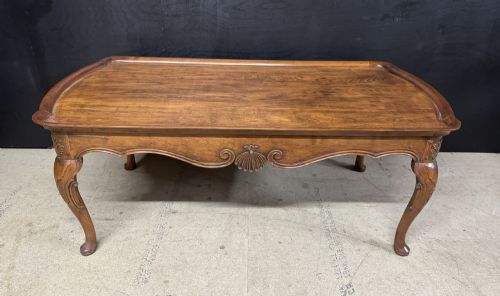


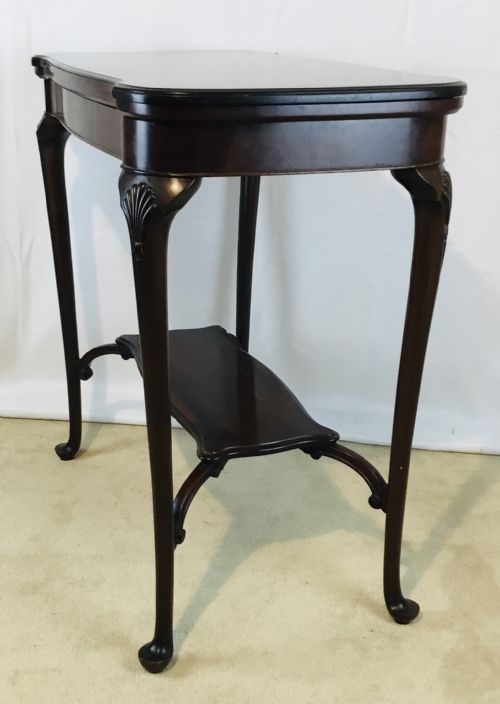

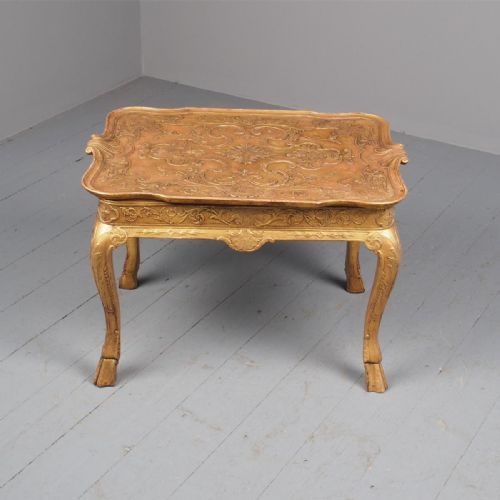
Shell Carved Tea Table
These shell carved tea table pieces offer refined surfaces and traditional craftsmanship, bringing period elegance to a room.
Shell Carved Tea Table
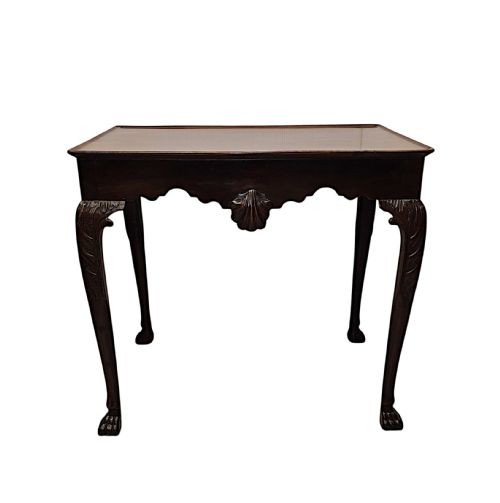
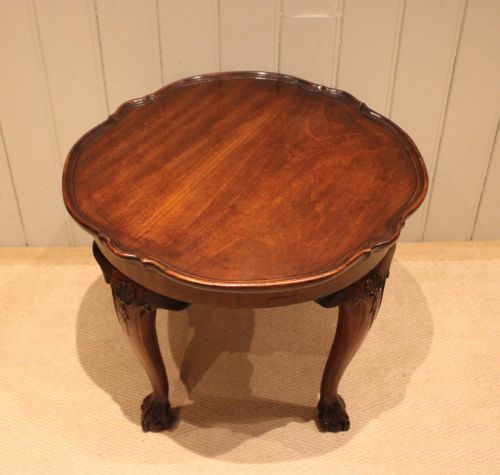
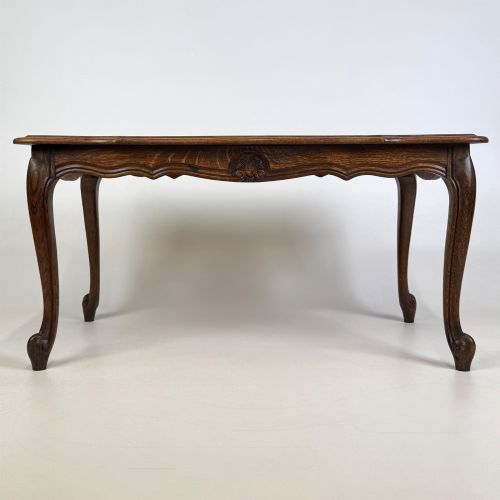
A shell carved tea table is a foundational piece of antique furniture designed for hosting and display, appearing across multiple eras from the eighteenth century through the twentieth. Buyers searching for this form encounter various iterations, including side tables, centre tables, and convertible card and games tables.
The selections available here span periods such as the Georgian era, the Edwardian period, and twentieth-century revivals like the Chippendale style and Queen Anne style. Mahogany and walnut dominate the offerings, occasionally accompanied by oak, burr walnut, and giltwood.
Makers and craftsmen throughout these periods utilised traditional forms, resulting in pieces that function equally well as coffee tables or occasional tables in modern interiors. Irish Georgian examples also appear, showing regional decorative motifs.
Materials and construction
Construction relies heavily on timber selection, with solid mahogany and figured walnut providing both structural stability and rich grain patterns. Craftsmen shaped these materials into intricate forms, incorporating decorative elements such as carved shell motifs directly into the wood.
Surface finishes and detailing include gold leaf application on giltwood examples and specialised joinery for folding card and games tables. The integration of tilt tops and turn-over leaves demonstrates the mechanical ingenuity applied to domestic furniture.
Listings feature timbers including mahogany, walnut, burr walnut, oak, and gold leaf across multiple centuries.
Assessing craftsmanship and proportion
Quality in these tables is evident in the crispness of the carved ornamentation, particularly around the knees, aprons, and shell details. Superior examples display balanced proportions, harmonious wood selection, and seamless movement in folding leaves or tilt mechanisms.
The depth of the carving and the quality of the timber, such as highly figured walnut or dense mahogany, distinguish finer examples from simpler vernacular pieces. Preservation of the original surface and structural integrity further separates the better specimens.
The Shell Carved Tea Table Glossary
- Card table
- A folding table specifically designed for playing cards, often featuring a baize-lined interior and pockets for counters. These pieces typically feature turn-over leaves supported by pivoting legs.
- Piecrust table
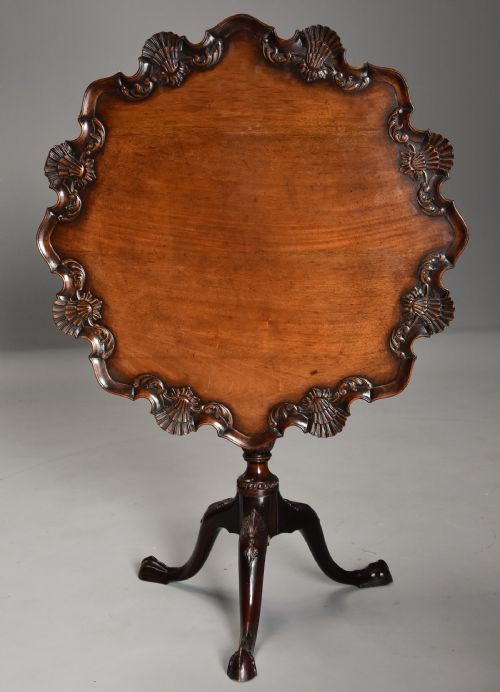
- A small circular table with a raised, carved edge resembling pastry crimping. This decorative rim is usually carved from a single solid piece of timber.
- Silver table
- An elevated table with a raised gallery edge designed for displaying silver tea services. These forms often feature elaborate carving and cabriole legs.
- Tilt top table
- A table with a mechanism allowing the surface to pivot to a vertical position when not in use. This design saved space in period interiors.
- Cabriole leg
- A furniture leg that curves outward at the knee and tapers inward toward the foot, often terminating in a pad or claw foot. It is characteristic of Queen Anne and Georgian design.
Shell Carved Tea Table: Frequently Asked Questions
Where were these tables placed originally?
These tables stood in principal entertaining rooms, positioned against walls or in the centre of parlours and drawing rooms. They served practical functions during social gatherings, holding tea services, cards, or decorative objects.
Over time, their placement shifted as domestic habits changed, and today they frequently function as occasional or coffee tables in contemporary living spaces.
How do I identify a revival piece?
Revival pieces, such as those from the Edwardian period or the early twentieth century, emulate the styles of earlier eras like the George II or Chippendale periods. Examining the secondary woods, internal construction methods, and tool marks helps determine the true age of the piece.
Makers working during revival periods often utilised machine assistance alongside traditional hand tools, creating distinct structural characteristics compared to eighteenth-century originals.
How do folding mechanisms work on card tables?
Folding card tables typically employ a hinged top that opens to reveal a flat playing surface, supported by a swing leg that pivots out from the frame. The mechanism requires precise alignment to ensure the top rests level when open.
Inspectors and collectors look for smooth operation in the hinges and supporting gate legs, which should lock securely into position without excessive play.
What is figured walnut?
Figured walnut refers to timber harvested from walnut trees that exhibit distinctive, highly decorative grain patterns caused by growth anomalies or specific branching. Craftsmen utilised these veneers or solid cuts on prominent surfaces to create visual depth and striking contrasts.
This material is frequently seen on tables from the early twentieth century and earlier walnut-dominant periods, adding significant decorative appeal to the piece.