



Georgian Revival Accent Table
A georgian revival accent table brings neoclassical grace and practical surface space to a room, borrowing the refined proportions of the eighteenth century for later interiors.
Georgian Revival Accent Table
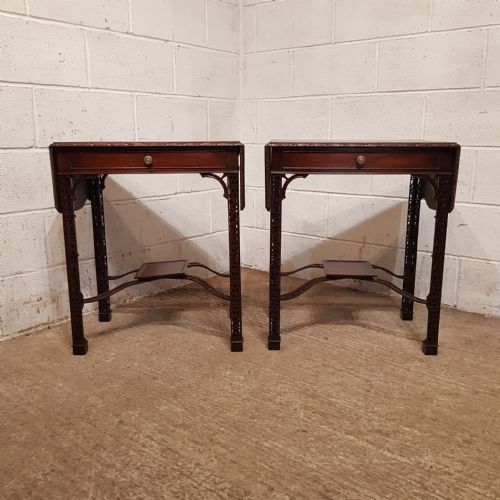
A georgian revival accent table encompasses various occasional and side tables produced during the Victorian, Edwardian, and early twentieth-century periods. These pieces draw heavily upon earlier eighteenth-century forms, translating classic eighteenth-century cabinetmaking into domestic furniture suited for later homes.
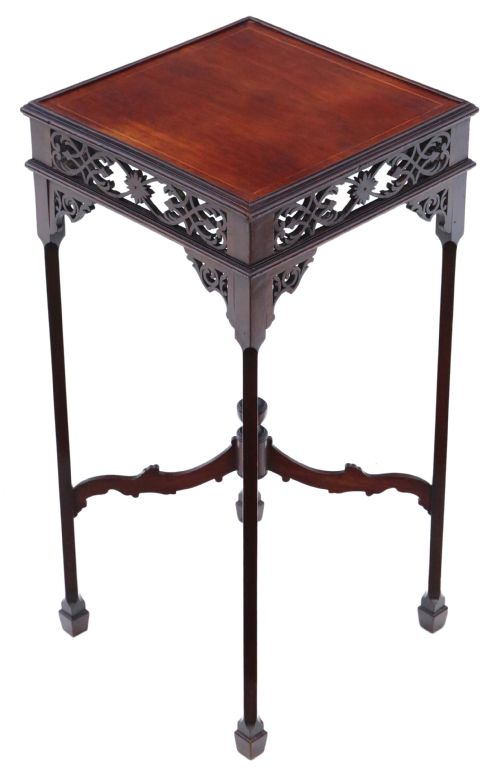
You are most likely to encounter occasional tables, side tables, and urn stands executed in mahogany, walnut, or satinwood. Many examples channel specific revivals such as Sheraton, Chippendale, or Queen Anne, reflecting a sustained Victorian and Edwardian appetite for historical design.
The selection ranges from simple drop-leaf and lamp tables to elaborate silver tables and centre tables featuring detailed inlay. Makers of these pieces utilised traditional forms like the lowboy alongside smaller occasional formats designed specifically for drawing rooms and sitting rooms.
How they were made
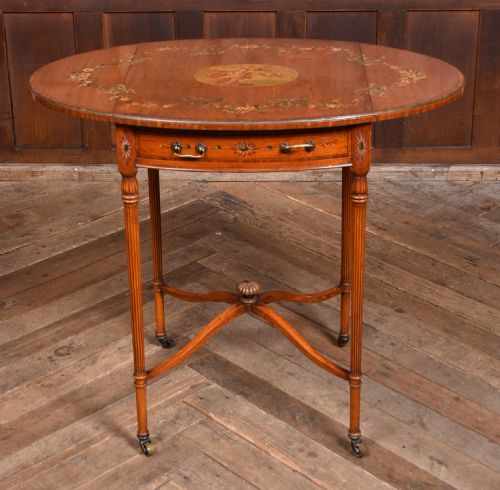
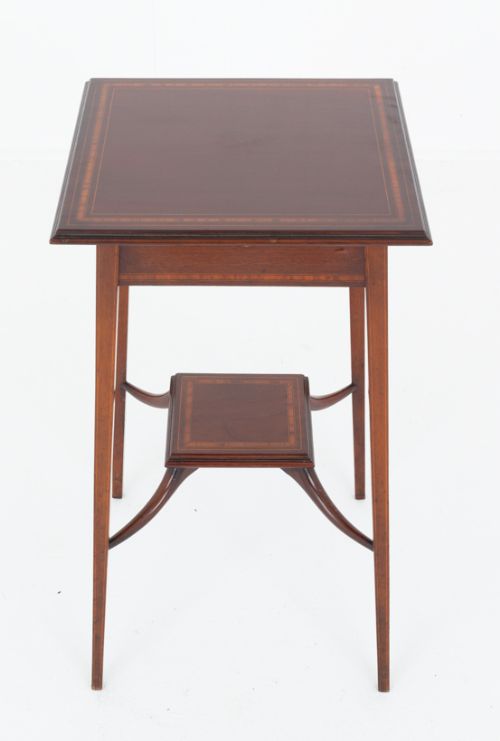
Cabinetmakers constructed these tables primarily in solid mahogany, walnut, and satinwood, frequently applying boxwood stringing and contrasting veneers. These timbers provided a stable, fine-grained canvas capable of supporting intricate surface decoration.
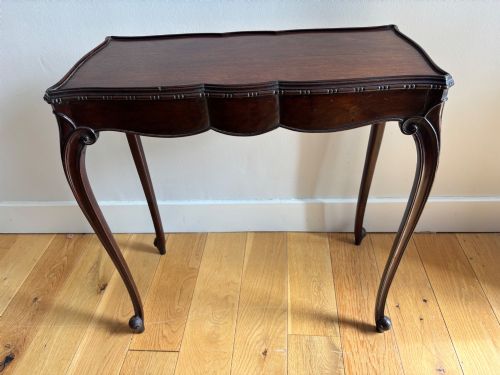
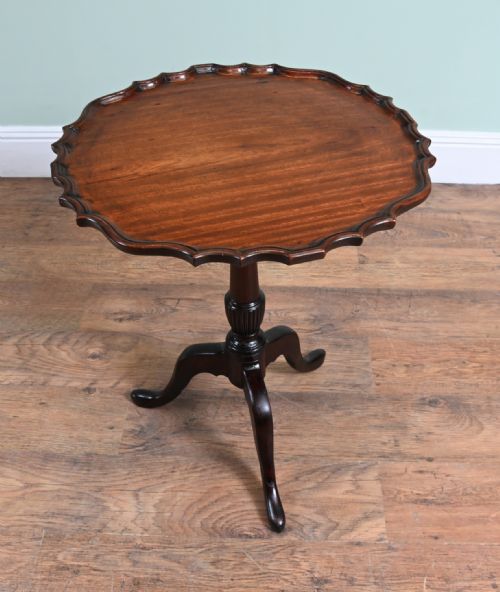
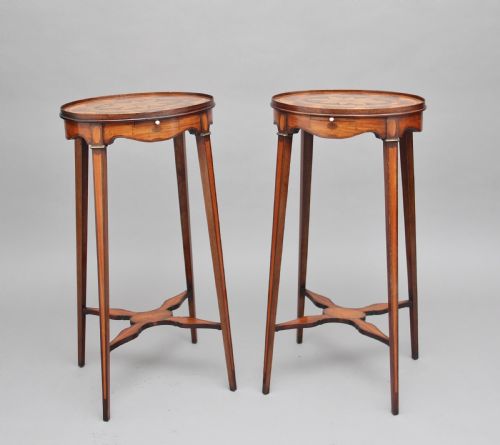
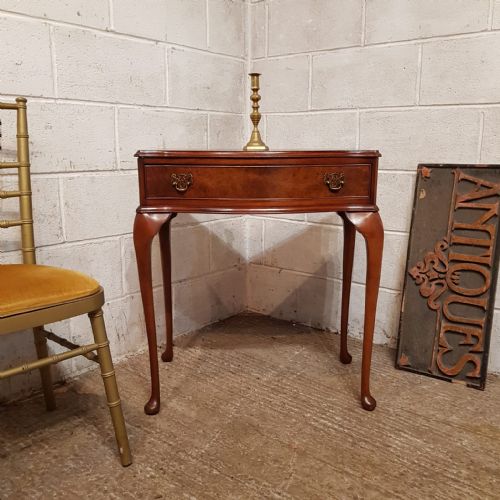
Decoration relied heavily on marquetry and inlay, depicting classical urns, shells, and neo-classical scenes directly onto the wood. Carved details such as pie crust edges, cabriole legs, and serpentine fronts appeared on pieces channelling Chippendale or Queen Anne influence.
Alternative finishes included hand-painting with neo-classical motifs and bleached oak surfaces. Brass hardware, drop handles, and galleried edges on silver display tables added both utility and decorative contrast to the timber.
Listings feature mahogany, satinwood, and walnut predominantly, alongside decorative elements like brass, paint, and boxwood inlay.
What varies in quality
Quality rests significantly on the selection of timber and the precision of the underlying construction. Higher-grade examples display carefully matched veneers, tight joinery, and substantial secondary woods rather than thin surface laminates.
The execution of decorative elements distinguishes finer pieces from standard production. Crisp hand-carving on pie crust edges and cabriole legs separates superior items from softer, mechanically churned moulding.
Inlaid detail reveals much about a piece's pedigree. Finely cut boxwood stringing and sharply rendered satinwood motifs demonstrate a higher tier of workshop competence than hasty, poorly fitted marquetry.
The Georgian Revival Accent Table Glossary
- Occasional table
- A small, movable table designed for secondary use in a room, such as holding a lamp or book. These pieces form the core of most revival furniture selections.
- Lowboy
- A small seventeenth or eighteenth-century style dressing table or side table featuring one or more drawers beneath a flat top. Revival versions often served narrow hallways or reception rooms.
- Silver table
- A high-sided display or serving table originally designed for holding silver tea services. They frequently feature raised galleries around the top edge.
- Marquetry
- The art of applying pieces of veneer to a structure to form decorative patterns and pictures. Craftsmen utilised contrasting woods like satinwood and boxwood to achieve pictorial depth.
- Pie crust edge
- A decorative raised border carved into the circumference of a circular table top, resembling pastry crimping. This detail is commonly associated with Chippendale revival pieces.
Georgian Revival Accent Table: Frequently Asked Questions
What is a georgian revival accent table?
A georgian revival accent table is a smaller nineteenth or early twentieth-century piece of furniture that mimics the styles, woods, and proportions of eighteenth-century English design. These tables include occasional, side, lamp, and silver formats built for practical modern living.
Cabinetmakers drew inspiration from makers like Chippendale and Sheraton, adapting classic forms for Edwardian and Victorian homes without losing the refined aesthetic of the original eras.
How do I date these tables?
Dating requires looking closely at secondary timbers, construction methods, and the style of the revival movement itself. Pieces made around nineteen hundred often combine Edwardian manufacturing techniques with Georgian revival aesthetics.
Examining the drawer linings, screw types, and finish helps separate genuine Edwardian revival work from later twentieth-century interpretations.
Where should I place a silver table?
A silver table suits a hallway, drawing room, or living space where its raised gallery and decorative top can be appreciated. Originally intended for displaying silver tea wares, today they serve effectively as lamp or display surfaces.
Keep them out of direct sunlight to protect the sensitive satinwood or mahogany veneers from fading over time.
How do I care for inlaid satinwood?
Maintain inlaid satinwood by keeping it away from extreme temperature shifts and direct heat sources. Regular dusting with a soft, dry cloth preserves the polished surface without stripping the timber.
Avoid liquid cleaners and silicone polishes, applying traditional wax sparingly only when the wood appears dry.