


Sheffield Silver Plated Tray
These pieces of a sheffield silver plated tray bring Georgian and Victorian utility to the table, offering durable metalwork with bright metallic surfaces for modern serving.
Sheffield Silver Plated Tray
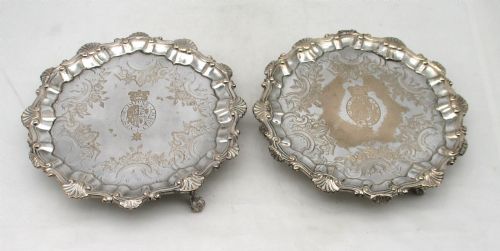
A sheffield silver plated tray covers a range of serving vessels, salvers, and desk accessories spanning the eighteenth, nineteenth, and early twentieth centuries. The selection encountered on this page includes styles from the Georgian, Regency, and Victorian eras, alongside Edwardian examples.
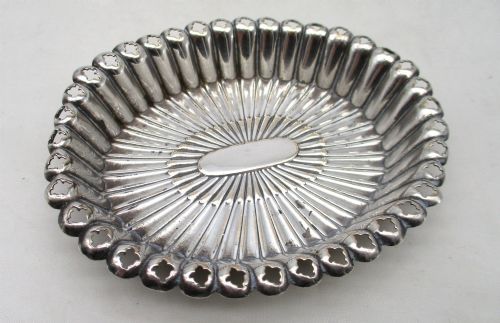
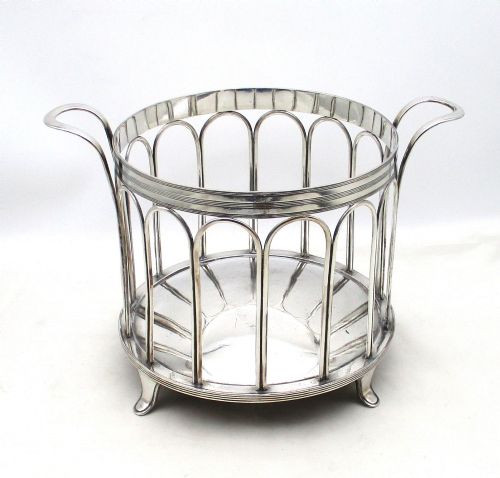
Forms vary from large serving and meat trays to smaller pin trays, card trays, knife trays, and gallery trays. Collectors also meet chamber candlesticks, inkstands, and wine coasters reflecting the domestic habits of past centuries.
Materials and Technique
Many items utilise Old Sheffield Plate, a method created by fusing a thin sheet of silver to a thicker copper base before rolling and shaping. Later pieces employ electroplated nickel silver or standard silver plate over copper.
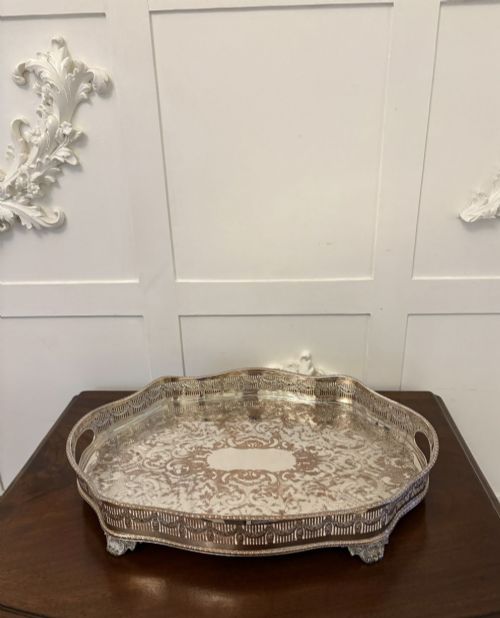
Decoration relies on hand engraving, pierced reticulation, applied shell motifs, and raised gallery borders soldered to the base plates.
Listings feature items spanning the 18th Century through the Edwardian period, incorporating copper, cut glass, and wood alongside silver plate.
Judging Quality
Quality rests upon the crispness of chased and engraved details, the weight of the metal base, and the preservation of the silver layer over the underlying copper. Pieces bearing clear maker marks and heraldic crests show greater attention to individual manufacture.
The integrity of applied borders, feet, and handles distinguishes superior production from simpler domestic items, as does the balance and rigidity of larger serving surfaces.
Creswick·Walker Knowles·Padley Parkin·J Dixon & Sons·Frank Cobb & Co.·Daniel Holy·Lee & Wigfull·J.H. Potter·Viners·Atkin Brothers·Harrison
The Sheffield Silver Plated Tray Glossary
- Old Sheffield Plate
- A composite material formed by fusing silver to a copper core. This technique was largely superseded by electroplating in the mid-nineteenth century.
- Gallery Tray
- A tray featuring a pierced or pierced and solid raised metal border around the edge. These rims often include small cut-out handles.
- Salver
- A flat serving plate or tray, typically raised on small feet. They are frequently circular or square with shaped borders.
- Mazarine
- A flat draining plate pierced with holes or slots. These inserts sat inside larger dishes to drain juices from meat.
- Reticulation
- An openwork pattern formed by piercing or cutting metal sheets. This decorative technique appears on borders and central fields of serving pieces.
Sheffield Silver Plated Tray: Frequently Asked Questions
What is Old Sheffield Plate?
Old Sheffield Plate is an early material made by sandwiching a thin layer of silver onto a thick copper block and fusing them under heat.
Craftsmen then rolled this combined ingot into sheets for shaping into trays and hollowware.
How do I date a tray?
Dating relies on stylistic clues like Georgian or Regency borders, hallmarks, and the manufacturing method.
Fused copper edges often indicate eighteenth or early nineteenth origin, while electroplating points to later decades.
How were these trays used?
These trays served practical roles in wealthy households, carrying tea sets, wine bottles, letters, or carving meats.
Smaller examples held calling cards or inkwells on desks and in hallways.
How do I care for silver plate?
Care requires gentle cleaning with non-abrasive silver polishes to preserve the thin metal layer.
Avoiding harsh chemical dips protects any underlying copper from showing through worn areas.