


Sheffield Plate Serving Tray
These pieces of a sheffield plate serving tray combine copper and silver in a fused sheet, offering the weight and lustre of solid metal.
Sheffield Plate Serving Tray
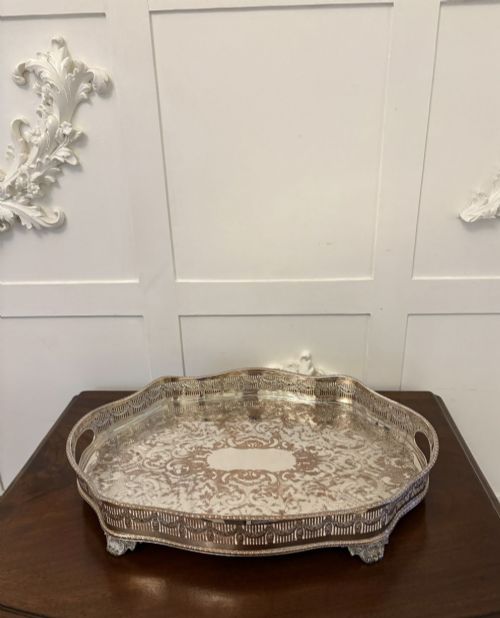
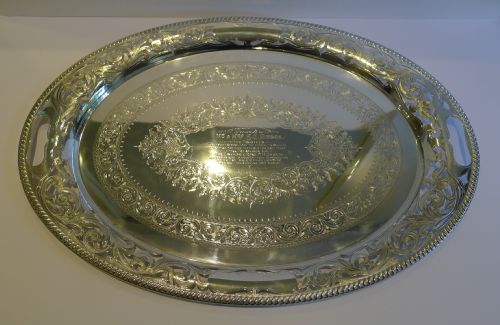
When you search for a sheffield plate serving tray, you enter a field defined by nineteenth century domestic hospitality and silver working. The forms range from tea and drinks trays to meat warming dishes, salvers, and knife trays.
Most examples you meet on this page date from the nineteenth century and the Edwardian era, spanning styles from Regency and Georgian to Victorian and Rococo Revival. Makers utilise oval, round, and galleried shapes, often featuring engraved surfaces or pierced reticulated borders.
The objects served practical dining functions in period homes, carrying vessels or presenting food. Their survival in varied sizes demonstrates the enduring utility of fused metal wares.
How they were made
Makers fused a thin sheet of silver to a thicker ingot of copper by heat and pressure before rolling the combined metal into sheets. This old sheffield plate technique created a durable material that could be shaped into trays and salvers.
Later pieces shift to electroplated nickel silver, reflecting changes in workshop practices towards electroplating. Craftsmen finished these trays by hand, adding engraved details, applied borders, and handles of wood or metal.
Some knife trays survived centuries of dining by doubling as sturdy letter holders on eighteenth century desks.
What varies in quality
The standard of a sheffield plate serving tray rests on the crispness of its engraving and the integrity of the fused metal edges where copper might show through. Heavier gauge metal indicates a more substantial piece that holds its form under use.
Design complexity also separates examples, with reticulated pierced borders and cast shell motifs requiring greater skill than plain surfaces. Maker attribution to known workshops adds distinct provenance to the piece.
Creswick·Padley Parkin·J Dixon and Sons·Frank Cobb and Co·Lee and Wigfull·Viners of Sheffield·Atkin Brothers
The Sheffield Plate Serving Tray Glossary
- Old Sheffield Plate
- A material made by fusing silver and copper together through heat and rolling. This technique preceded modern electroplating.
- Gallery Tray
- A tray featuring a raised pierced or solid border around the edge. This design kept glasses and decanters secure during service.
- Salver
- A flat serving tray typically raised on small feet. These pieces usually held drinks or calling cards.
- Reticulated
- Decorated with an openwork pattern of pierced holes or slots. This ornamental technique lightens the visual weight of large trays.
- EPNS
- Electroplated Nickel Silver. A later base metal base coated with a thin layer of silver via an electrical current.
Sheffield Plate Serving Tray: Frequently Asked Questions
How do I clean an old sheffield plate tray?
Use a soft cloth and mild silver cleaner designed for plated items to preserve the surface. Avoid harsh abrasive polishes that can wear through the thin silver layer to the underlying copper.
Gentle maintenance keeps the metal bright without removing the historic character accumulated over generations of use.
Can I use these trays for serving food?
Most antique trays function well for serving dry items, drinks, or afternoon tea as originally intended. Ensure the surface is cleaned thoroughly before presenting any edible goods.
Care should be taken with acidic foods or liquids left standing on the plating for extended periods.
How do I spot the difference between old sheffield plate and later electroplate?
Old sheffield plate often reveals a thin line of dark copper visible along cut edges or worn high points where the fused silver has thinned. Later electroplated pieces display an even silver coating over a white metal base like nickel silver.
Weight and manufacturing hallmarks also help distinguish the earlier fused method from nineteenth century galvanic processes.
What is a gallery tray used for?
The raised gallery wall around the perimeter prevented glassware, teapots, and decanters from sliding off during transport. Servants carried these trays between rooms in period households.
Today they function effectively on sideboards or coffee tables to display collections.