



Sheffield Plate Goblets
Sheffield plate goblets are fused silver on copper drinking vessels prized for their rich lustre and historic ecclesiastical and domestic forms.
Sheffield Plate Goblets
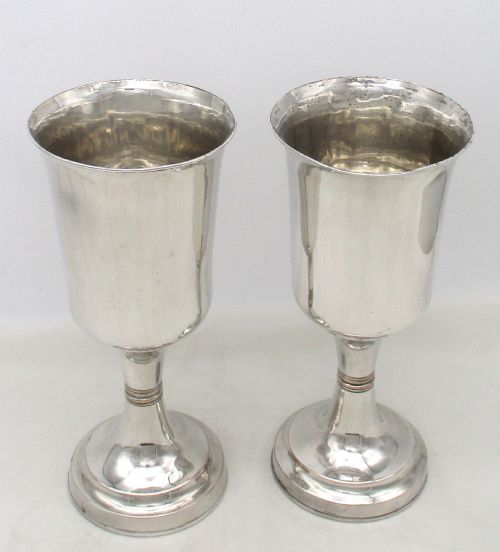
Sheffield plate goblets encompass drinking vessels and communion chalices produced during the eighteenth and nineteenth centuries, spanning Georgian, Regency, William IV, and Victorian periods. Buyers encounter forms ranging from monumental church chalices to intimate loving cups and tankards, reflecting both secular and ecclesiastical commissions.
The nineteenth century yields pairs of tall church chalices alongside single communion vessels dated around the eighteen-forties. Earlier examples from the eighteenth century appear as simpler goblets and tankards, demonstrating the evolution of the form from utilitarian drinking vessels to ritual plate.
How they were made
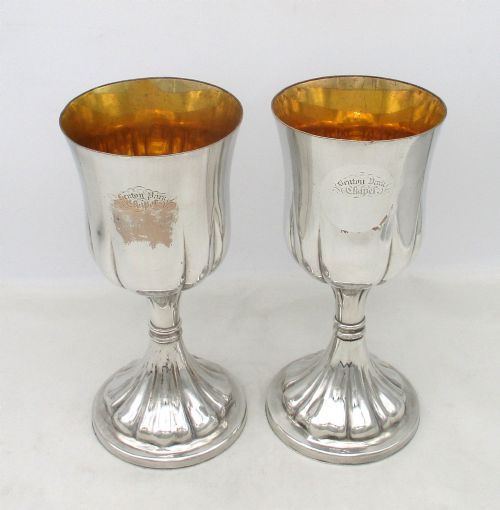
Makers fused a thin sheet of silver to a thicker copper core through heat and pressure before shaping the resulting composite metal into the desired vessel form. Artisans then applied gold gilding or gold wash to the interior bowls of communion chalices to protect the metal from consecrated wine.
Additional decorative elements like cast silver mounts, rims, and handles were soldered onto the plated body to conceal exposed copper edges and reinforce high-wear areas. Later pieces incorporate heavier applied ornamentation characteristic of Victorian and Art Nouveau manufacturing techniques.
Sheffield Plate Goblets Retail Price Guide 2026
Typical asking prices for sheffield plate goblets among the pieces listed under this phrase on Sellingantiques today, from the lower quarter to the upper quarter. They describe what is for sale here now, not the wider market.
Some nineteenth-century church chalices retain interior gold wash applied specifically to withstand centuries of sacramental wine.
What varies in quality
The preservation of the original silver layer over the copper core dictates the visual integrity of each piece, as heavy polishing eventually exposes the reddish metal beneath. Crispness in the execution of cast mounts and applied borders separates standard production from superior workshop output.
Proportion and weight also distinguish finer examples, particularly in matched pairs of church chalices where balance and symmetry govern the aesthetic. The survival of interior gold wash adds significant distinction to ecclesiastical vessels.
Richard Morton·Joseph Rodgers & Sons
The Sheffield Plate Goblets Glossary
- Old Sheffield Plate
- A composite material made by fusing a sheet of silver to a copper ingot, developed in the eighteenth century. This predates electroplating and leaves a characteristic copper seam visible on raw edges.
- Communion Chalice
- A sacred vessel utilised for sacramental wine during church services. These pieces often feature deep bowls and heavy baluster stems.
- Loving Cup
- A large two-handled drinking vessel designed for shared communal toasts at banquets and civic events. They appear in both silver plate and solid silver forms.
- Gold Wash
- A thin layer of gold applied to the interior of silver or plated vessels, particularly church plate. This prevents the acidic contents from tarnishing the base metal.
Sheffield Plate Goblets: Frequently Asked Questions
How were communion chalices used?
Communion chalices served during ecclesiastical services to hold sacramental wine for the congregation. Their deep bowls and sturdy stems suited ritual handling.
Many feature gold wash interiors to protect the metal from wine acidity. They reflect the religious commissions typical of the period.
How do I date these goblets?
Dating relies on stylistic shifts from eighteenth-century simplicity to ornate Victorian and Art Nouveau flourishes. Inscriptions, proportions, and manufacturing markers also help narrow the decade.
Archival dates on church plate often provide precise years of dedication or commission. Examining the weight and mount style clarifies the period of manufacture.
Can I use these for drinking?
While these vessels were originally made for beverages, historic plated items require careful handling and gentle hand washing. The thin silver layer can wear down with aggressive daily use.
Collectors generally treat them as display pieces or decorative objects rather than everyday tableware. Preserving the remaining silver and interior gilding guides their care.