



Communion Goblet
These communion goblet vessels span centuries of ritual manufacture, offering solid tactile weight and historical gravity for collectors of ecclesiastical silver and secular turned wood alike.
Communion Goblet
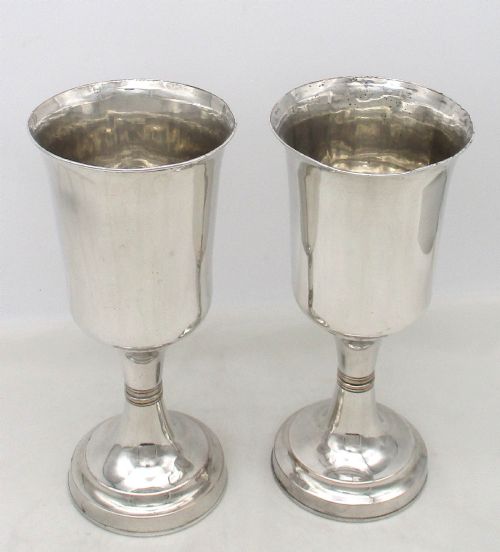
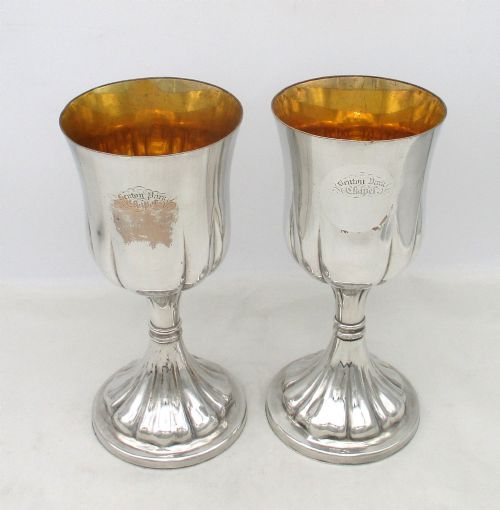
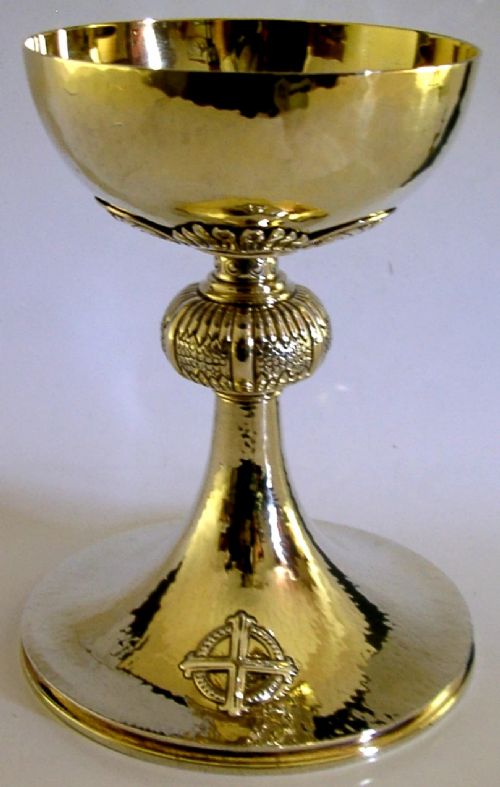
A communion goblet bridges sacred ritual and domestic display, appearing across eras from the sixteenth century to the mid-twentieth century in forms ranging from simple turned wood to heavy sterling silver gilt. When you search for a communion goblet, you meet church vessels designed for sacramental service alongside secular cups adapted for display.
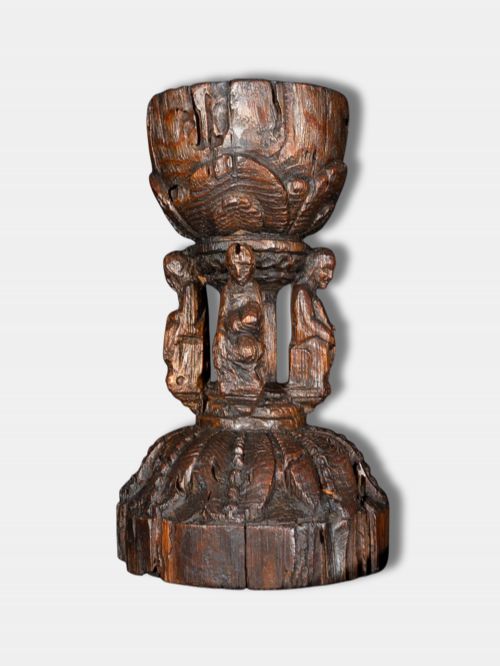
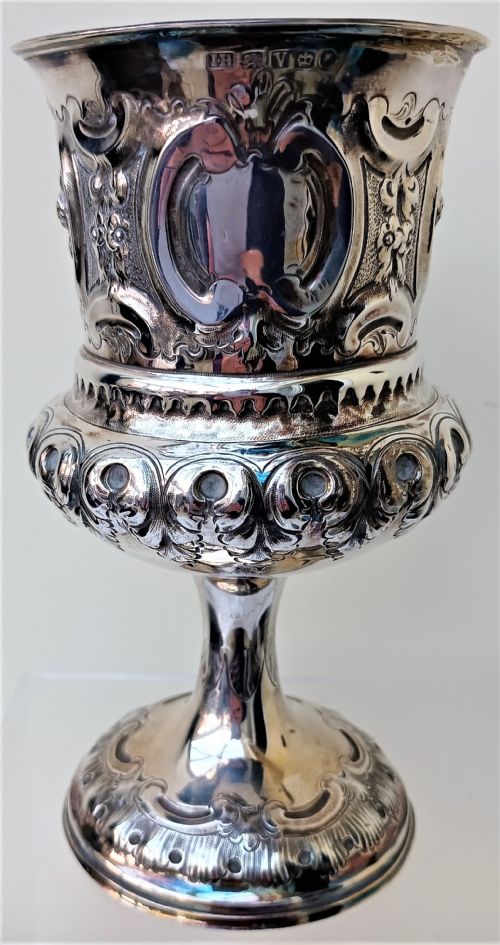
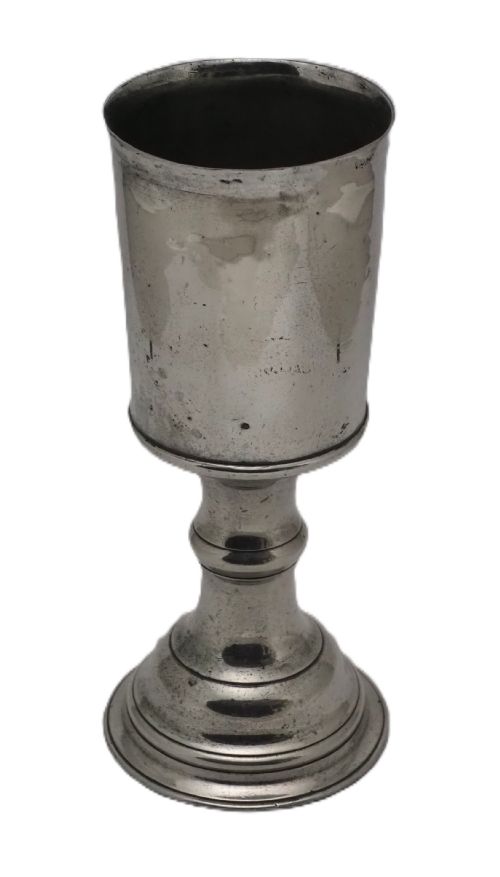
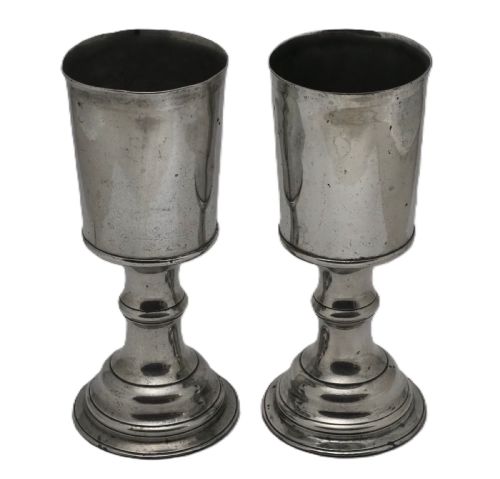
The nineteenth century supplies the largest share of examples on this page, predominantly shaped as silver-plated or sterling silver church chalices bearing Victorian Gothic or neoclassical revival details. Alongside these metal vessels, earlier centuries contribute turned fruitwood, carved oak, and plain Irish pewter pieces dated to seventeen-fifty.
Makers such as George Unite, Elkington Mason, and Walker and Hall represent the institutional and domestic output found in these listings. Styles shift from plain Georgian vase-shaped bodies to heavily embellished mid-century ecclesiastical metalwork and earlier Renaissance carving.
Materials and Working Methods
Metals dominate the record, utilising sterling silver, silver plate, Old Sheffield plate, parcel gilt, and pewter shaped into sturdy bowls set upon domed feet. Silversmiths hammered, spun, or cast these metals before applying bright-cut engraving or parcel gilding to the interior bowl.
Woodworking traditions appear through turned fruitwood and walnut, where craftsmen shaped timber on a lathe to create symmetrical drinking vessels during the Regency and nineteenth-century periods. Carved oak examples demonstrate traditional hand-chiselling techniques from the sixteenth century.
Materials range from humble turned walnut and fruitwood to prestigious gold gilt and sterling silver.
Factors Distinguishing Quality
Quality rests upon the weight of the metal and the crispness of the hand-chased or bright-cut ornamentation applied by the silversmith. Heavy gauge sterling silver or thick Old Sheffield plating indicates a higher grade of manufacture intended for enduring ecclesiastical use.
Provenance and maker attribution elevate certain pieces, where identifiable marks from silversmiths such as William Eaton or established firms provide secure dating. The integrity of the turned wooden grain or the depth of hand-carved oak details similarly separates standard production from exceptional survival pieces.
George Unite·John Hunt and Robert Roskell·Elkington Mason·William Eaton·James Deakin and Sons·Richard Gurney·Walker and Hall
The Communion Goblet Glossary
- Old Sheffield Plate
- A composite material formed by fusing a sheet of silver to a thicker copper base. This technique was widely utilised before the invention of electroplating.
- Parcel Gilt
- Silverware that is partially gilded with gold, most commonly applied only to the interior bowl of a chalice. This protected the metal from acidic communion wine.
- Bright-Cut Engraving
- A surface decoration technique utilising faceted angled cuts to create sparkling geometric or floral patterns. It was particularly popular on Georgian silver.
- Ciborium
- A covered ecclesiastical vessel used to hold sacramental bread. It shares stylistic metalwork and liturgical origins with church chalices.
Communion Goblet: Frequently Asked Questions
What is a communion goblet?
A communion goblet is a ritual cup utilised during religious services to hold sacramental wine. These vessels take diverse forms, ranging from simple turned timber cups to ornate silver-gilt chalices.
Over the centuries, silversmiths and craftsmen adapted their designs to reflect changing church aesthetics, moving from plain Renaissance oak to elaborate Victorian Gothic revival metalwork.
How do I date a silver communion goblet?
Dating relies primarily upon hallmarks stamped into the metal, which record the assay office, the year letter, and the silversmith's mark. Stylistic clues such as vase-shaped bodies or bright-cut engraving also point to specific eras like the Georgian or Victorian periods.
Unmarked pieces or wooden examples require stylistic analysis of the turning patterns, timber species, and historical wear marks to estimate their age.
Were these goblets used only in churches?
While many pieces originated as church plate for Holy Communion, others served domestic or secular functions. Pieces made from pewter or turned wood often served domestic households for everyday dining or formal toasts.
Secular silver cups, Kiddush cups, and loving cups share similar forms with ecclesiastical chalices, making their exact original function dependent on specific engravings or institutional marks.
How should I clean silver plate?
Silver plate and Old Sheffield plate require gentle cleaning to preserve the thin layer of precious silver over the base metal. Harsh abrasive dips wear away the plating over time.
Utilise a soft microfibre cloth and a mild, non-abrasive silver polish formulated specifically for plated items, rinsing and drying thoroughly after application.