

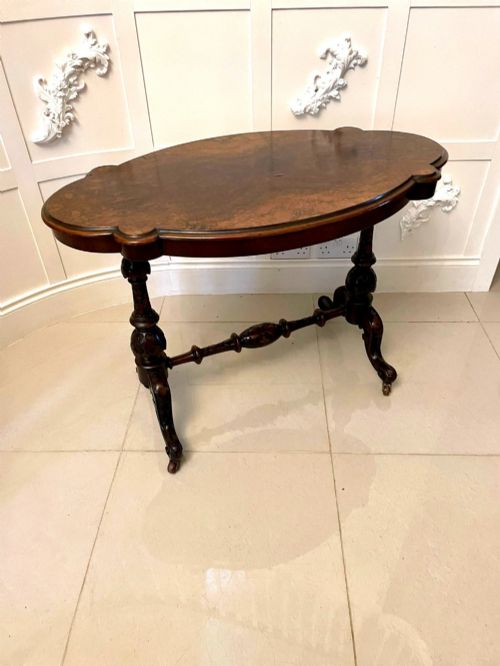
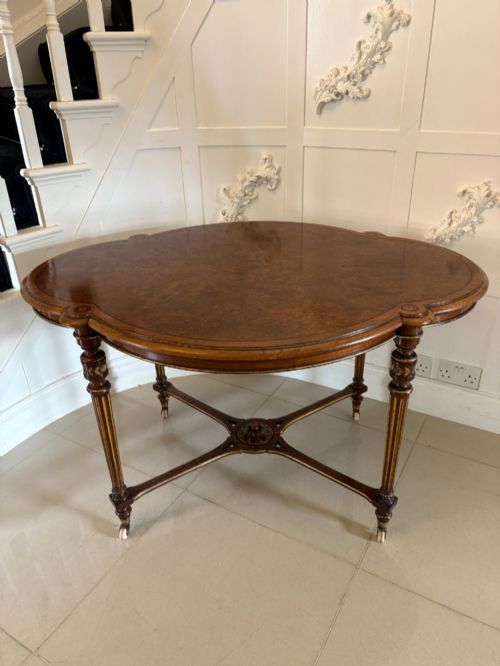
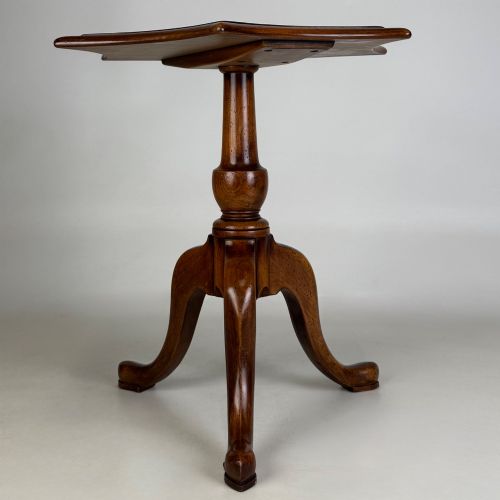
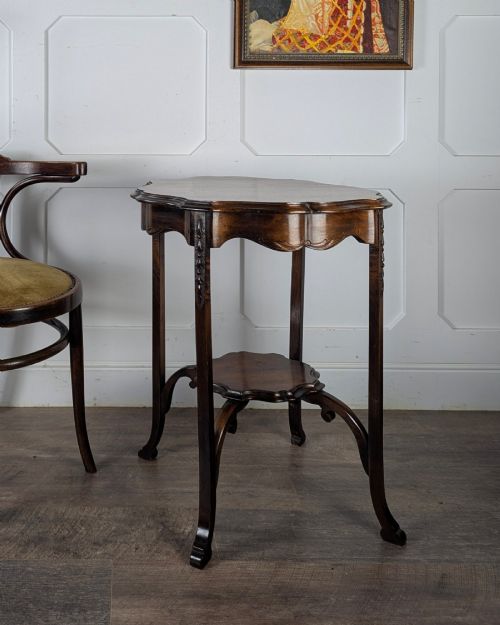
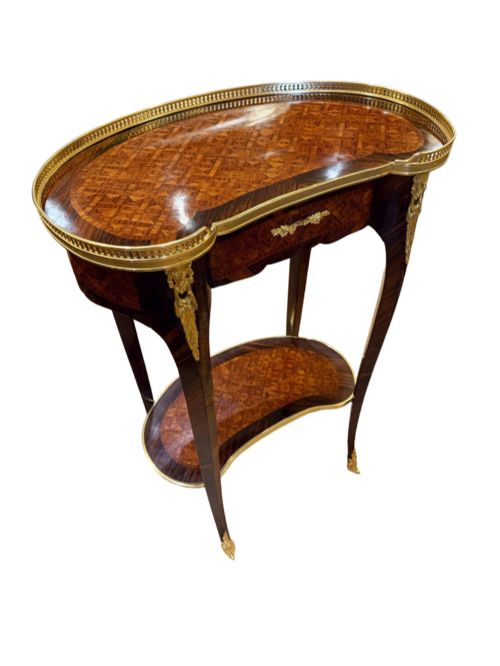
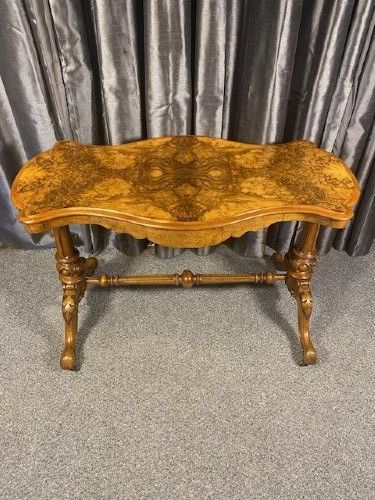
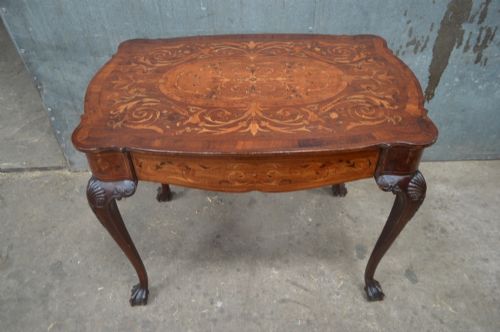


Shaped Walnut Accent Table
A shaped walnut accent table brings warmth and rich grain to a room, offering a practical surface with distinctive period character.
Shaped Walnut Accent Table
A shaped walnut accent table encompasses a variety of compact occasional, side, and centre tables designed for versatile placement around the home. These pieces emerge predominantly from the Victorian era and the broader nineteenth century, alongside examples from the eighteenth and early twentieth centuries.
Makers drew on diverse design vocabularies ranging from Georgian and Dutch Rococo to various French revival styles. This mix ensures that buyers encounter both simple domestic surfaces and more elaborate, freestanding centre tables.
Materials and Construction
Makers utilised solid walnut and decorative burr walnut veneers to construct these tables, harnessing the dramatic grain patterns of the wood. Surfaces often incorporate intricate parquetry, marquetry, and inlay work executed in contrasting timbers.
Structural embellishments frequently include brass, ormolu, and gilt bronze mounts, particularly on pieces influenced by French revival aesthetics. Fruitwood further supplements the palette for contrasting details within inlaid tabletop motifs.
One lonely Thonet salon table managed to slip into a sea of stately British walnut.
Assessing Quality and Execution
The sophistication of the timber selection dictates the visual impact, with choice burr walnut and precise marquetry setting superior examples apart from plainer counterparts. Richness of grain and symmetry in veneer layout indicate careful craftsmanship.
Integration of secondary materials like ormolu mounts and brass details reflects the maker's ambition. Solid construction in the framing and the crisp execution of shaped edges distinguish finer period output.
The Shaped Walnut Accent Table Glossary
- Burr walnut
- A figured wood obtained from the warted growths on walnut trees, prized for its swirling grain patterns. It provides a highly decorative surface on Victorian table tops.
- Marquetry
- The art of applying pieces of veneer to a structure to form decorative patterns and pictures. Craftsmen utilise various woods to create elaborate floral or geometric table tops.
- Parquetry
- A geometric mosaic of wood pieces used for decorative floors and tabletops. This technique appears prominently on nineteenth-century French and English occasional tables.
- Ormolu
- Gilded bronze applications used as mounts on furniture. It accentuates the corners and aprons of revival-style tables.
- Pedestal table
- A table supported by a single central pillar resting on a base or feet. This form allows maximum legroom while maintaining a compact footprint.
Shaped Walnut Accent Table: Frequently Asked Questions
What rooms suit a shaped walnut accent table?
These compact pieces fit easily beside seating in a sitting room or function as a lamp table in a hallway. Their finished backs often allow freestanding placement in the middle of a room.
The diverse forms range from narrow window tables to generous centre tables, accommodating different spatial requirements while introducing rich wood tones.
How do I identify a Victorian walnut table?
Victorian examples frequently display rich burr walnut veneers combined with turned pedestals or shaped stretcher bases. Stylistic cues often point towards mid-nineteenth-century revival tastes.
Construction methods and timber choices characteristic of the 1860s help separate these pieces from earlier Georgian or later Edwardian furniture.
What is the difference between an occasional table and a centre table?
Occasional tables are generally smaller and designed to be moved easily to the side of a room when not in use. Centre tables are built to stand independently in an open space, often finished ornamentally on all sides.
Both types serve accent purposes, but centre tables traditionally anchor a room layout rather than tucking against a wall.
How should I care for antique walnut furniture?
Keep walnut tables away from direct sunlight and heat sources to prevent the wood veneers from drying out or splitting. Regular dusting with a soft, dry cloth maintains the finish.
Applying a quality wax polish occasionally nourishes the burr walnut grain and preserves the historic lustre of the timber.