


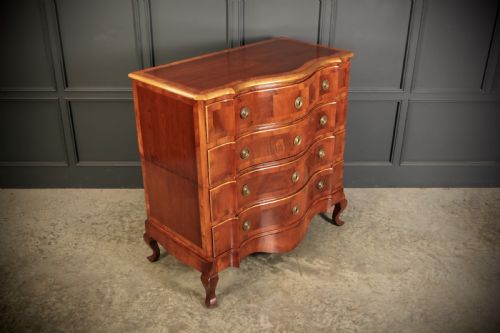


Shaped Front Chest
A shaped front chest brings architectural movement and rich timber figure to a room, offering generous storage through curved, serpentine, or bomb silhouettes.
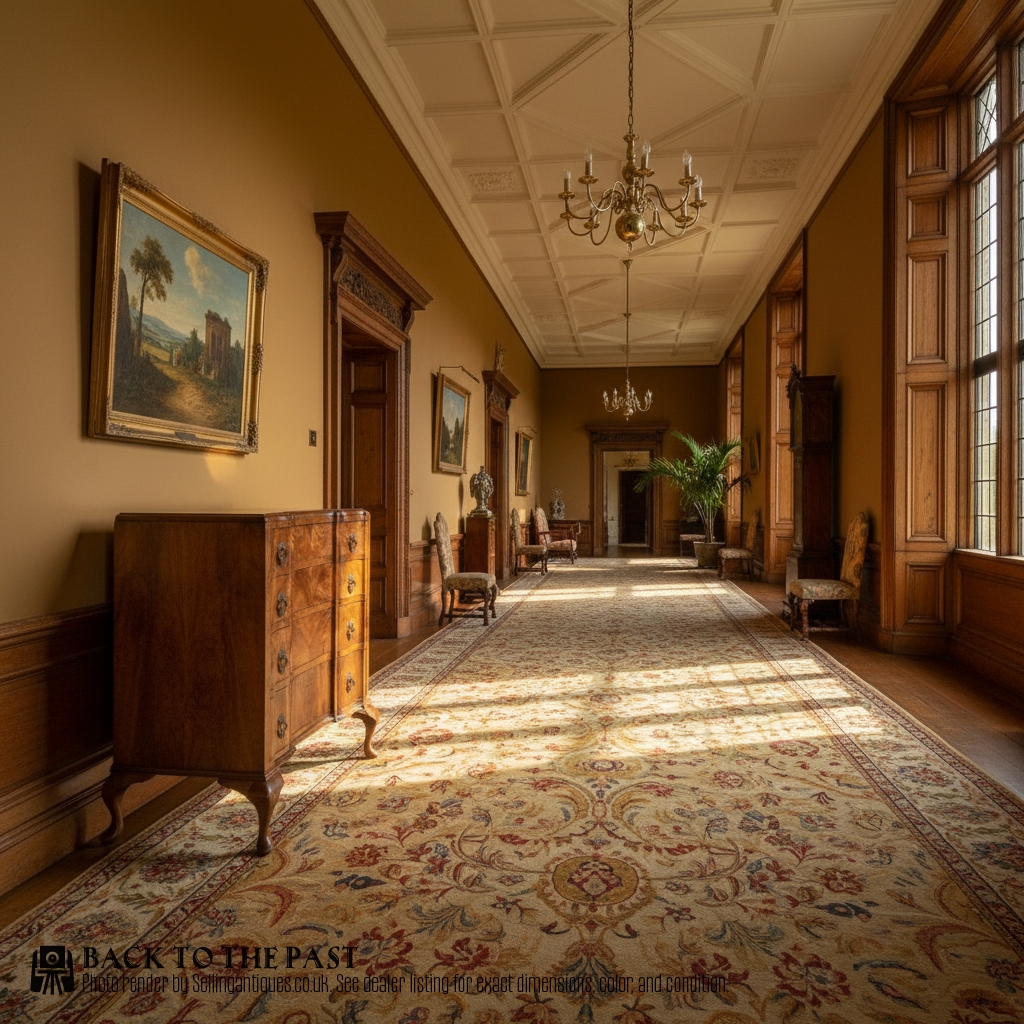
Shaped Front Chest
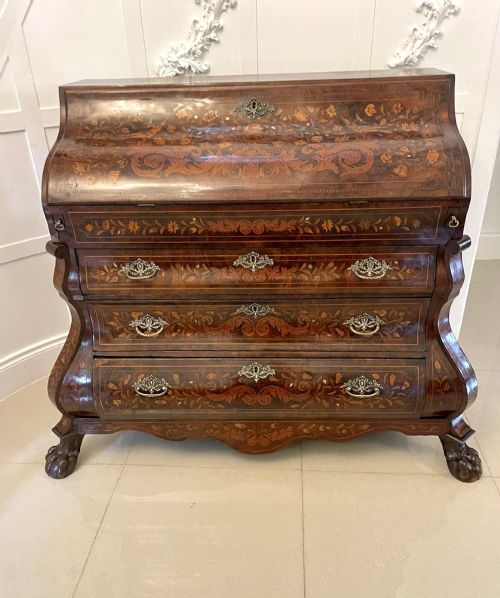
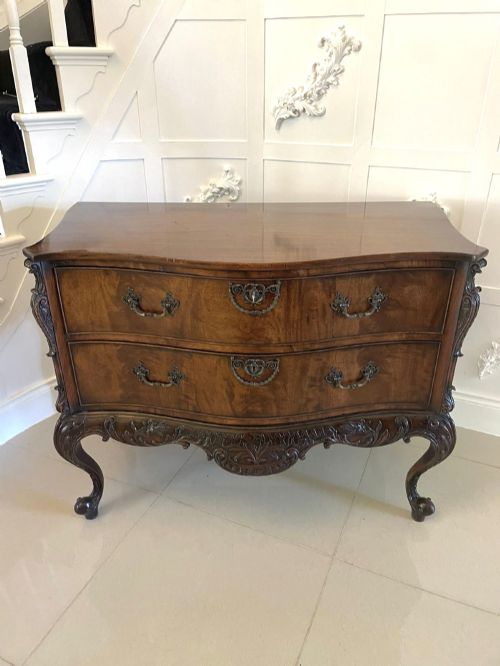
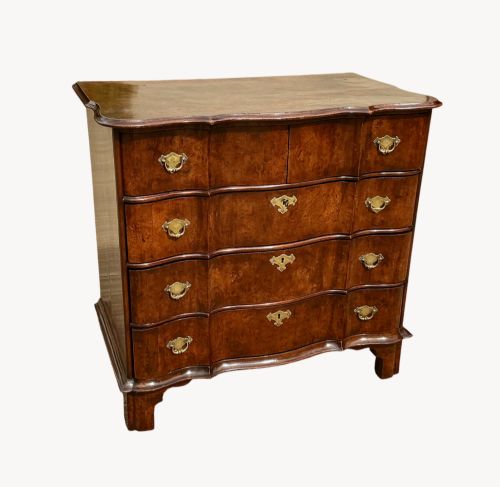
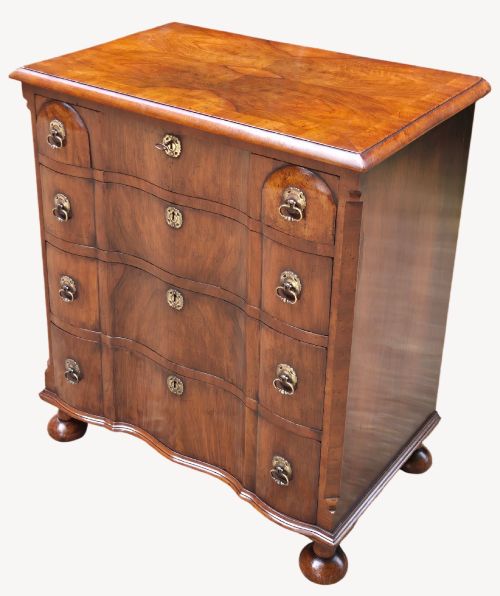
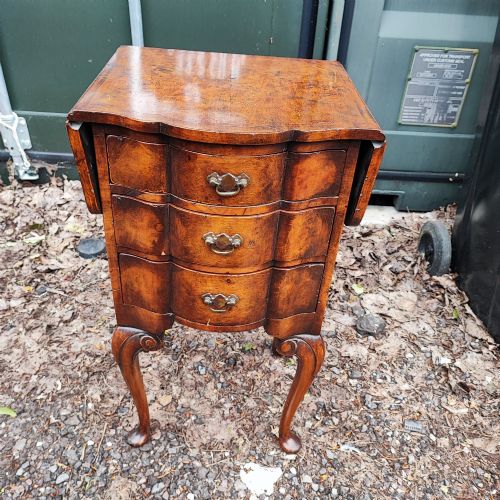
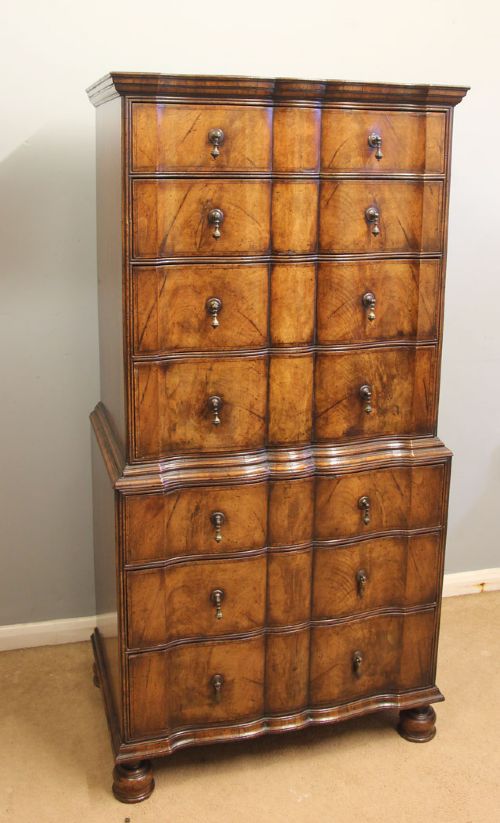
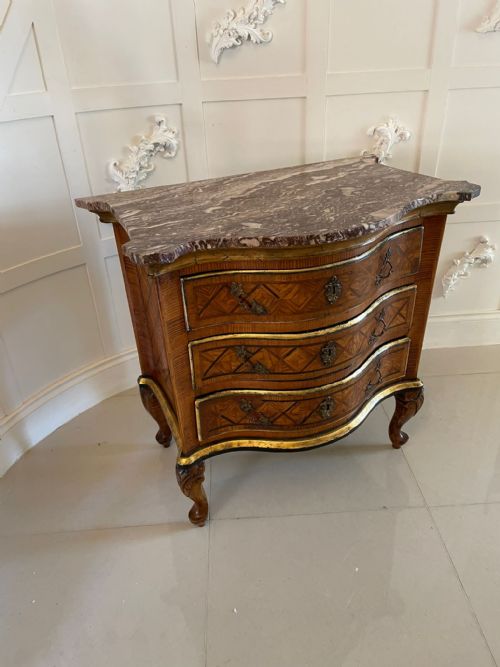
A shaped front chest departs from the standard flat-faced drawer unit by employing undulating, curved, or bowed lines across its drawer fronts and carcase. When you search for a shaped front chest, you encounter diverse regional interpretations ranging from Dutch and Italian bomb commodes to English serpentine and bow-front designs spanning the eighteenth through the early twentieth centuries.
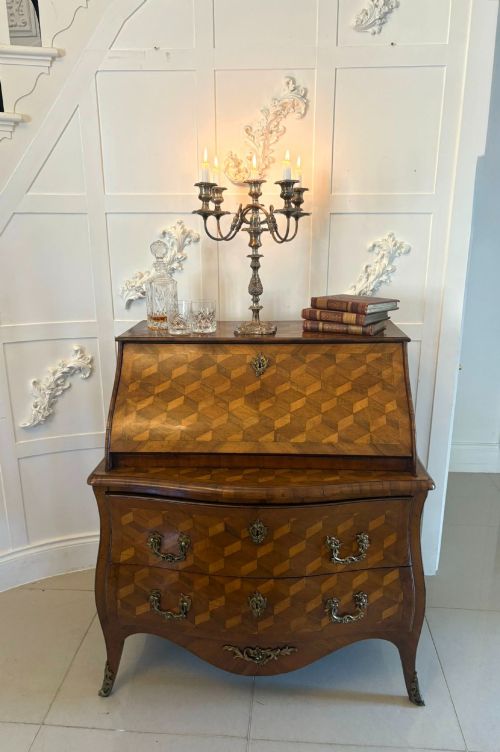
Walnut, burr walnut, and mahogany dominate the offerings, frequently enhanced by floral marquetry, parquetry inlay, or figured grain patterns. These pieces manifest primarily as chests of drawers, commodes, and writing bureaux, presenting varying profiles from gentle curves to dramatic swelling contours.
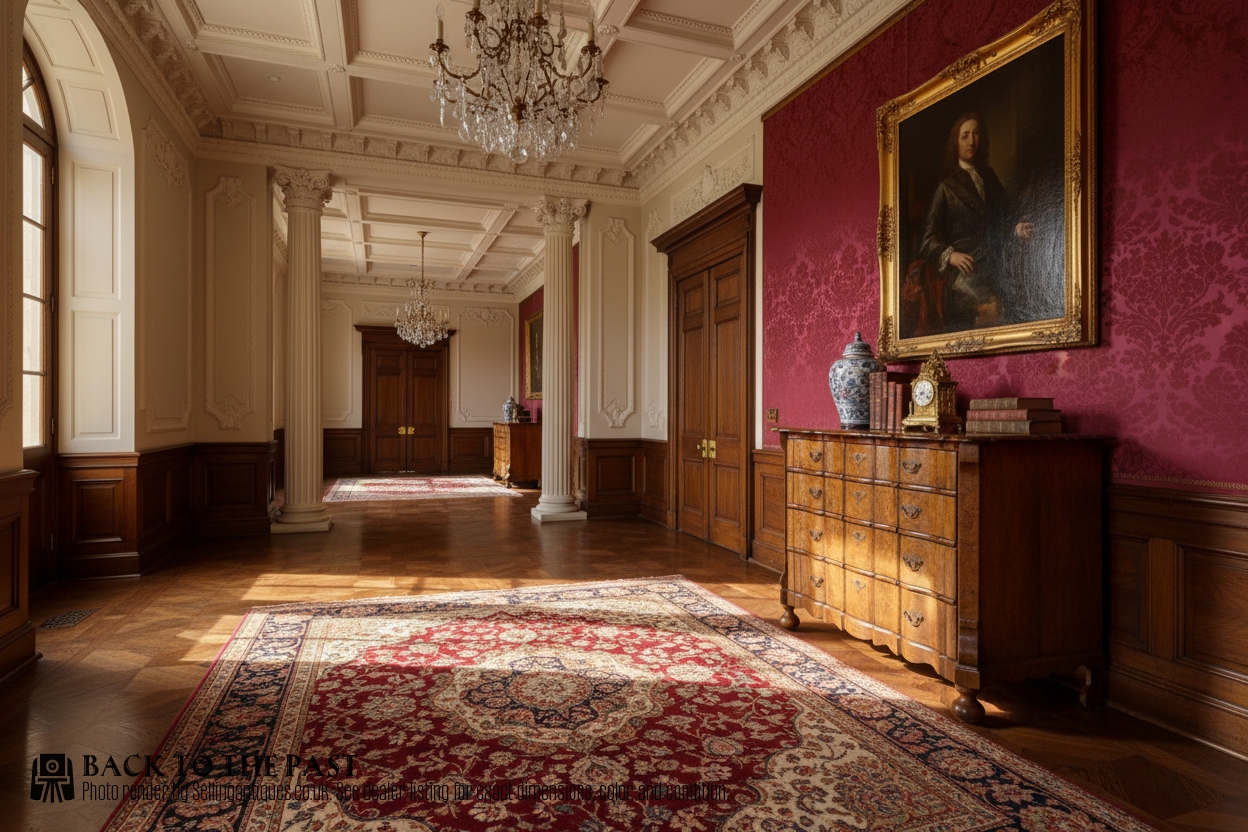
Distinctions in quality
The sophistication of the timber figure and the precision of the veneer work largely determine the standing of an individual piece. Highly figured burr walnut and meticulous floral marquetry separate exceptional examples from simpler oak or plain walnut iterations.
Listings demonstrate that eighteenth-century examples frequently employ burr walnut and mahogany, whilst later nineteenth-century pieces introduce figured mahogany and oak.
Druce & Co
The Shaped Front Chest Glossary
- Serpentine
- A front profile that curves outward in the centre and inward toward the ends, creating an elongated 'S' shape. This configuration demands high precision from the cabinetmaker.
- Bombe
- A swollen, bulging contour where the sides and front of the furniture swell outward toward the base. This exuberant form is frequently seen in continental European pieces.
- Marquetry
- Decorative veneer work formed by fitting together small pieces of various coloured woods to create pictorial or floral designs. Artisans employed this technique extensively on eighteenth-century bureau desks.
- Parquetry
- Geometric mosaic woodwork used for decorative inlay on furniture surfaces. It creates repeating patterns like cubes or zig-zags across the drawer fronts.
- Commode
- A low chest of drawers or cabinet originating in France. The term frequently applies to decorative continental pieces with shaped fronts and marble tops.
Shaped Front Chest: Frequently Asked Questions
How do I clean a burr walnut surface?
Dust the piece regularly with a soft, dry cloth to prevent dirt accumulation in the grain. Avoid modern liquid polishes containing silicone, opting instead for traditional beeswax applied sparingly and buffed gently.
Keep the furniture away from direct sunlight and heat sources to prevent the delicate burr veneers from drying out and splitting over time.
Where should I place a shaped chest?
Position the piece against a principal wall in a drawing room, hallway, or bedroom where its curved silhouette can be appreciated from multiple angles. Ensure adequate clearance around the carcase so doors or fall-fronts operate without obstruction.
Because these chests often feature dramatic wood grain or marquetry, placing them in moderate, stable lighting enhances the natural depth of the timber.
How do I distinguish an eighteenth-century piece?
Examine the drawer construction for hand-cut dovetails and timber linings appropriate to the period, such as oak or pine drawer sides. Look for subtle irregularities in the symmetry that indicate hand-tooling rather than machine production.
Check the timber patination and the wear around the handles and feet, which should display the gradual softening associated with generations of handling.
What is the difference between serpentine and bomb?
A serpentine front moves in undulating waves across the facade, featuring alternating concave and convex curves along a generally vertical plane. It maintains a relatively flat side profile whilst animating the front elevation.
In contrast, a bomb shape swells outward dramatically on both the front and the sides, presenting a heavily rounded, bulbous silhouette that pushes outward in all directions.