
Walnut Serpentine Drawers
Walnut serpentine drawers bring together undulating fronts and rich cabinet timber, offering both generous storage and sophisticated focal points for traditional rooms.
Walnut Serpentine Drawers
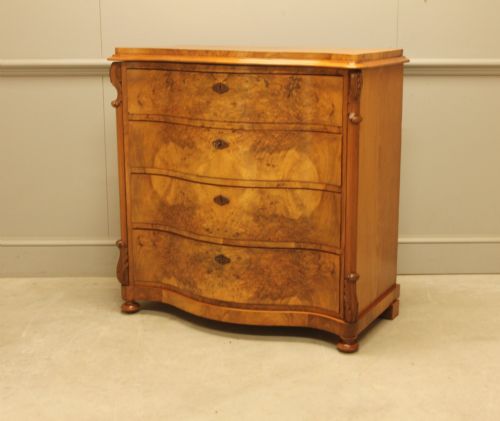
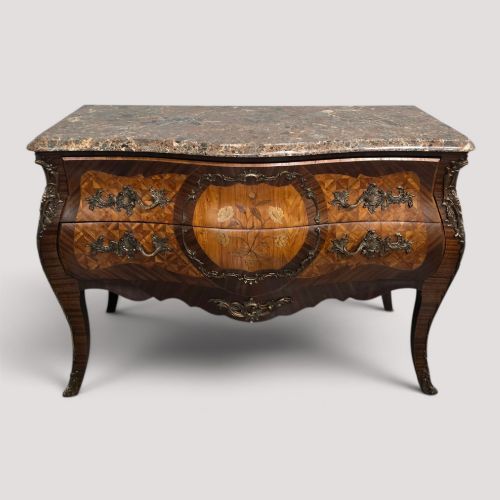
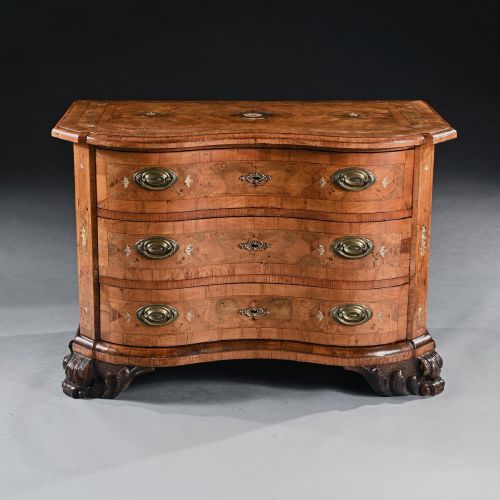
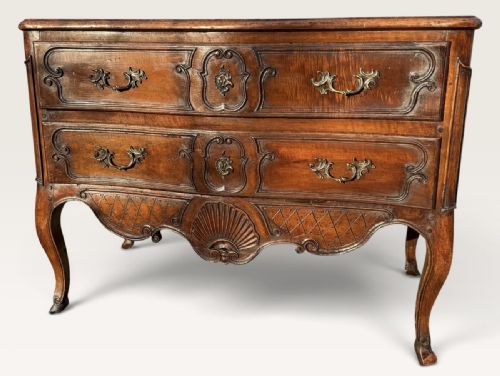
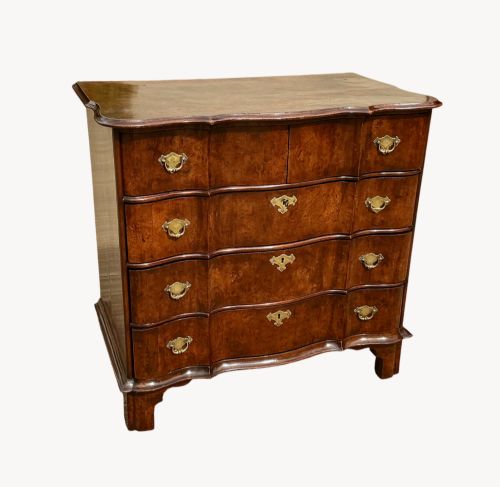
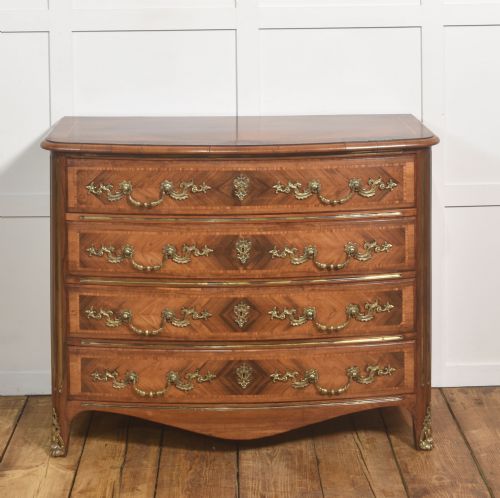
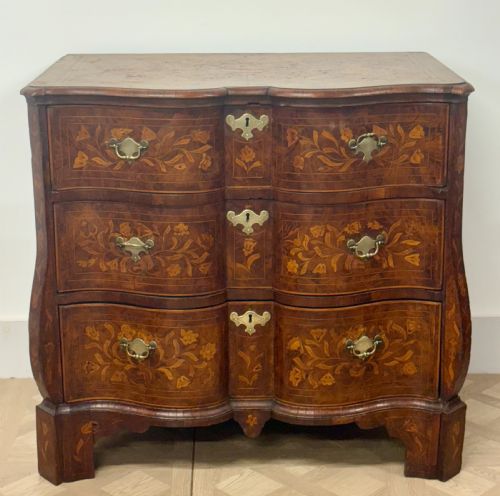
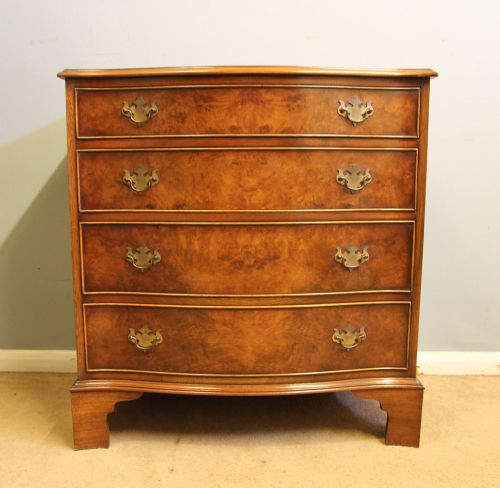
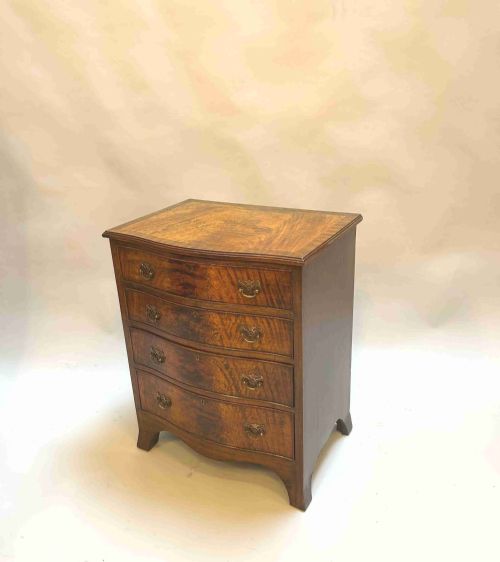
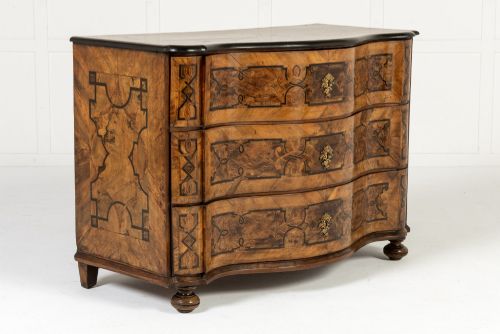
When searching for walnut serpentine drawers, buyers encounter a distinct category of case furniture defined by a sweeping, curved front that alternates between convex and concave sections. The selection spans grand eighteenth-century continental commodes to later revival pieces from the Edwardian era and the nineteen-twenties.
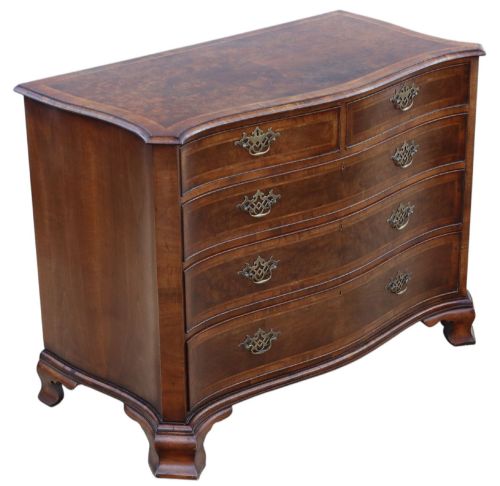
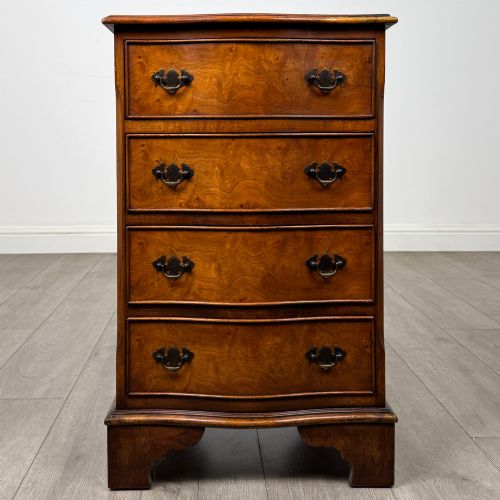
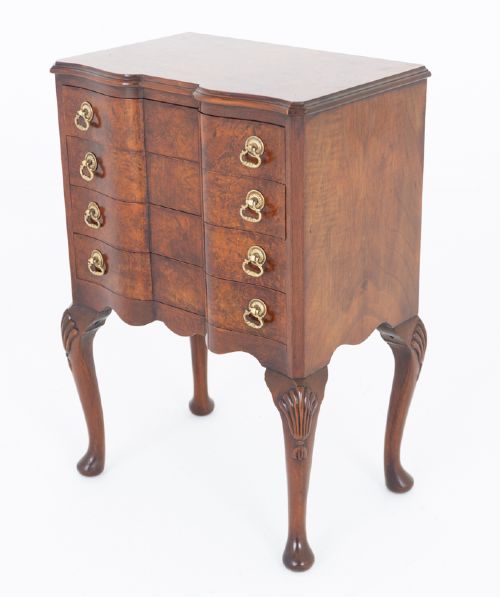
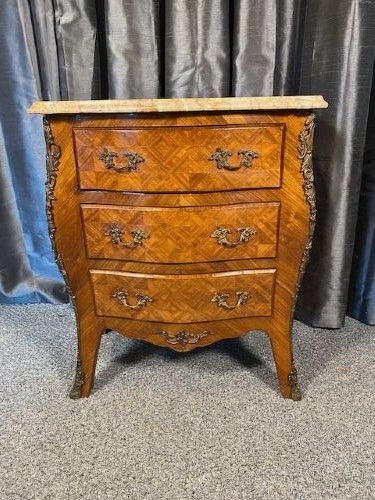
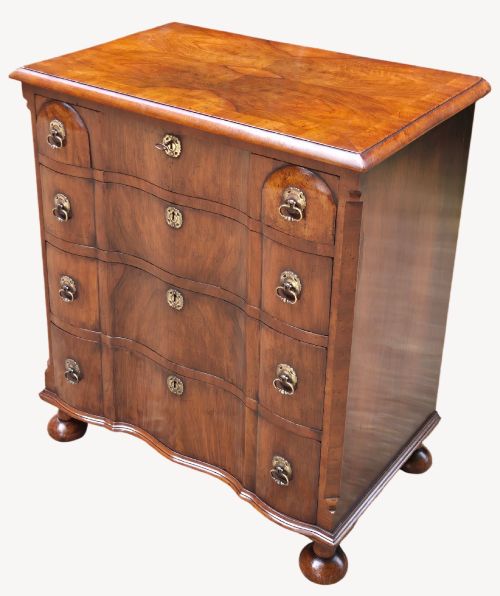
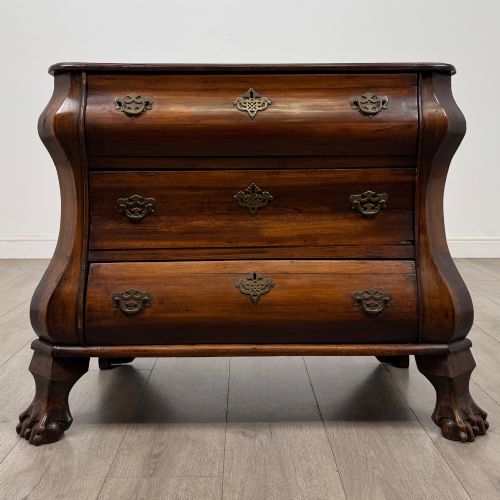
The most common forms on this page are substantial chests of drawers, often featuring burr walnut veneers, alongside smaller bedside tables, commodes, and chests on chests. These pieces originate from diverse European workshops, including English, French, Dutch, and German makers adhering to regional design idioms.
Period examples range from eighteenth-century masterworks with intricate marquetry to early twentieth-century Georgian and Queen Anne style revivals. Each iteration utilises the inherent flexibility of the serpentine curve to catch light and create depth across the timber grain.
What varies in quality
The sophistication of the veneer selection largely dictates the visual appeal of a piece, with densely figured burr walnut commanding particular attention for its swirling patterns. Superior examples exhibit seamless continuity of grain matching across multiple drawers, demonstrating precise planning by the artisan.
The execution of the serpentine curve itself reveals the maker's skill, requiring harmonious proportions and crisp transitions between the convex and concave sweeps. Finer items incorporate meticulous hand-cut dovetailing in the drawer construction and well-fitted internal elements such as brushing slides.
Object forms span commodes, bedside tables, pedestal desks, and chests on chests, demonstrating diverse applications of the serpentine front.
The Walnut Serpentine Drawers Glossary
- Serpentine
- A front shape characterised by a central convex curve flanked by two concave sweeps, creating an undulating wave effect. This design requires advanced woodworking skill to execute cleanly across drawer fronts and frames.
- Burr walnut
- A veneer sliced from the woody growths on walnut trees, prized for its complex, swirling grain patterns. It adds rich texture and visual movement to the surface of fine case furniture.
- Crossbanding
- A narrow strip of veneer applied perpendicularly to the main grain direction around the edges of a drawer or top. This technique frames the primary wood and provides a clean border.
- Commode
- A low chest of drawers or cabinet originating in France, often featuring decorative mounts, marble tops, or elaborate marquetry. In historical contexts, it represents a stylish alternative to standard storage chests.
- Marquetry
- The art of applying decorative pieces of veneer to a structure to form intricate pictorial or geometric designs. Craftsmen use various tinted woods, metals, and ivories to achieve contrasting visual effects.
Walnut Serpentine Drawers: Frequently Asked Questions
How do I care for walnut furniture?
Keep walnut furniture away from direct sunlight and heat sources to prevent the wood from drying out and the veneers from lifting. Regular dusting with a soft, dry cloth maintains the finish without requiring heavy polishes.
Apply a traditional beeswax occasionally to nourish the timber and preserve its natural lustre. Avoid placing damp items directly onto the polished surfaces to protect the delicate grain underneath.
What is a brushing slide?
A brushing slide is a pull-out shelf integrated into the upper section of a chest of drawers, historically used for folding clothes or inspecting items. It sits discreetly above the topmost drawer and matches the surrounding veneer.
When extended, it provides a convenient temporary surface without permanently altering the footprint of the furniture.
How do I distinguish eighteenth-century pieces from later revivals?
Eighteenth-century pieces typically display hand-cut dovetails, older secondary woods like oak, and signs of hand-planing on the internal backboards. The patination develops naturally over centuries through handling and environmental exposure.
Twentieth-century revival pieces often exhibit more standardised construction methods and machine-cut elements while faithfully copying earlier stylistic proportions.
Where did serpentine furniture originate?
Serpentine furniture gained widespread prominence during the Baroque and Rococo periods, particularly within French and Italian workshops. Master cabinetmakers adopted the curved front to introduce movement and architectural drama to interior spaces.
English and Dutch makers soon embraced the form, adapting the undulating lines to suit regional tastes and domestic proportions.