


Shaped Fireplace Mirror
A shaped fireplace mirror centres a room, bringing light and proportion above a mantelpiece.
Shaped Fireplace Mirror
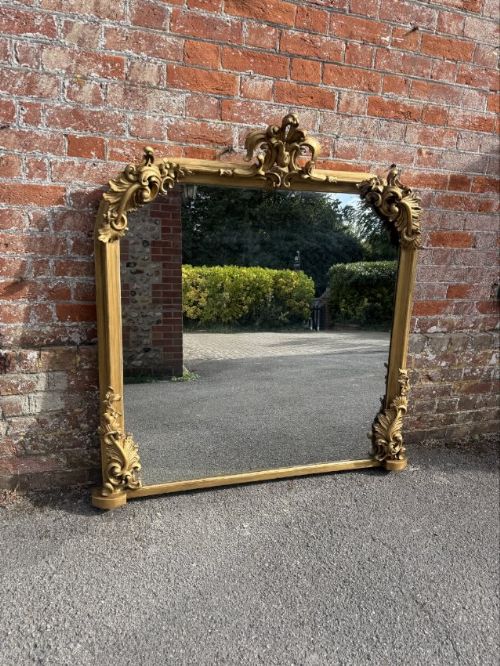
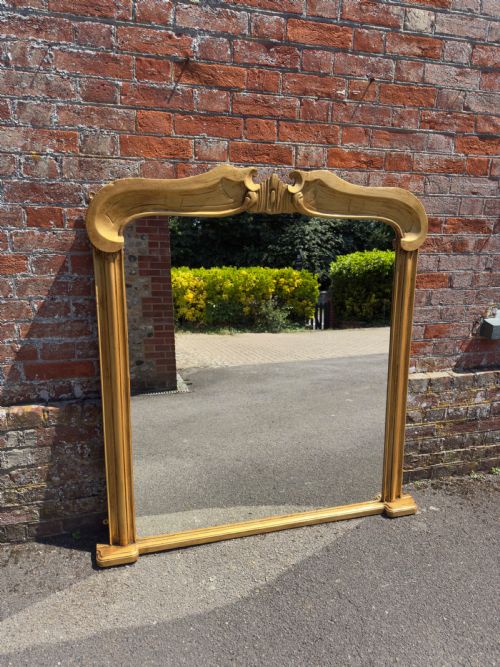
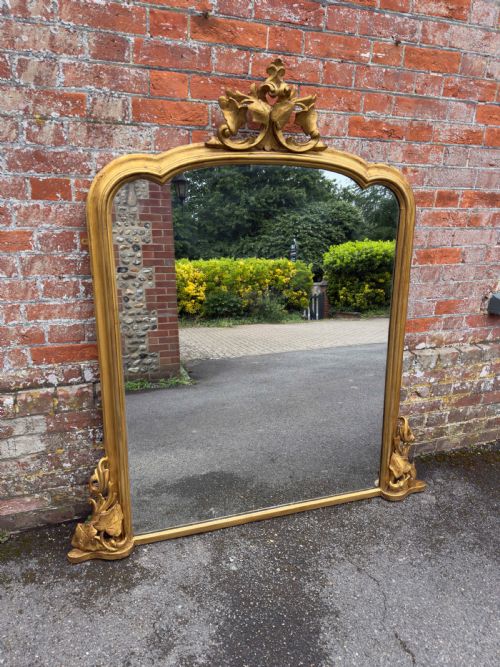
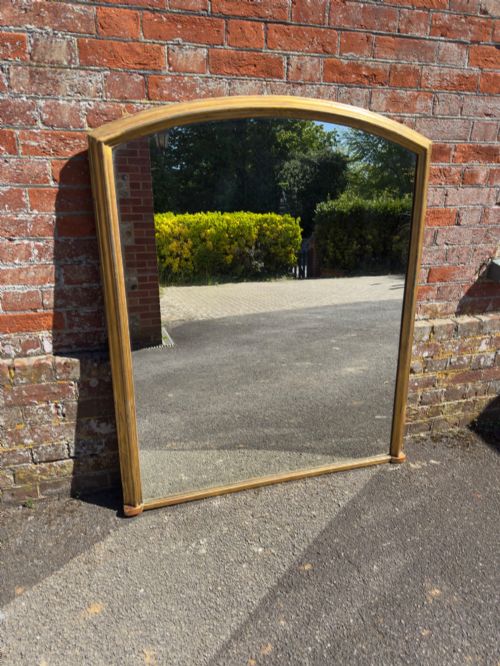
A shaped fireplace mirror is a large architectural glass designed to hang directly above a hearth. When searching for a shaped fireplace mirror, buyers encounter grand overmantel mirrors scaled for nineteenth-century chimney breasts.
The pieces present distinctive arched, serpentine, or hourglass silhouettes that break away from simple rectangles. Victorian examples dominate the selection, bringing considerable presence to a reception room.
Origins stretch from English workshops to French chateau interpretations, spanning the decades from the mid-nineteenth century into the Edwardian era. These large looking glasses served to reflect candlelight and brighten dark Victorian parlours.
Materials and construction
Carved wood provides the structural foundation for the frames, shaped by hand before receiving ornamental decoration. Artisans applied layers of gesso over the timber base to build up crisp relief details and curves.
Gold leaf and giltwood finishes impart a brilliant metallic lustre across the Victorian designs, while select examples carry painted surfaces or dark lacquer. Mirror glass is set within these ornate surrounds, often retaining original foxing and silvering characteristics.
Current listings feature nineteenth-century English and French pieces spanning the Victorian and Edwardian periods.
Quality variations
Depth and crispness of the carved wood and gesso ornamentation separate exceptional frames from simpler versions. Relief work that retains sharp contours demonstrates superior craftsmanship during the moulding process.
The integrity of the original giltwood or painted surface dictates the visual impact of the piece. Surviving gold leaf applied over gesso holds greater aesthetic weight than later repainted surfaces.
The Shaped Fireplace Mirror Glossary
- Overmantel mirror
- A large looking glass specifically built to sit upon the mantel shelf of a fireplace. These pieces often feature wide frames designed to fill the chimney breast wall.
- Gesso
- A plaster-like mixture applied to a wooden frame to create a smooth surface for gilding or painting. It allows craftsmen to model intricate scrollwork and beaded borders in high relief.
- Giltwood
- Timber covered with a thin layer of gold leaf. This material catches firelight and daylight to brighten period interiors.
- Hourglass shaped
- A silhouette curving inward at the waist before flaring at the top and base. This distinctive form appears frequently among nineteenth-century overmantel designs.
Shaped Fireplace Mirror: Frequently Asked Questions
How do I hang a heavy overmantel mirror?
These large mirrors require robust wall fixings anchored directly into masonry or secure studs. Professional installation is recommended due to the substantial weight of the timber and glass.
Weight distribution across multiple brackets ensures the frame remains stable against the chimney breast without straining the hanging loops.
Are the mirror plates original?
Many Victorian pieces retain their original mirror glass, which often shows light oxidation and age spots. These natural imperfections confirm the antique status of the looking glass.
Replacement glass is occasionally fitted during restoration when the original silvering has deteriorated beyond preservation.
What styles are common in these mirrors?
Victorian Rococo Revival and French Chateau influences shape the majority of these designs. Elaborate curves, beaded framing, and architectural pediments define the aesthetic.
Later Edwardian pieces introduce simpler black lacquer and walnut treatments while maintaining the traditional overmantel format.
Can these mirrors stand on the mantel shelf?
Most overmantel mirrors are designed to be hung securely on the wall just above the shelf rather than resting unsecured. Their significant height makes wall mounting essential for safety.
Weight rests primarily on wall brackets while the base sits flush or slightly above the wooden mantel.