



Sevres Porcelain Mantel Clock
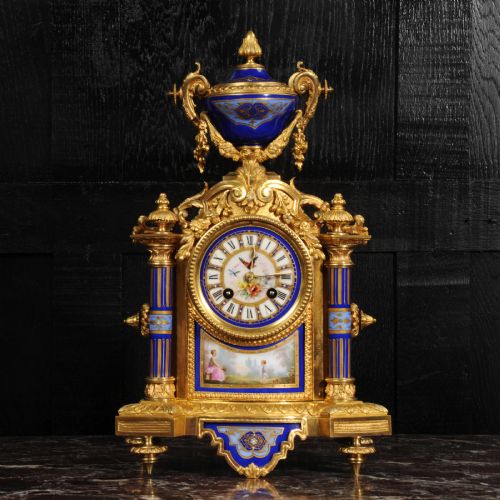
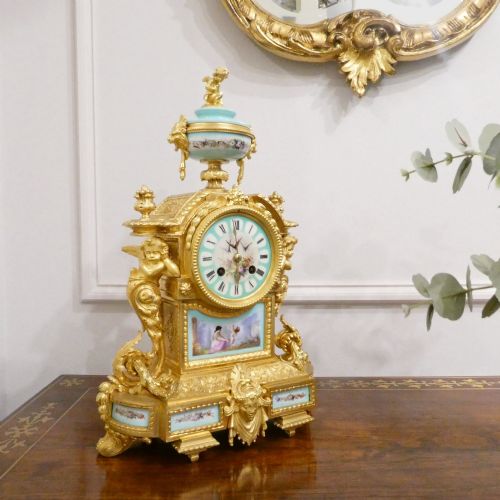
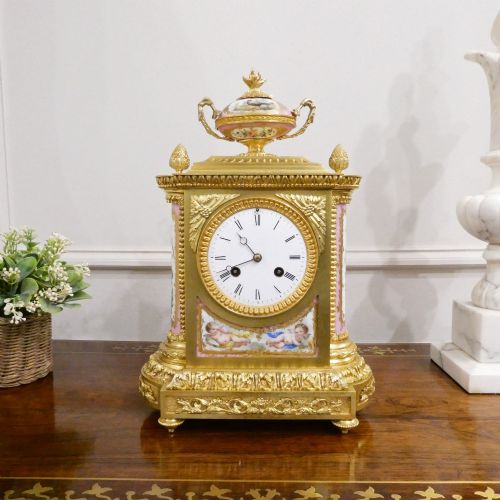
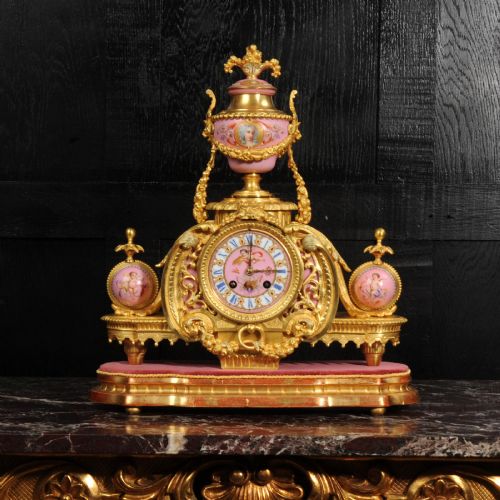
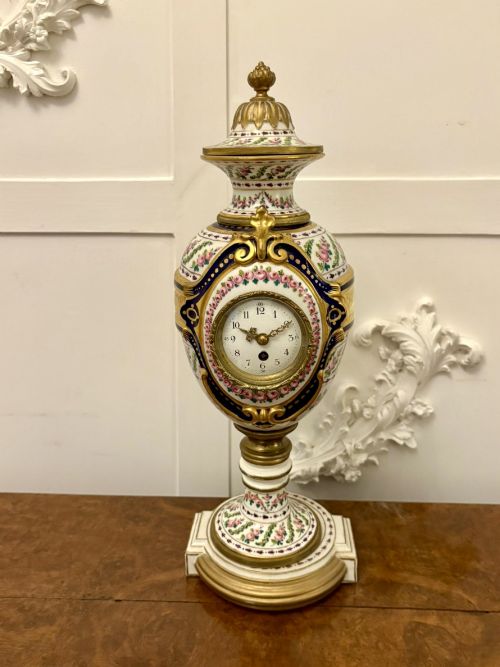
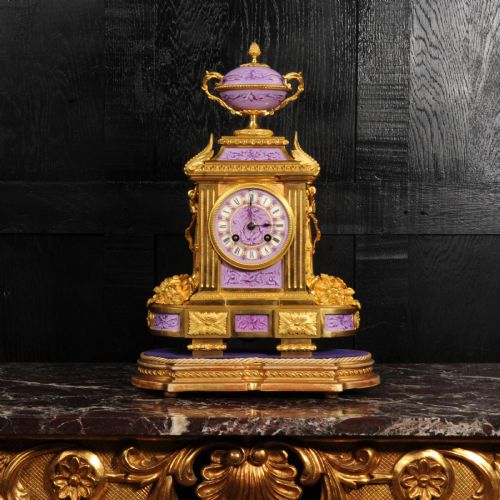
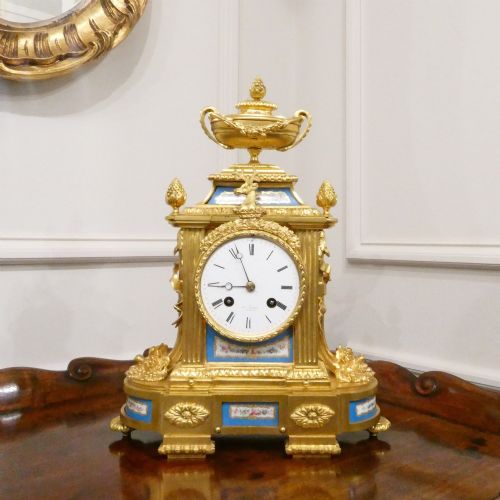
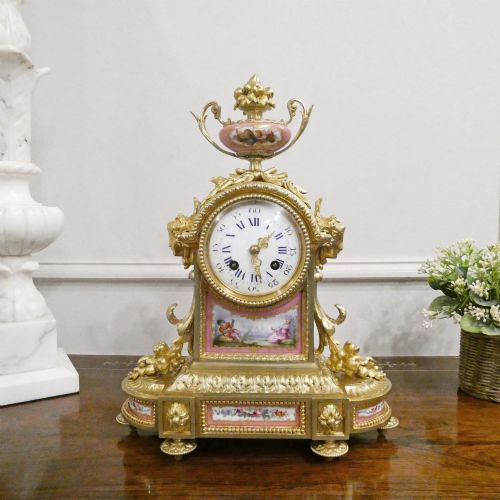
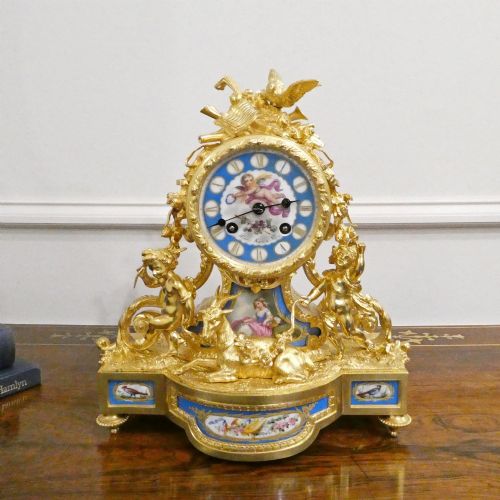
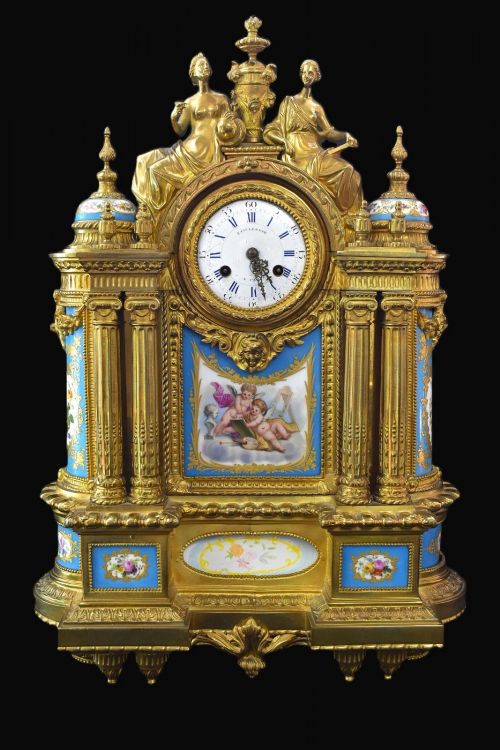
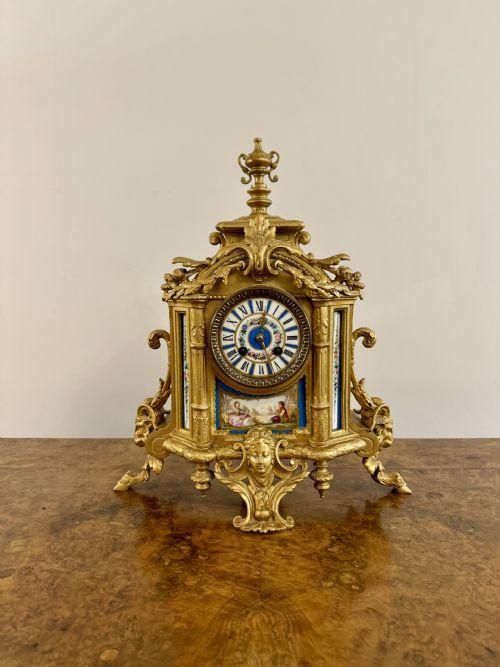
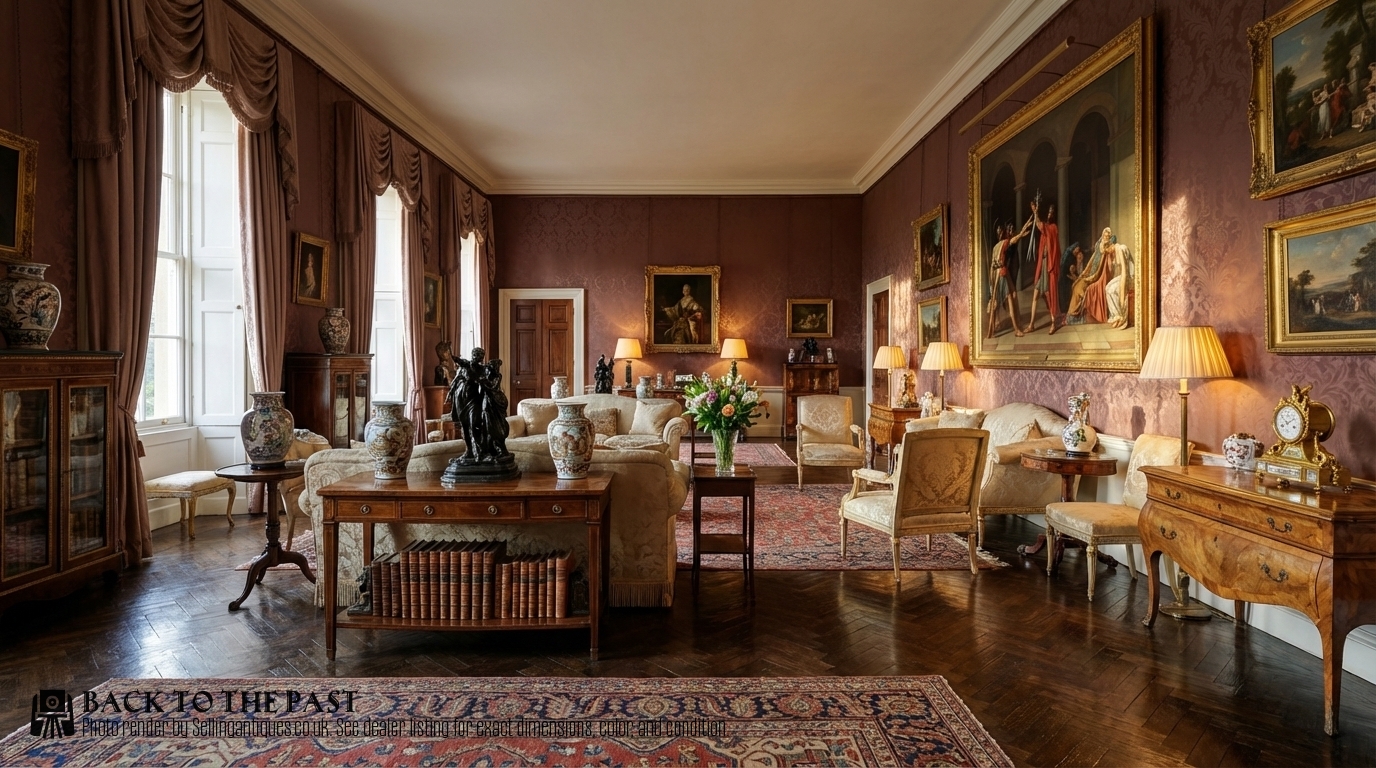
A sevres porcelain mantel clock combines cast gilt bronze with hand-painted ceramic panels to anchor a grand nineteenth-century interior.
Sevres Porcelain Mantel Clock
When you search for a sevres porcelain mantel clock, you encounter ornate nineteenth-century French horology built around ceramic plaques and gilt mounts. The most common examples on this page date from the decades between eighteen-fifty and eighteen-eighty during the Victorian and Napoleon III periods. These pieces take various forms including drum heads, urns, and lyres, frequently accompanied by matching garniture sets housed under glass domes.
Makers and retailers of the era housed mechanical movements inside heavy metal housings decorated in the French Rococo Revival or Louis XVI style. The porcelain elements often display hand-painted scenes or floral motifs framed by rich ormolu foliage. Collectors find these objects in distinct revival aesthetics that reflect nineteenth-century interpretations of earlier French monarchy designs.
How they were made
Craftsmen built these clocks by combining fire-gilded bronze or ormolu mounts with ceramic body panels and enamel dial faces. Foundries cast the metal components in detailed moulds before applying mercury gilding to achieve a deep, durable shine. Porcelain plaques underwent hand-painting with mineral colours and subsequent kiln firing to set the glaze before mounting into the metal chassis.
Clockmakers fitted mechanical brass movements driven by springs or pendulums behind the decorated dials, integrating escapements produced by specialised Parisian workshops. Wood carcasses occasionally provided internal structural support beneath the heavy metal and ceramic exterior cladding.
Some clocks feature delicate glass domes so heavy they require two people just to lift them off for dusting.
What varies in quality
The standard of a sevres porcelain mantel clock depends heavily on the crispness of the bronze chasing and the artistic merit of the painted ceramic panels. Fine examples display deeply sculpted ormolu mounts with hand-chiseled detailing, whereas simpler versions rely on smoother, cast-only surfaces. The intricacy of the movement and the reputation of the horologist also dictate the standing of the piece within the nineteenth-century hierarchy.
Cohesion between the clock body and any accompanying garniture urns or candelabra indicates superior workshop production. Pieces bearing signatures from established makers demonstrate a higher grade of mechanical reliability and artistic execution than unsigned factory output.
Japy Freres·Jean-Baptiste Delettrez·Achille Brocot·Henry Marc·Etienne Lenoir·PH Mourey·Le Roy Et Fils
The Sevres Porcelain Mantel Clock Glossary
- Ormolu
- A technique of applying finely ground high-carat gold to a bronze base using a mercury amalgam, creating a rich golden finish. This surface treatment defines the primary metallic appearance of many nineteenth-century French clock cases.
- Garniture
- A set of decorative matching objects, typically a clock flanked by urns or candelabra designed to sit together on a mantelpiece. These groupings share matching porcelain panels and ormolu mounts.
- Bleu de Roi
- A deep, rich royal blue ceramic glaze frequently utilised as a backdrop for hand-painted gilt decoration on porcelain panels. This specific shade appears widely across nineteenth-century French decorative arts.
- Drum head
- A clock configuration where the circular movement housing sits atop a sculptural plinth, resembling the shape of a side drum. This form showcases the enamel dial and surrounding metal bezel prominently.
- Crystal regulator
- A mantel clock enclosed entirely by glass panels held within a brass or gilt frame, allowing light to pass through the movement. These pieces gained popularity during the later decades of the nineteenth century.
Sevres Porcelain Mantel Clock: Frequently Asked Questions
How do I wind a sevres porcelain mantel clock?
Wind the clock using the appropriate key inserted into the winding holes on the enamel dial, turning gently until resistance meets you. Care must be taken not to overwind the mainspring.
Ensure the pendulum is secured or engaged correctly according to whether the movement uses a suspension spring or thread suspension before setting the time.
Where should I place a heavy gilt clock?
Position the clock on a stable, level surface such as a reinforced mantelpiece or heavy sideboard capable of supporting substantial bronze and ceramic weight. Avoid areas exposed to direct sunlight or fluctuating temperatures.
Keep the piece away from busy household pathways where accidental bumps might dislodge the delicate glass domes or garniture sidepieces.
How do I identify a Napoleon III clock?
Look for the characteristic heavy ormolu mounts, exuberant revival styling, and deep blue porcelain panels typical of the French Second Empire period. These clocks often feature robust proportions and maker signatures active during the eighteen-fifties to eighteen-eighties.
Compare the decorative motifs against Louis XVI or Rococo Revival design vocabularies to determine the specific aesthetic influence employed by the workshop.
What maintenance do antique clock movements need?
Antique clock movements benefit from professional cleaning and lubrication every few years to prevent wear on the brass gears and pivots. Dust accumulation inside the case should be minimised by keeping the glass or back door properly sealed.
Avoid applying household oils or lubricants to the movement components, as incorrect substances attract dirt and gum up the escapement.