


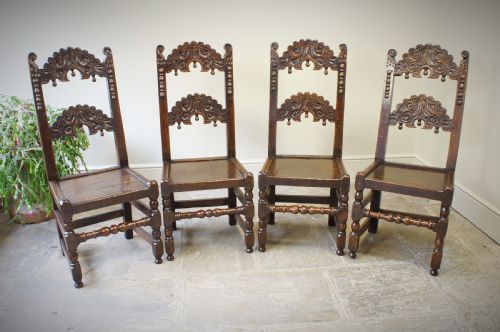


Seventeenth Century Oak Backstools
Seventeenth century oak backstools are sturdy, high-backed seating from the 17th century that bring grounded historical character to a room.
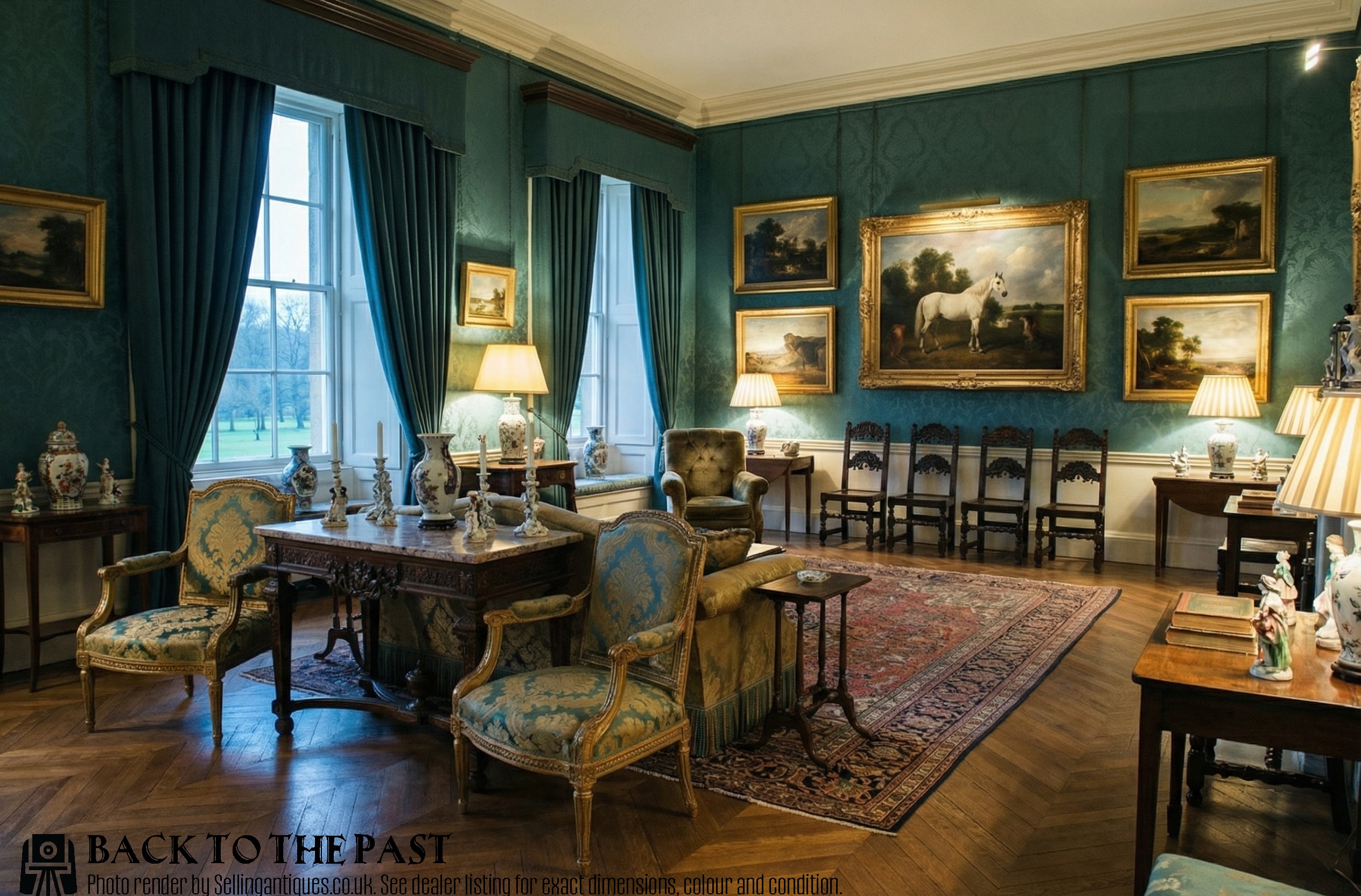
Seventeenth Century Oak Backstools
Seventeenth century oak backstools are traditional side and dining chairs designed without arms, standing upright to suit the domestic interiors of the period. Buyers find both single examples and matched sets, including regional variations from Lancashire, Yorkshire, and Wales.
Most pieces seen here belong to the Jacobean and vernacular traditions of the seventeenth century. They serve as functional seating that carries distinct architectural presence through panelled backs and sturdy frames.
How they were made
Craftsmen built these seventeenth century oak backstools using solid oak timbers shaped with hand tools and joined using traditional pegged mortise and tenon joints. This rigid construction method ensures the framework remains robust over centuries of use.
Some examples incorporate tapestry upholstery or carved ornamentation across the woodwork to add texture and visual depth. The reliance on native oak defines the structural identity of these chairs.
All listed pieces date from the seventeenth century and utilise solid oak construction, occasionally featuring tapestry upholstery.
What varies in quality
Quality in seventeenth century oak backstools rests upon the crispness of the original timberwork and the integrity of the joined frame. Pieces retaining their early structural components without extensive replacement timber command greater attention from purists.
Regional distinctiveness also shapes the character of a chair, with specific carving styles from areas like South Yorkshire or North Wales marking out particular workshops. The depth and execution of carved details separate standard utility chairs from finer regional examples.
The Seventeenth Century Oak Backstools Glossary
- Backstool
- An early term for a chair with a back but no arms. These pieces evolved from stools by the addition of an upright wooden backrest.
- Joined oak
- Furniture constructed using interlocking mortise and tenon joints secured with wooden pegs rather than nails. This method typifies seventeenth-century carpentry.
- Jacobean
- The stylistic period spanning the reign of James I and the broader seventeenth century, characterised by solid proportions and linear carved decoration. It forms a primary design reference for these chairs.
- Vernacular
- Objects made by local craftsmen for everyday use, reflecting regional materials and traditions rather than court fashions. Many surviving country chairs fall into this category.
Seventeenth Century Oak Backstools: Frequently Asked Questions
What is a backstool?
A backstool is an early form of seating that essentially adds a vertical backrest to a standard stool. These pieces function as upright chairs without arms.
They appear frequently in seventeenth-century contexts as practical dining or side seating.
Where were these chairs made?
These chairs originate from various British regions, with specific examples associated with Yorkshire, Lancashire, and North Wales. Local craftsmen utilised native timber and regional carving motifs.
Regional traits help specialists attribute pieces to particular workshops or districts.
How do I live with oak backstools?
Seventeenth century oak backstools suit modern interiors as occasional side chairs or paired around a dining table. Their narrow footprint allows them to fit easily into hallways and studies.
Keeping them away from direct heat sources helps preserve the historic timber.
How are periods identified?
Period identification relies on construction methods, timber patination, and stylistic markers such as carved motifs. Carpenters of the seventeenth century employed specific joinery techniques that changed over time.
Comparing structural details against dated examples clarifies the age of a piece.