
Jacobean Oak Side Chairs
Jacobean oak side chairs bring substantial timber, carved detail and centuries of domestic history straight into a room.
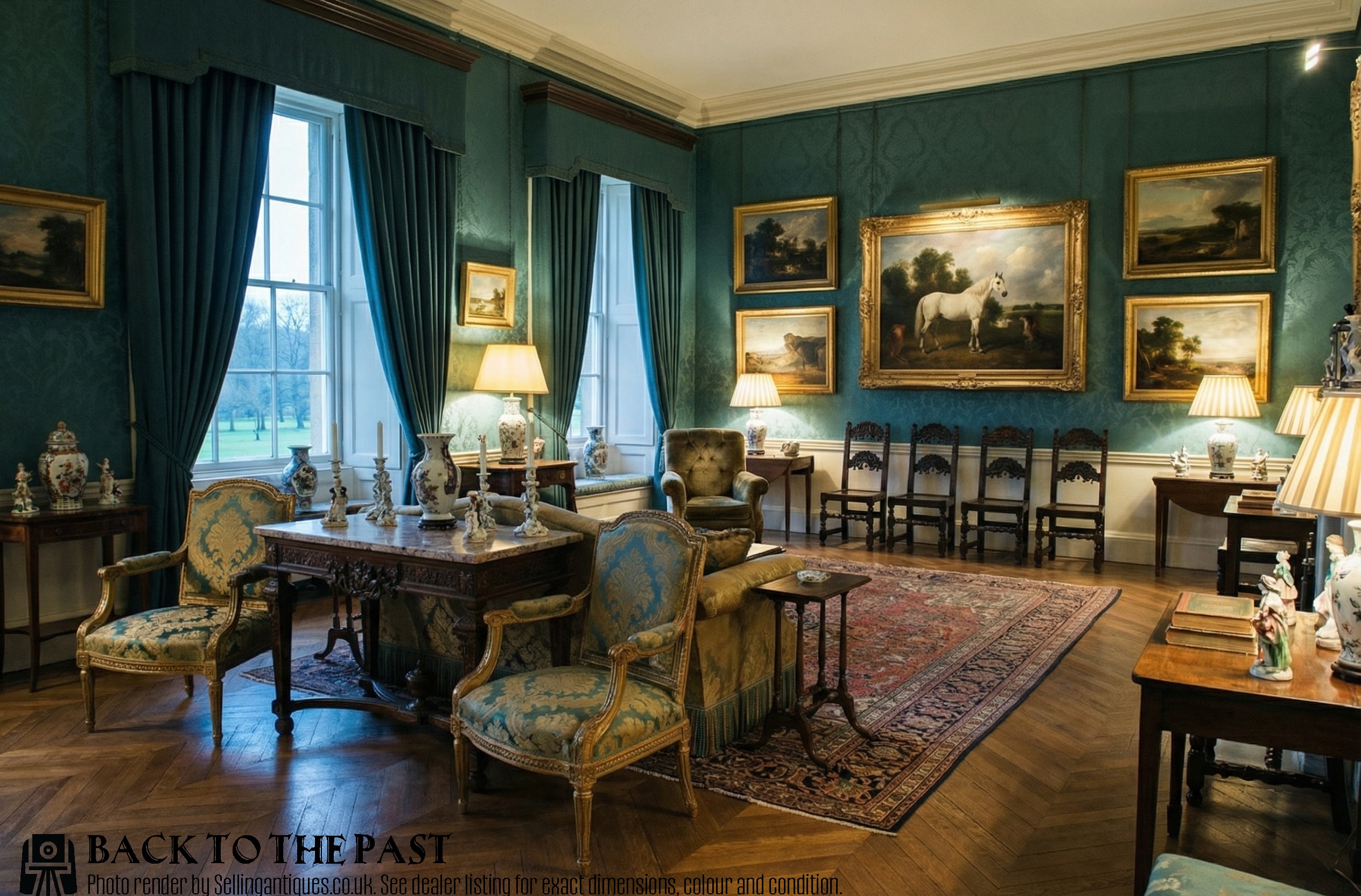
Jacobean Oak Side Chairs
Jacobean oak side chairs encompass both genuine seventeenth-century seating and later revival pieces produced across the nineteenth and twentieth centuries. Buyers searching for jacobean oak side chairs will encounter original period joinery alongside revival interpretations from the Victorian, Edwardian and later periods.
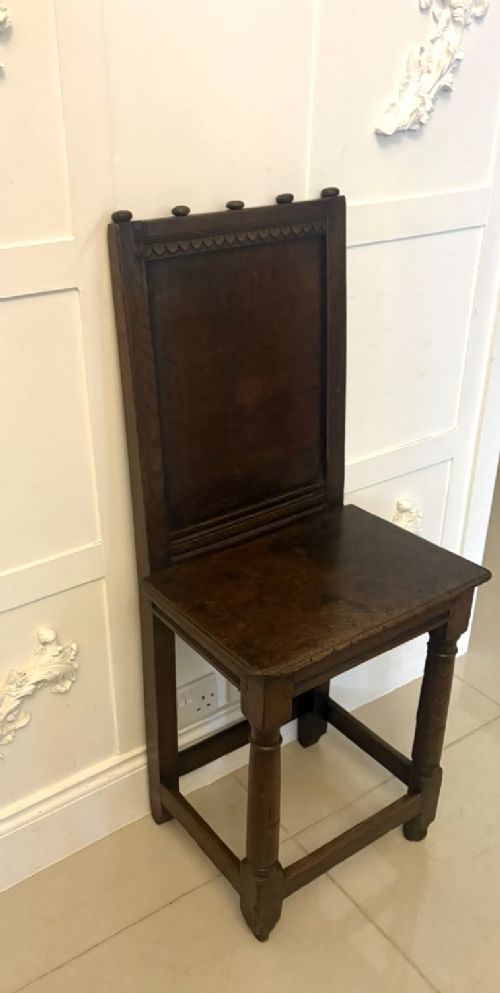
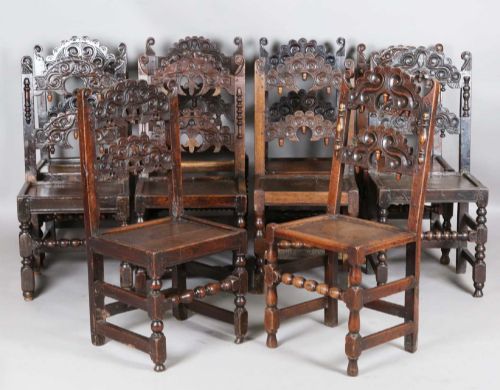
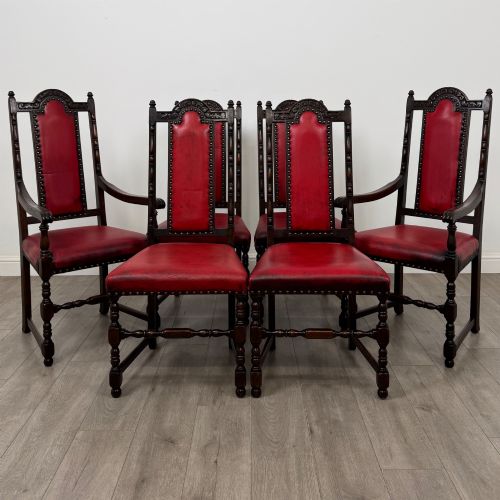
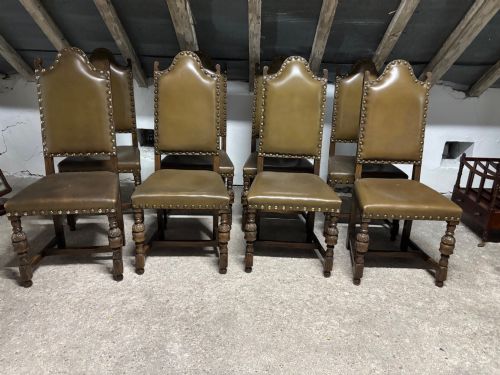
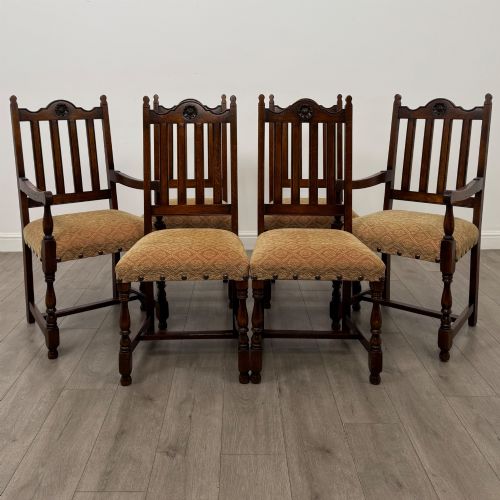
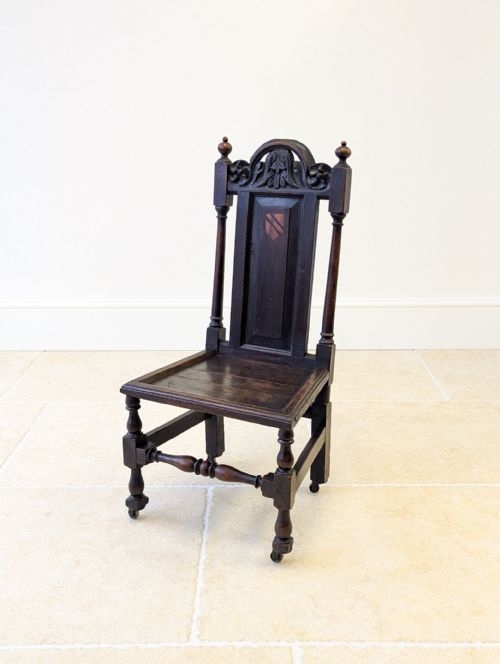
The selection ranges from sturdy Yorkshire and Derbyshire backstools to matched dining sets built in the twentieth century. Forms include hall chairs, high-back side chairs and corner chairs constructed primarily for domestic and formal use.
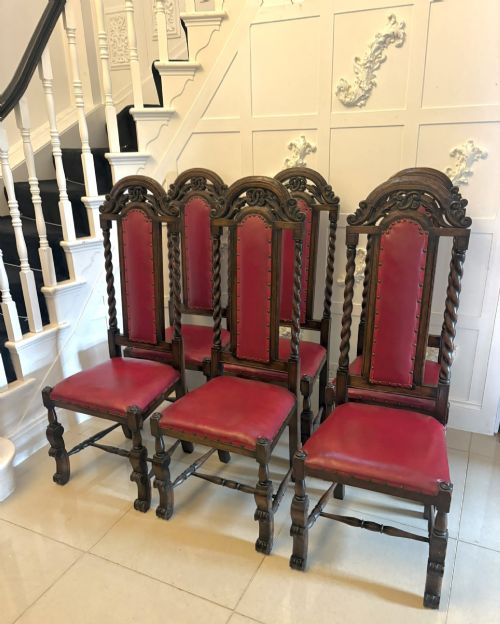
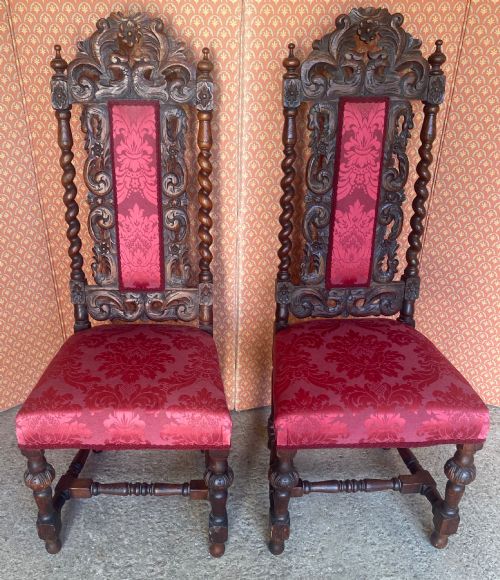
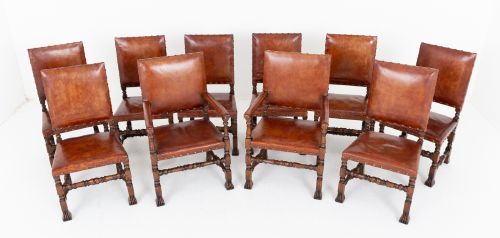
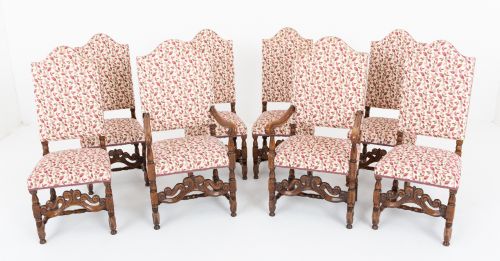
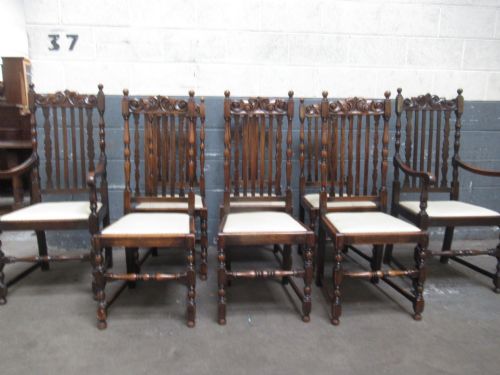
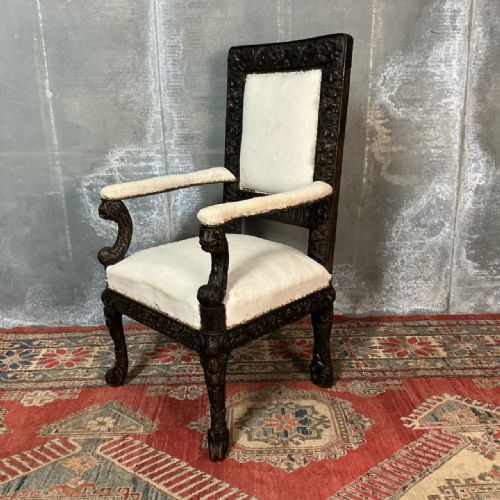
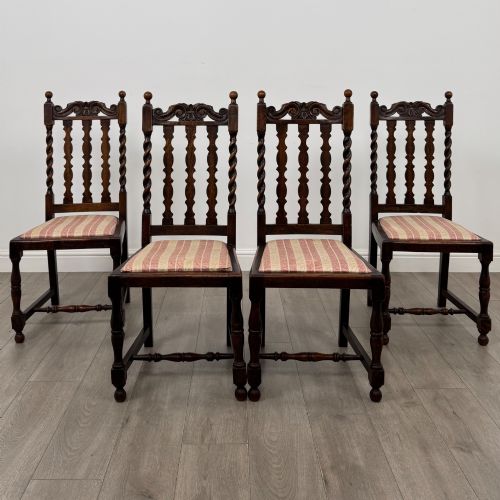
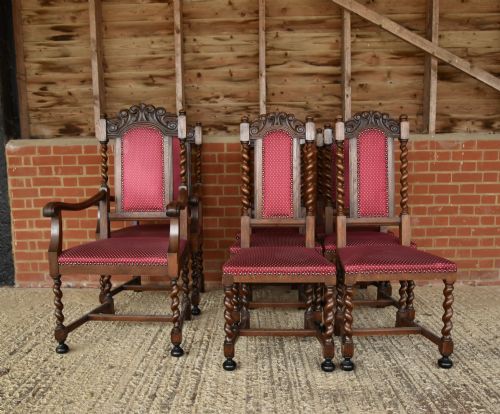
Period examples sit alongside revival pieces showing barley twist legs, carved cresting rails and panelled backs. Many items reflect subsequent design movements such as Carolean, Baroque and Gothic revivals while retaining their core oak construction.
Materials and construction
Construction relies heavily on solid oak, shaped through traditional joinery techniques such as mortise and tenon joints held with wooden pegs. Carved ornamentation, punchwork and moulding appear directly on the timber frames of both early originals and later revivals.
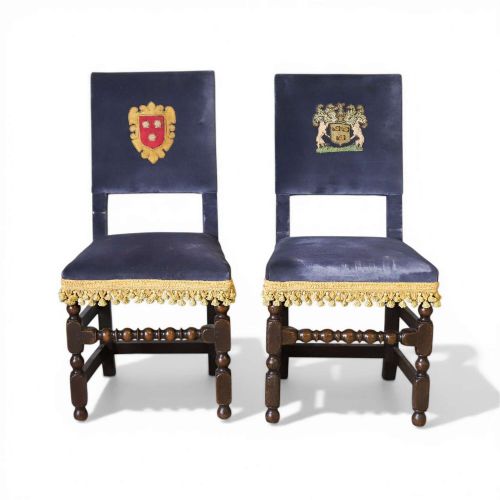
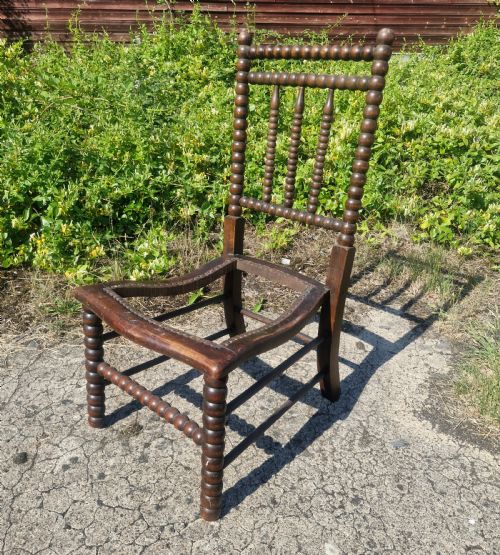
Seating surfaces vary from solid timber boards to woven cane, leather, and upholstered pads covered in fabric, textile or velvet. Turned elements such as barley twists and bobbin frames add structural complexity and decorative silhouette to the legs and stretchers.
Some seventeenth-century chairs carry heraldic crests and clan associations, proving that even dining seating once required proper social credentials.
Separating the ordinary from the exceptional
Quality rests in the crispness of the hand-carved detail and the integrity of the original timber frame. Depth of relief in carved panels and the balance of proportion distinguish finely executed examples from simpler production pieces.
Surface patination, timber density and the survival of original elements like cane seats or early upholstery dictate the standing of an individual piece. Consistency across a matched set elevates multi-chair groups above assembled assortments.
The Jacobean Oak Side Chairs Glossary
- Backstool
- An early term for an upholstered or panelled chair without arms, serving as the precursor to the modern side chair.
- Barley twist
- A spiral-turned wooden column used for legs and stretchers, popular during the seventeenth century and revived extensively in later periods.
- Joined oak
- Furniture constructed using mortise and tenon joints secured with wooden pegs rather than metal nails or screws.
- Derbyshire chair
- A regional seventeenth-century chair type characterised by open arcade backs and turned supports.
- Carolean
- The period of English furniture design spanning the reign of King Charles II, noted for rich carving and scrollwork.
Jacobean Oak Side Chairs: Frequently Asked Questions
Are these chairs comfortable for daily dining?
Original period chairs were built with upright wooden or panelled backs designed for posture rather than lounging.
Later revival sets often provide firmer padding or wider proportions suitable for contemporary dining use.
How do I distinguish a seventeenth-century original from a revival?
Original pieces display distinct tool marks, timber shrinkage and pegged joinery consistent with early hand-tool production.
Revival pieces from the Victorian and Edwardian eras show machine-cut precision, standardised turnings and later wood ageing.
Can I mix these chairs with modern tables?
The rich brown tones of oak and strong vertical lines complement minimalist or contemporary wooden tables.
Contrasting modern materials with historic carved timber creates a balanced focal point in a dining room.
What maintenance do oak and cane seats need?
Solid oak benefits from occasional treatment with appropriate beeswax to nourish the timber and preserve the natural surface sheen.
Cane seats require gentle cleaning and occasional dampening to maintain tension and prevent the natural fibres from becoming brittle.