
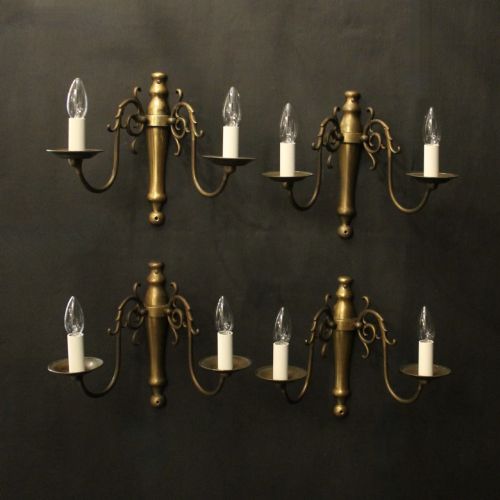
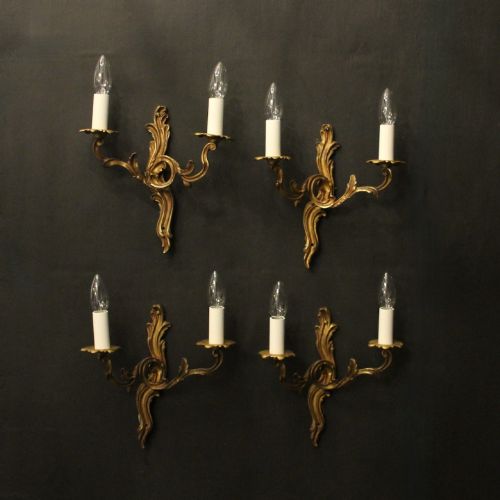
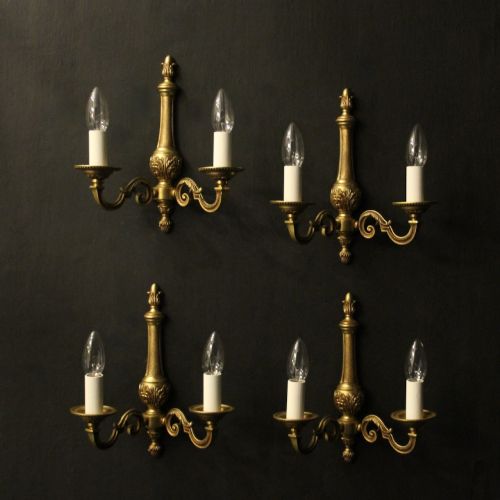
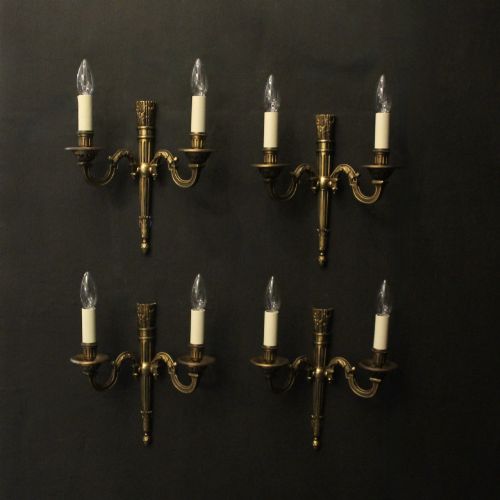
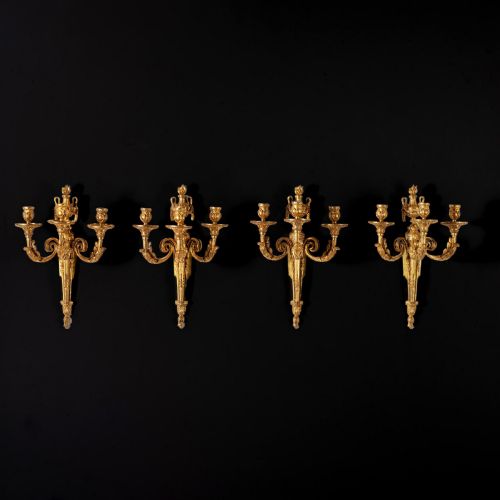
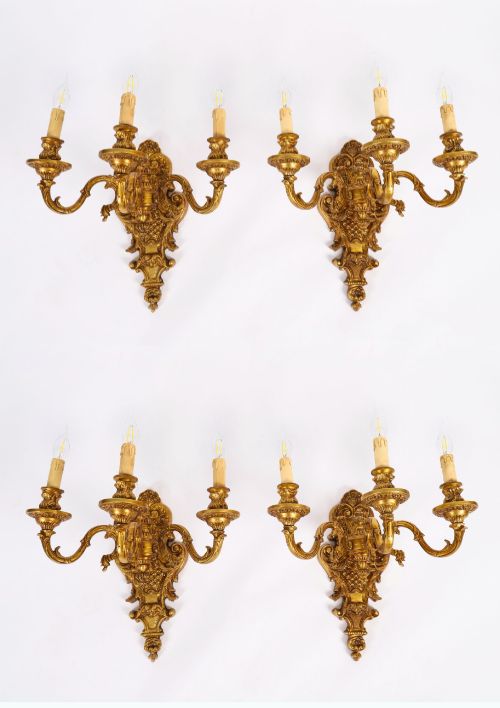
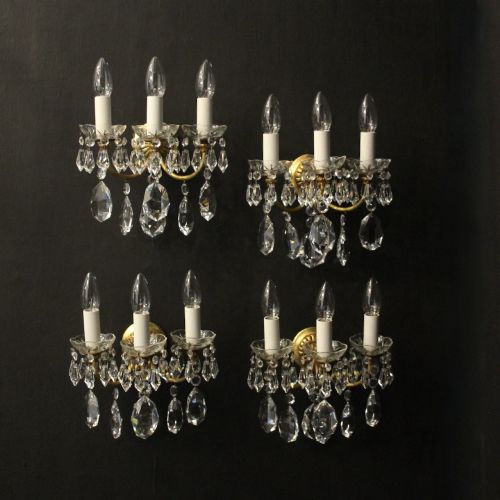
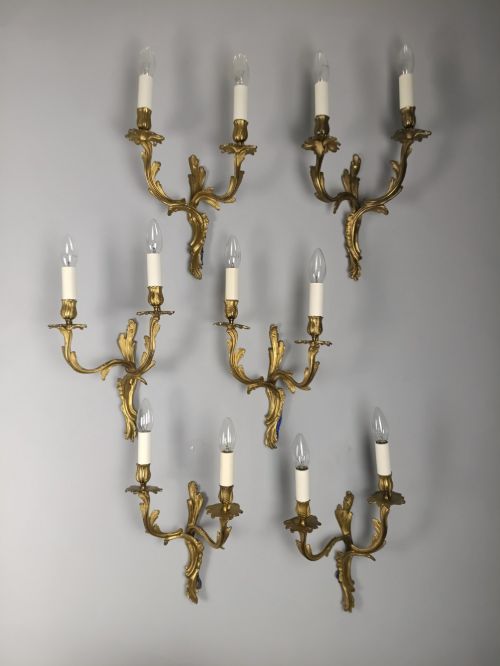
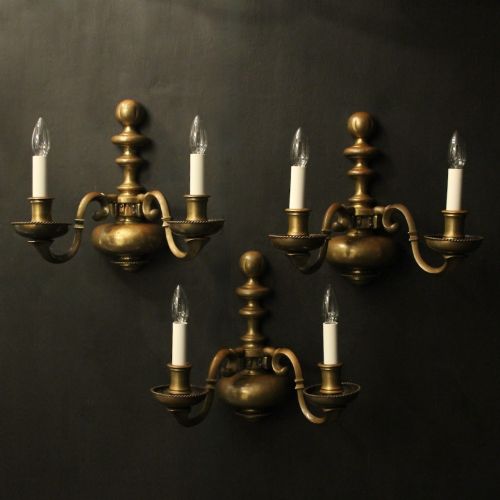
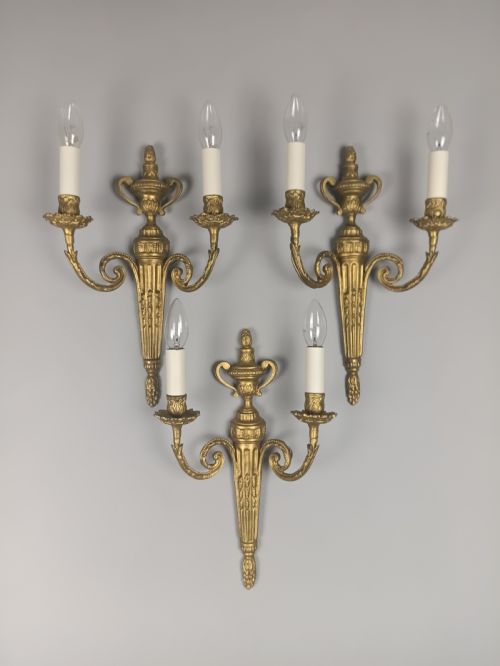
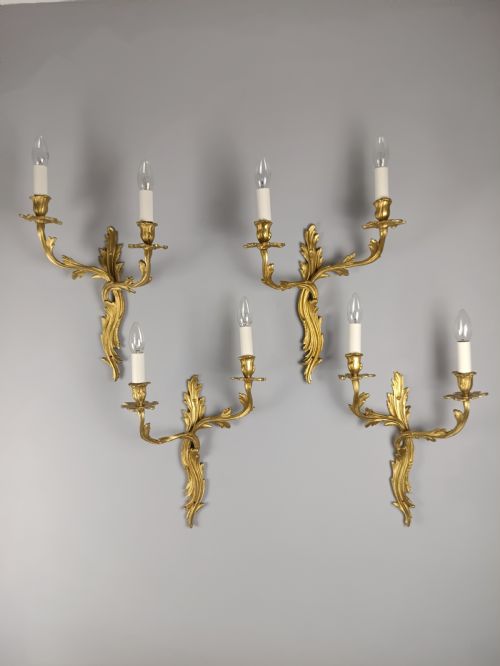
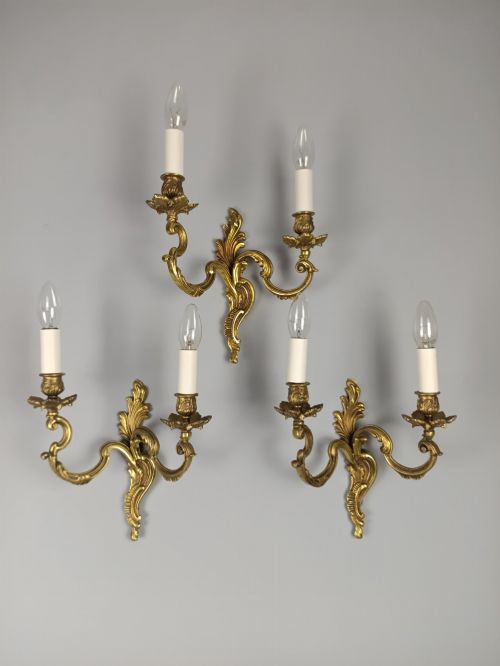
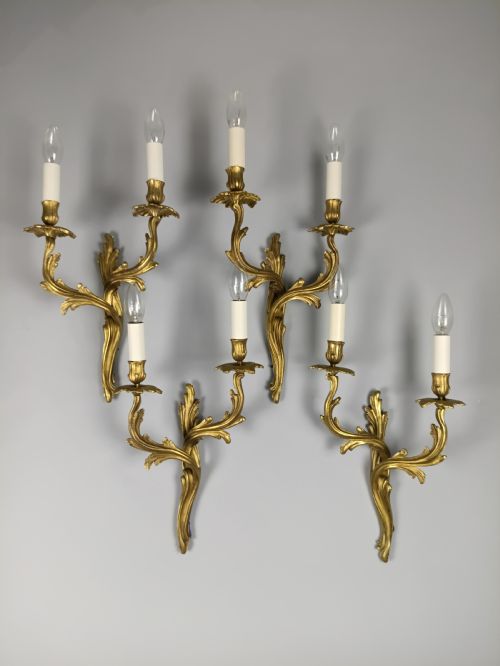
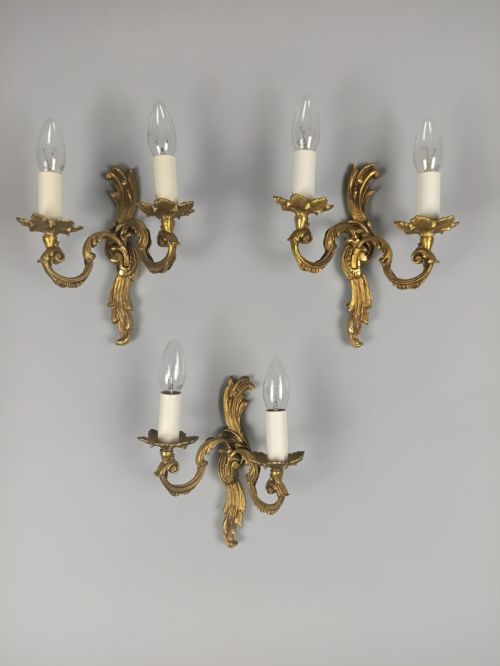
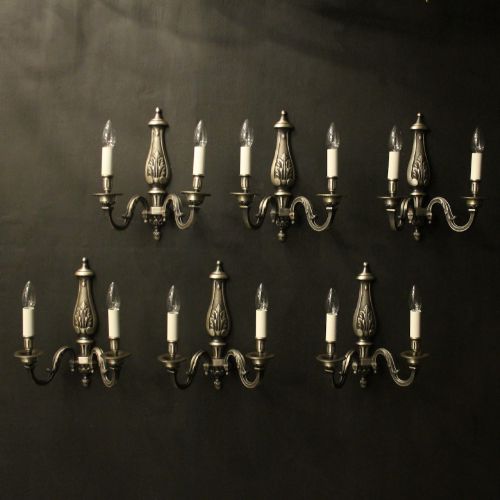
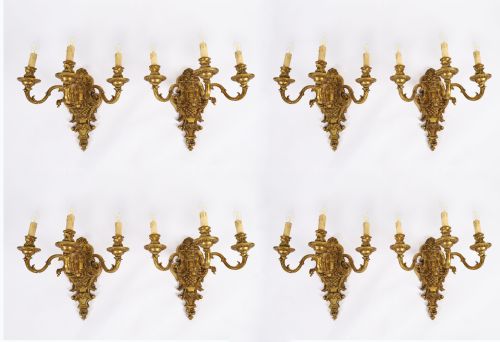
Set of Wall Lights
When furnishing a room with matched illumination, a set of wall lights brings balanced architectural presence and layered interior lighting from the eighteenth century to the art deco era.
Set of Wall Lights
The selections span from eighteenth-century ormolu castings to twentieth-century brass, bronze, and chrome fixtures. Buyers frequently encounter mid-century and earlier twentieth-century French production featuring twin or triple arms.
Beyond standard brass and gilt bronze, specimens incorporate crystal drops, silver plating, or specialised glass elements. Formats range from flush torch forms to elaborate rococo revival branches.
Materials and construction methods
Metal fabrication forms the foundation of these pieces, utilising cast brass, bronze, or wrought iron shaped into structural arms and backplates. Many surfaces receive a gilt finish, ormolu mercury gilding, or silver plating to enhance reflectivity.
Decorative glass and crystal components, including moulded shades and pendent drops, complement the metalwork. Historic manufacturing methods rely on sand casting for heavy bronze elements followed by hand chasing and mounting.
Design styles represented span French rococo, neoclassical, empire, art deco, and adam revival aesthetics.
Assessing craftsmanship and finish
Quality separates sharply in the crispness of the metal casting and the depth of the subsequent gilding or chasing. Superior examples display sharply rendered leaf motifs, symmetrical arms, and heavy gauge brass or bronze rather than light pressed sheet metal.
The integrity of matched sets relies on uniform patination and identical casting details across every sconce in the group. Fine mountings integrate glass and crystal components securely without excessive visible pinning.
The Set of Wall Lights Glossary
- Ormolu
- Gilded bronze produced by applying a mercury and gold amalgam to a bronze base and firing it to drive off the mercury. This technique creates a durable, deep golden surface characteristic of high-end French pieces.
- Sconce
- A wall-mounted light fixture designed to hold candles or electric lamps. The term frequently applies interchangeably with wall lights in historic descriptions.
- Rococo Revival
- A nineteenth-century design movement mimicking the asymmetrical, fluid curves and scrollwork of the eighteenth-century rococo period. Pieces in this style feature abundant naturalistic leaf and shell motifs.
- Empire
- A neoclassical design style inspired by ancient Roman, Greek, and Egyptian motifs popular during the early nineteenth century. Common characteristics include symmetrical geometry, torches, and martial emblems.
- Holophane
- A brand of scientific prismatic glass engineered to direct and diffuse light efficiently. These commercial and industrial shades appear frequently on utilitarian wall fittings.
Set of Wall Lights: Frequently Asked Questions
How many wall lights come in a set?
Sets typically comprise groups of three, four, or six matching sconces designed to balance a room layout.
Larger configurations of eight or twelve pieces occasionally appear from grander domestic interiors.
Can antique wall lights be used with modern wiring?
Most surviving metal fixtures adapt readily to contemporary electrical standards and modern wall box fixings.
Professional rewiring ensures compliance with current safety regulations while preserving the original backplate mountings.
Where should wall lights be positioned?
Traditional placement involves flanking large focal points such as mantelpieces, architectural doorways, or large wall mirrors.
Height depends on ceiling proportions, though mounting points generally sit at eye level to prevent direct glare.
How do I identify French rococo wall lights?
French rococo pieces display dynamic asymmetry, scrolling acanthus leaves, and C-scroll motifs cast in heavy bronze.
These fixtures often incorporate twin or triple branching arms with detailed drip pans beneath each light source.