



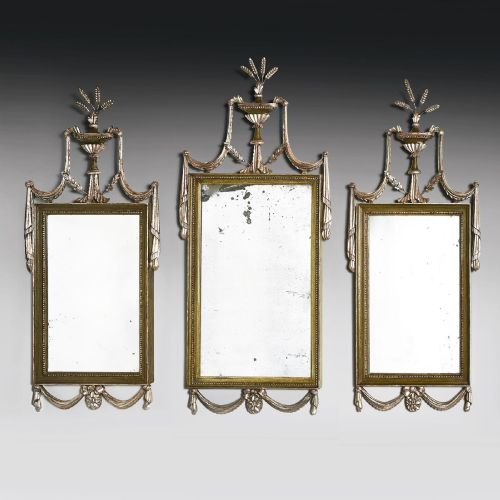
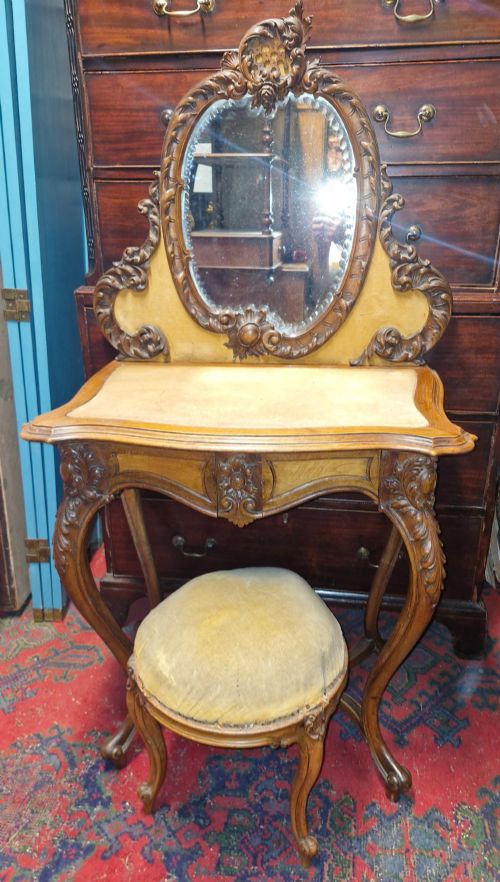
Set of Mirrors
When you search for a set of mirrors, you seek matched or grouped looking glasses that bring light and rhythm to a room.
Set of Mirrors
A set of mirrors typically includes multiple matched looking glasses designed to function together visually across a wall or within a specific interior scheme. The selection encompasses various configurations, from sets of four gilt frames to grouped wall mirrors originating from the nineteenth and early twentieth centuries.
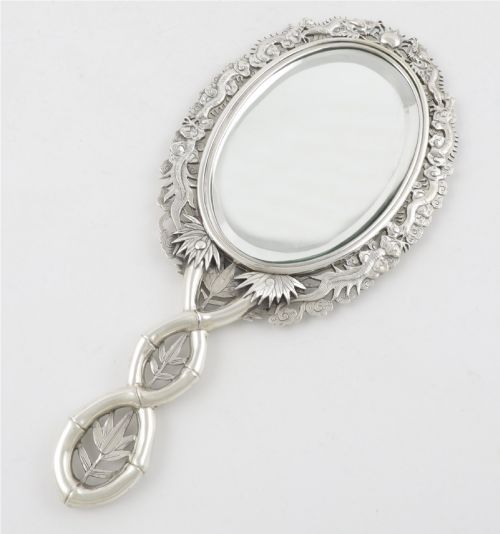
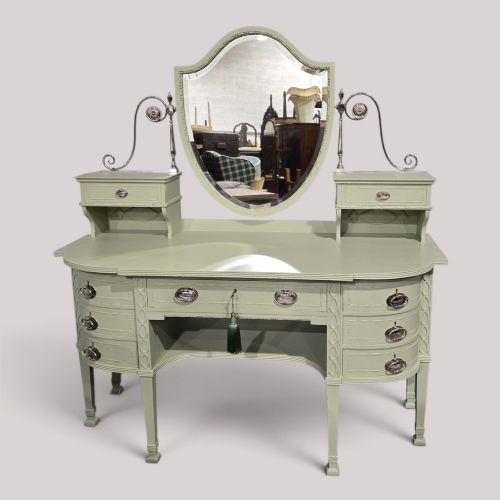
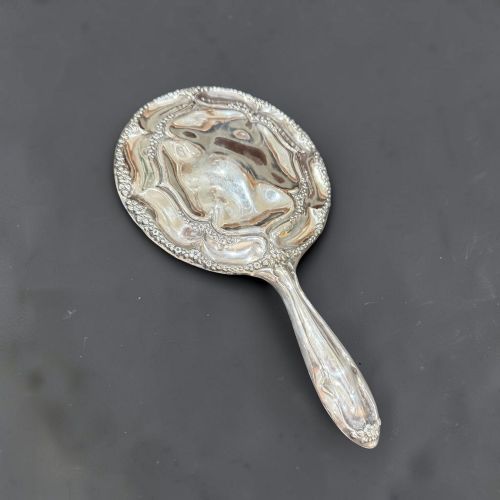
The versions most frequently encountered here span Victorian, Edwardian, and Art Deco periods, often rendered in wood, gilt, or painted finishes. These groupings range from architectural window mirrors to decorative wall pieces and hand mirrors.
Buyers look for these assemblies to create balanced focal points in reception rooms, hallways, and bedrooms. The selection reflects diverse aesthetic movements, including Arts and Crafts, Rococo Revival, and Neoclassical styles.
Materials and construction
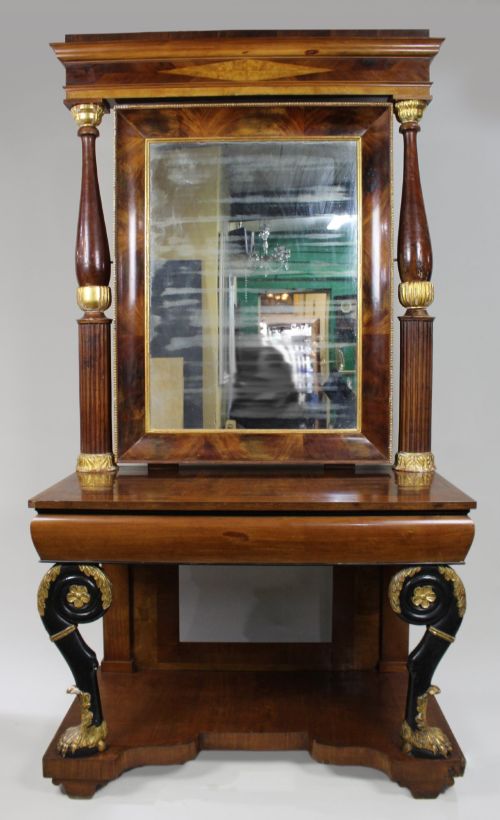
Makers utilised traditional timbers such as oak, walnut, and mahogany for structural frames, alongside specialised woods like birds-eye maple and goncalo alves. Giltwood and parcel gilt finishes involved applying gold leaf over prepared gesso on carved wooden bases.
Glass production relied on silvering techniques behind mirror plate, whilst decorative frames featured hand-carved ornamentation, painted surfaces, and inlaid details. Metal elements such as brass and copper complemented the wooden and glass components.
Set of Mirrors Retail Price Guide 2026
Typical asking prices for set of mirrors among the pieces listed under this phrase on Sellingantiques today, from the lower quarter to the upper quarter. They describe what is for sale here now, not the wider market.
Listings feature oak, walnut, mahogany, and giltwood frames spanning the Victorian, Edwardian, and Art Deco periods.
Distinctions in craftsmanship
Quality reveals itself in the depth and precision of hand-carved wooden details, the crispness of the gilt or painted finish, and the preservation of original mirror glass. Superior examples maintain the integrity of matching frames without later alterations or mismatched replacements.
The refinement of joinery in timber frames and the subtlety of decorative embellishments, such as marquetry or parcel gilding, separate standard production from exceptional pieces.
Gillows Of Lancaster·Waring & Gillows·Charles Boyton·Lamb of Manchester·Heals
The Set of Mirrors Glossary
- Giltwood
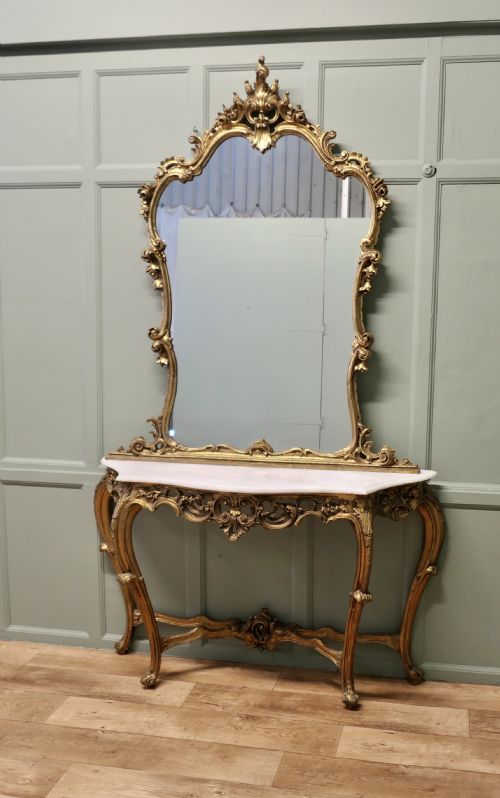
- Wood carved and coated with gold leaf or gold paint. This finish creates a luminous surface common in nineteenth-century decorative frames.
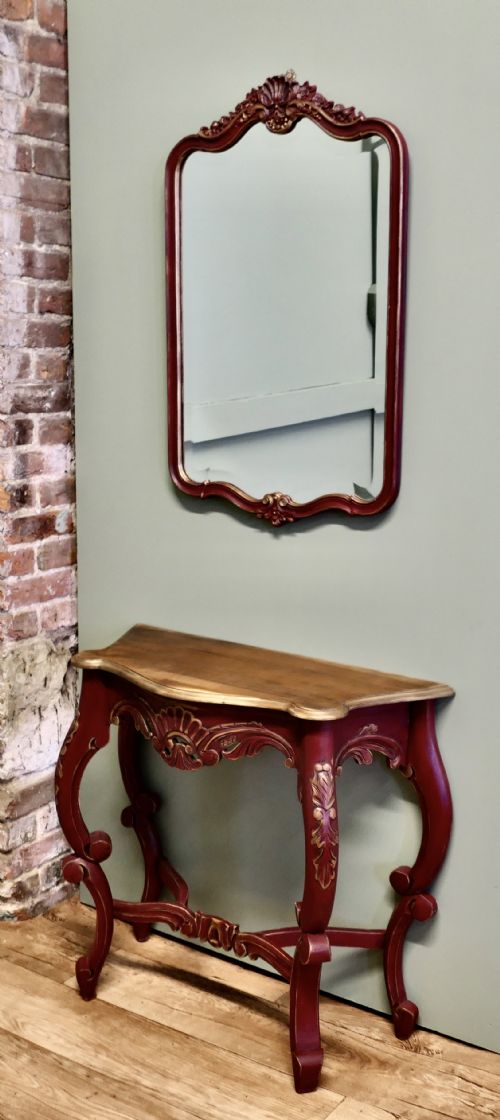
- Console Table
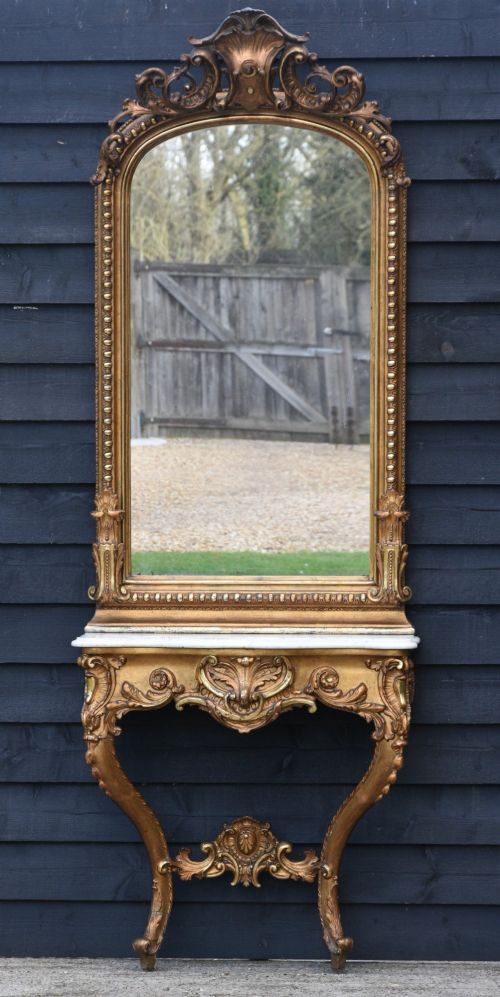
- A table designed to stand against a wall, frequently paired with a matching wall mirror above it. These combinations appeared extensively in formal nineteenth-century interiors.
- Trumeau
- A decorative wall mirror featuring a painted or carved panel above the glass plate. Originating in French interior design, these pieces combined art and reflection within a single frame.
- Guilloche
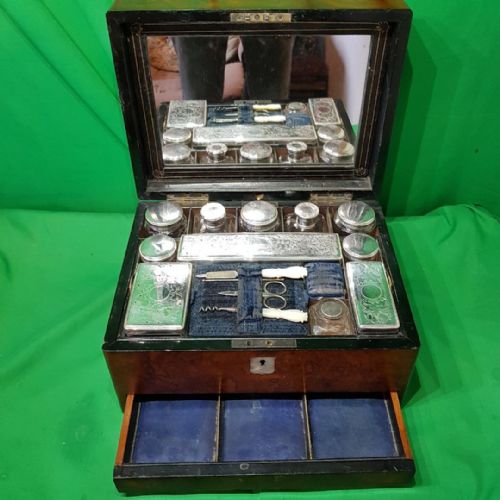
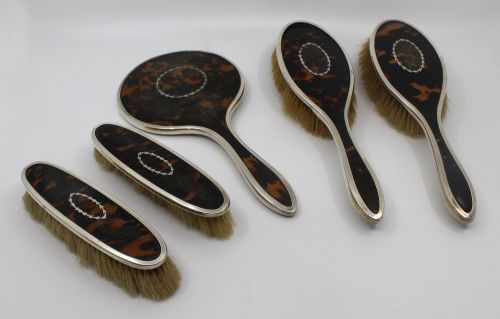
- An architectural pattern of intersecting curved lines produced by mechanical engraving. This technique appears on metalwork associated with vanity items and mirror frames.
Set of Mirrors: Frequently Asked Questions
What defines a trumeau mirror?
A trumeau mirror integrates a vertical looking glass with an upper panel containing either an oil painting or carved wood decoration. This style originated in eighteenth-century France and remained popular through subsequent revival periods.
The combined format allowed interior designers to anchor large wall surfaces with a single cohesive decorative installation. The upper panel frequently featured pastoral scenes or classical motifs.
How do I care for antique glass?
Maintaining antique mirror glass requires gentle cleaning methods that protect both the silvering behind the plate and the surrounding frame material. Moisture must be kept away from the edges where the protective backing is vulnerable to degradation.
Harsh chemical cleaning agents should be avoided in favour of soft, dry cloths for dusting. Preserving the original glass often means accepting minor foxing and age spots as evidence of authenticity.
Are these mirrors suitable for modern walls?
Period mirrors integrate well into contemporary interiors by introducing textural contrast and reflective depth against plain walls. Their diverse framing styles, ranging from restrained Arts and Crafts oak to ornate giltwood, allow them to function as standalone artworks.
Proper wall fixings are essential when hanging heavy framed pieces, particularly large giltwood or console-paired designs. Weight distribution must be carefully managed to secure the wooden structures safely.