

Set of Four Tables
When you search for a set of four tables, you uncover graduated nests and matching dining assemblies designed to slot together or cluster around a room.
Set of Four Tables
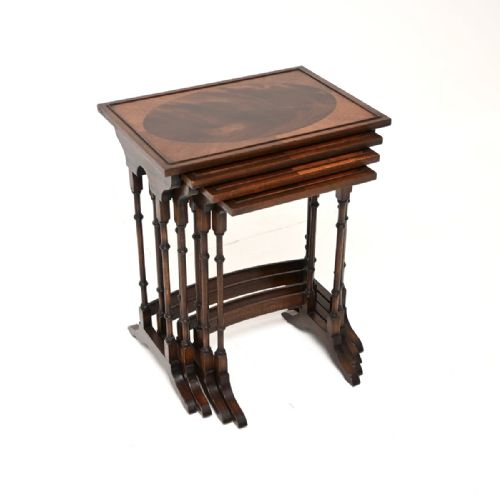
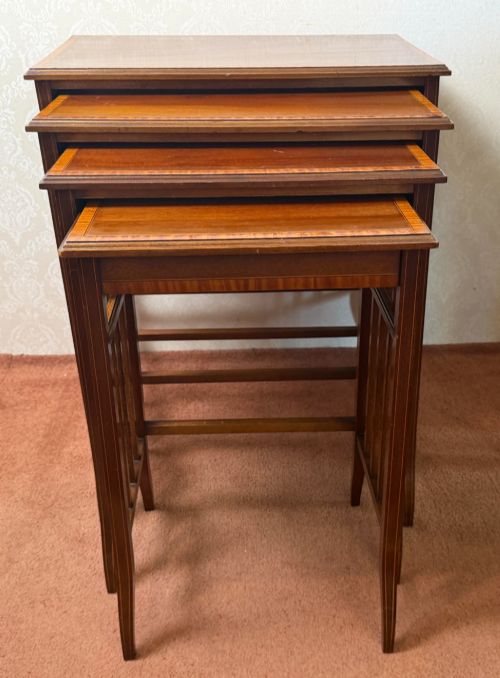
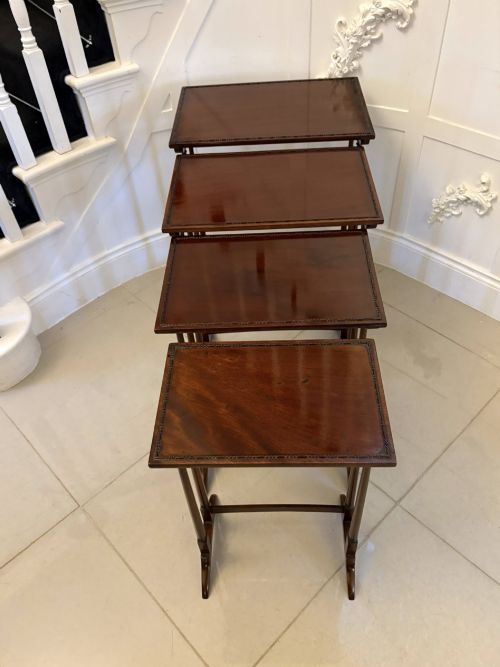
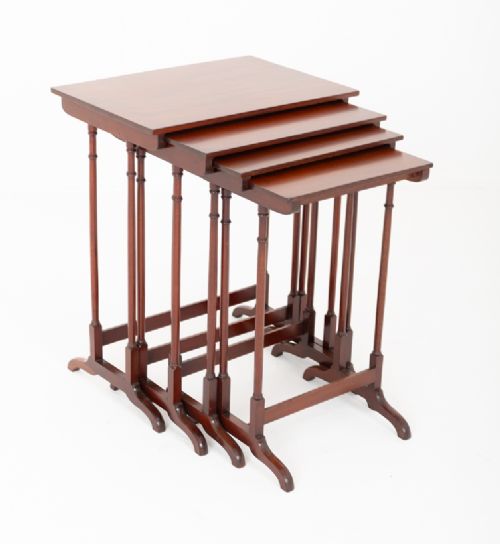
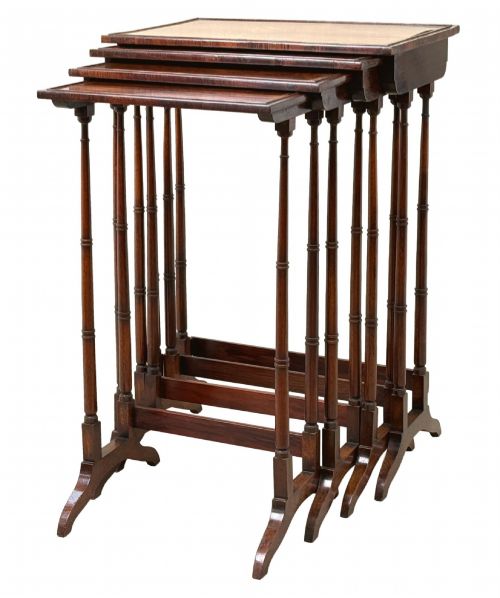
A set of four tables most commonly appears in the records as a nest of tables, often termed a quartetto, where four graduated pieces slide neatly beneath one another to save space when not in use.
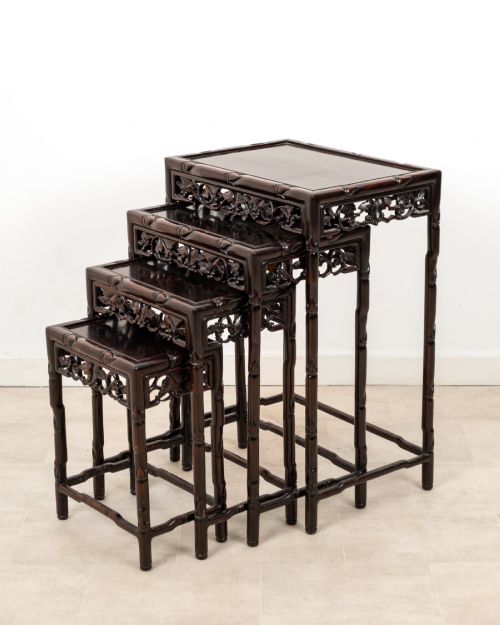
The form spans the nineteenth century through the Edwardian period and into the 1920s and 1930s, encompassing both British mahogany designs and Chinese hardwood variants with carved details.
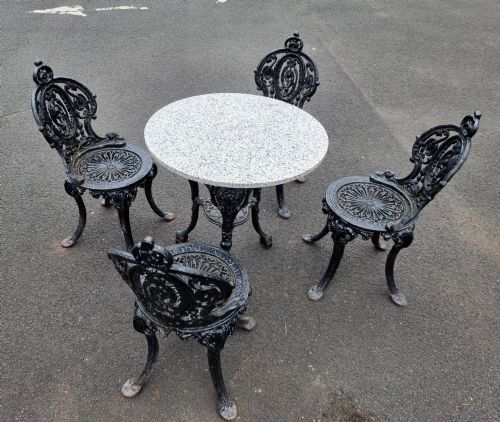
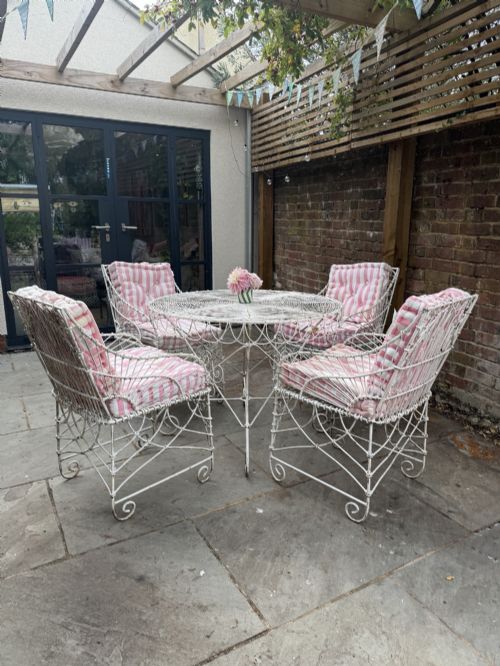
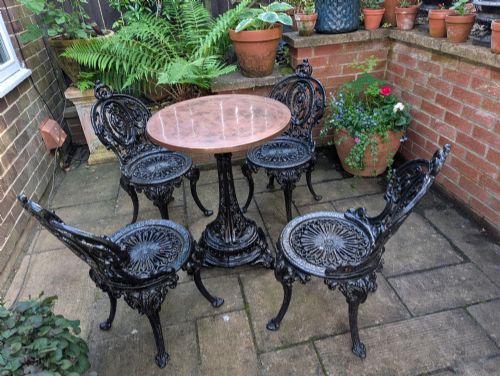
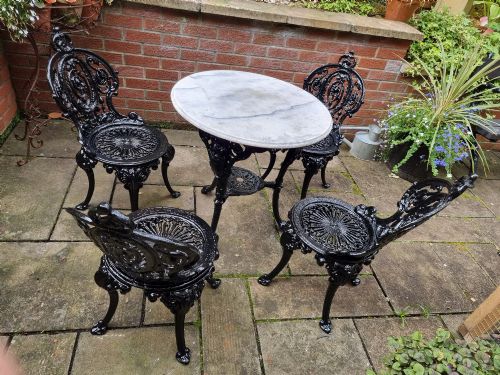
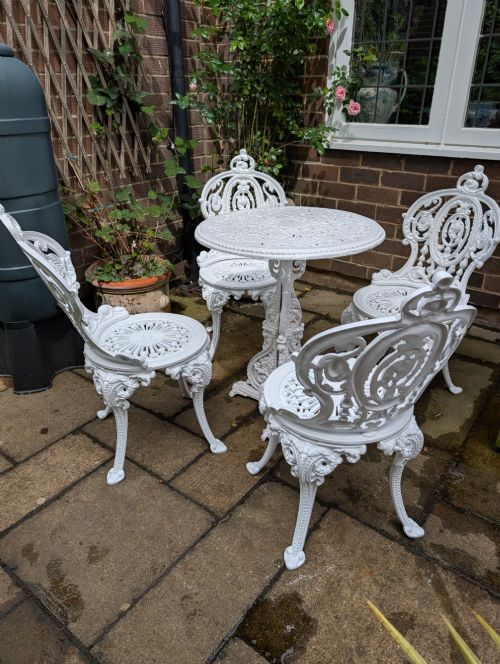
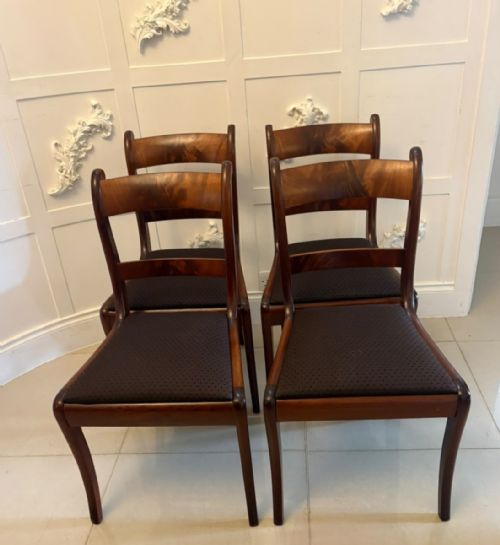
Buyers also encounter matching sets of garden tables with four chairs cast in iron, alongside dining room chairs and occasional tables grouped in matching quartets.
How they were made
Cabinet makers utilised dense timbers like mahogany, walnut, rosewood, and hardwood for nests of tables, often enhancing the surfaces with satinwood crossbanding, parquetry, or floral inlay.
Garden furniture and heavier structural frames relied on cast iron, sometimes paired with brass or bronze components for decorative lighting and hardware.
Joining techniques prioritised stability across graduated tiers, ensuring smaller subordinate tables maintained rigid frames while sliding smoothly in and out of the primary unit.
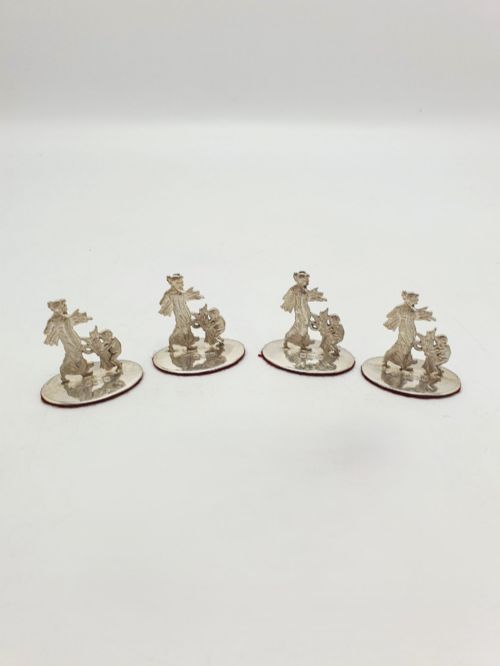
Grouse menu holders keep dinner parties orderly while reminding everyone of a very specific Victorian appetite.
What varies in quality
Quality separates through the crispness of timber inlay, the precision of dovetails and joints, and the overall weight and balance of the frame.
Finer examples display delicate tapering legs, well-figured wood grains, and clean carving on hardwood edges, whereas simpler pieces rely on plain surfaces and heavier proportions.
Christopher Dresser·Smith & Sissons & Co·Thomas Smily
The Set of Four Tables Glossary
- Quartetto
- A set of four graduated tables designed to stack inside one another. The term frequently appears in nineteenth-century and Edwardian furniture descriptions.
- Crossbanding
- A decorative border of veneer laid with the grain running perpendicular to the main panel. It frames the top surfaces of better mahogany tables.
- Hardwood
- Dense timber derived from broad-leaved trees, used extensively in Chinese occasional tables. These woods withstand heavy carving without splintering.
- Inlay
- Material embedded into a recess flush with the surrounding surface to form patterns. Satinwood and lighter veneers frequently provide contrast against darker mahogany.
Set of Four Tables: Frequently Asked Questions
What is a quartetto nest?
A quartetto nest is a set of four graduated tables made to slide underneath the largest table to save floor space.
Cabinet makers developed this stacking format during the nineteenth century for drawing rooms and parlours where flexibility mattered.
How do I date a nest of tables?
Dating relies on timber choice, leg shape, and decorative motifs like inlay or crossbanding. Earlier nineteenth-century examples often feature rosewood or rich mahogany, while Edwardian versions frequently incorporate satinwood stringing.
Comparing construction joints and secondary woods helps confirm the period of manufacture.
Were these tables used in sets?
Yes, nests were manufactured specifically as a family of four pieces designed to be pulled out individually when serving guests.
They functioned as portable tea or coffee tables around a seating area before sliding back into a single compact column.
How do I care for inlaid wood?
Inlaid wooden surfaces benefit from stable room temperatures away from direct sunlight and heat sources. Gentle cleaning with a dry or barely damp cloth preserves the delicate veneer and surrounding polish.
Applying a traditional wax occasionally helps nourish older mahogany and walnut timbers.