
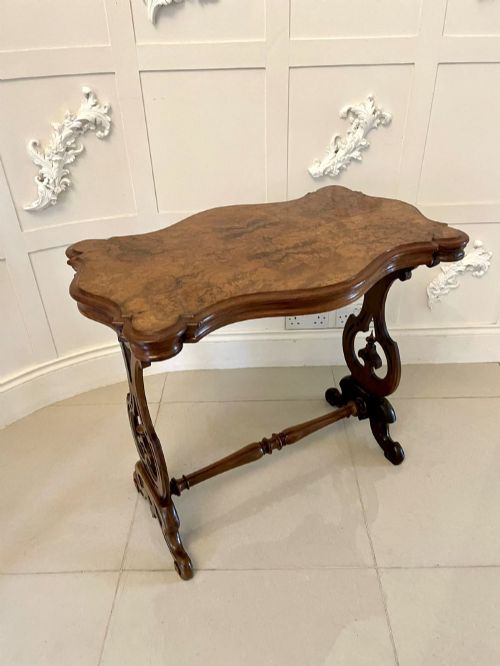
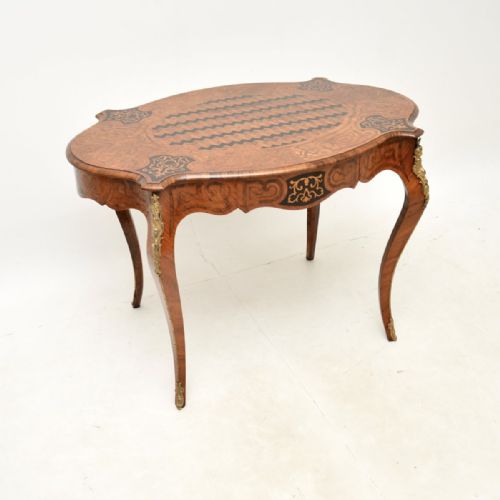
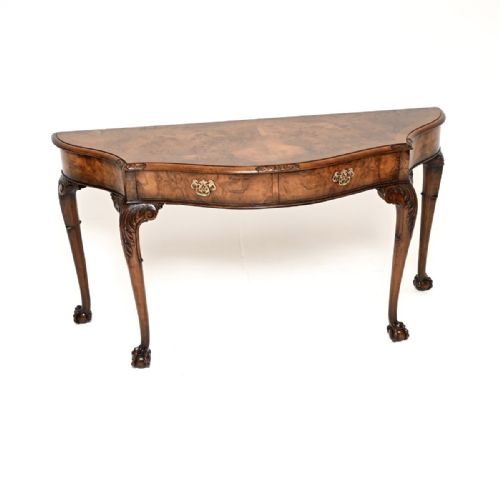
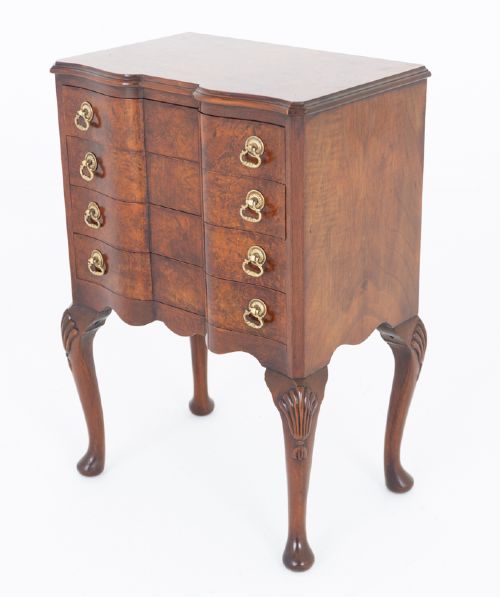


Serpentine Walnut Side Table
A serpentine walnut side table brings rhythmic curves and rich grain to a room, offering a functional surface shaped with distinctive flowing lines.
Serpentine Walnut Side Table
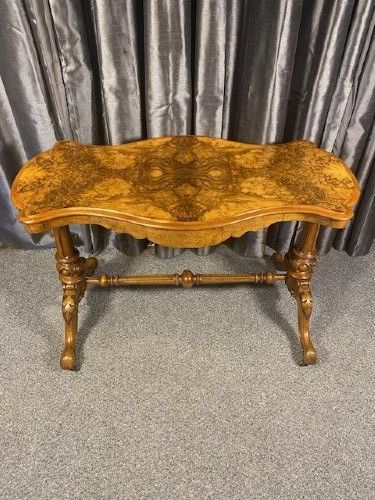
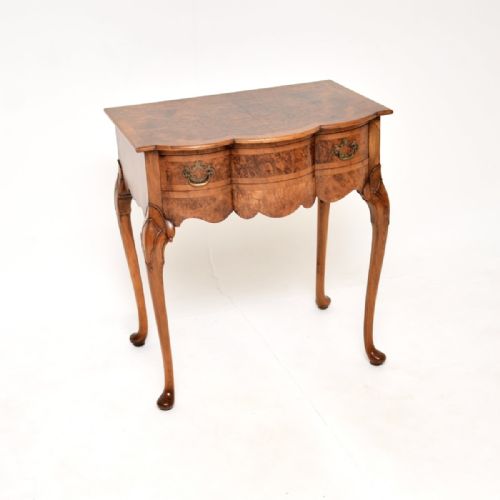
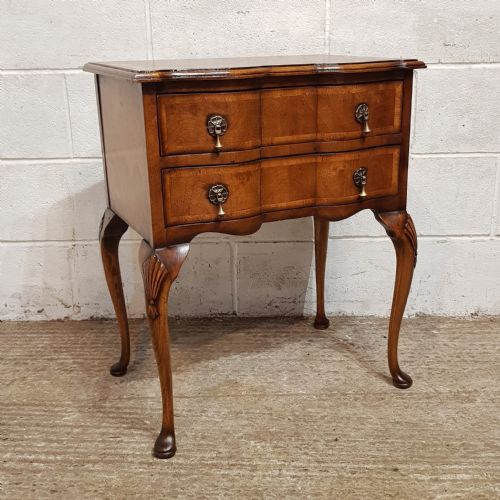
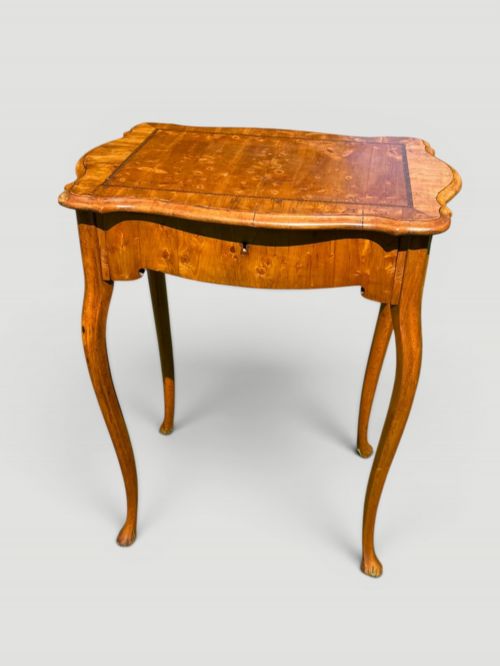
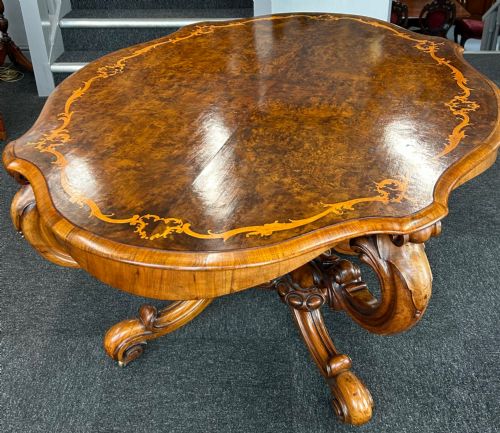
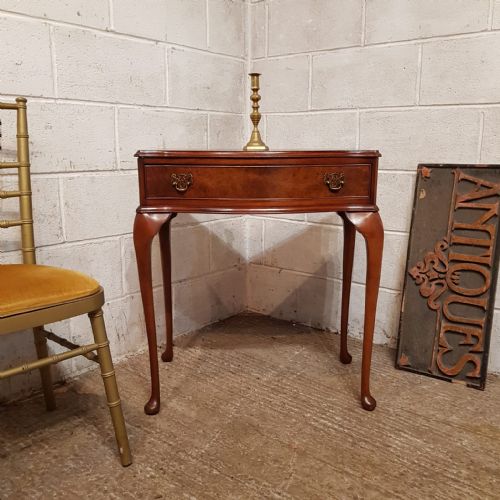
A serpentine walnut side table combines a characteristic undulating front edge with timber construction, appearing across Victorian periods through to the nineteen thirties. These pieces emerge in styles ranging from Queen Anne revival to French Louis XV designs, often utilising shaped tops and slender supports.
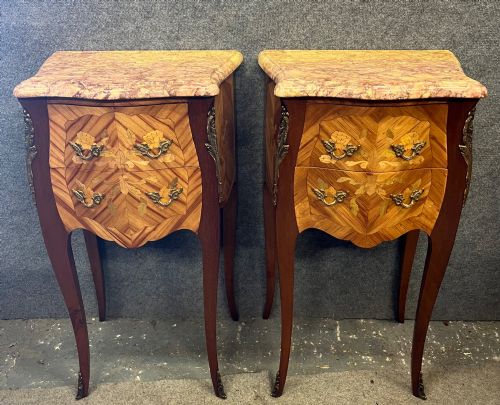
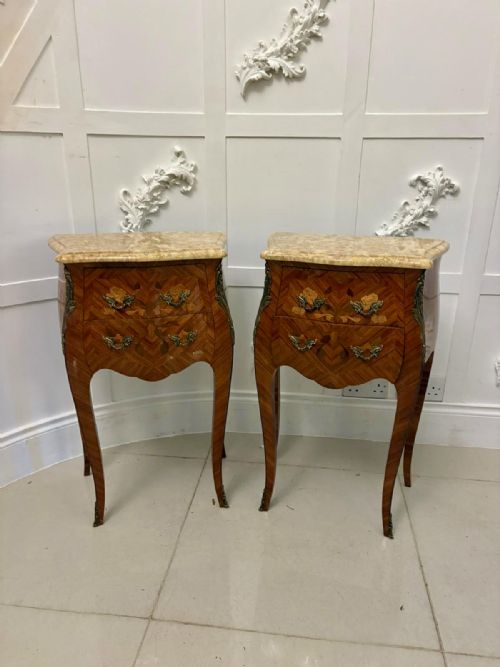
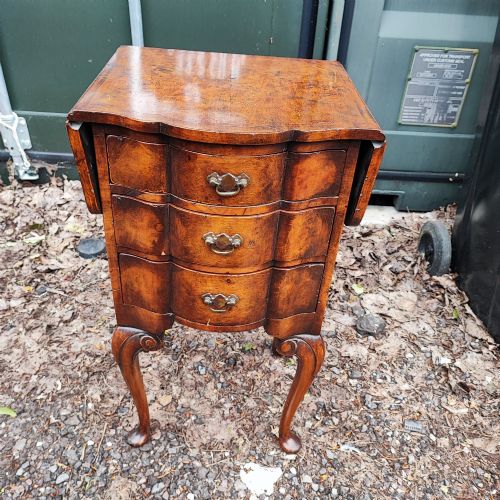
The form functions primarily as a decorative yet practical surface for a hallway, drawing room or bedroom. Examples frequently integrate single drawers or matching bedside configurations alongside standard freestanding tables.
Most surviving pieces date from the nineteenth and early twentieth centuries, drawing heavily on continental influences such as French marquetry and Italian console shapes. Buyers will encounter both compact bedside versions and larger console formats matching the search phrase.
Materials and construction methods
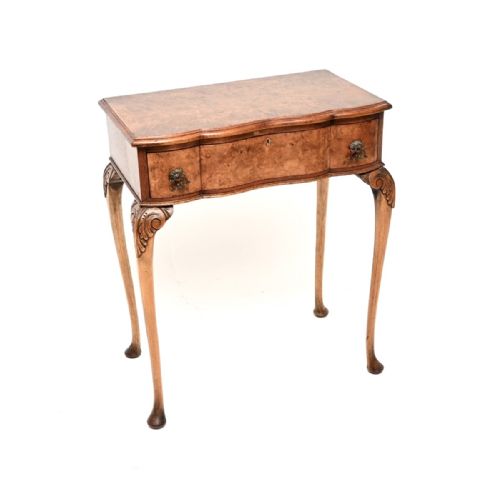
Cabinetmakers constructed these tables using solid walnut frameworks overlaid with highly figured burr walnut veneers to create striking grain patterns on the top and drawer fronts. Marquetry, parquetry and delicate stringing details frequently complement the primary timber surfaces.
Secondary materials such as brass handles, leather inserts and marble tops appear regularly across the period selection. Ormolu mounts and fine inlay work further define the execution of the more elaborate continental and Victorian examples.
Listings feature walnut, marble, brass, and ormolu across Victorian, Edwardian, and Art Deco periods.
Judging the standard of execution
Quality rests heavily on the choice of burr veneer and how symmetrically the grain patterns match across the serpentine curve of the top. Superior examples display crisp, hand-cut marquetry and seamless joints along the undulating contours without visible warping in the timber.
The refinement of the carving on the legs and the weight of the brass or ormolu mounts indicate the original workshop standard. Tables with integrated drawers show tighter tolerances in the drawer linings and smoother movement along the runners.
Epstein and Co·Druce and Co London
The Serpentine Walnut Side Table Glossary
- Serpentine
- A furniture front or top shaped with a curving, wave-like contour that swells outward in the centre and recedes at the sides.
- Burr Walnut
- Timber taken from the gnarled growths of a walnut tree, yielding dense, swirling grain patterns highly valued for decorative veneer.
- Marquetry
- Decorative inlay work where pieces of various coloured woods are fitted together to form intricate pictorial designs on a surface.
- Ormolu
- Gilded bronze ornamentation applied to furniture, popular in French-influenced cabinet making of the nineteenth century.
- Console Table
- A table designed to stand against a wall, frequently supported by decorative brackets or legs rather than four standard posts.
Serpentine Walnut Side Table: Frequently Asked Questions
Where should I place a serpentine walnut side table?
These pieces suit entrance halls, living rooms or bedrooms where their curved profile softens straight architectural lines.
They function well as lamp tables, small writing desks or display surfaces against a flat wall.
How do I care for burr walnut veneer?
Keep the timber away from direct sunlight and heat sources to prevent the burr veneer from drying out or splitting.
Polish the surface occasionally with a traditional beeswax to maintain the natural lustre of the walnut.
What is the difference between a console and a side table?
Console tables traditionally anchor against a wall and sometimes rely on wall brackets for stability.
Side tables are typically freestanding structures designed to be viewed from multiple angles in an open room.
How can I date a walnut table from the nineteenth century?
Examine the construction methods of the drawer linings, the type of secondary timbers used underneath, and the overall wear patterns.
Stylistic cues such as heavy Victorian carving or lighter Queen Anne revival proportions also point to the specific decade of manufacture.