



Serpentine Walnut Cupboard
A serpentine walnut cupboard brings together graceful curved lines and rich timber figures, offering practical storage with distinct decorative presence.
Serpentine Walnut Cupboard
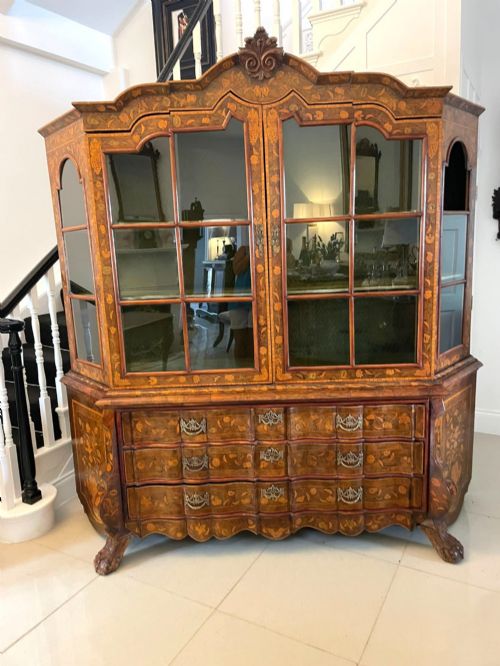
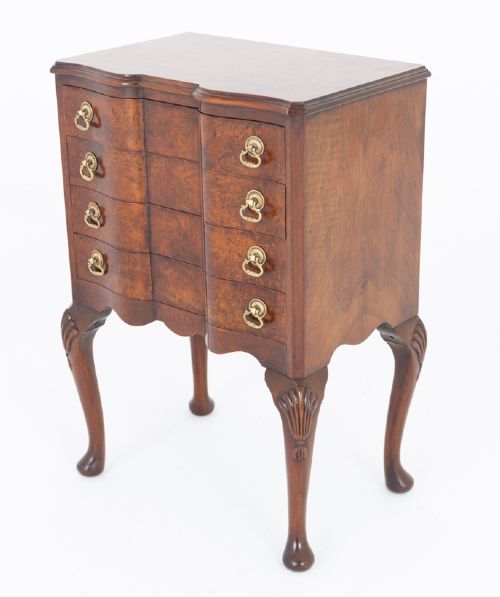
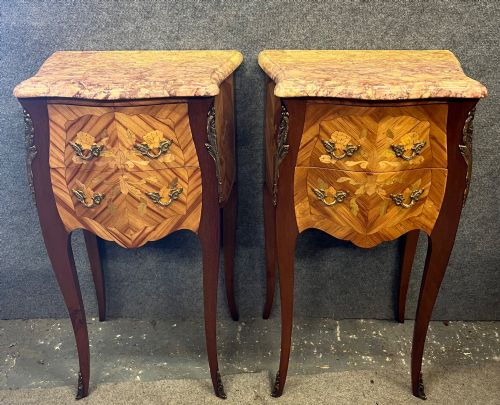
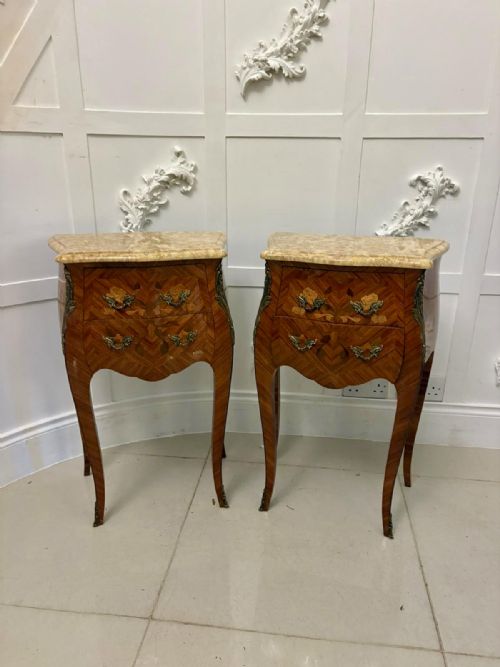
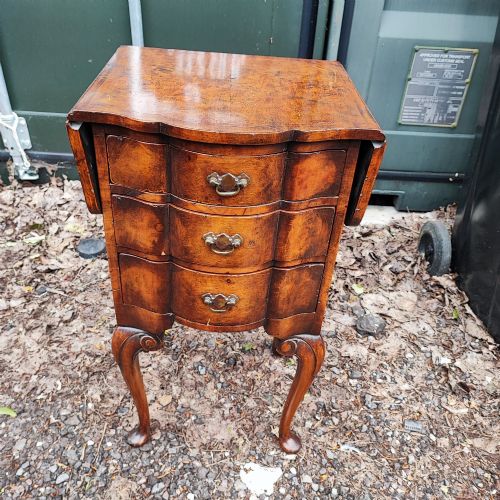
The version most commonly encountered on this page is the bedside chest or small side cabinet, often influenced by Louis XV or Queen Anne styles. These pieces utilise walnut and burr walnut veneers, frequently showing the characteristic sweeping front edge that defines the group.
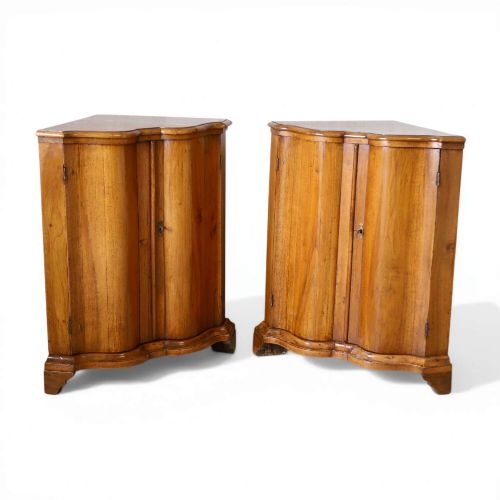
Origins stretch from eighteenth-century Italy and France through to Victorian workshops and early twentieth-century revivals. Buyers encounter everything from provincial walnut panettiere forms to grand marble-topped commodes and cocktail cabinets.
How they were made
Cabinet makers utilised solid walnut and decorative burr walnut veneers applied over secondary timbers to achieve the characteristic figured surfaces. Marquetry, parquetry, and brass inlay frequently enrich the exterior panels alongside shaped marble tops.
Shaping the curved serpentine fronts required specialist joinery techniques, particularly when combined with bombe profiles or corner construction. Ormolu mounts, brass handles, and iron hinges provide structural and decorative accents across French and Italian examples.
Serpentine Walnut Cupboard Retail Price Guide 2026
Typical asking prices for serpentine walnut cupboard among the pieces listed under this phrase on Sellingantiques today, from the lower quarter to the upper quarter. They describe what is for sale here now, not the wider market.
Object forms span bedside tables, side cabinets, corner cabinets, chests of drawers, sideboards, commodes, wall cupboards, and bar cabinets.
What varies in quality
The refinement of the curved serpentine outline and the symmetry of the wood grain across the drawer and door fronts dictate the visual success of each piece. Superior examples display carefully matched burr walnut veneers that flow uninterrupted across the undulating contours.
Integration of secondary materials such as figured marble tops, finely chased ormolu mounts, and intricate marquetry distinguishes higher-grade commissions from simpler provincial workshops. The execution of internal framing and drawer construction further separates standard production from exhibition pieces.
Waring and Gillows
The Serpentine Walnut Cupboard Glossary
- Serpentine
- A shape characterised by a double-curved line, concave in the centre and convex at the sides, creating a flowing front profile on cabinets and commodes.
- Burr walnut
- Timber taken from a tree growth or wart, yielding highly figured, swirling grain patterns prized by cabinet makers for decorative veneer work.
- Bombe
- A swelling or bulging out convex shape in the sides and front of a cabinet, prevalent in continental furniture styles.
- Marquetry
- The art of applying pieces of veneer to a structure to form decorative patterns, pictorial scenes, or floral motifs.
- Panettiere
- A traditional French wall-mounted or freestanding bread cupboard, often featuring turned spindles and carved walnut panels.
- Ormolu
- Gilt-bronze decorative mounts applied to furniture to accentuate corners, feet, and key escutcheons.
Serpentine Walnut Cupboard: Frequently Asked Questions
How do I style a serpentine cabinet?
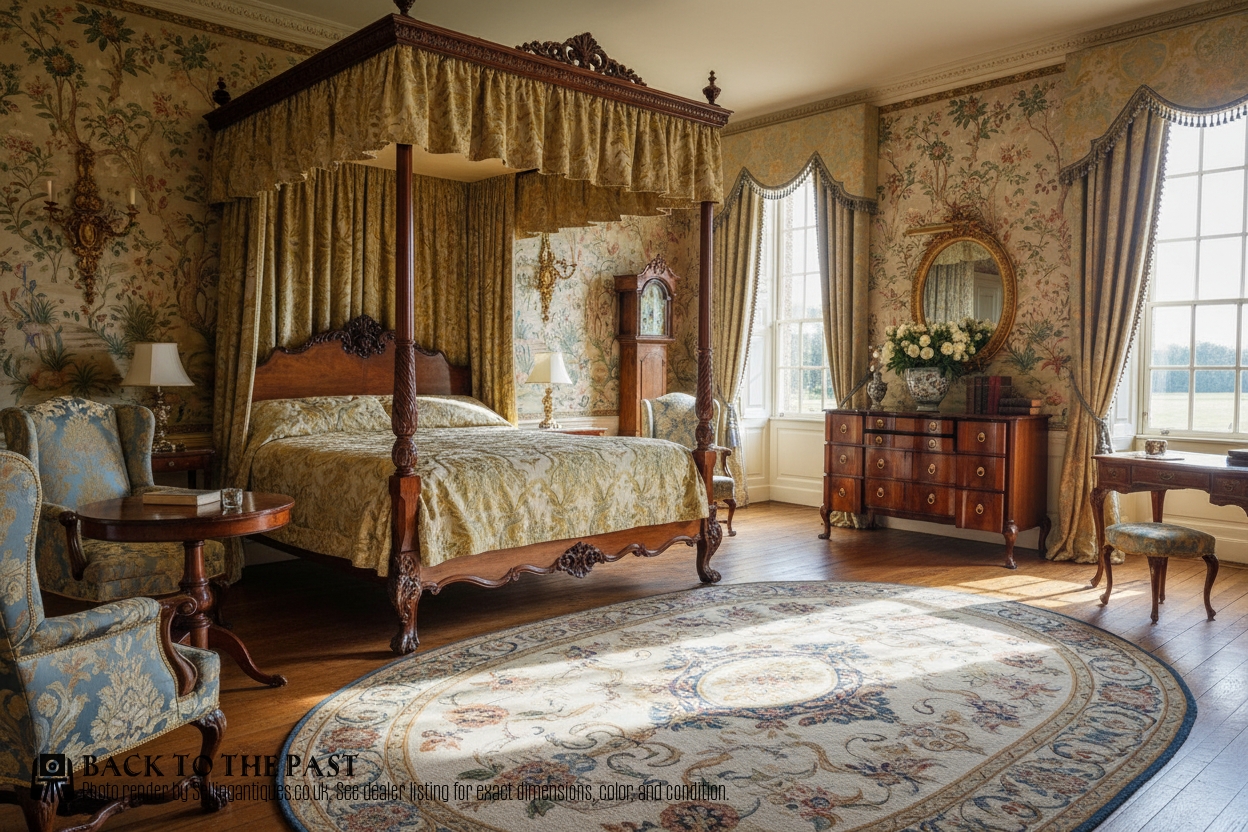
These cabinets work well as focal points in living spaces, bedrooms, or hallways where their curved profiles can be appreciated. Their rich wood tones pair effectively with both traditional and restrained contemporary interiors.
Placing a lamp or decorative object on the marble or wooden top completes the arrangement without obscuring the grain.
How can I tell eighteenth-century pieces apart?
Eighteenth-century examples typically show hand-cut joinery, specific regional construction methods, and period-appropriate hardware. Italian and French pieces from this era often display authentic provincial patination and native walnut timbers.
Later nineteenth and twentieth-century revivals replicate these historic styles with machine assistance and standardised internal components.
Where were these cupboards used?
Original locations ranged from provincial French dining rooms and Italian chambers to grand nineteenth-century drawing rooms. Bedside cabinets served private sleeping quarters, while commodes and sideboards furnished reception areas.
Wall cupboards and corner cabinets maximised vertical storage in domestic interiors.