





Serpentine Parquetry Table
These serpentine parquetry table listings offer geometric timber work and curved French revival forms that anchor a room.
Serpentine Parquetry Table
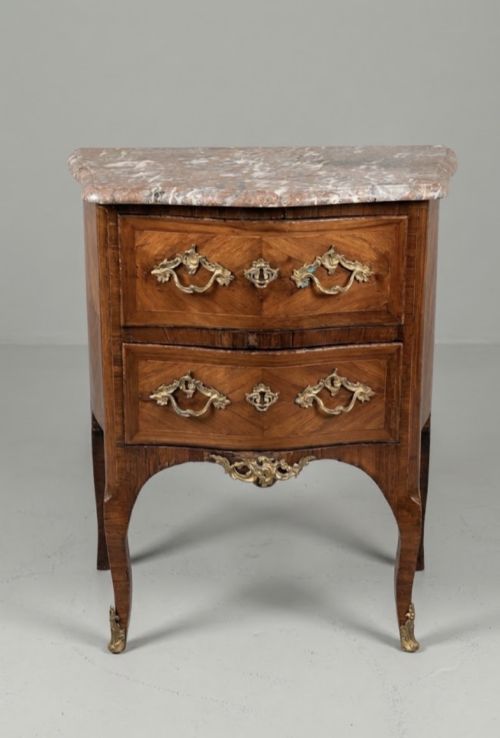
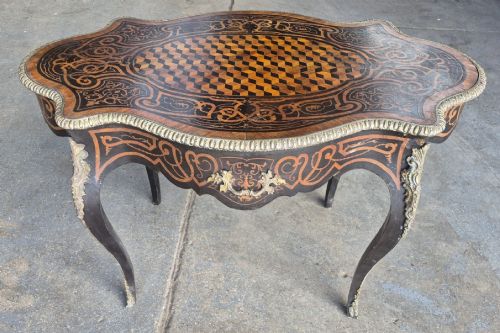
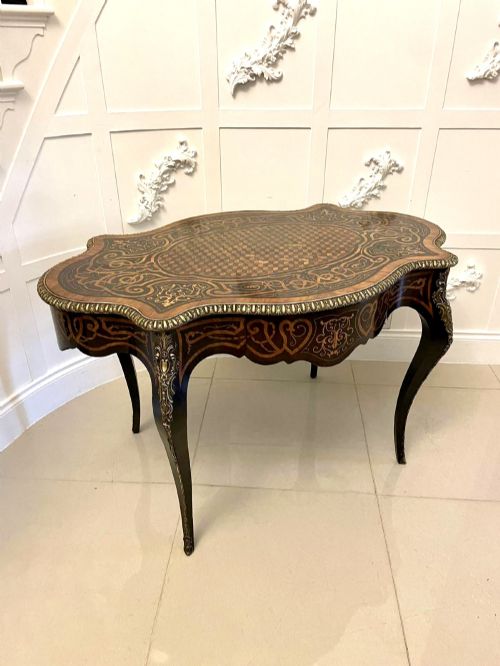
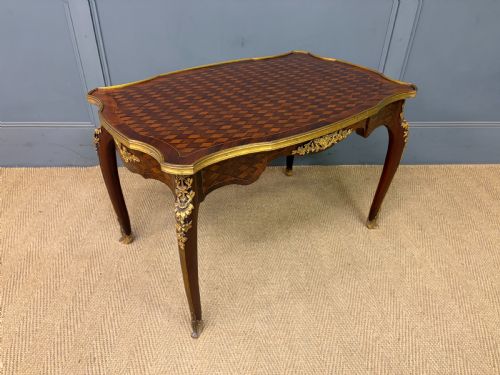
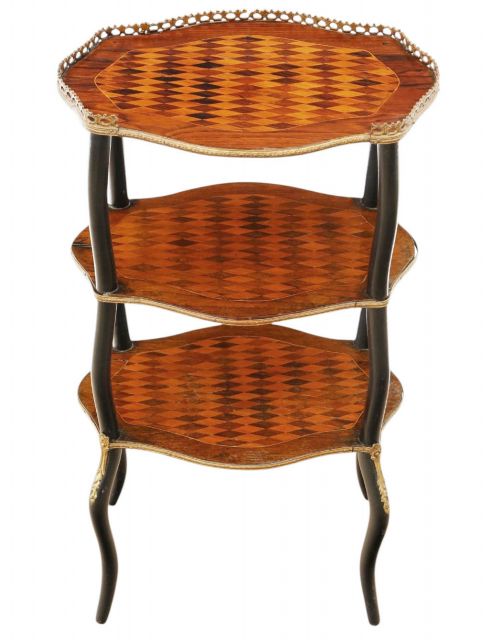
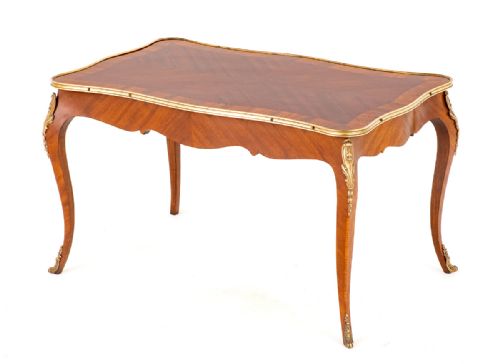
A serpentine parquetry table brings together curved undulating edges and geometric wood veneers arranged in repeating patterns. Buyers seeking this phrase encounter various forms including side tables, coffee tables, bedside cabinets, and centre tables.
The pieces listed on this page span several decades from the nineteenth century into the twentieth century. They draw heavily on French Louis XV style and revival aesthetics, showing how cabinet makers adapted historical curves for later homes.
Materials and construction methods
Craftsmen built these tables using foundational timbers like walnut, mahogany, and ebonised wood overlaid with decorative veneers of kingwood and rosewood. Mixed timber parquetry creates geometric surface patterns across the tops and drawer fronts.
Metal mounts in brass and ormolu accent the curves, while select pieces incorporate marble tops. Cabinet makers shaped these elements to follow the sweeping serpentine outlines characteristic of the Louis XV revival period.
Serpentine Parquetry Table Retail Price Guide 2026
Typical asking prices for serpentine parquetry table among the pieces listed under this phrase on Sellingantiques today, from the lower quarter to the upper quarter. They describe what is for sale here now, not the wider market.
Even bedside cabinets on this page get the full curved treatment, proving no small table escapes a sweeping serpentine edge.
Assessing quality and craftsmanship
Quality rests in the precision of the veneer work and the integration of the parquetry patterns across complex curves. Stronger examples maintain crisp geometry in the wood inlay without lifting or gaps along the undulating edges.
The sophistication of the timber choice dictates the standing of a piece. Rich contrasts between rosewood, kingwood, and walnut separate standard production from finer cabinet work.
The Serpentine Parquetry Table Glossary
- Parquetry
- A geometric mosaic of wood veneer arranged in repeating patterns. It differs from marquetry by using strictly geometric lines rather than pictorial scenes.
- Serpentine
- A shape characterised by a line of alternating convex and concave curves. This contour appears frequently on the edges and fronts of these tables.
- Ormolu
- Gilded bronze used for decorative mounts and furniture trim. It provides metallic contrast against the dark timber veneers.
- Etagere
- An open piece of furniture with multiple tiers for display. These listings include etagere whatnot display shelves alongside standard tables.
Serpentine Parquetry Table: Frequently Asked Questions
What periods do these tables come from?
The listings on this page span from the nineteenth century through the early twentieth century, specifically covering decades between eighteen-sixty and nineteen-thirty.
Many pieces adopt an eighteenth-century style or draw on French revival aesthetics rather than dating to the original period.
How do parquetry and marquetry differ?
Parquetry involves arranging wood veneers into geometric and symmetrical patterns like cubes, chequers, or basket weaves. Marquetry uses similar timber slices to create pictorial images of flowers, landscapes, or scrolls.
Both techniques appear across these French revival tables to decorate table tops and drawer fronts.
What timber types are used?
Makers utilised a wide range of woods including walnut, rosewood, kingwood, mahogany, and ebonised timber. Mixed timber parquetry combines these varieties to create contrast within the geometric patterns.
Some examples also incorporate coromandel or feature marble inserts on the upper surfaces.
What table formats are available?
The selection includes coffee tables, side tables, bedside cabinets, centre tables, desks, and etagere display shelves. Each format incorporates the characteristic curved lines and veneered surfaces.
Buyers can find both freestanding centre tables and smaller bedside pieces.