

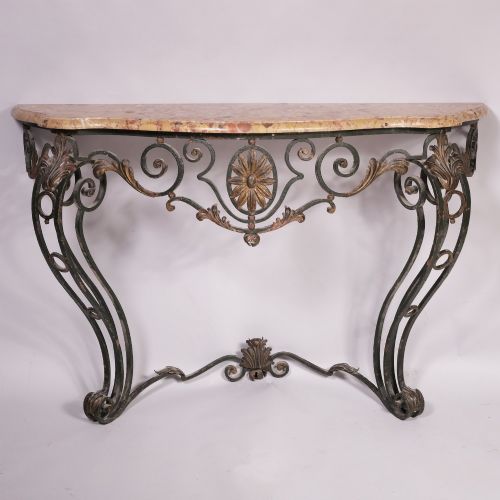


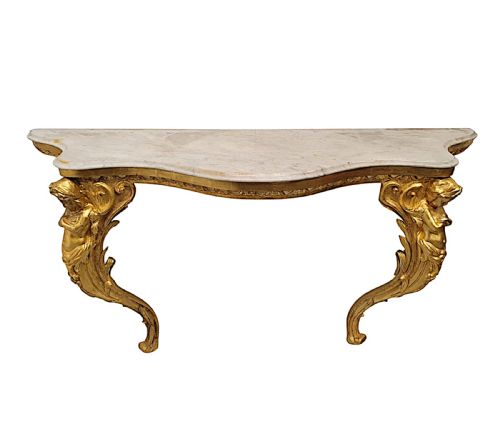


Serpentine Marble Console Table
A serpentine marble console table brings sculptural curves and substantial stone tops into a room, offering both display space and architectural presence.
Serpentine Marble Console Table
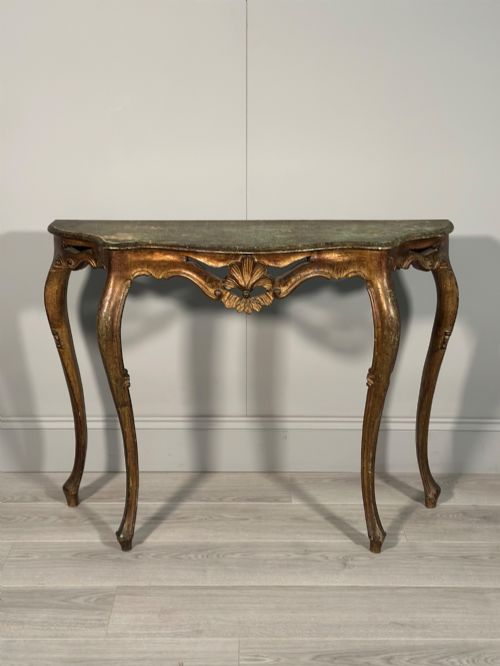
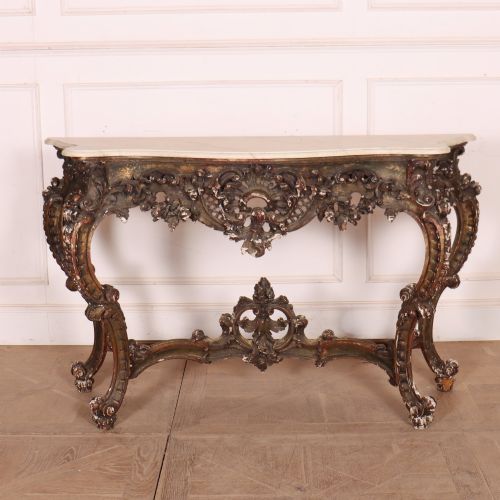
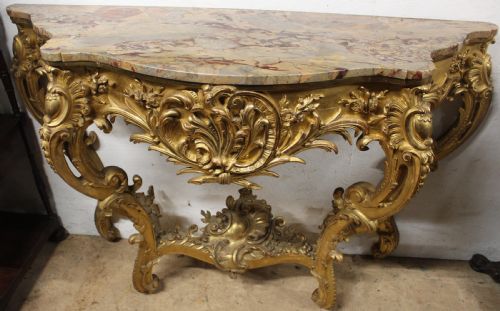
A serpentine marble console table combines a distinctive curving stone top with a supportive timber or gilt frame designed to stand against a wall. These pieces emerge in styles ranging from Italian Baroque and French Rococo Revival to Victorian and early twentieth century expressions, reflecting continental and domestic tastes across several centuries.
You are most likely to encounter nineteenth century examples featuring carved giltwood, walnut, or painted finishes alongside shaped marble surfaces. Forms vary from grand pier tables to smaller side tables, with the signature undulating front edge defining the silhouette of the furniture.
Materials and construction
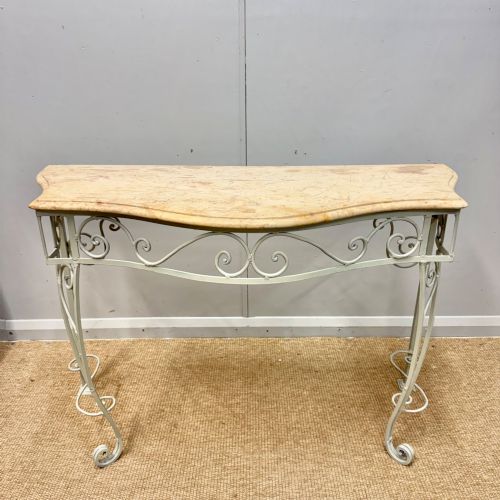
The construction relies on dense stone tops paired with supportive frames fashioned from walnut, mahogany, oak, or carved wood finished with gesso and gold leaf. Wrought iron also appears in specific twentieth century interpretations of the form.
Carvers shaped timber and applied gilt or paint to create elaborate bases, while stonemasons cut and polished marble to match the sweeping contours of the serpentine front edge.
Serpentine Marble Console Table Retail Price Guide 2026
Typical asking prices for serpentine marble console table among the pieces listed under this phrase on Sellingantiques today, from the lower quarter to the upper quarter. They describe what is for sale here now, not the wider market.
The listings span the eighteenth, nineteenth, and twentieth centuries, featuring materials such as walnut, mahogany, oak, giltwood, and wrought iron.
Assessing the pieces
Quality rests in the depth and precision of the wood carving, the crispness of the gilt or painted finish, and the harmonious proportion between the heavy stone top and its supporting base. Finer examples display meticulous joinery and carefully selected timber grains beneath the surface decoration.
The character and thickness of the marble top, along with how cleanly the stone follows the complex curves of the serpentine apron, distinguish the more ambitious pieces from simpler utility items.
The Serpentine Marble Console Table Glossary
- Serpentine
- A furniture front or tabletop cut with a sweeping convex centre flanked by concave curves, creating an undulating S-shape. This contour requires precise woodworking and stone shaping.
- Console table
- A wall-mounted or freestanding table designed to stand against a vertical surface, frequently fitted with front legs and secured to the wall for stability.
- Giltwood
- Timber that has been coated with a thin layer of gold leaf over a prepared gesso ground. This finish provides a bright reflective surface common on decorative continental tables.
- Pier table
- A table designed specifically to fit against the wall space, or pier, between two windows. They often match large mirrors hung above them.
- Gesso
- A plaster-like mixture applied to wood surfaces as a smooth base for gilding or painting. It allows craftsmen to carve intricate relief details before applying gold leaf.
Serpentine Marble Console Table: Frequently Asked Questions
Where should I place a console table?
These tables suit hallways, living rooms, and dining spaces where floor space is limited against a wall. Their shallow depth allows them to function without blocking main pathways.
They often sit beneath mirrors or artwork to create a formal focal point in an interior scheme.
How do I care for the marble top?
Marble requires gentle cleaning with warm water and a soft cloth to avoid scratching the polished surface. Acidic liquids like wine or citrus juice can etch the stone and should be wiped away immediately.
Using coasters and mats helps protect the historical finish from moisture and staining over time.
Are these tables freestanding?
Many console tables rely on wall fixings or brackets for total stability because they feature only two front legs. Taller or heavier stone-topped examples need this support to prevent tipping.
Freestanding versions with four legs do exist, particularly among centre tables adapted for wall placement.
How can I tell the period?
Dating relies on combining the timber species, the style of the carved ornamentation, and the construction methods visible underneath. Eighteenth and nineteenth century pieces show hand-tool marks and traditional joinery.
Revival styles borrow decorative motifs from earlier centuries, such as Louis XVI or Baroque details, while retaining the construction techniques of their actual manufacturing era.