

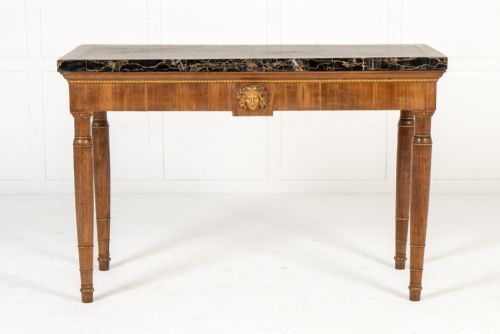


Dark Walnut Pier Table
These dark walnut pier table pieces bring architectural grandeur to a hallway, fashioned from rich timber and stone.
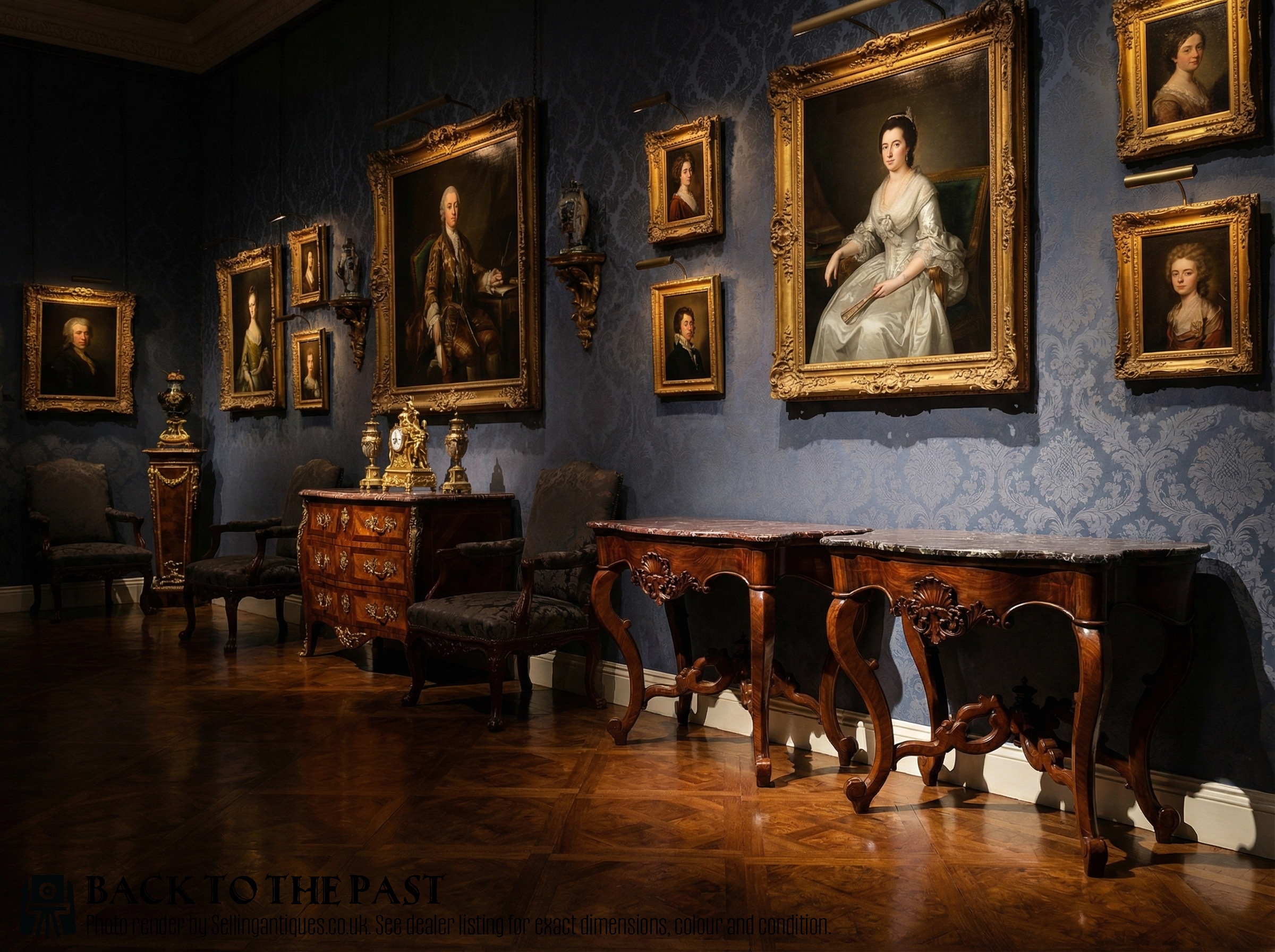
Dark Walnut Pier Table
A dark walnut pier table sits flat against a wall, frequently beneath a mirror or window pier, anchoring a room with its substantial presence. When you search for a dark walnut pier table, you encounter console and side tables spanning the eighteenth and nineteenth centuries.
The selections recorded here include Italian and Victorian pieces, featuring serpentine fronts and demilune shapes. Walnut timber dominates these examples, often paired with contrasting marble tops.
Makers shaped these console and side tables in various revivals, including Rococo and Baroque styles, alongside Italian Neoclassical and Empire designs. Buyers meet both single tables and matched pairs designed for formal reception rooms.
Materials and construction
Cabinetmakers constructed these pieces primarily from solid walnut and wood veneer, utilising dense hardwoods to achieve deep, dark tones. Many examples incorporate fruitwood and mahogany elements within their structural framing.
Carved wooden surfaces frequently support heavy marble slabs, while select pieces integrate ormolu mounts and wrought iron details. Artisans shaped the timber through traditional joinery, carving intricate foliage and scrolls into the solid walnut.
Dark Walnut Pier Table Retail Price Guide 2026
Typical asking prices for dark walnut pier table among the pieces listed under this phrase on Sellingantiques today, from the lower quarter to the upper quarter. They describe what is for sale here now, not the wider market.
Some pier tables include hidden nineteenth-century dust caught in deep carved acanthus leaves, waiting quietly for a very thorough dusting.
Judging quality in dark walnut pier table examples
Quality rests in the crispness of the hand-carved woodwork and the depth of figure within the walnut timber. Superior examples display fluid, confident carving along the frieze and legs, avoiding mechanical stiffness.
The integration of the stone top dictates the overall refinement, with well-fitted marble slabs demonstrating high-status commission work. Harmony between the timber frame and decorative mounts separates standard production from exceptional artistry.
The Dark Walnut Pier Table Glossary
- Pier table
- A table designed to stand against a wall between two windows or beneath a mirror. These pieces often feature flat backs and decorative fronts.
- Console table
- A table supported by wall brackets or console legs rather than four independent vertical posts. They remain flush against the vertical surface.
- Demilune
- A half-moon or semicircular shape utilised for tabletops and console bases. This curved form softens room geometry.
- Ormolu
- Gilded bronze mounts applied to furniture for decorative accent. The technique creates bright metallic contrast against dark walnut.
- Serpentine
- A wave-like undulating contour featuring alternating convex and concave curves. This shaping appears along table fronts and tabletops.
Dark Walnut Pier Table: Frequently Asked Questions
Where should I place a dark walnut pier table?
These tables find their natural home in entrance hallways, drawing rooms, or dining spaces against a blank wall. Placing one beneath a large mirror or artwork completes the traditional arrangement.
Because they sit flat against the wall, they occupy minimal floor space while providing a useful surface for lamps or decorative objects.
How do I care for the marble top?
Clean the stone surface using a damp cloth with mild soap, avoiding acidic cleaners that etch polished marble. Promptly wipe away spills to prevent staining.
Treat the dark walnut base with natural wax periodically to nourish the timber grain without building up heavy residues.
Are these tables sturdy enough for daily use?
Most examples possess substantial weight, particularly those featuring thick marble slabs, which lend inherent stability. They function well as display surfaces for lamps, vases, and decorative items.
Avoid placing excessive or uneven loads upon the edges, as antique joinery benefits from balanced weight distribution.
How can I tell an eighteenth century table from a nineteenth century piece?
Eighteenth century examples often exhibit simpler, bolder Italian Baroque or Neoclassical carving lines. The timber shows deeper patination acquired through centuries of polishing.
Nineteenth century pieces frequently reflect revival styles such as Victorian Rococo, displaying more exuberant, complex ornamentation and machine-assisted preparation.