

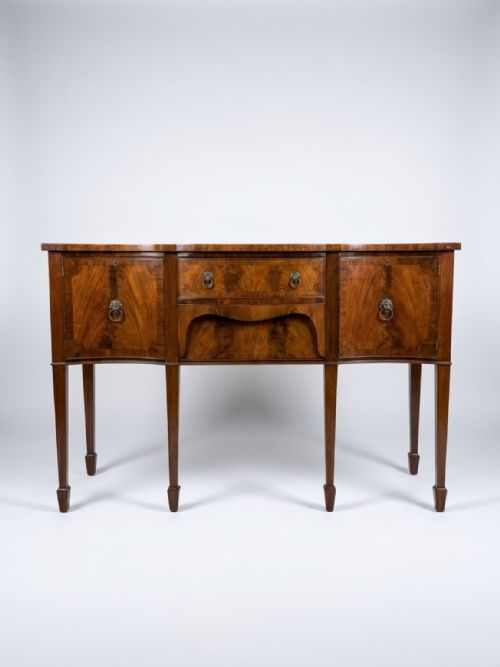
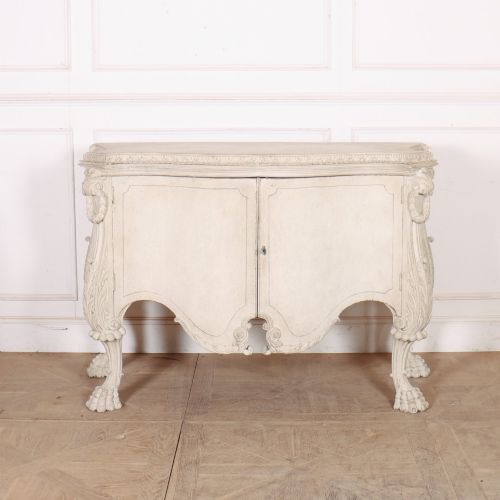
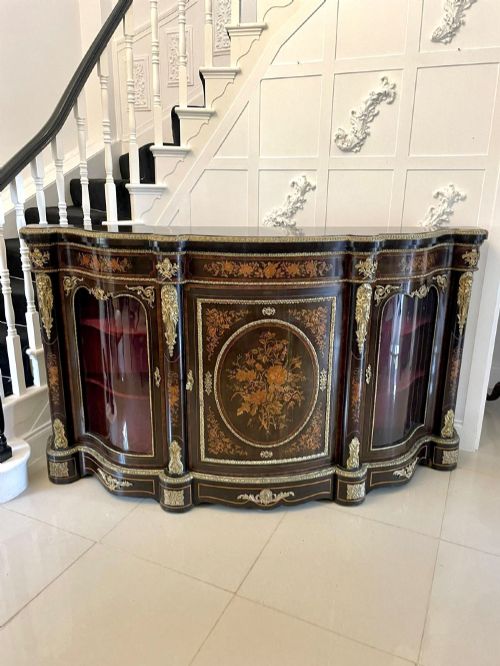
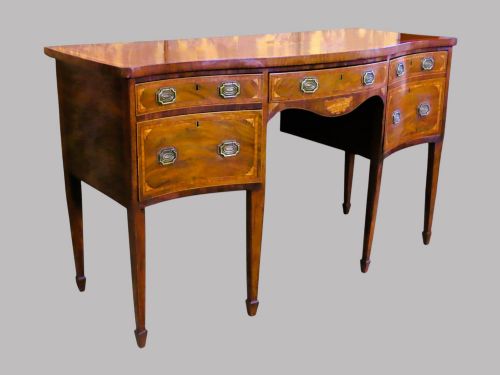
Serpentine Fronted Sideboard
A serpentine fronted sideboard brings flowing curves and formal dining room presence to an interior, built for serving and display.
Serpentine Fronted Sideboard
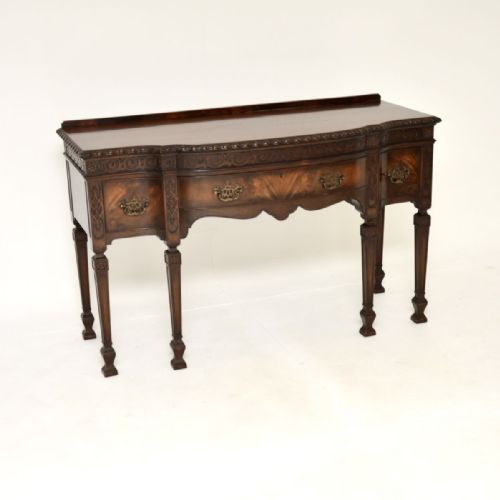
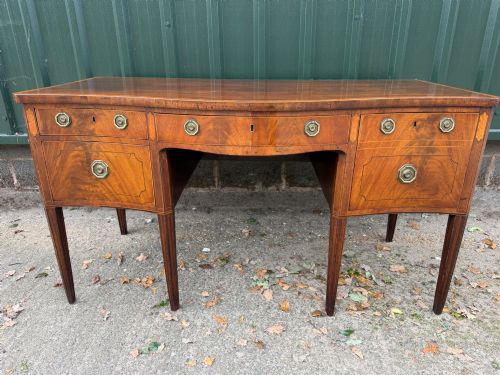
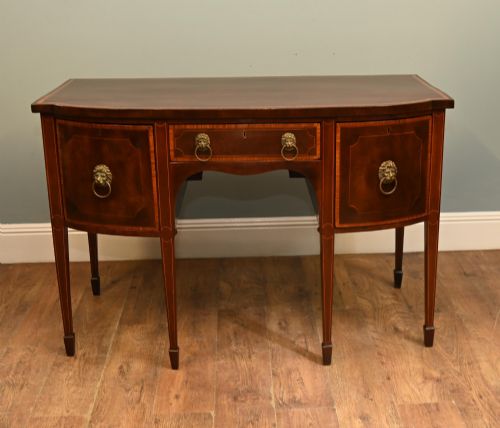
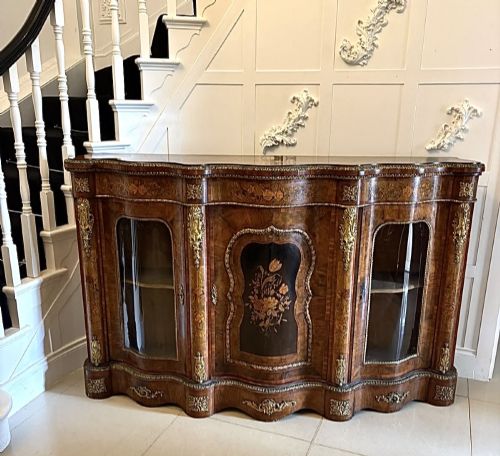
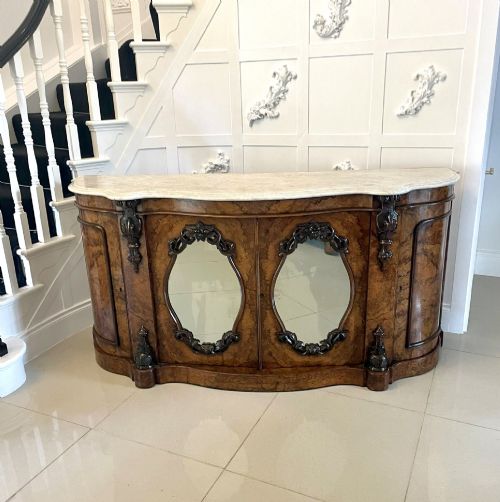
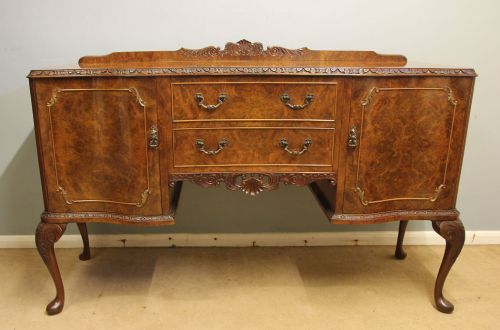
A serpentine fronted sideboard delivers a gently undulating, curved silhouette across the front, making it a sophisticated choice for dining rooms and reception spaces. These pieces function as serving surfaces and storage cabinets, taking forms such as large sideboards, servers, and credenzas.
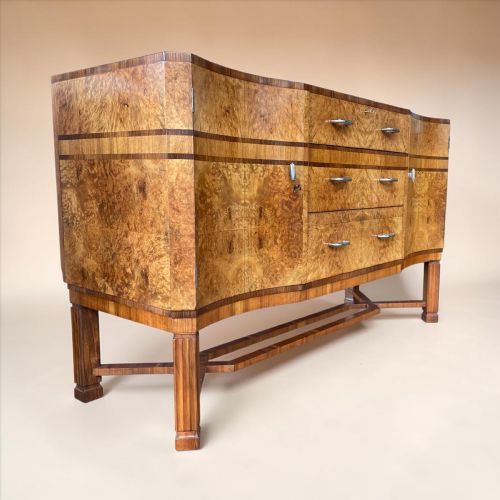
The selections span distinct historical eras, with George III and Georgian examples sitting alongside Victorian credenzas, Edwardian revival pieces, and Art Deco iterations. Mahogany and walnut dominate the offerings, often enhanced by decorative inlays, marquetry, and marble tops.
Buyers encounter everything from formal 18th-century dining room furniture to later revival styles and 1930s server designs. Each version uses the signature curved facade to soften the rigid geometry traditionally found in rectangular cabinetry.
How they were made
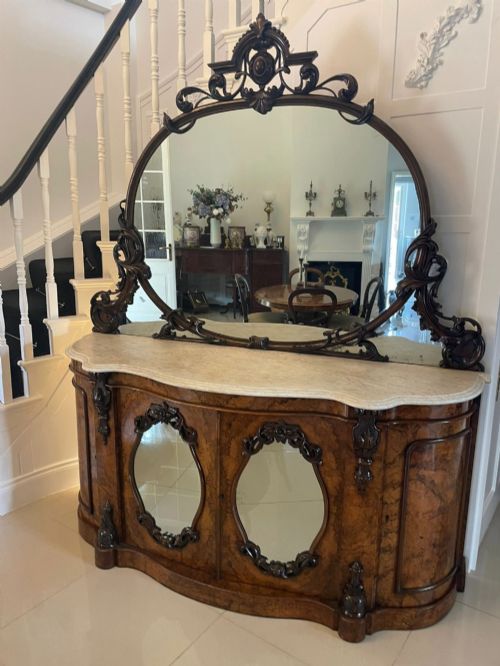
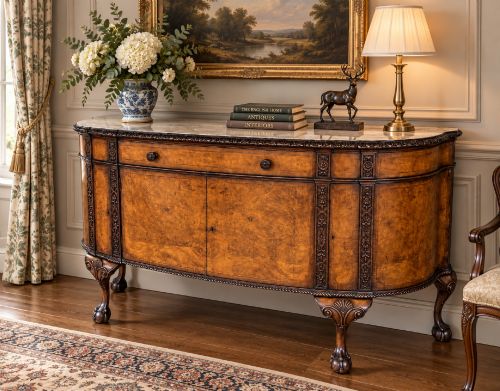
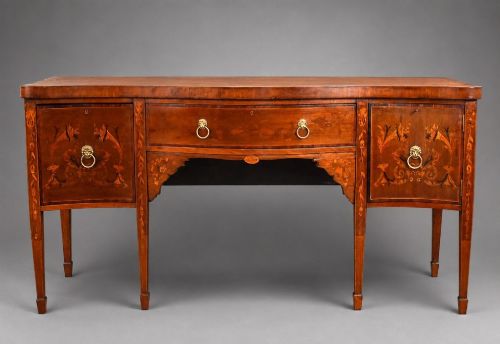
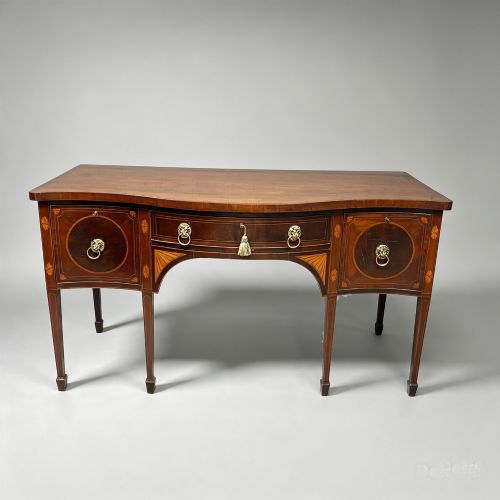
Cabinet makers built these pieces using solid and veneered timbers, primarily mahogany and walnut, frequently selecting burr walnut to create dramatic, highly figured grain patterns on the curved doors and drawers. Artisans applied floral marquetry and fine string inlay to enrich the primary timber surfaces.
Mounts in cast brass and ormolu add metallic contrast to the woodwork, particularly on Victorian credenzas and French-influenced commodes. Fitted marble tops appear on continental commodes and specific credenza designs, providing a cool, durable working surface above the curved cabinetry.
Serpentine Fronted Sideboard Retail Price Guide 2026
Typical asking prices for serpentine fronted sideboard among the pieces listed under this phrase on Sellingantiques today, from the lower quarter to the upper quarter. They describe what is for sale here now, not the wider market.
One walnut sideboard comes equipped with its own twelve piece cutlery set, ready for an impromptu dinner party.
What varies in quality
Quality rests in the handling of the curved timber fronts, where superior examples exhibit seamless grain continuity and precise joinery around the complex serpentine contours. The ambition of the decorative program separates standard production from exceptional pieces, visible in elaborate floral marquetry, finely cast ormolu mounts, and mirrored back structures.
Maison Gagneau·Epstein
The Serpentine Fronted Sideboard Glossary
- Serpentine
- A curved architectural line that sweeps outward at the centre and inwards at the sides, or vice versa. This contour defines the characteristic front profile of these sideboards.
- Credenza
- A sideboard or display cabinet, often featuring glazed doors or elaborate marquetry. Victorian examples frequently incorporate mirrored backs and ormolu mounts.
- Marquetry
- Decorative veneer work forming pictorial or geometric patterns using various woods and shell. Craftsmen applied these patterns to the drawer fronts and doors.
- Ormolu
- Gilt bronze mounts used as decorative accents on furniture. French and Victorian pieces frequently employ these gilded mounts along the corners and base.
- Commode
- A low chest of drawers or cabinet. Continental examples in this selection often feature shaped marble tops.
Serpentine Fronted Sideboard: Frequently Asked Questions
Where should I place a sideboard?
These cabinets suit dining rooms, large hallways, or living spaces where they function as serving surfaces or display consoles. The curved front projects outward, so adequate floor clearance in front of the piece is essential.
Positioning them against a principal wall allows the figured timber and ormolu mounts to catch ambient light. They also pair well beneath large mirrors or paintings that mirror their width.
How do I care for mahogany surfaces?
Maintain timber surfaces by dusting with a soft, dry cloth and avoiding silicone-based polishes that build up over time. Applying traditional beeswax periodically preserves the lustre of the wood.
Keep these cabinets away from direct sunlight and heat sources to prevent the veneers from drying out or lifting. Marble tops require simple wiping with a damp cloth and mild soap to avoid staining from liquids.
How do I date a serpentine sideboard?
Examine the secondary woods inside the drawers, the style of the hardware, and the construction methods used for the frame. Georgian pieces display hand-cut dovetails and simpler interior structures, while Victorian examples often feature heavier carved details and ormolu.
Revival pieces from the Edwardian era frequently combine earlier stylistic motifs with 20th-century assembly techniques. Art Deco and 1930s items show streamlined profiles and distinct veneer choices like burr walnut.
What is the difference between a sideboard and a credenza?
A sideboard traditionally serves a dining room function for storing plate and serving food, often featuring a low profile with drawers and cupboards. A credenza typically includes display elements, and Victorian iterations frequently add raised mirror backs and glazed compartments.
Both pieces can share the same serpentine front shape, but their internal layouts and decorative treatments reflect their intended uses in different rooms of the house.