





Serpentine Front Chest Bureau
A serpentine front chest bureau offers a graceful undulating profile that brings sophisticated movement and undeniable presence to any interior.
Serpentine Front Chest Bureau
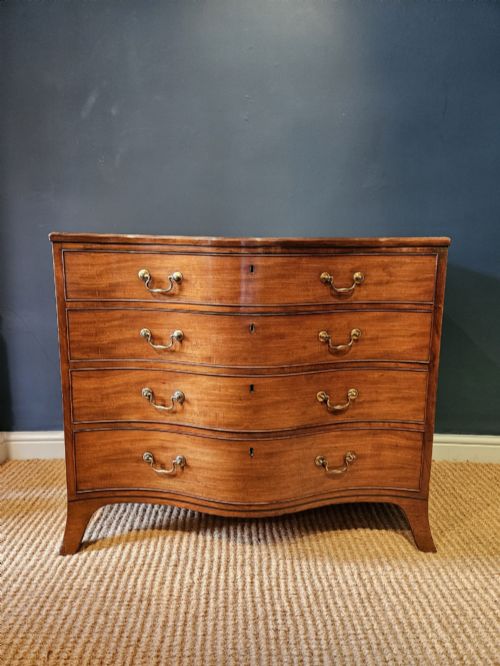
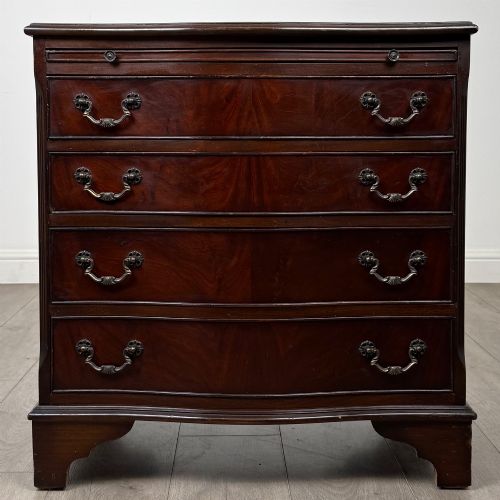
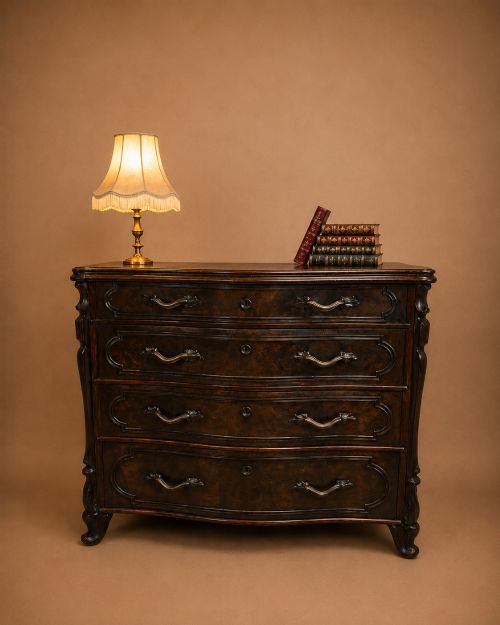
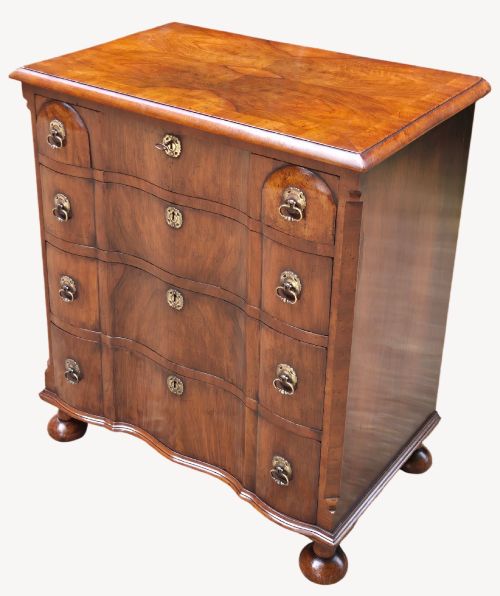
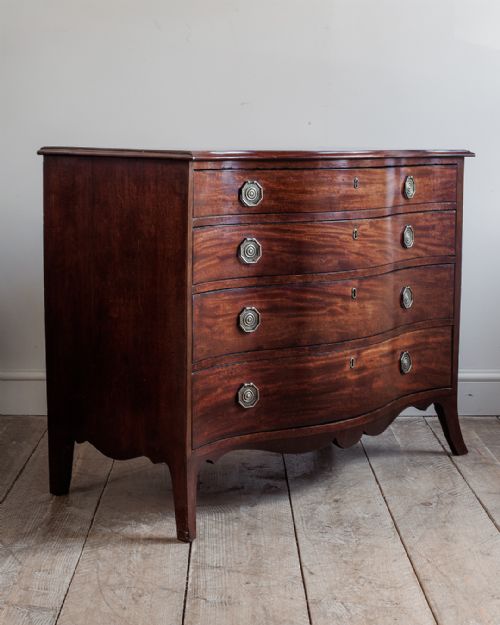
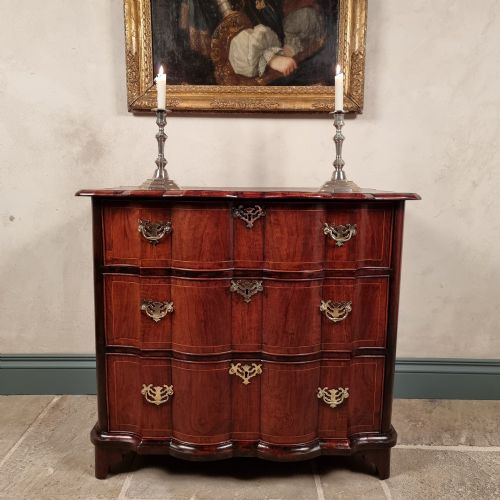
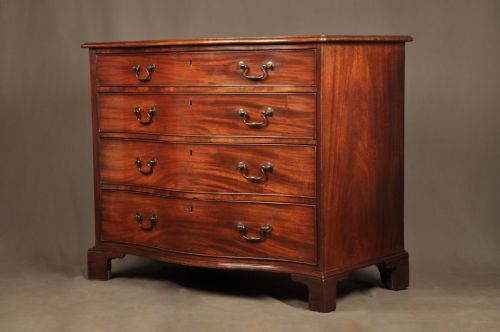
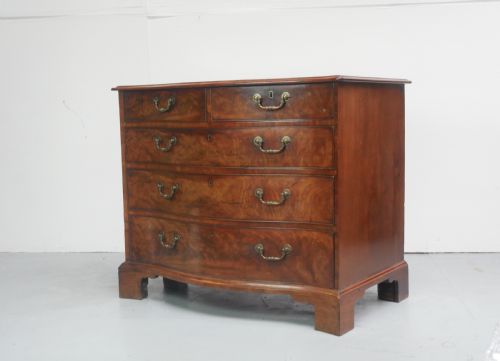
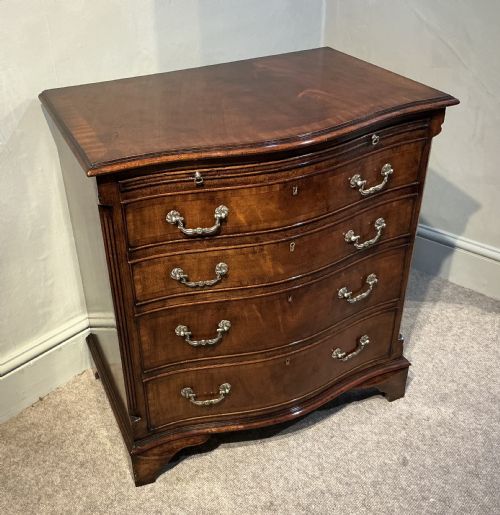
A serpentine front chest bureau combines a curving drawer configuration with writing surfaces and storage compartments, appearing primarily in Georgian and 18th Century variations alongside later revivals. Buyers looking at this selection encounter chests of drawers, secretaire bookcases, and bureau bookcases that showcase the distinctive convex centre flanked by concave ends. Mahogany and walnut dominate these forms, providing the structural stability necessary to shape complex curves without compromising the integrity of the piece.
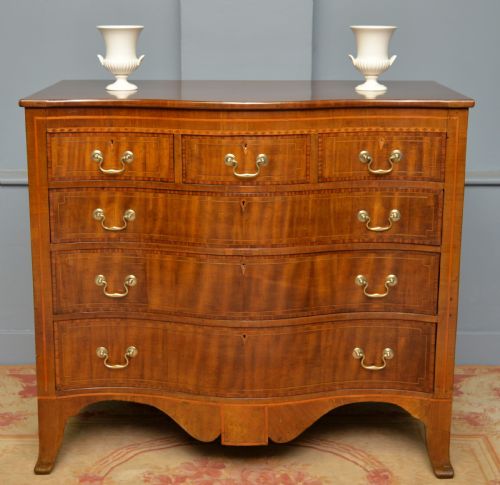
The most common iterations on this page are mahogany chests of drawers from the Georgian period, often reflecting George III craftsmanship or later Hepplewhite styles. Makers utilised figured timbers, boxwood inlay, and fiddleback grain to accentuate the flowing lines of the serpentine facade. Alongside standard chests, occasional knee-hole desks and dressing chests appear, offering the same characteristic curved silhouette in more compact dimensions.
Materials and construction methods
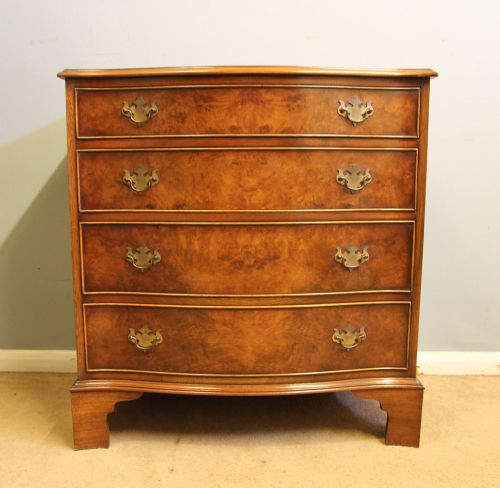
Makers constructed these pieces predominantly using solid mahogany and walnut, frequently applying veneers such as burr walnut onto secondary woods to create rich surface patterns. The undulating serpentine shape required precise timber selection and skilled joinery, as the curved drawer fronts had to be carved from solid blocks or painstakingly bent and laminated. Cabinetmakers utilised brass hardware, including drop handles and escutcheons, which complemented the warm tones of the timber.
Inlaid details involving boxwood and specialised banding frame the drawer edges and top surfaces, demonstrating meticulous hand-workmanship. Secondary woods like oak frequently appear in drawer linings and internal divisions, providing durable framing that withstands centuries of daily use. French polishing finishes the exterior surfaces, sealing the wood while highlighting the natural grain variations across the curved facades.
The listings span multiple centuries, capturing Georgian, Edwardian, and 1930s interpretations of the serpentine form.
Factors influencing quality and distinction
The sophistication of the timber selection dictates much of the visual distinction between pieces, with highly figured fiddleback mahogany and burr walnut commanding particular attention. Master cabinetmakers achieved tighter, more balanced serpentine curves that flowed harmoniously from the centre to the outer edges, whereas lesser examples display rigid or uneven transitions. The crispness of inlaid boxwood banding and the integrity of the original brass hardware further separate standard production from exceptional work.
Internal construction quality reveals the true standard of the piece, particularly the dovetail joints on the drawers and the condition of the oak linings. Pieces that retain their original surfaces without excessive modern restoration exhibit a superior depth of colour and patina. The integration of complex forms such as secretaire drawers or bookcase top sections demands higher carpentry skill, elevating the overall calibre of the furniture.
Maple & Co
The Serpentine Front Chest Bureau Glossary
- Serpentine
- A front profile characterised by a convex central section flanked by two concave curves. This contour requires advanced woodworking skill to shape and fit.
- Secretaire
- A desk feature disguised as a standard drawer that pulls down to reveal a writing surface and small pigeonholes. It provides concealed functionality without disrupting the exterior lines.
- Banding
- A narrow strip of contrasting veneer inlaid around the perimeter of drawer fronts or tabletops. This technique frames the primary wood and highlights the silhouette.
- Fiddleback
- A type of wood figure displaying transverse ripples resembling the back of a violin. Cabinetmakers prized this grain for its shimmering appearance under light.
- Escutcheon
- A protective plate surrounding a keyhole, frequently cast in brass. It serves both a functional purpose and a decorative role on drawer fronts.
Serpentine Front Chest Bureau: Frequently Asked Questions
How do I identify a genuine period piece?
Examine the construction methods visible within the drawer linings and internal framing, looking for hand-cut dovetails and period-appropriate secondary woods like oak. Original hardware marks and consistent ageing across the timber surfaces also help confirm authenticity.
Compare the proportions and curve geometry against established stylistic markers from the Georgian or 18th Century eras. Inconsistencies in the timber movement or modern fixings often indicate later alterations or reproduction work.
Where were these pieces used historically?
Owners typically placed these items in principal reception rooms, elegant bedrooms, or private studies where they functioned as storage units or writing desks. The sophisticated serpentine facade ensured they served as decorative centrepieces as well as practical furniture.
Secretaire and bureau bookcase variants provided dedicated spaces for correspondence and document storage within wealthier households. Their dual functionality made them versatile additions to domestic interiors.
How should I care for mahogany and walnut surfaces?
Maintain a stable indoor environment away from direct sunlight and extreme temperature fluctuations to prevent the timber and veneers from drying out. Dust regularly with a soft, dry cloth and apply occasional high-quality wax to nourish the polish.
Avoid placing damp items or heavy abrasive objects directly onto the wood surfaces to protect the finish. Professional conservation ensures the structural integrity of the complex curved drawers remains sound over time.
What distinguishes Hepplewhite style furniture?
Hepplewhite designs typically feature lighter proportions, elegant tapering supports, and refined decorative elements such as delicate boxwood inlay. The focus centres on grace and symmetry, complementing the undulating movement of the serpentine front.
Pieces attributed to this style often incorporate premium mahogany timbers and sophisticated veneer work. This aesthetic shift moved away from heavier earlier forms toward a more slender, polished appearance.