
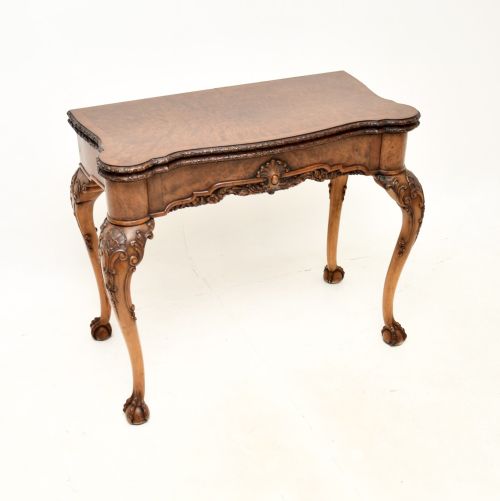
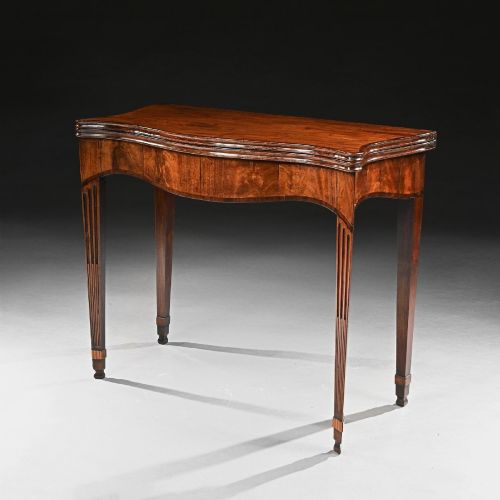

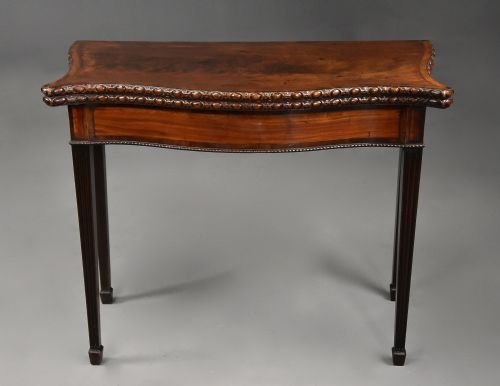
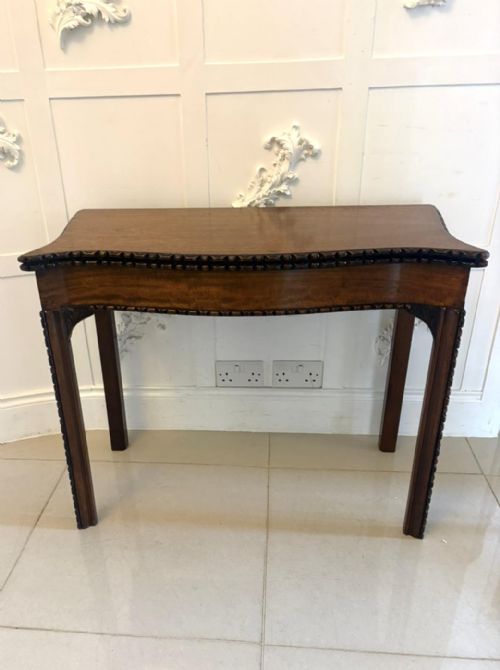
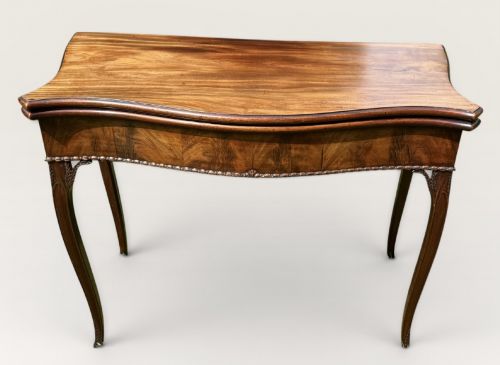


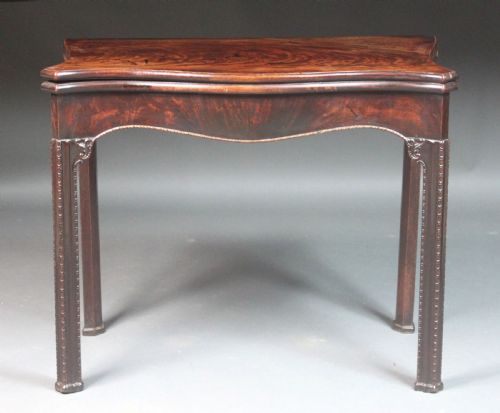


Serpentine Front Card Table
A serpentine front card table offers an undulating fold-over top designed for gaming, combining cabinet-maker skill with Georgian and Victorian elegance.

Serpentine Front Card Table
A serpentine front card table brings together curved timber edges and a folding top designed for card games in historic drawing rooms. When you search for a serpentine front card table, you encounter pieces spanning the eighteenth century through to the Victorian era and nineteen hundred. George III examples in mahogany dominate the selection, alongside later Victorian interpretations in burr walnut and marquetry.
Cabinet-makers constructed these tables with hinged tops that open to reveal baize-lined playing surfaces and internal wells for counters. The serpentine shape curves outward at the centre and inward towards the corners, demanding precise carpentry from the maker. Most pieces date from the eighteenth century, though late nineteenth-century revivals also appear frequently.
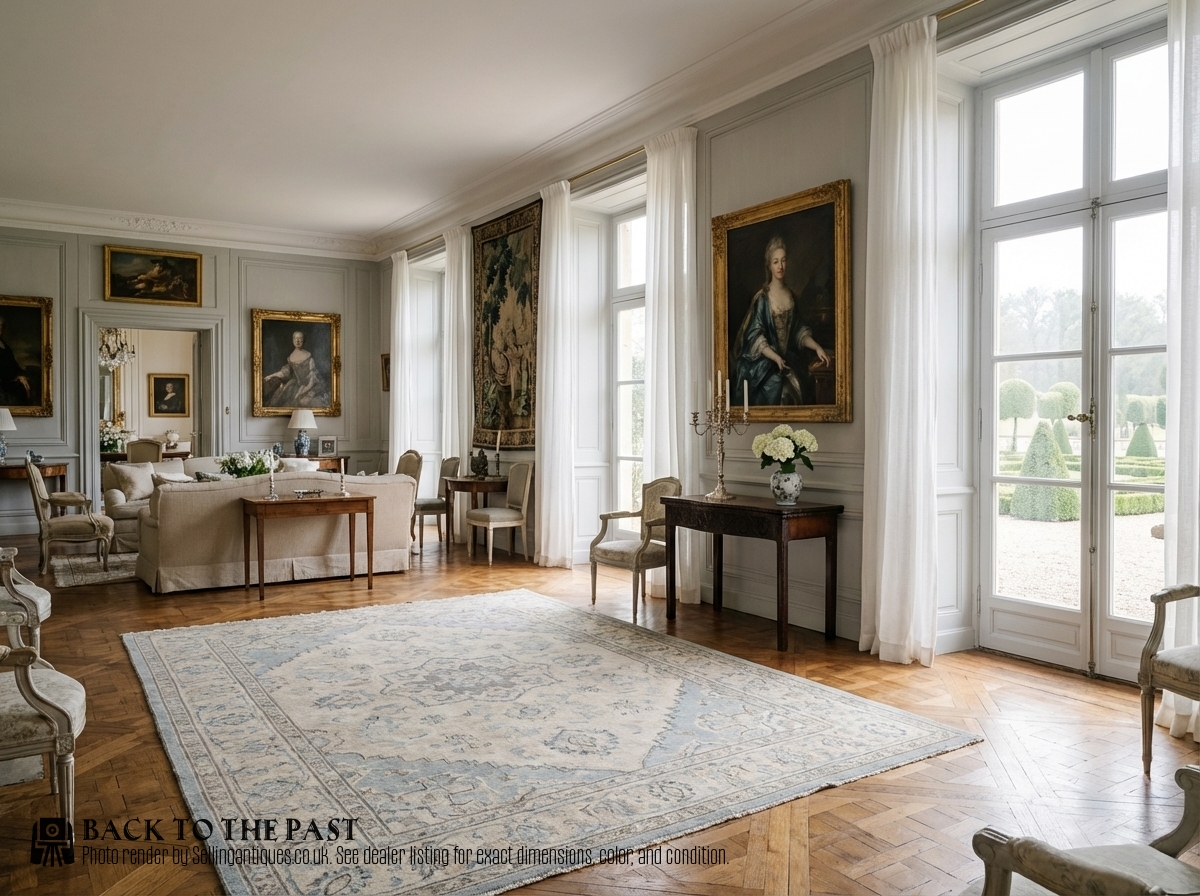
The form functions primarily as a console table against a wall when closed, transforming into a gaming surface when needed. Regional variations and stylistic revivals, including Chippendale and Rococo influences, shape the visual character of the pieces on offer. Buyers find both simple mahogany surfaces and richly inlaid satinwood or walnut variations.
Distinguishing quality across pieces
Quality rests upon the crispness of the carved details along the frieze and legs, particularly in George III and Chippendale iterations. Superior examples display timber with deep, original patination and well-matched veneer grains across the entire folding top. The precision of the hinge mechanism and the tightness of the mitred joints also mark the division between standard production and master craftsmanship.
The fluidity of the serpentine curve itself dictates the visual success of the piece, as inferior versions exhibit rigid or ungraceful transitions. Integration of the legs with the shaped apron shows the level of attention dedicated by the original cabinet-maker. Original surfaces untouched by harsh modern refinishing command greater appreciation among collectors.
Serpentine Front Card Table Retail Price Guide 2026
Typical asking prices for serpentine front card table among the pieces listed under this phrase on Sellingantiques today, from the lower quarter to the upper quarter. They describe what is for sale here now, not the wider market.
Design styles represented across the inventory include George III, Chippendale, Hepplewhite, Regency, and French Rococo Revival forms.
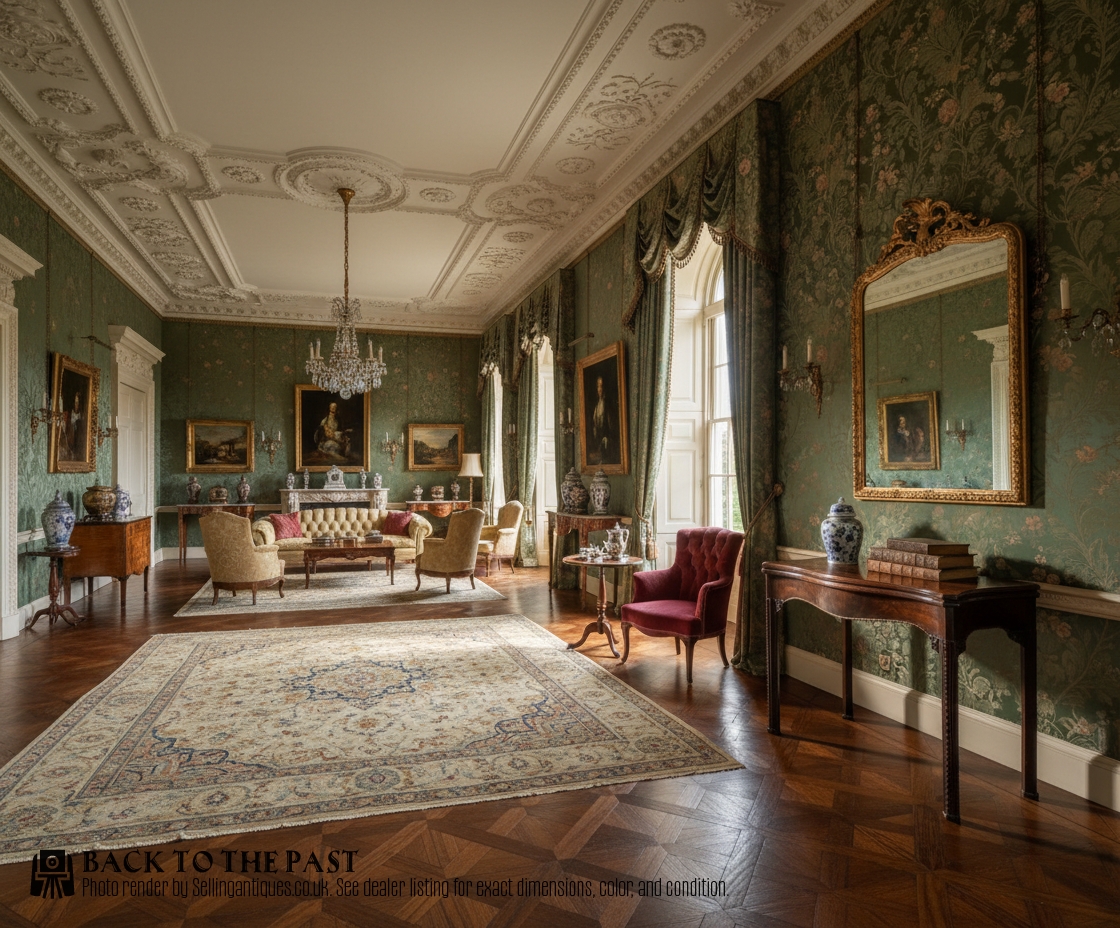
George III·Hepplewhite·Chippendale
The Serpentine Front Card Table Glossary
- Serpentine
- A furniture front characterised by a double curve, sweeping outward in the middle and inward at the sides. This profile creates movement and depth across the facade of the table.
- Baize
- A coarse woollen material resembling felt, traditionally used to line the playing surfaces of card tables. It provides a soft, non-slip texture suitable for handling cards.
- Marquetry
- Decorative patterns formed by inserting pieces of various coloured woods into a veneered surface. This technique creates pictorial or geometric designs across the top of the table.
- Ormolu
- Gilded bronze or brass applied as a decorative mount on furniture. It gained popularity during revival periods influenced by French design.
- Patina
- The surface sheen and coloration developed by wood through age, handling, and light exposure over decades. Original patination is a key indicator of authenticity.
Serpentine Front Card Table: Frequently Asked Questions
What is a serpentine front card table?
A serpentine front card table is an antique folding table featuring a curved, undulating front edge designed specifically for card games. These pieces typically stand against a drawing room wall when closed.
When opened, the hinged top reveals a baize-lined playing surface and a concealed compartment for storing gaming accessories.
How were these tables used?
Georgian and Victorian households utilised these tables for evening entertainment, primarily card games such as whist, quadrille, or hazard. During the day, the folded table functioned as a decorative console or side table.
Servants would unfold the top and swing out the rear supporting leg when guests gathered for evening social events.
How do I date a card table?
Dating relies upon examining the timber species, leg styles, and construction methods visible beneath the frame and inside the mechanism. Eighteenth-century examples often feature solid mahogany with hand-cut dovetails and subtle carving.
Later Victorian and nineteen-hundred pieces frequently incorporate machine-sawn elements, burr walnut veneers, or revival styles reflecting earlier Georgian and French aesthetics.
How do I care for wood veneer?
Protect antique wood veneer by keeping tables away from direct sunlight and maintaining stable room humidity to prevent splitting. Dust gently with a dry, soft cloth rather than using silicone-based polishes.
Occasional applications of high-quality beeswax preserve the historic finish and maintain the natural lustre of the timber.