
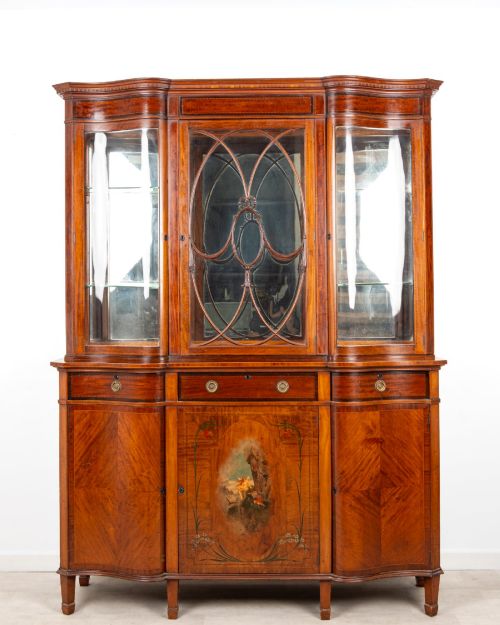
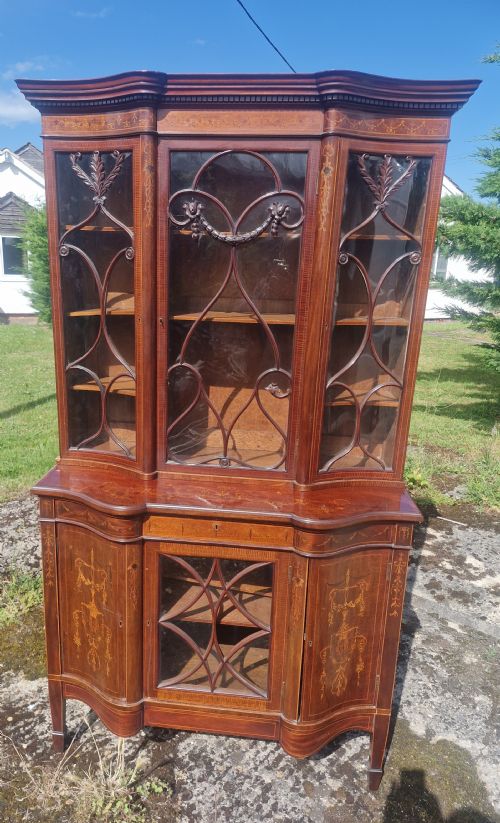


Serpentine China Cabinet
A serpentine china cabinet brings sweeping curves and glazed elegance to a room, offering a refined way to display treasured ceramics and collectibles.
Serpentine China Cabinet
A serpentine china cabinet displays precious ceramics and glassware behind curved glass panels. When you search for a serpentine china cabinet, you encounter sophisticated nineteenth-century and Edwardian examples fashioned with undulating fronts.
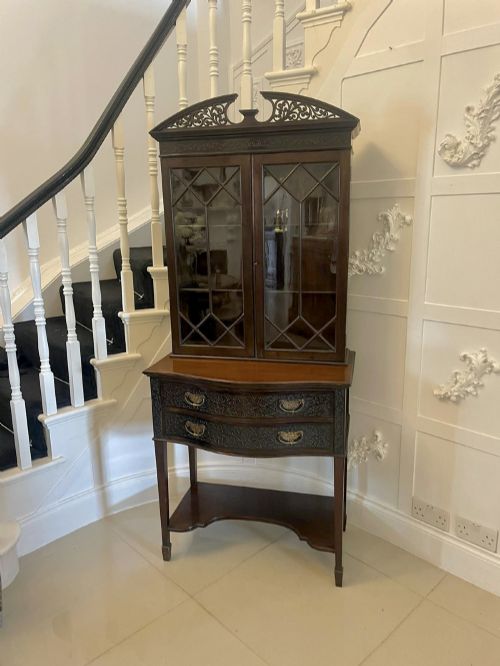
These pieces function primarily as vitrines, display cabinets, and specialised bookcases. The selection spans distinct design vocabularies including French Rococo Revival, Louis XV Revival, Sheraton Revival, and Chippendale Revival styles.
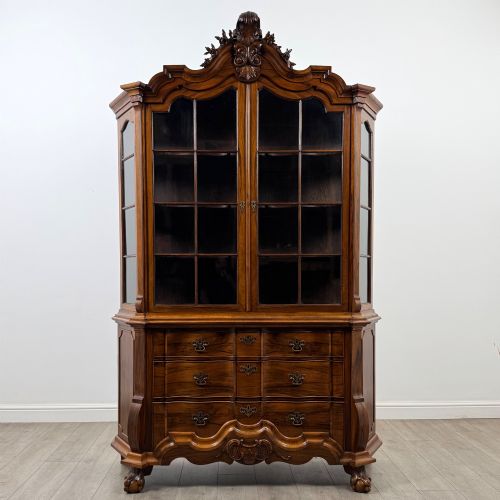
Makers and cabinetmakers constructed these display pieces in both freestanding formats and two-part configurations. The curving profile distinguishes them from standard flat-fronted cabinets, creating dynamic movement across the furniture face.
How they were made
Craftsmen built structural carcasses from dense timbers such as mahogany, walnut, kingwood, and satinwood, often applying intricate fruitwood inlay and marquetry across the curved surfaces. Skilled joiners shaped the timber to form the characteristic undulating serpentine lines.
Many workshops mounted gilded bronze ormolu embellishments along the framing edges, corners, and mounts to accent the woodwork. Glazed doors and side panels allowed light to illuminate the interior display shelves.
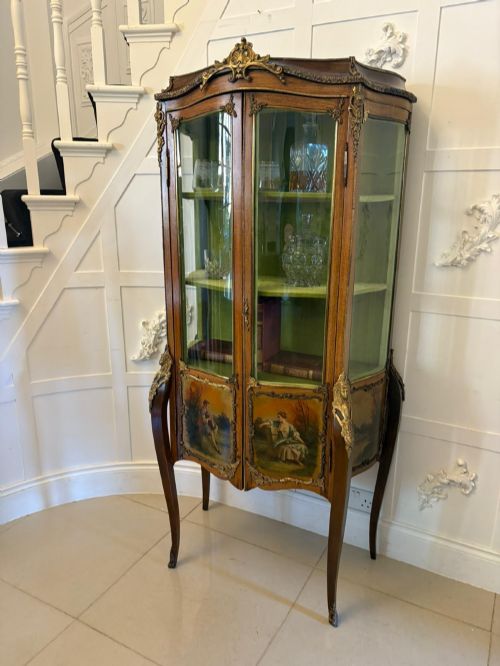
Makers utilised specialised finishing techniques, including Vernis Martin painted panels depicting classical or romantic scenes on the lower sections of French vitrines. Fabric linings frequently covered the interior back panels to provide a soft backdrop for displayed porcelain.
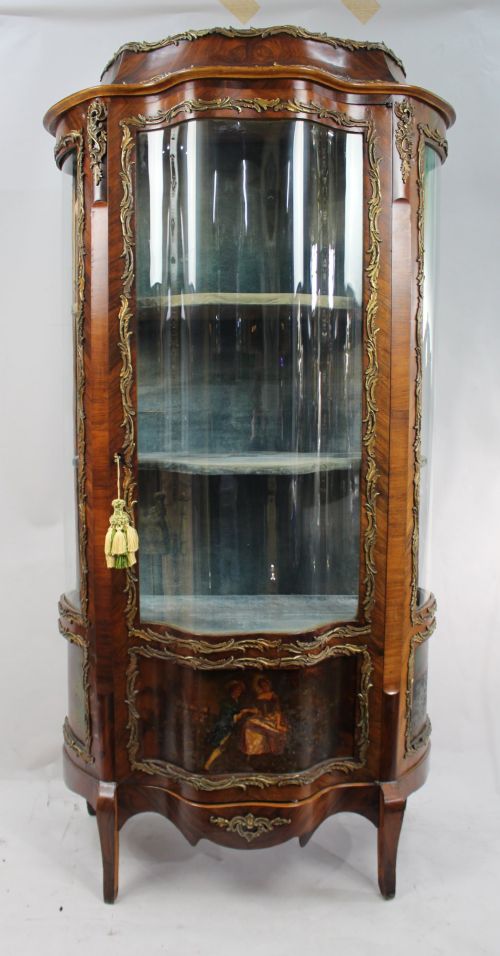
Some cabinets hide hand-painted Vernis Martin panels of pastoral scenes beneath the glass display.
What varies in quality
The refinement of the timber selection and the complexity of the marquetry dictate the upper tiers of quality. Finer cabinets display meticulously matched veneers and hand-carved details rather than printed patterns or superficial ornamentation.
The integration of the serpentine shape itself reveals the maker's skill, requiring precise joinery to maintain structural integrity along curving drawer fronts and door frames. Superior examples feature heavier, more chased ormolu mounts and authentic Vernis Martin hand-painted panels.
The quality extends to the glasswork and hardware, where original curved glass panes and substantial locking mechanisms distinguish workshop masterworks from more utilitarian production.
Edwards and Roberts·Thomas Justice and Sons
The Serpentine China Cabinet Glossary
- Serpentine
- A furniture front characterised by a double-curved line, convex in the centre and concave at the sides, creating a wave-like profile. This shaping requires expert woodworking to fit doors and drawers.
- Vernis Martin
- A simulated Japanese lacquer developed in eighteenth-century France and revived during the nineteenth century. This glossy, translucent varnish coats hand-painted pastoral or romantic scenes.
- Ormolu
- Gilded bronze mounts applied to furniture edges and corners for decoration. Higher quality mounts feature crisp chasing and heavy gold gilding.
- Marquetry
- Decorative patterns formed by fitting contrasting pieces of wood veneer onto a structural panel. Craftsmen use varied grain directions to create pictorial or geometric designs.
- Vitrine
- A glass-fronted display cabinet designed specifically for exhibiting porcelain, curiosities, and fine objects. These cabinets often feature glazed side panels to maximise interior illumination.
Serpentine China Cabinet: Frequently Asked Questions
What is a serpentine china cabinet?
A serpentine china cabinet is a glazed display furniture piece featuring a distinctive curved front that sweeps inward and outward. These cabinets were designed to showcase fine porcelain and decorative objects while adding architectural movement to a room.
Cabinetmakers utilised hardwoods and delicate veneers to construct these undulating frames, incorporating glass panels on the front and sides. They serve as both practical storage and focal points for interior display.
How do I date a display cabinet?
Dating a display cabinet involves examining the underlying timber, construction methods, and stylistic revival influences. Pieces from the Victorian era often display heavier proportions and rich mahogany or walnut, whilst Edwardian examples tend toward lighter satinwood and refined inlay.
Stylistic cues such as Louis XV or Sheraton Revival markers help narrow the manufacturing window. Maker marks and hardware styles also provide concrete evidence for the exact period of origin.
Where should I place a vitrine?
A vitrine requires a stable location away from direct sunlight to protect delicate wood veneers and interior fabrics. Placing the cabinet against a strong wall anchor ensures the tall structure remains secure, especially given the weight of glass panels.
Positioning the piece near ambient light sources allows the glazed sides to illuminate the interior contents effectively. Ensuring adequate clearance for the swinging doors prevents accidental impact against surrounding furniture.
How do I clean mahogany furniture?
Cleaning mahogany furniture requires a soft, dry lint-free cloth to remove everyday dust from the carved surfaces and veneers. Avoiding silicone-based polishes prevents buildup that can dull the traditional French polish or wax finish over time.
Moisture should be kept away from the timber and especially the glazed joints. Occasional application of quality furniture wax helps nourish the wood and maintain its natural lustre.