





Serpentine Burr Walnut Cabinet
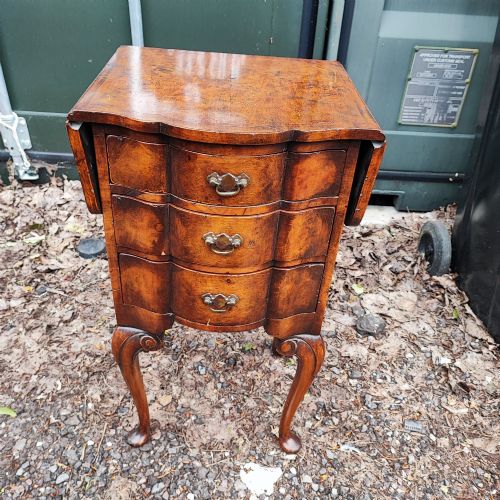
A serpentine burr walnut cabinet brings swirling timber grain and undulating curves into a room, offering both presence and storage.
Serpentine Burr Walnut Cabinet
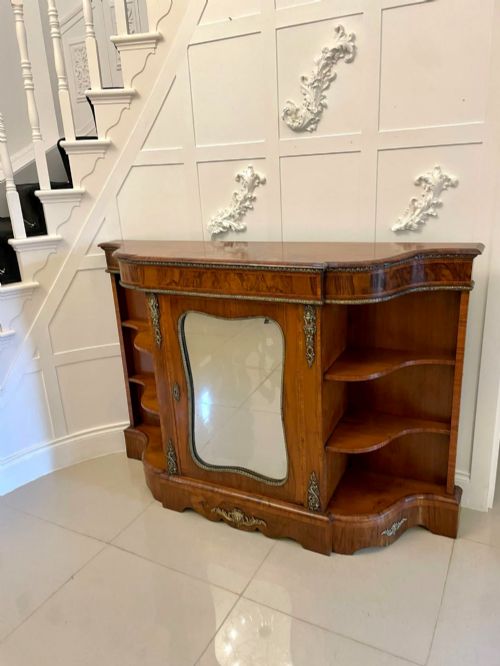
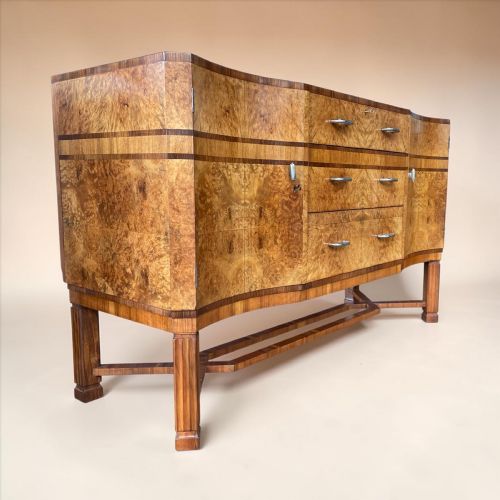
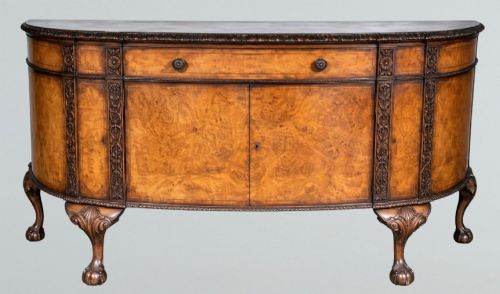
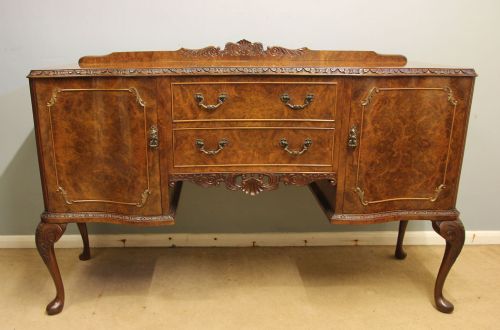
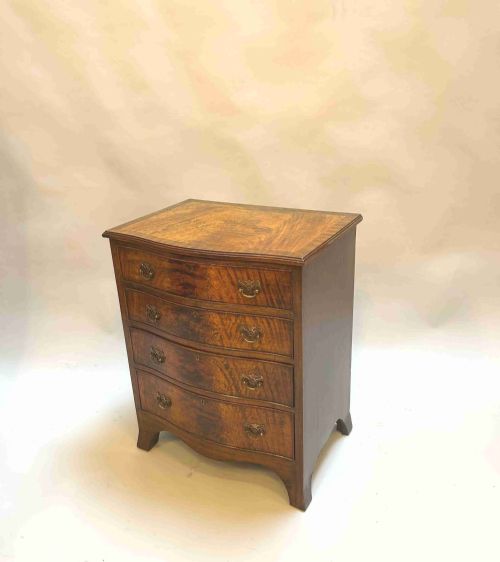
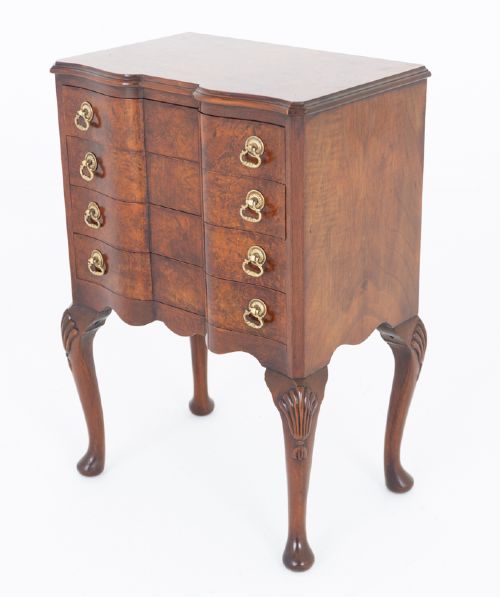
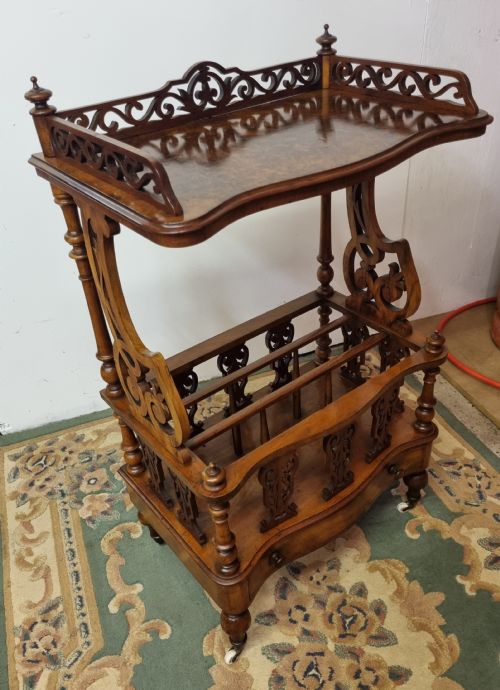
A serpentine burr walnut cabinet combines a fluid, undulating front outline with the richly patterned figuring of walnut burl timber. These pieces appear primarily as credenzas, side cabinets, and bedside tables originating from Victorian and later revival periods.
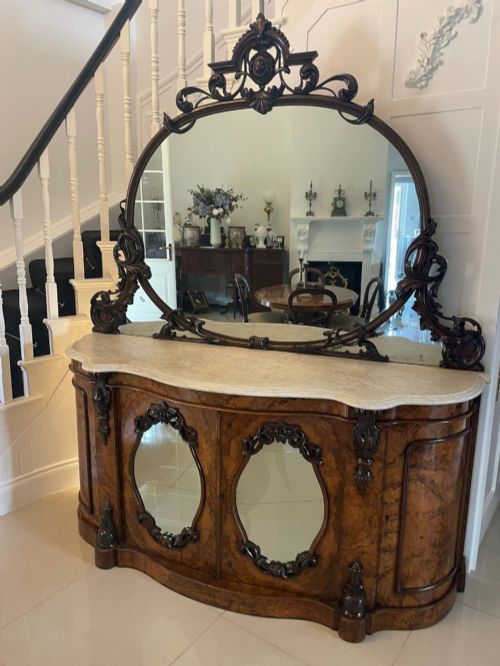
The Victorian era supplies many of the large mirror-back credenzas and pier cabinets seen here, often shaped with pronounced serpentine fronts and detailed marquetry. Later twentieth-century pieces shift toward compact bedside chests, cocktail cabinets, and Art Deco sideboards.
The underlying architecture follows regional interpretations of English Victorian design alongside continental influences like South German Baroque and Italian cabinetmaking. Buyers choose these specific forms to anchor a drawing room or bedroom with distinctive historic character.
Materials and Construction
Cabinetmakers constructed these pieces by applying thin layers of burr walnut veneer over solid secondary timbers to showcase the complex, swirling grain patterns. This veneer work frequently joins with marquetry inlay, brass mounts, and ormolu detailing.
Shaping the characteristic undulating front required careful steaming and shaping of timber to form the sweeping curves of the serpentine outline. Heavier structural elements often incorporate marble tops, glass doors, and mirrored backs.
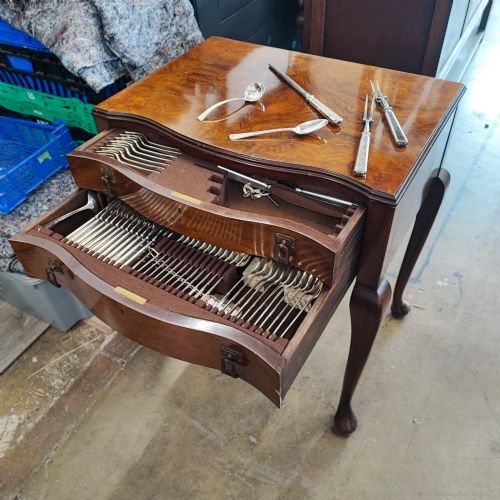
Interior carcases utilise sturdy construction methods typical of nineteenth and early twentieth-century workshops, supporting fitted shelving, drawers, and cutlery compartments.
One unexpected survival pairs the serpentine timber curves with a hidden twelve-piece cutlery set.
Assessing the Pieces
Quality rests heavily on the choice and matching of the burr walnut veneer across the curved serpentine surfaces. Superior examples display symmetrical grain patterns that flow smoothly around the undulating contours without disruption.
The crispness of carved wooden details, the precision of marquetry inlay, and the integration of ormolu or brass mounts distinguish finer workshops from standard production. Heavier additions like solid marble tops and original mirrored backings elevate the architectural weight of the piece.
The Serpentine Burr Walnut Cabinet Glossary
- Serpentine
- A furniture front characterised by a curving contour that bulges outward in the centre and recesses inward at the sides. This sweeping line requires advanced woodworking skill to match with veneer.
- Burr Walnut
- Timber taken from the abnormal growth or burl of a walnut tree, producing dense, swirling clusters of knots and eyes. It is sliced into thin veneers for decorative cabinet surfaces.
- Credenza
- A low dining or drawing room cabinet, often featuring mirrored backs, glass-fronted display doors, and side cupboards. Victorian examples frequently incorporate serpentine shaping.
- Marquetry
- The art of applying small pieces of varied veneer to a structure to form decorative patterns and pictures. It appears frequently on Victorian walnut cabinet doors.
- Ormolu
- Gilded bronze mounts applied to furniture for decorative accent, popular during the nineteenth century. These metal fittings highlight corners, feet, and friezes.
Serpentine Burr Walnut Cabinet: Frequently Asked Questions
What is a serpentine front?
A serpentine front is an undulating shape that curves outward in the middle and inward toward the edges. This distinctive profile creates dynamic shadows and movement across the wooden surface.
Cabinetmakers adopted this curved design to soften rigid room layouts and display decorative timber veneers to maximum advantage.
How do I care for burr walnut?
Burr walnut benefits from consistent indoor humidity and protection from direct sunlight to prevent the thin decorative veneers from drying out. Regular dusting with a soft, dry cloth preserves the polished surface.
Avoid placing these cabinets near heat sources or damp exterior walls, as temperature shifts stress the historic timber joints.
Where were these cabinets placed?
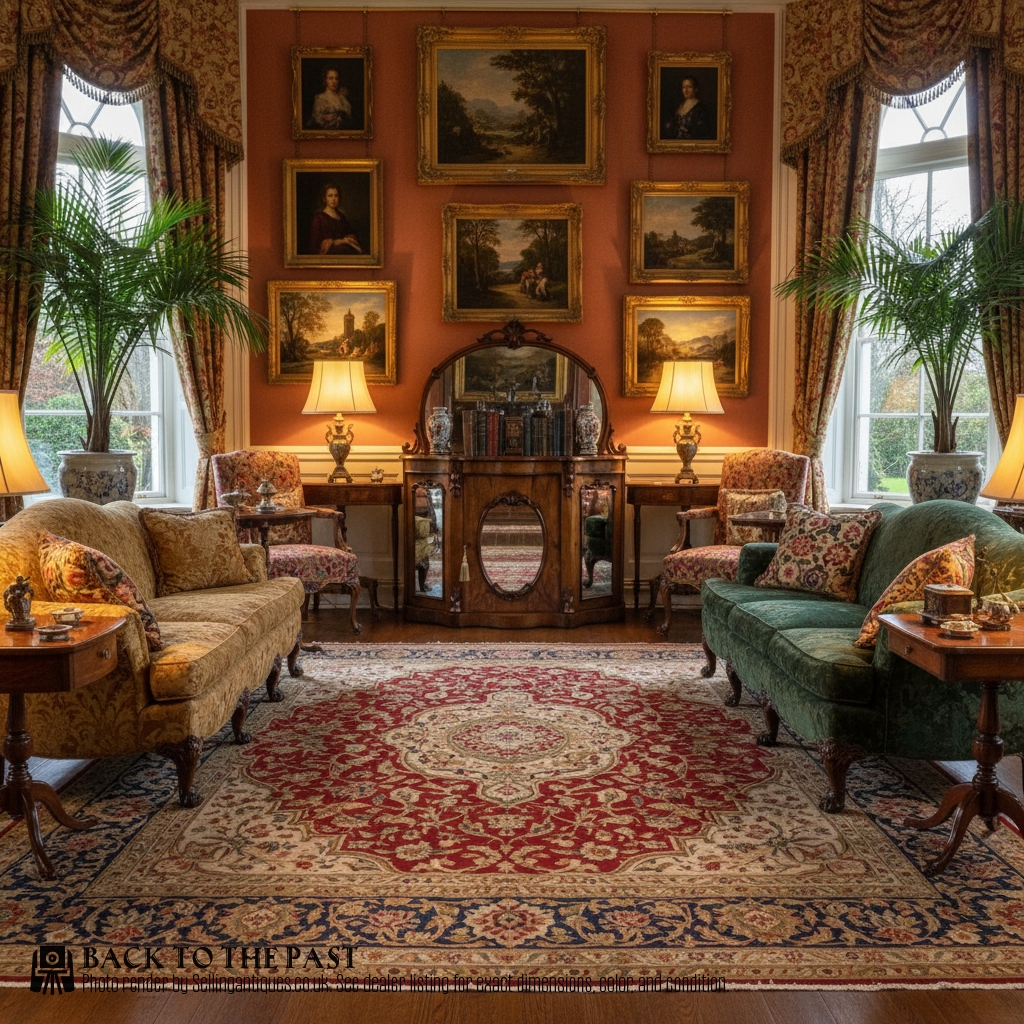
Victorian credenzas and side cabinets traditionally stood against principal drawing room walls to display silver, glass, and ornaments. Smaller bedside versions served bedrooms as functional storage.
Today, these pieces transition easily into modern living spaces as focal storage points in hallways, dining rooms, or studies.
Are these pieces purely decorative?
While prized for their striking grain patterns and decorative mounts, these cabinets offer substantial interior space behind doors and drawers. Historic examples accommodated everything from dining silver to books and linens.
Modern owners utilise the enclosed shelving for storage while displaying lamps and decorative objects on the upper surface.