


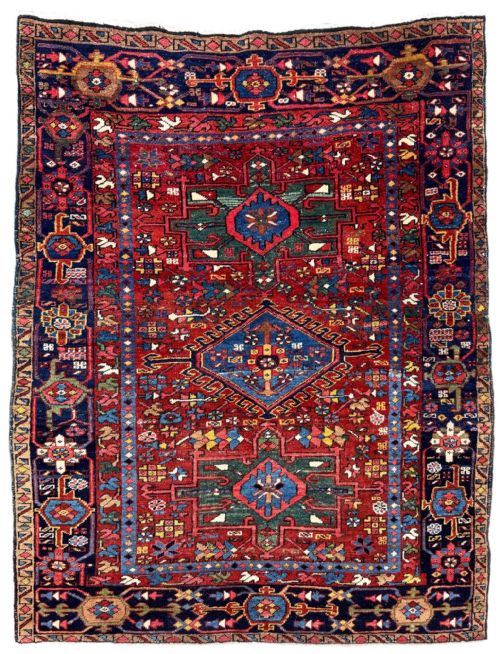


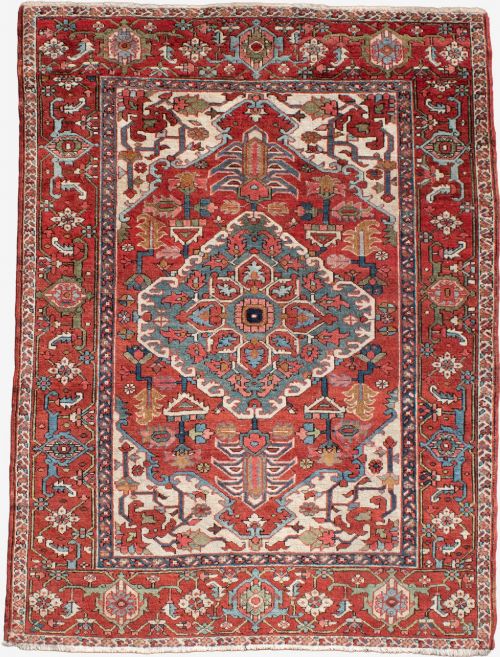


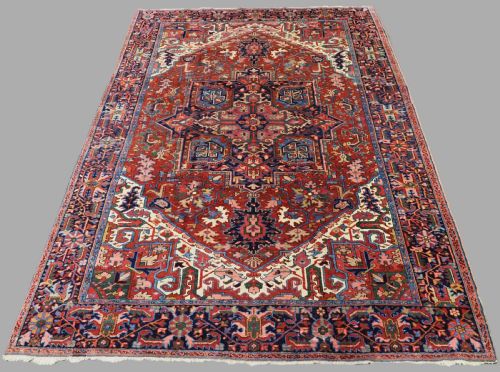


Serapi Wool Carpet
These heavy hand-knotted room-sized rugs and runners bring the bold geometry of northwest Persia into a modern interior.
Serapi Wool Carpet
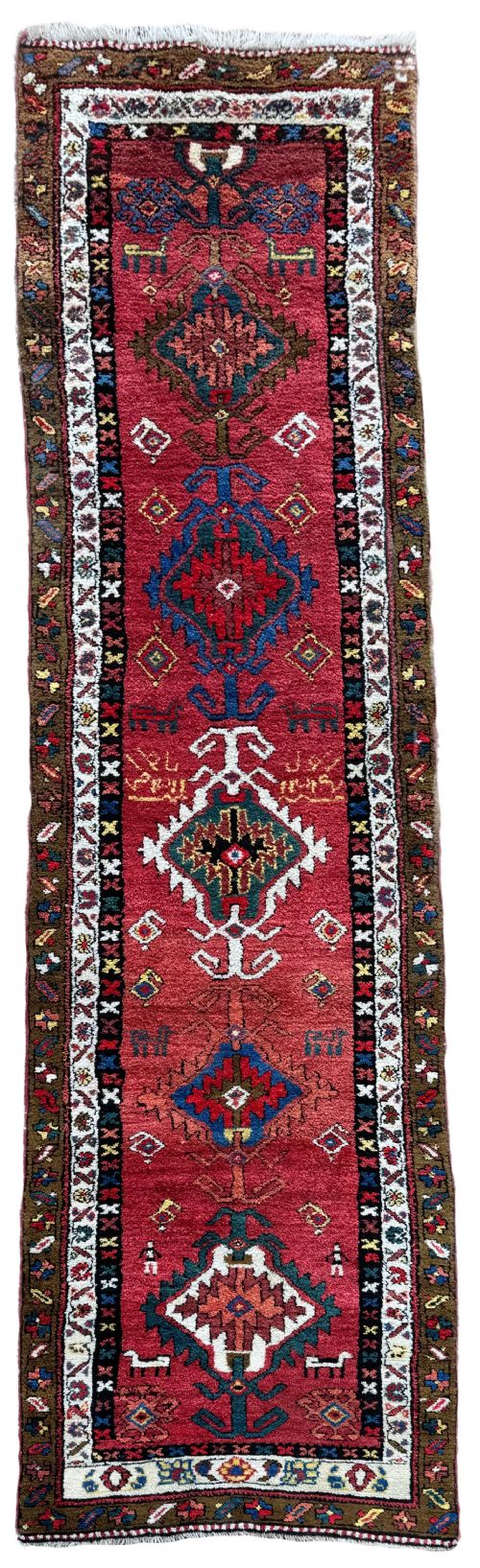
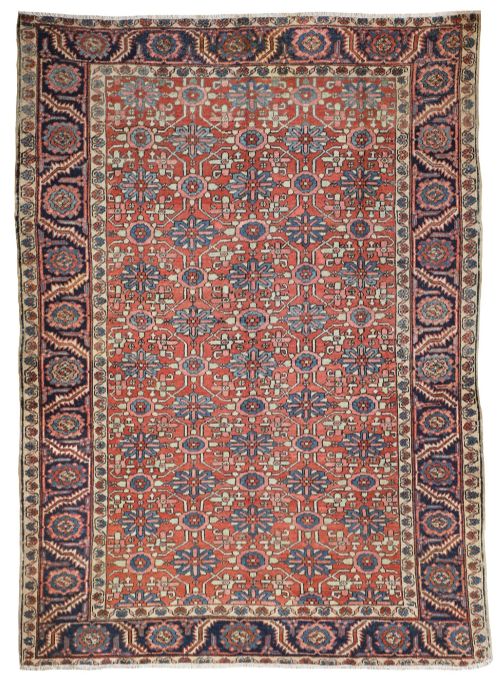
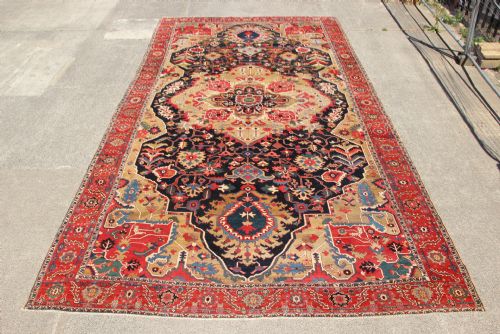
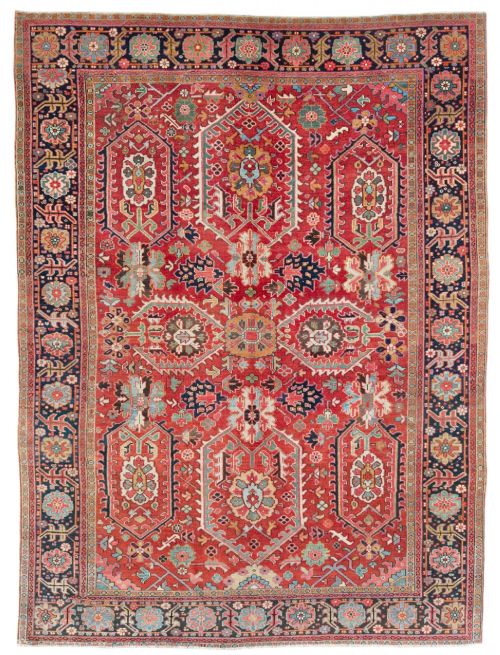
A serapi wool carpet is a distinctive large format floor covering originating from the Heriz district of northwest Persia. These pieces date predominantly from the late nineteenth century through to the early decades of the twentieth century, spanning periods from eighteen sixty to nineteen thirty.
Buyers will most frequently encounter generous room-sized carpets and elongated runners rather than small scatter rugs. The inventory demonstrates a strong representation of antique Persian Heriz styles alongside pieces specifically classed under the Serapi designation.
What varies in quality
Quality rests primarily in the crispness of the geometric drawing and the balance of the central medallion against the field. Finer examples display harmonious colour saturation and well-proportioned borders that frame the composition without crowding.
The integrity of the wool pile and the evenness of the wear across large expanses dictate the visual impact of the piece. Carpets retaining their original outer guard stripes and end finishes hold a stronger presence in a room.
Listings span production dates from eighteen sixty to nineteen thirty, all executed in durable wool and cotton.
The Serapi Wool Carpet Glossary
- Serapi
- A sub-style of Heriz carpets known for bolder, more spacious geometric designs and a slightly earlier production period. These rugs typically feature large-scale central medallions.
- Heriz
- A region in northwest Persia famous for durable carpets woven with geometric rather than floral motifs. The style is characterised by robust structural integrity and earthy colour palettes.
- Runner
- An elongated narrow carpet format designed specifically for hallways, corridors, or alongside beds. These pieces navigate restricted spatial dimensions while maintaining full-scale village designs.
- Warp
- The stationary vertical threads stretched on the loom that form the structural skeleton of the carpet. Cotton is standard for these northwest Persian weaves.
Serapi Wool Carpet: Frequently Asked Questions
How do I clean a large wool carpet?
Gentle surface vacuuming without a beater bar removes everyday dust from the wool pile. Professional specialist washing remains essential for deep cleaning to protect the natural dyes.
Water saturation must be avoided to prevent dye migration or cotton foundation shrinkage. Regular rotation ensures even exposure to light and foot traffic.
Can I place these carpets in high-traffic hallways?
The robust cotton and wool construction makes these runners and carpets exceptionally durable for busy areas. Their dense knotting resists crushing under sustained movement.
Pairing the carpet with a quality underlay prevents slipping and cushions the foundation against hard subfloors. This protective layer reduces internal friction between the wool fibres.
How do I identify a Serapi from a standard Heriz?
Serapi designs generally exhibit a more open field layout with larger geometric motifs and simplified medallion structures. The drawing feels airier and less crowded than later village productions.
Colour combinations in these pieces often incorporate softer terracotta tones alongside rich indigos and creamy ivories. Production dates lean heavily toward the late nineteenth century.
What size options are available in these listings?
The inventory spans compact square rugs up to expansive gallery carpets exceeding six metres in length. Narrow runners designed for corridors appear alongside broad room-sized floor coverings.
Dimensions vary considerably due to the bespoke nature of village weaving traditions. Measuring the intended floor space carefully ensures the chosen proportion fits the room architecture.