


Sepia Tone Watercolour
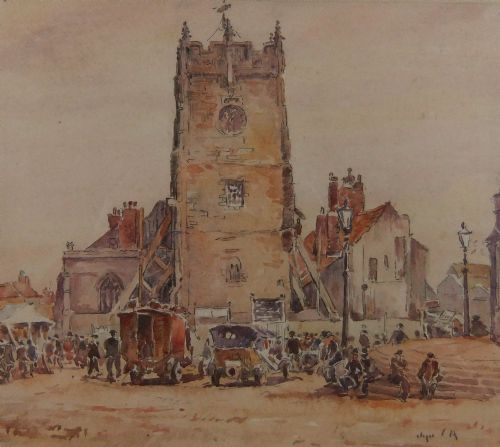
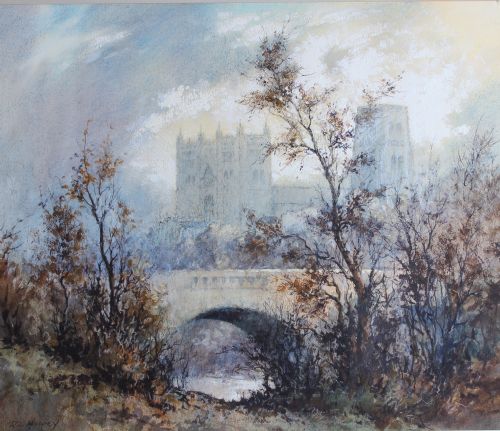
These sepia tone watercolour pieces offer restrained monochromatic tones and delicate washes, bringing historic townscapes and architectural scenes directly to your wall.
Sepia Tone Watercolour
A sepia tone watercolour presents historic landscapes, townscapes and architectural studies executed in monochrome brown pigments and ink washes. These works capture architectural details and subtle lighting through monochrome gradations rather than full polychrome palettes.
The pieces appearing on this page span several distinct eras, stretching from the Georgian period through the Victorian and Edwardian epochs into the mid-twentieth century. Works often depict British locations, ranging from cathedrals and riverside views to urban streetscapes.
Most examples take the form of original watercolour paintings, ink drawings and monochrome wash studies on paper. Buyers frequently encounter framed landscape and townscape artworks attributed to named British artists and regional schools.
How They Were Made
Artists built these compositions upon paper supports using watercolour paint, ink and pencil underdrawings. The monochrome effect relies on sepia pigment and wash techniques applied to create depth and shadow.
Pen and ink lines frequently define the initial architecture or landscape contours before the artist laid down transparent washes of brown watercolour pigment. Gouache occasionally appears alongside watercolour for added opacity in highlights.
Materials employed across these artworks include paper, watercolour paint, ink, pencil and wash.
What Varies in Quality
Quality rests upon the deftness of the pen work and the control of the wash, where confident brushstrokes define form without heavy corrections. Strong tonal contrast and precise architectural perspective elevate a composition.
The significance of the subject matter and the documented skill of the hand distinguish individual sheets. Works displaying assured draughtsmanship and atmospheric handling command greater appreciation.
John Smith Atherton·Robert Leslie Howey·Charles James Lauder·Thomas Rowlandson·Tom Dudley·Dame Laura Knight·Fred Lawson·John Thirttle
The Sepia Tone Watercolour Glossary
- Sepia
- A brown pigment traditionally derived from the ink sac of the cuttlefish. It forms the primary monochromatic tone in these watercolours.
- Wash
- A thin, fluid layer of watercolour paint spread evenly across paper to create transparent shadows or sky backgrounds. This technique establishes the atmospheric depth in monochrome works.
- Monochrome
- A painting or drawing executed in a single colour or shades of a single colour. In this context, it refers to the brown and sepia tones characteristic of the works.
- Gouache
- An opaque watercolour paint made from pigment combined with a binding agent and white filler. Artists use it to add solid highlights over transparent washes.
Sepia Tone Watercolour: Frequently Asked Questions
How should I hang a sepia watercolour?
Keep these works away from direct sunlight to prevent the paper and brown pigments from fading over time. Framing with UV-filtering glass provides essential protection for works on paper.
Ensure they hang in rooms with stable humidity levels to avoid cockling or damp damage to the paper support.
Are these works original paintings?
The pieces listed here comprise original watercolour paintings, ink sketches and hand-drawn wash studies rather than mass-produced reproductions. Each sheet represents a unique historic creation.
Artists applied pigment directly to paper by hand, resulting in singular brushwork and individual composition.
What periods do these pieces date from?
The selections span from the eighteenth century through the Victorian and Edwardian eras into the mid-twentieth century. This timeline reflects shifting British artistic styles and topographical interests.
Earlier pieces often feature delicate pen work, while later twentieth-century examples display broader wash techniques.
What subjects typically appear in these works?
Common subjects include British landscapes, cathedrals, riverside views, urban streetscapes and architectural studies. Artists frequently recorded local towns and notable historic buildings.
Marine scenes and coastal townscapes also feature among the topographical watercolours.