



Sepia Maritime Painting
These sepia maritime painting works capture harbours and ships on paper and canvas, offering collectors a direct view into historical waters.
Sepia Maritime Painting
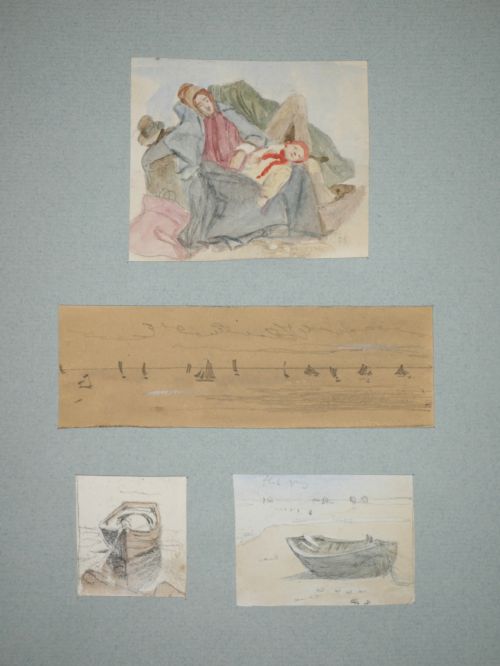
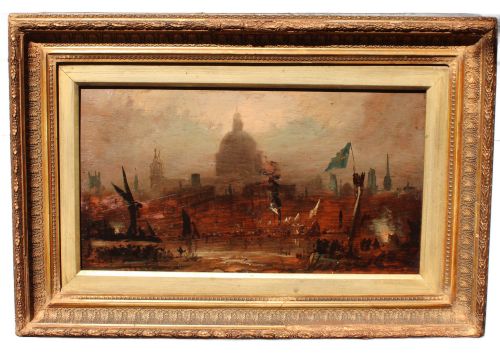
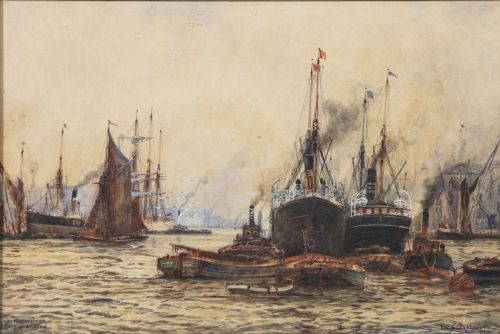
A sepia maritime painting depicts ships, rivers, and coastal scenes using monochromatic brown tones or mixed watercolour pigments. These works appear across the nineteenth century and the interwar period, capturing scenes from the Port of London to West Country trawling luggers.
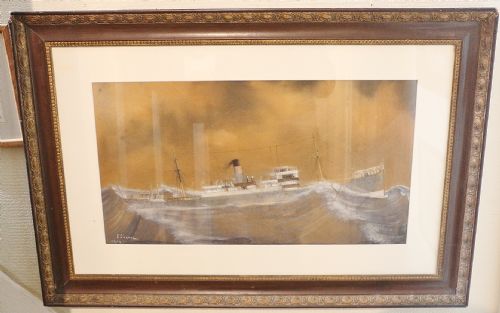
Buyers encounter framed watercolours on paper and oil paintings on canvas depicting vessels in rough waters, moored yachts, and busy quaysides. The selection spans Victorian and Edwardian maritime traditions alongside romantic and impressionist approaches.
How they were made
Artists painted primarily on paper and canvas, applying watercolour pigments and oil paints to build up coastal and marine subjects. Framed works often feature wood framing and glass protection to preserve the delicate pigment surfaces.
Some works incorporate gold leaf detailing alongside watercolour pigment to highlight specific elements of the maritime scene. Painters utilised washes and fine brushwork on paper to capture the movement of water and atmospheric harbour conditions.
Several artists braved the unpredictable British weather down at the docks just to catch steamships wallowing in remarkably choppy harbour waters.
What varies in quality
The strength of the composition and the artist's ability to render water and vessel rigging define the upper tier of these works. Masterful handling of light across rivers and harbours distinguishes accomplished maritime art from routine sketches.
Condition and original framing also influence the standing of a piece, particularly where watercolours on paper show minimal fading or foxing. Signed works by documented marine artists carry greater historical weight than anonymous watercolours.
James Smetham·Frank William Scarbrough·Richard Harry Carter·William Frederick Settle·Leslie Rackham·William Wyld·Henry Barlow Carter·Harry Wanless·Thomas Clavering Alder·Arthur Netherwood·Edward Fletcher·Thomas Lound
The Sepia Maritime Painting Glossary
- Watercolour
- A painting method where fine pigment is suspended in a water-based solution and applied to paper. It allows for translucent washes that suit atmospheric marine depictions.
- Oil on Canvas
- Pigment mixed with drying oil applied to stretched woven fabric. This medium provides rich texture and depth for maritime scenes.
- Framed Artwork
- A piece enclosed within a protective wooden border and glass. This presentation guards works on paper from environmental damage.
- Gold Leaf
- Hammered sheet gold applied to highlight specific areas of an artwork. It occasionally appears in framing or details within nineteenth-century pieces.
Sepia Maritime Painting: Frequently Asked Questions
What is a sepia maritime painting?
A sepia maritime painting is a work of art focusing on ships, rivers, and coastal views executed in brown monochrome tones or watercolour pigments.
These pieces document historical vessels, ports, and maritime activity primarily across the nineteenth and early twentieth centuries.
How should I hang these paintings?
Works on paper require positioning away from direct sunlight to prevent the watercolour pigments and paper from fading over time.
Framed pieces under glass benefit from stable indoor humidity levels to protect both the artwork and the wood framing.
How do I identify the period?
Stylistic clues, artist signatures, and framing materials often point toward the Victorian, Edwardian, or interwar periods in which the work was created.
Historical subject matter, such as steamships or specific sailing luggers, also helps narrow down the date of execution.
Were these used as studies?
Many surviving examples began as field sketches or oil studies created by artists observing shipping activity along rivers and coasts.
Artists often worked directly from life in ports like London or Whitby before completing finished watercolours or canvases in the studio.