


Edwardian Sailboat Painting
These Edwardian sailboat painting examples capture coastal light and maritime movement, offering a genuine piece of early twentieth-century nautical history for your walls.
Edwardian Sailboat Painting
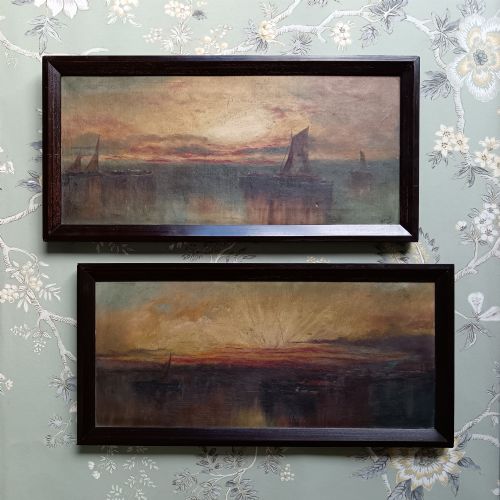
When you search for an edwardian sailboat painting, you encounter maritime scenes rendered across the late nineteenth and early twentieth centuries. These works record coastal harbours, fishing vessels, and lighthouses through the eyes of artists working in oil and watercolour.
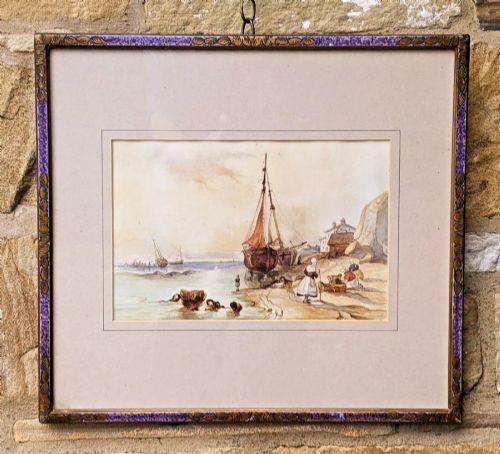
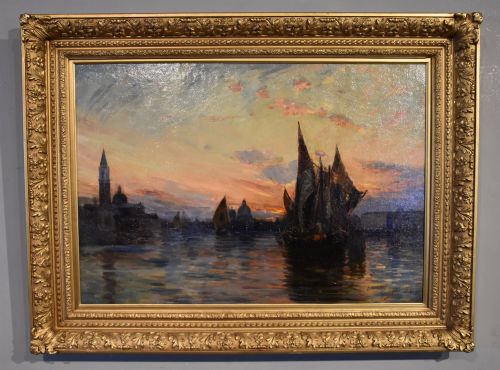
The selections on this page span the Edwardian period alongside adjacent nineteenth-century pieces and later works up to the 1920s. You find framed artwork ranging from intimate watercolours of Cornish and Yorkshire harbours to expansive oil paintings on canvas depicting sunrise and sunset.
Most pieces direct attention toward British coastal life, capturing trawling luggers and coastal shipping under varied atmospheric conditions. Alongside traditional flat wall art, the selection occasionally extends to three-dimensional items like large pond yachts from around 1900.
Materials and construction
Artists created these works primarily using oil on canvas or watercolour pigment applied to paper. Canvas supports allowed for textured, heavier applications of paint suited to maritime skies and rolling seas, while watercolours offered a transparent medium for capturing luminous harbour light.
Framing forms an integral part of these pieces, utilising traditional materials such as wood, gilt wood, and moulded gesso. Glazing protects the works executed on paper, preserving the delicate watercolour pigments from environmental moisture and light degradation.
Among the flat maritime scenes, a large wooden pond yacht from 1900 occasionally sails right into the middle of the paintings.
Quality and execution
Quality in these maritime works rests upon the artist's handling of light, atmosphere, and vessel anatomy. Superior examples demonstrate a confident command of proportion and movement, accurately portraying rigging and hull construction alongside convincing water reflections.
The integrity of the physical components also dictates standing, particularly the condition of the original canvas or paper and the stability of the framing. Intricate gilt wood and gesso frames that retain their original surfaces complement higher-tier paintings.
B. Nash·Thomas Hodgson Liddell·Richard Harry Carter·E. Tucker·John McDougal·Harry Wanless·Bertram Priestman
The Edwardian Sailboat Painting Glossary
- Watercolour
- A painting method in which the paints are made of pigments suspended in a water-based solution. This technique often produces luminous washes well-suited to coastal scenes.
- Oil on Canvas
- A traditional medium utilising pigments bound with drying oils applied to stretched fabric. This combination permits rich colour depth and textured brushwork.
- Gesso
- A plaster-like mixture applied to wood frames to create a smooth surface for gilding. It provides ornate decorative relief around maritime paintings.
- Lugger
- A type of small fishing vessel characterised by lug sails set on one or more masts. These boats frequently appear in regional coastal watercolours from the period.
Edwardian Sailboat Painting: Frequently Asked Questions
What subjects appear in these marine paintings?
These works typically depict coastal scenes, lighthouses, fishing harbours, and sailing vessels navigating British waters. Artists recorded daily maritime life, from trawling luggers off Devon and Cornwall to evening views of Venice.
Many pieces focus specifically on the interplay between light and water, capturing sunrise, sunset, or bright summer sunlight over the sea.
How do I hang and display framed maritime art?
Display these framed oil paintings and watercolours away from direct sunlight to protect pigments and paper from fading. Ensure your wall fixings match the weight of the wooden and gesso frames.
Keep pieces away from sources of excess moisture, such as unventilated damp rooms, to safeguard both the canvas and the historical frame.
How do I distinguish between an oil painting and a watercolour?
Oil paintings feature a textured surface with visible brushstrokes on canvas, usually displayed without protective glass. Watercolours are executed on paper, revealing smooth washes of pigment, and require glass framing for protection.
Examining the surface closely under good light reveals the distinct texture of the woven canvas versus the flat paper substrate.
What periods do these maritime artworks represent?
The selections span the Edwardian era, the Victorian period, and stretch from the mid-nineteenth century through the 1920s. This timeframe encompasses British Impressionism and Edwardian marine art movements.
Dates are often established through artist signatures, inscriptions, or stylistic evidence inherent in the brushwork and framing.