


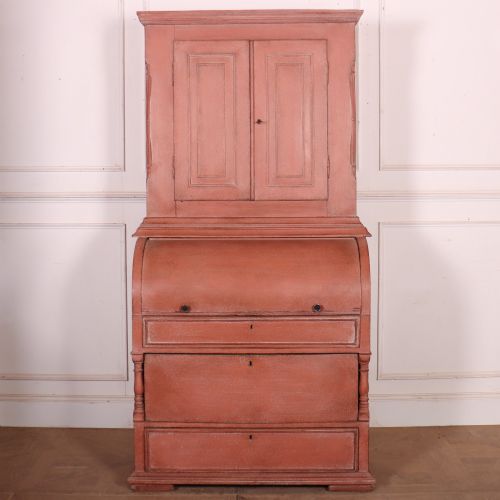

Secretary Bookcase Cabinet
A secretary bookcase cabinet combines a fitted writing drawer with upper display shelves, offering serious storage and workspace in a single stately piece.
Secretary Bookcase Cabinet
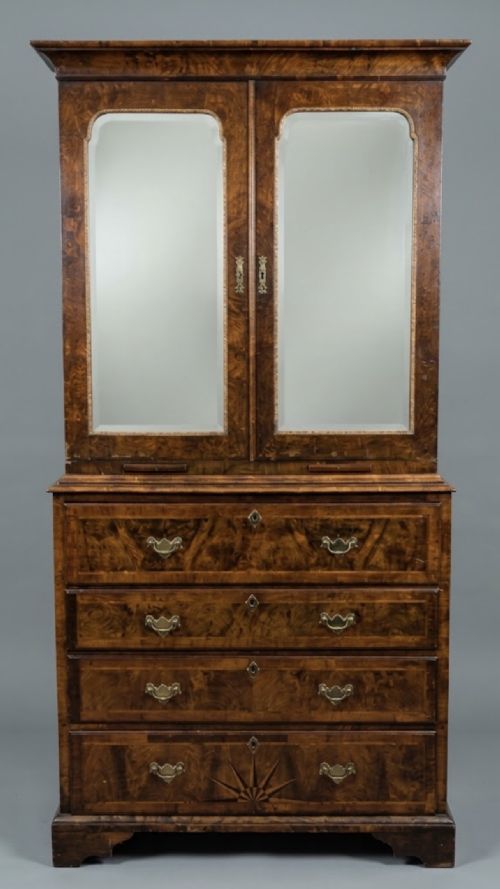
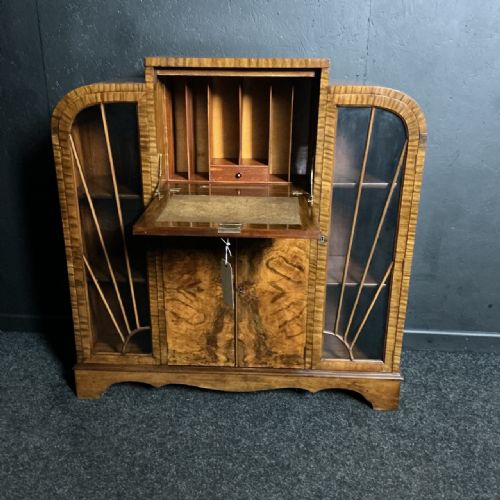
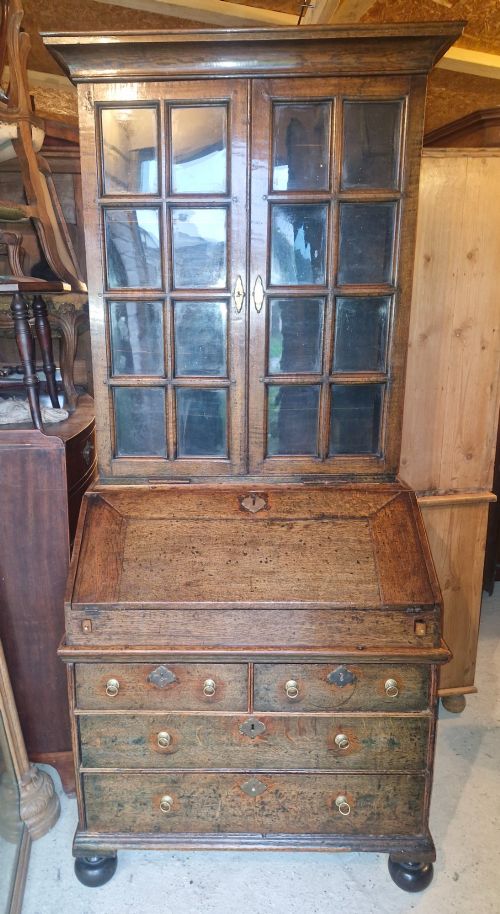
A secretary bookcase cabinet is a dual-purpose item featuring a drop-front desk or pull-out writing drawer paired with glazed or panelled upper shelving for books and display. The search phrase encompasses everything from tall William and Mary double-dome walnut pieces to George III mahogany breakfronts and later Edwardian revival examples.
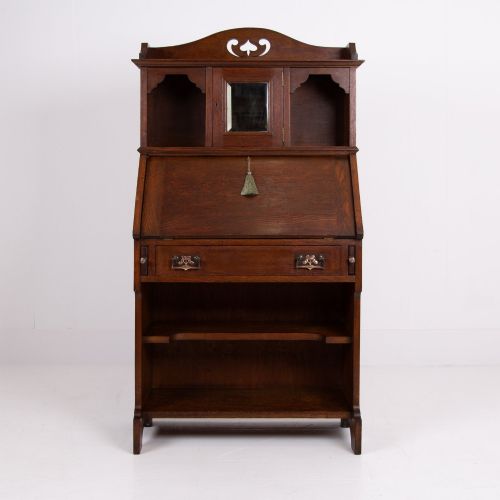
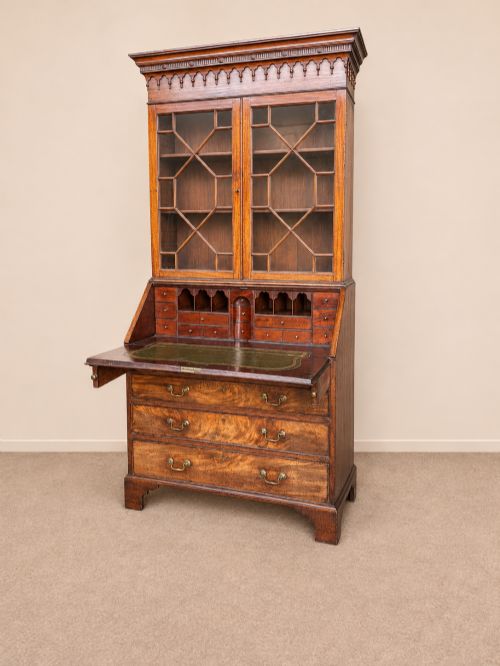
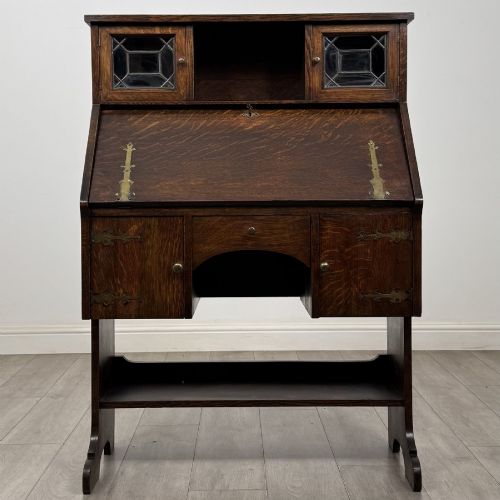
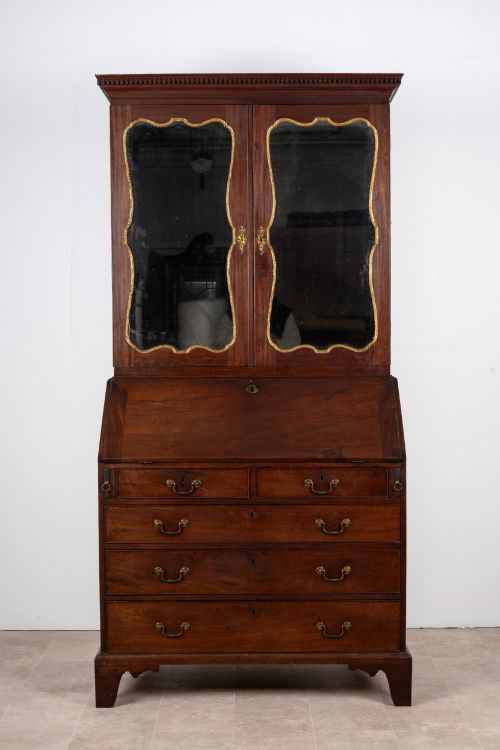
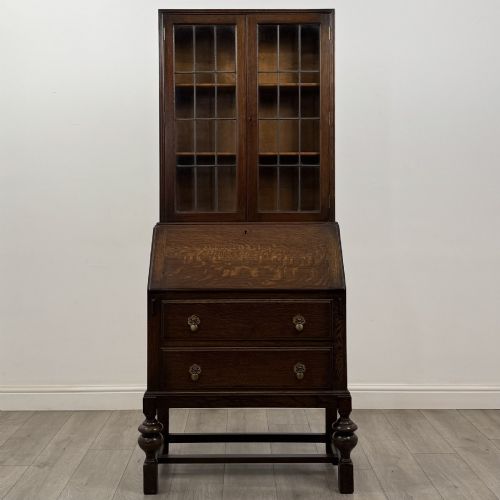
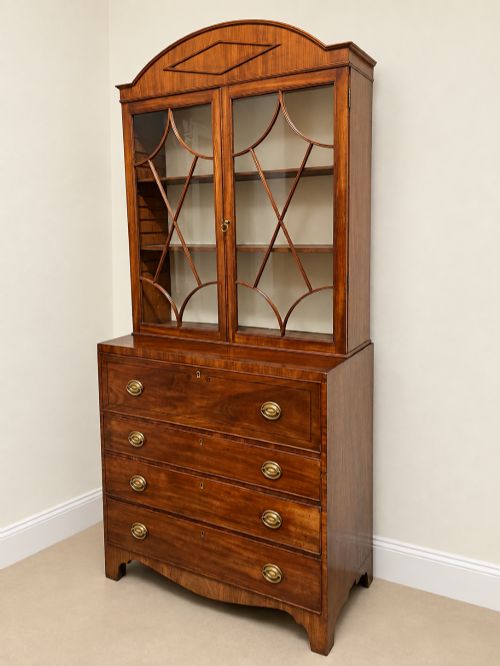
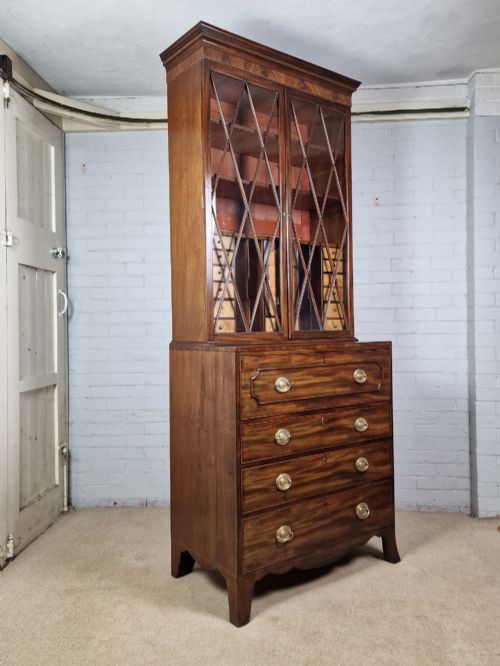
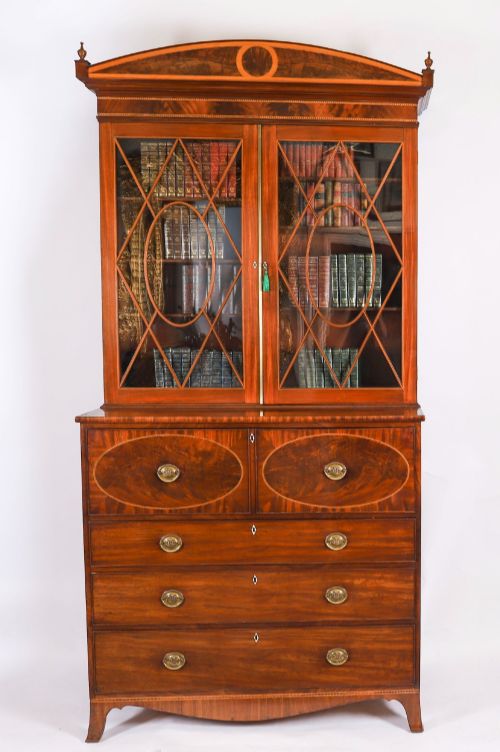
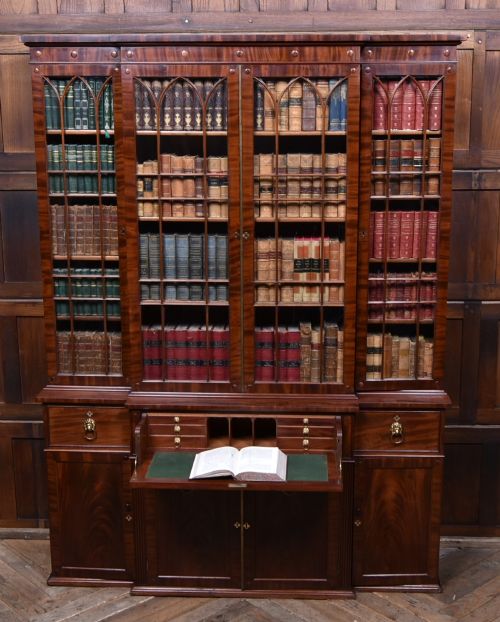
The version most commonly met on this page is the Georgian or Regency mahogany piece with astragal glazed doors above a fitted bureau section, though walnut variants from the eighteenth century appear alongside Arts and Crafts golden oak designs.
Makers and cabinetmakers ranged from provincial workshops to renowned firms like Gillows of Lancaster and Edwards & Roberts, spanning periods from the seventeenth century through to the early twentieth century.
Materials and Construction
Makers constructed these cabinets using native and exotic timbers, notably figured mahogany, walnut, burr walnut, and satinwood, often enhanced with marquetry inlay, ebony stringing, or featherbanding. Structural carcasses frequently utilise sturdy oak or pine to support the heavy upper bookcase sections.
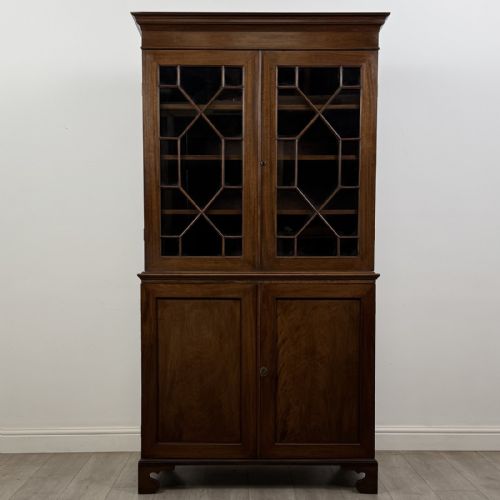
Upper doors utilise individual glass panes held together by timber astragal bars, while writing sections house complex fitted interiors comprising small pigeonholes, sliding document compartments, and secret drawers.
Secretary Bookcase Cabinet Retail Price Guide 2026
Typical asking prices for secretary bookcase cabinet among the pieces listed under this phrase on Sellingantiques today, from the lower quarter to the upper quarter. They describe what is for sale here now, not the wider market.
Many writing sections conceal hidden compartments and secret thumbnail drawers designed to keep private letters away from prying eyes.
Judging Quality
The distinction between ordinary and exceptional pieces rests on the choice of timber veneers, such as richly figured flame mahogany or burr walnut selected for symmetrical grain patterns. Finer examples display meticulous cabinetmaking in the interior pigeonholes and secret compartments rather than standard commercial joinery.
Proportions also dictate distinction, with superior items maintaining balanced heights and widths, complemented by crisp carving on mouldings, brackets, or claw and foot details.
Gillows of Lancaster·Edwards & Roberts·E Gomme
The Secretary Bookcase Cabinet Glossary
- Secretaire
- A writing drawer with a drop-front that conceals a fitted interior of small drawers and pigeonholes. This allows the piece to function as a desk without opening a traditional fall-front bureau.
- Astragal glazed
- Glass cabinet doors divided into individual panes by slender wooden glazing bars. These bars form geometric patterns that became increasingly refined through the Georgian period.
- Featherbanding
- A decorative inlay technique using small veneers cut diagonally to the grain and laid in opposing directions to form a herringbone pattern around drawer fronts or doors.
- Breakfront
- A large cabinet design where the central section projects forward from the flanking outer sections. This architectural arrangement creates depth and visual weight.
- Marquetry
- Elaborate decorative patterns formed by fitting together pieces of various coloured woods, veneers, or other materials onto a structural surface.
Secretary Bookcase Cabinet: Frequently Asked Questions
What is a secretary bookcase cabinet?
A secretary bookcase cabinet is a tall furniture form that combines a bookcase with glass doors on top and a concealed writing desk below. It provides both enclosed shelving for books and a private workspace.
These pieces served as practical household furniture for writing letters, managing accounts, and displaying valued books or porcelain in the main rooms of a home.
How do I use one today?
You can use the upper glazed section to display books or collections while utilising the pull-out writing drawer or drop-front desk for a laptop or correspondence. The internal pigeonholes remain useful for organising stationery and small items.
Position the cabinet in a study, drawing room, or living space where its height and presence can anchor the room.
How do I tell periods apart?
Early pieces from the seventeenth and early eighteenth centuries often feature burr walnut veneers, double-dome tops, and featherbanded borders. Georgian and Regency examples typically showcase figured mahogany with astragal glazing bars and bracket or splay feet.
Later Edwardian and early twentieth-century pieces often revive these earlier styles or incorporate Arts and Crafts oak construction with simpler geometric lines.
What woods were commonly used?
Mahogany and walnut dominate the selection, especially in figured, burr, or flame varieties that create striking grain patterns on the main surfaces. Satinwood, oak, and yew also appear across different periods and regional workshops.
Secondary timbers like pine or oak are typically found inside drawer linings and carcass backs.