
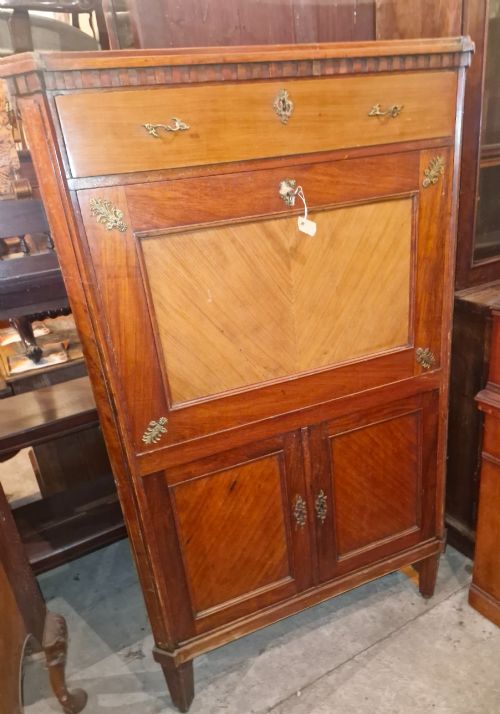
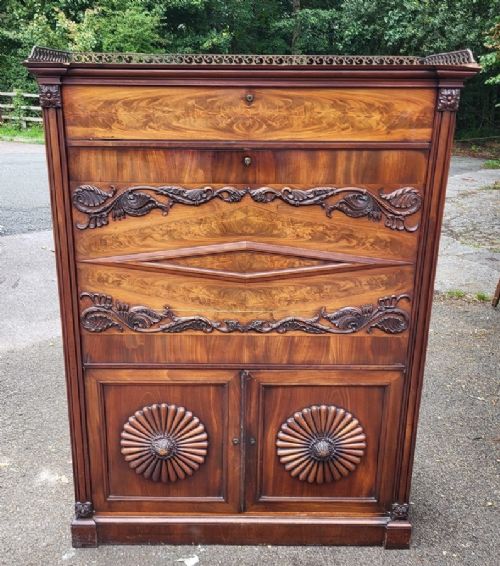
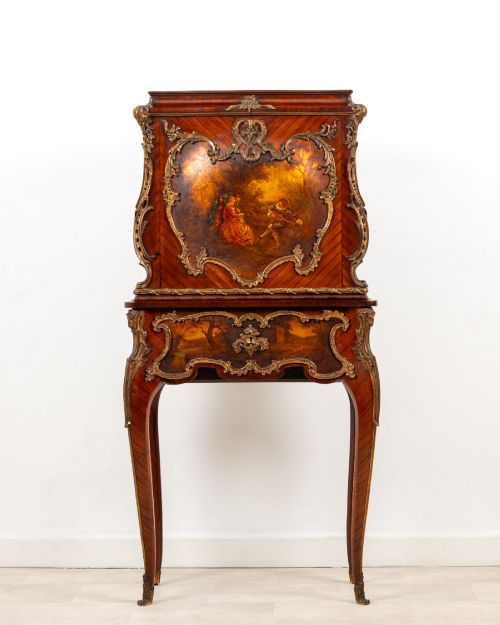

Secretaire Abattant Desk
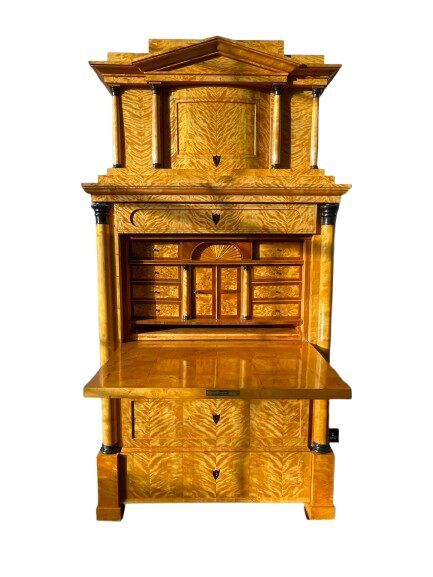
A secretaire abattant desk combines a formal vertical cabinet with a drop-down writing surface, concealing fitted drawers and pigeonholes behind a handsome drop front.

Secretaire Abattant Desk
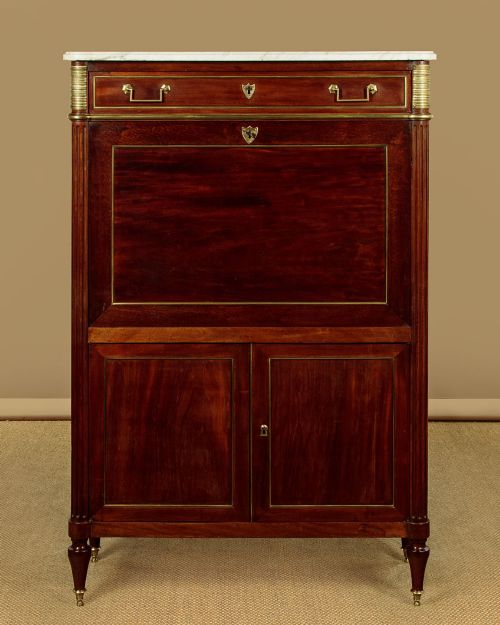
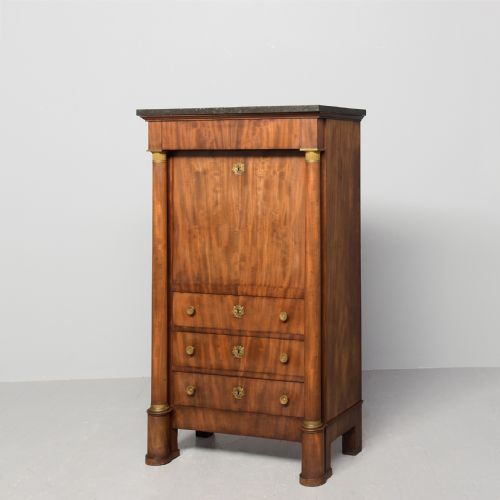
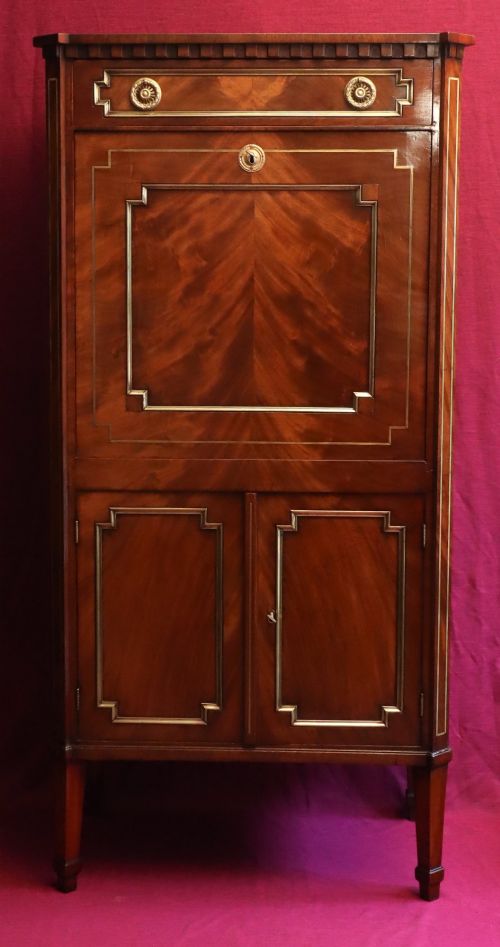
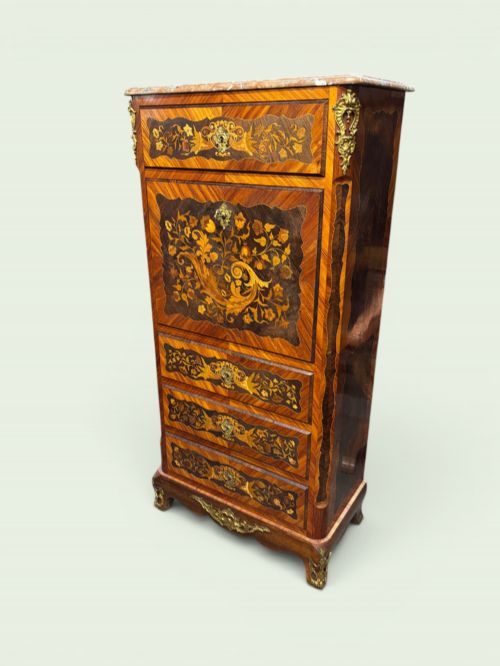
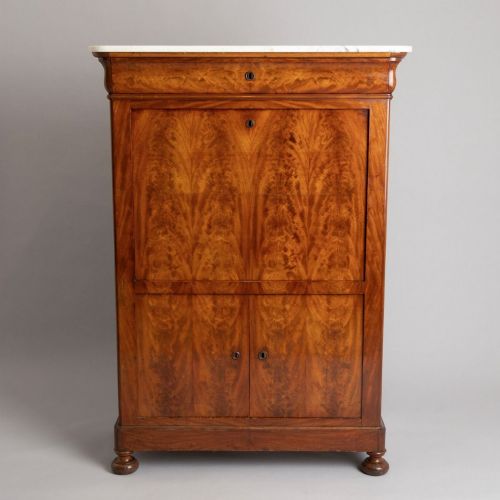
A secretaire abattant desk presents a tall, upright silhouette that saves floor space while offering a proper writing surface and substantial enclosed storage. The form appears across the nineteenth century, with French continental examples frequently pairing mahogany, kingwood, or marquetry with marble tops.
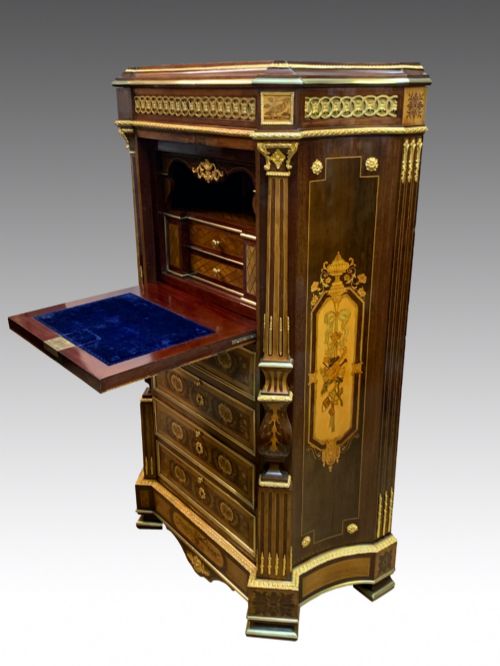
The defining mechanical feature is the fall-front writing flap, which lowers to a horizontal position supported by the cabinet structure or internal stays. Behind this drop panel lies an architectural arrangement of small drawers, compartments, and often secret compartments.
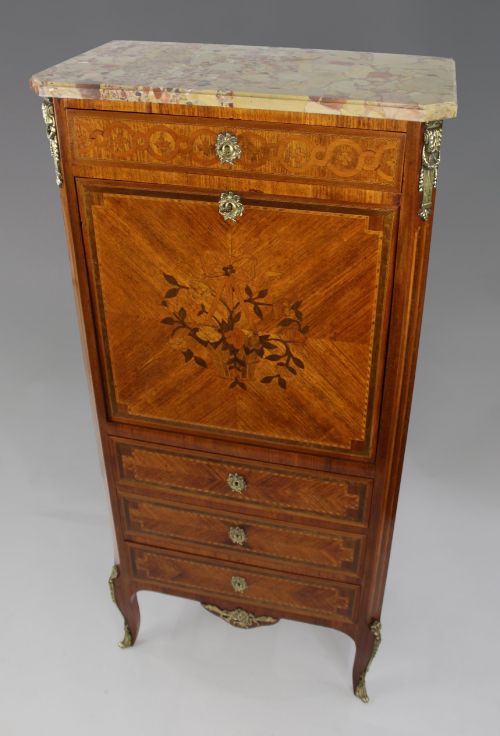
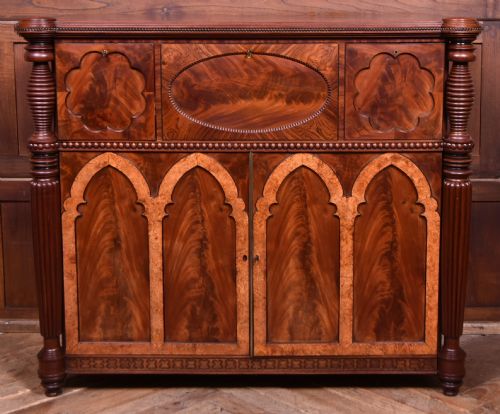
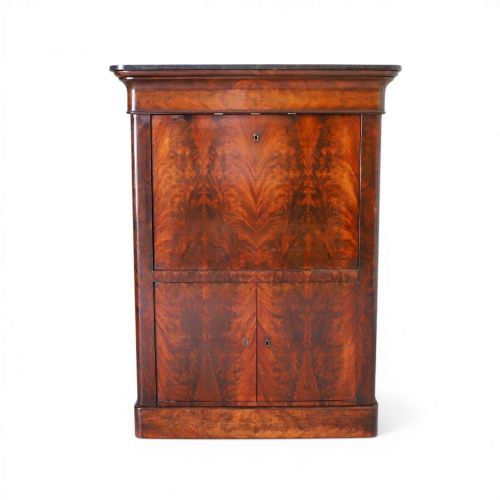
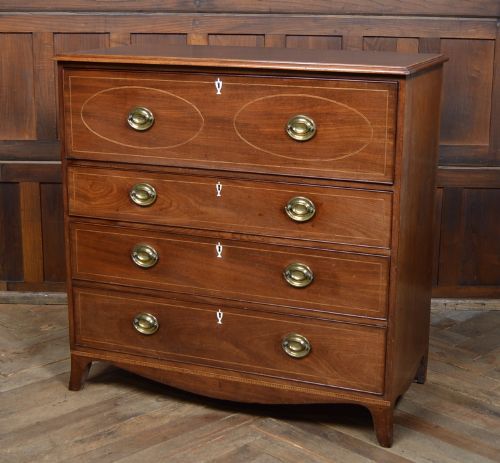
Beyond French interpretations, the search phrase encompasses Biedermeier mahogany pieces, Regency rosewood variations with brass inlay, and Victorian pine or mahogany incarnations. Buyers encounter everything from austere architectural facades to elaborately inlaid floral marquetry surfaces.
Materials and Technique
Cabinetmakers utilised dense timbers like mahogany, walnut, and flame mahogany as structural bases and applied decorative veneers including kingwood, rosewood, amboyna, and satinwood. Marquetry and parquetry patterns created intricate geometric or floral designs across the exterior surfaces.
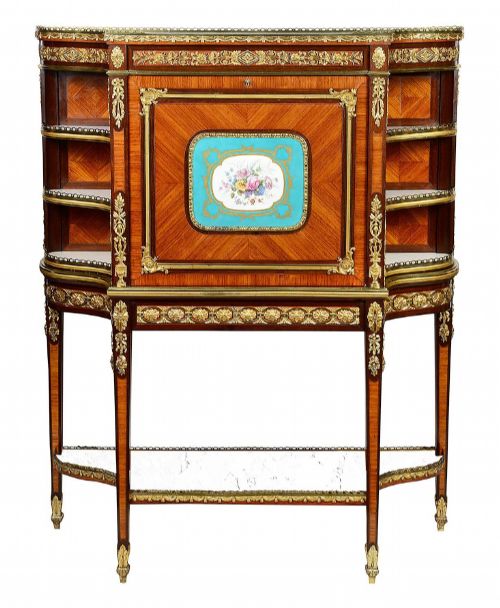
High-status examples incorporated cast and gilt bronze or ormolu mounts, framing the corners, keyholes, and drawer fronts. Heavy marble slabs, typically white or grey veined, formed finished tops on many continental pieces.
Interior construction relied on dovetailed drawer boxes and secondary softwoods for framing. Secret drawers often depended on hidden spring catches or sliding panels concealed within the pigeonhole architecture.
Materials recorded on this page include mahogany, kingwood, rosewood, walnut, marble, and ormolu mounts.
Character and Execution
The refinement of a secretaire abattant desk rests on the selection and matching of wood veneers, particularly the symmetry of flame mahogany or the precision of floral marquetry. Superior execution shows continuous grain pattern alignment across the fall front and drawer banks.
The quality of cast ormolu mounts and the integration of marble tops distinguish workshop output, as does the complexity of the interior stationery compartments. Subtleties in secondary timber selection and the smoothness of the fall-front hinge mechanism indicate skilled cabinet work.
Gillows·Maison Krieger·Blake·Adriano Brambilla
The Secretaire Abattant Desk Glossary
- Abattant
- The vertical falling panel that serves as a writing flap when lowered. It transforms a cabinet into a desk.
- Escritoire
- An alternative term for a writing cabinet or desk. It shares similarities with the secretaire form.
- Ormolu
- Gilded bronze used for decorative mounts and furniture fittings. It accentuates the corners and borders of French pieces.
- Marquetry
- Inlaid wood veneers forming pictorial or decorative patterns. Artisans cut various coloured woods to assemble intricate designs.
- Parquetry
- Geometric wood inlay forming repeating patterns such as cubes or chequers. This technique decorates the exterior panels.
- Vernis Martin
- A simulated Japanese lacquer finish developed in France. It provides a glossy, translucent surface decoration.
Secretaire Abattant Desk: Frequently Asked Questions
What is a secretaire abattant?
A secretaire abattant is a tall upright cabinet featuring a hinged drop-front panel that opens to reveal a writing surface and internal compartments.
Unlike traditional side-by-side desks, this vertical format conceals papers and writing materials behind closed doors when not in use.
How were secret drawers used?
Secret drawers provided secure storage for valuables, private letters, or currency within the cabinet interior.
Cabinetmakers concealed these compartments behind false drawer bottoms, sliding panels, or architectural pigeonhole facades that required specific release mechanisms to open.
Where did these desks originate?
While the form developed widely in continental Europe, French workshops produced a large proportion of surviving examples during the eighteenth and nineteenth centuries.
English cabinetmakers also adopted the vertical writing cabinet style during the Regency and Victorian periods.
How do I style one at home?
A secretaire abattant works effectively in living rooms, studies, or bedrooms as both a functional writing station and a decorative storage cabinet.
The flat top surface accommodates lamps or decorative objects, while the closed fall front maintains a tidy room appearance.