


Empire Style Secretaire Cabinet
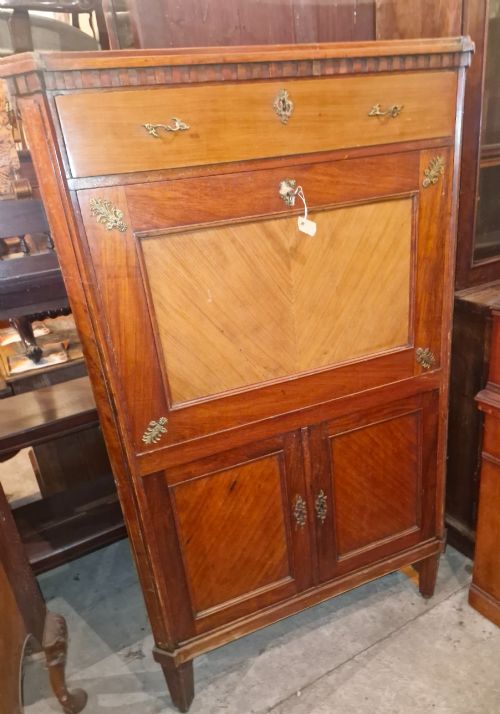
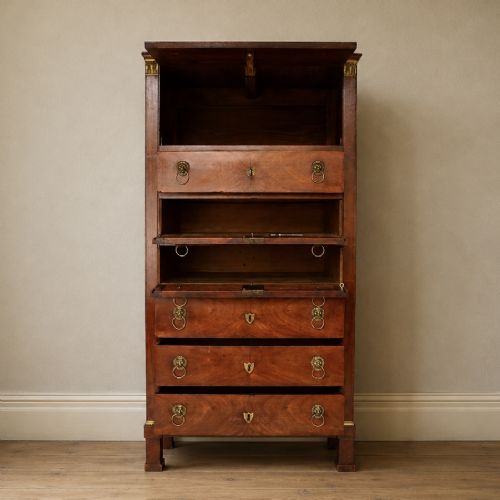
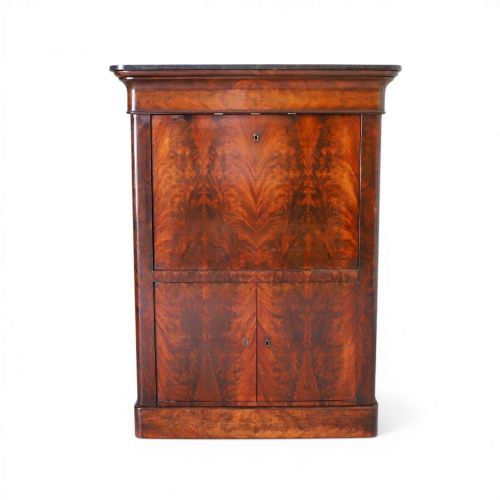
These empire style secretaire cabinet pieces combine architectural presence with hidden writing surfaces, offering a stately centrepiece for any study or drawing room.
Empire Style Secretaire Cabinet
An empire style secretaire cabinet represents a grand tradition of continental furniture making, originating in periods from the eighteenth century through to the early twentieth century. When browsing this selection, you will encounter various forms including the classic secretaire à abattant, escritoires, and secretaire commodes designed for formal writing and storage.
The pieces listed on this page span several decades and regional interpretations, featuring French Empire designs alongside Biedermeier and continental workshop traditions. Formats range from tall vertical writing cabinets with drop-down writing flaps to low commodes and fitted cocktail cabinets incorporating mirrors.
Originating across European centres, these cabinets frequently incorporate classical architectural motifs and restrained geometric lines. The selection relies heavily on nineteenth-century examples, capturing the enduring appeal of heavy timber construction and polished stone surfaces.
How they were made
Construction relies upon solid timber carcases faced with carefully selected veneers, notably flame mahogany, walnut, birch, and rosewood. These woods are chosen for their strong grain patterns, which provide the primary visual interest across large flat door panels and fall-front writing surfaces.
Decorative embellishments include cast or chased brass and ormolu mounts applied to key areas like corners, friezes, and key escutcheons. Many examples are completed with heavy marble slabs fitted to the top surface, adding weight and a formal finish to the cabinet.
Listings feature pieces spanning the eighteenth century, the nineteenth century, and nineteen ten, demonstrating long-standing production of these writing forms.
What varies in quality
The standard of timber selection and veneer matching defines the visual impact of each cabinet, with symmetrical grain layouts indicating careful workshop planning. The complexity of internal arrangements, such as secret drawers and fitted compartments behind the main writing flap, also distinguishes more ambitious pieces.
Metalwork quality separates standard production from finer examples, as heavy fire-gilt ormolu mounts retain sharper definition than simple cast brass alternatives. The integration of structural elements like functioning secret locking mechanisms and heavy marble tops further marks out the better specimens.
The Empire Style Secretaire Cabinet Glossary
- Secretaire à abattant
- A tall vertical cabinet featuring a drop-down front that opens to reveal a writing surface and internal compartments. This form conceals paperwork and storage behind a unified architectural facade.
- Escritoire
- A traditional writing desk or cabinet designed for correspondence and storage of writing materials. It often includes a sloping or fall-front writing flap.
- Ormolu
- Gilt bronze ornamentation applied to furniture, cast and chased for decorative effect. This technique provides metallic highlights against dark timber surfaces.
- Biedermeier
- A style of Central European furniture from the nineteenth century prioritising clean lines and utilitarian elegance over excessive ornamentation. It favours domestic woods such as birch and walnut.
- Flame mahogany
- A veneer cut from the fork of the mahogany tree, producing a distinctive flickering flame pattern. This decorative wood finish was widely used on prominent door and drawer fronts.
Empire Style Secretaire Cabinet: Frequently Asked Questions
What is an empire style secretaire cabinet?
An empire style secretaire cabinet is a formal storage and writing piece defined by classical architectural proportions and a drop-down writing surface. These cabinets often feature prominent vertical lines and contrasting metal mounts.
Originating from continental European traditions, they serve both decorative and practical functions in domestic interiors.
How were these cabinets used historically?
Historically, these pieces functioned as private writing desks where correspondence was drafted and important documents were stored securely. The drop-down flap provided a sturdy table surface when needed.
Internal drawers and compartments kept ink, paper, and valuables hidden away when the cabinet was closed up.
What woods are commonly found on them?
Construction typically involves dense hardwoods like mahogany, walnut, and rosewood, often applied as fine veneers over a secondary timber carcase. Flame mahogany and ebonised birch are also common.
These timbers are frequently paired with contrasting ormolu mounts and heavy marble tops.
How do I identify a Biedermeier piece?
Biedermeier examples from the nineteenth century are characterised by restrained geometric forms and light-coloured domestic timbers such as birch. They place emphasis on wood grain rather than heavy metallic ornamentation.
These cabinets offer a simpler, more intimate aesthetic compared to grander French Empire designs.
Where should I place one at home?
These cabinets suit studies, drawing rooms, or large hallways where their vertical presence and polished timber surfaces can be appreciated. They work well against flat walls due to their tall, architectural proportions.
Ensure adequate clearance in front of the cabinet for the writing flap to drop down fully.