

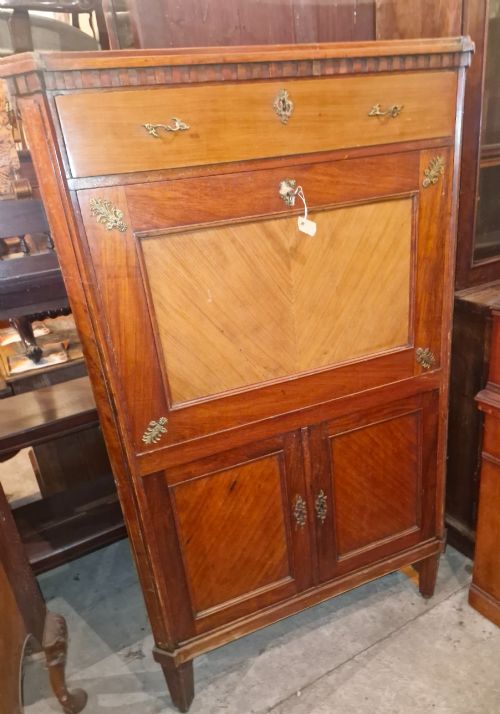
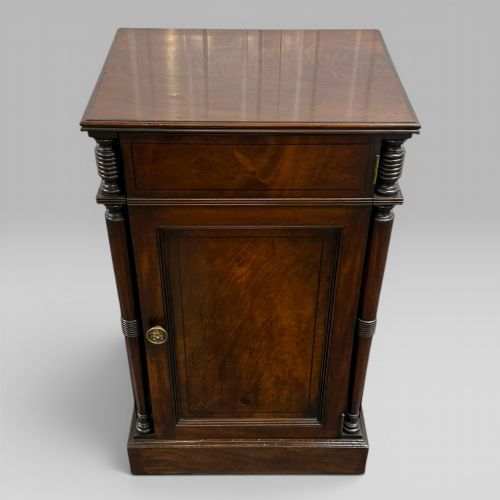
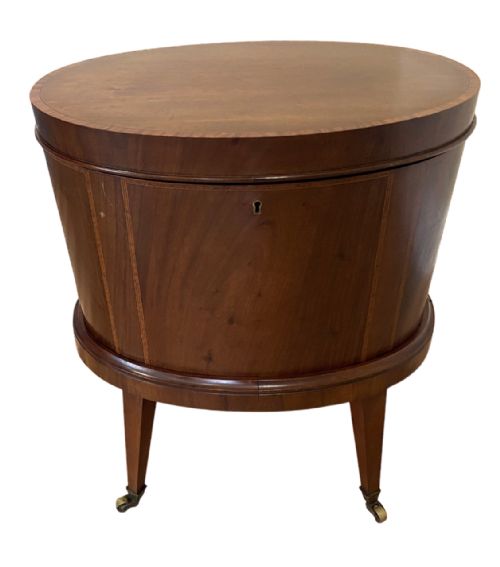


Brown Wood Drinks Chest
These brown wood drinks chest pieces are timber cabinets and cellarettes designed to store wine and spirits with elegance.
Brown Wood Drinks Chest
When you search for a brown wood drinks chest, you encounter a variety of timber storage pieces spanning cellarettes, wine coolers, and cocktail cabinets. The selection on this page ranges from nineteenth-century mahogany cellarettes to twentieth-century walnut cocktail cabinets and yew wood serving furniture.
The forms vary considerably across the periods represented, moving from Georgian and Regency wine coolers down to Art Deco cocktail chests and George V serving cabinets. You are most likely to meet mahogany cellarettes alongside burr walnut and satinwood cocktail cabinets from the Edwardian and interwar decades.
How they were made
Cabinet makers utilised dense hardwoods such as mahogany, walnut, and yew wood, often selecting burr walnut and satinwood veneers for decorative surfaces. These timbers were shaped into oval cellarettes, fitted secretaire cabinets, and pedestal forms.
Metal components played a structural and decorative role, with brass fittings and bindings reinforcing timber frames, particularly on campaign-style serving chests and wine coolers. Boxwood stringing frequently outlined the surfaces of Sheraton revival pieces.
Secret mirrors and bottle liners reveal that ancestors took their evening refreshments with considerable theatre.
What varies in quality
The calibre of a brown wood drinks chest rests upon the selection of timber grain and the precision of the cabinet work. Figured burr walnut veneers and carefully matched satinwood display a deliberate aesthetic intent that elevates certain pieces above plain utilitarian storage.
Attribution to notable workshops like Gillows or Maples and Co distinguishes superior workshop execution. Finer hardware, such as original brass handles and mounts, also separates standard production items from master-carved examples.
Gillows·Epstein·Maples and Co
The Brown Wood Drinks Chest Glossary
- Cellarette
- A lockable container or chest designed to hold bottles of wine, usually kept beneath a sideboard or in a dining room. These timber vessels often featured lead linings to hold melting ice.
- Cocktail cabinet
- A specialised piece of furniture intended for the mixing and serving of spirits, emerging strongly in the early twentieth century. They frequently contained mirror-fitted interiors and dedicated glass shelves.
- Plate-warmer pedestal
- A tall wooden cabinet or pedestal designed to heat dinner plates before a meal, sometimes adapted as a wine cooler. They often stood on shaped legs with brass handles.
- Secretaire mirror fitted
- A desk or cabinet configuration incorporating a fold-down writing flap and internal mirror panels. This layout was adapted in twentieth-century drinks chests to provide a preparation surface for mixing beverages.
Brown Wood Drinks Chest: Frequently Asked Questions
What is a cellarette?
A cellarette is a traditional timber chest designed specifically for storing wine bottles safely within a dining room.
Historically, these containers often included lead-lined interiors to hold ice and keep bottles cool before dinner.
How do I date a drinks cabinet?
Dating relies on identifying the prevailing timber choices, hardware styles, and structural forms characteristic of specific periods.
Nineteenth-century examples favour solid mahogany, whereas twentieth-century pieces often incorporate burr walnut veneers and specialised cocktail fittings.
Were these cabinets lined with metal?
Many wine coolers and cellarettes featured metal linings to manage ice and protect the surrounding wood from moisture.
Brass bindings and hardware also appeared frequently to reinforce the structural joins of travel-ready or serving pieces.
How do I distinguish a cellarette from a cabinet?
Cellarettes are generally compact, floor-standing chests intended solely for bottle storage, often dating from the Georgian or Regency eras.
Drinks and cocktail cabinets are taller upright furniture pieces designed in the twentieth century to house glassware and mixing equipment.