

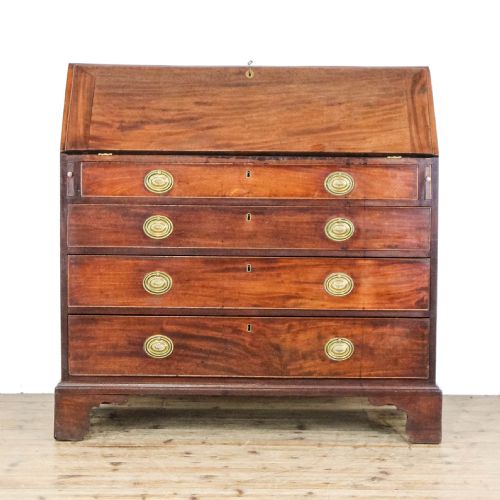
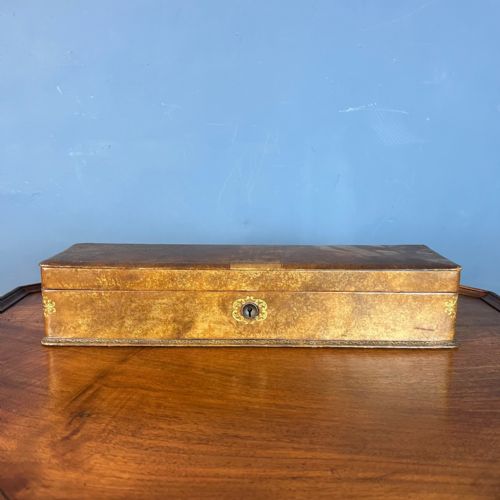


Edwardian Writing Chest
An edwardian writing chest brings compact elegance to a study, offering a clever drop-down surface for correspondence alongside sensible storage.
Edwardian Writing Chest
When you search for an edwardian writing chest, you encounter a selection of practical furniture forms designed for domestic correspondence and document storage.
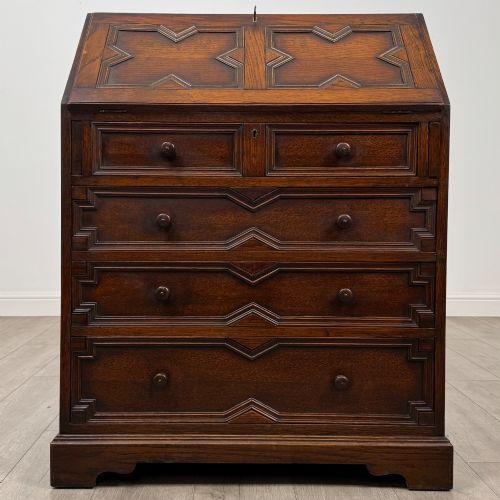
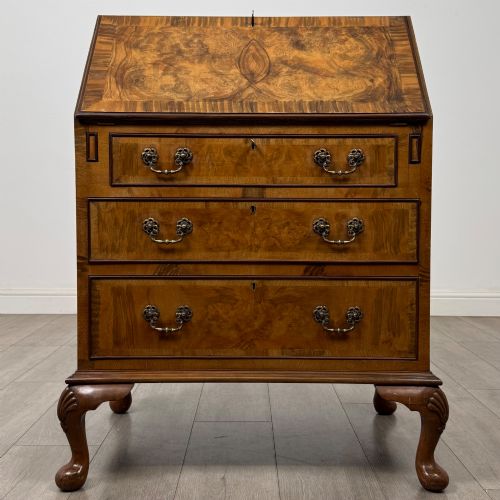
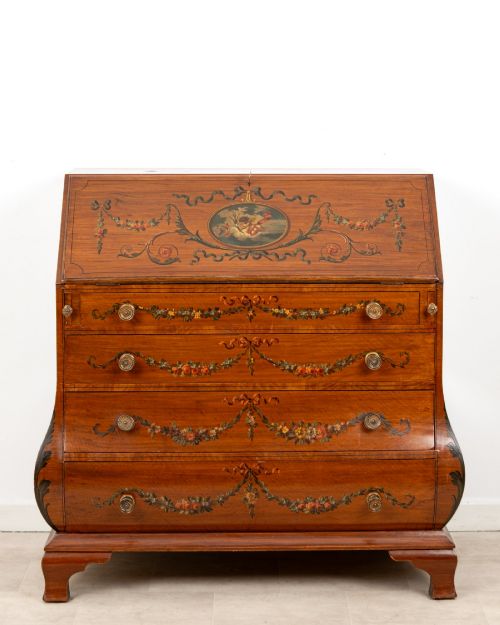
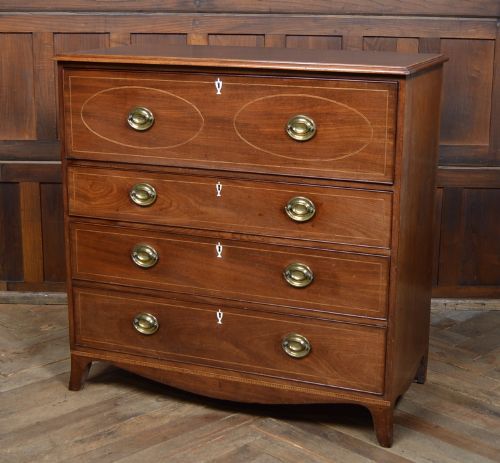
The pieces on this page span several eras alongside the Edwardian period, including Georgian, Regency, and Victorian examples, featuring bureaux, secretaire bookcases, and writing boxes.
Among these, you are likely to meet fitted wooden bureaux and cabinet pieces that combine drawer space with a fold-down writing flap.
Materials and construction
Cabinetmakers utilised robust timber carcasses, predominantly mahogany, oak, and satinwood, often enhanced with burr walnut veneers or delicate marquetry inlay.
Functional details such as brass handles, leather writing surfaces, and glass panel doors complete the construction of these writing pieces.
Object types range from compact tabletop writing boxes and brass-bound campaign chests to large secretaire bookcases and housekeeper's cupboards.
Assessing quality
Quality in these writing pieces rests on the crispness of the timber grain, the precision of the inlay, and the structural integrity of the interior pigeonholes and small drawers.
Finer examples display careful timber selection, such as figured satinwood or burr walnut, matched with original brass hardware and well-fitted writing mechanisms.
The Edwardian Writing Chest Glossary
- Bureau
- A desk with a sloping lid that folds down to reveal a writing surface and small compartments. It typically sits atop a chest of drawers.
- Secretaire
- A piece of furniture incorporating a concealed writing drawer or drop-front desk compartment. It often mimics the appearance of a standard chest of drawers or bookcase.
- Marquetry
- Decorative woodwork where pieces of veneer are fitted into a ground material to form geometric or pictorial designs. It frequently appears on Edwardian satinwood furniture.
- Campaign
- Portable furniture made in sections with brass corners and recessed handles, originally designed for military officers on the move. These pieces prioritise robust construction and dismantle easily.
Edwardian Writing Chest: Frequently Asked Questions
What is an edwardian writing chest?
An edwardian writing chest is a compact piece of furniture designed for correspondence, typically combining a set of drawers with a writing surface.
These items range from fall-front bureaux to tabletop boxes outfitted with compartments for stationery and ink.
How do I use one today?
These pieces serve well as functional laptop desks in modern home offices or as statement storage in a living room.
The internal compartments and small drawers provide useful storage for modern stationery, notebooks, and small household items.
How do I distinguish Edwardian from Georgian pieces?
Edwardian writing pieces often feature lighter satinwood finishes, painted decoration, and marquetry inlay, reflecting the revival styles popular around nineteen hundred.
Georgian examples tend to rely on heavier solid mahogany, architectural proportions, and subtle cockbeading around the drawer edges.
What woods were commonly used?
Mahogany and oak form the structural core for many of the pieces listed, providing durability and stable framing.
Satinwood, burr walnut, and rosewood frequently appear as decorative veneers on the exterior surfaces and writing flaps.