

Secretaire a Abattant Cabinet
A secretaire a abattant cabinet offers a disciplined facade that drops open to reveal a fitted writing surface and hidden compartments.
Secretaire a Abattant Cabinet
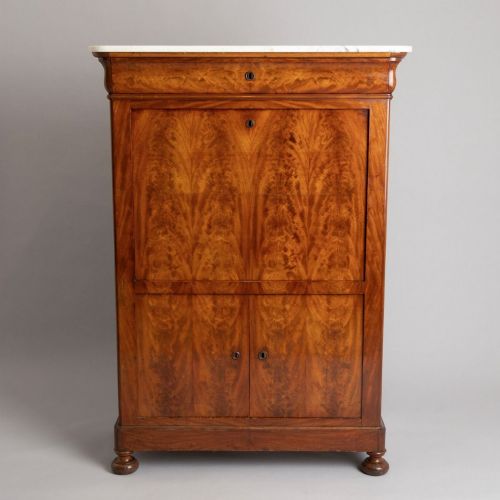
A secretaire a abattant cabinet combines the vertical presence of a tall chest with the utility of a drop-front desk, concealing internal pigeonholes and small drawers behind a lockable writing flap. When you search for this phrase, you encounter case furniture designed to economise on floor space while keeping correspondence and valuables secure.
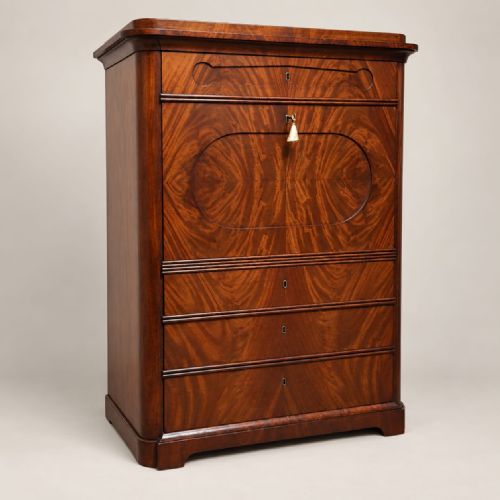
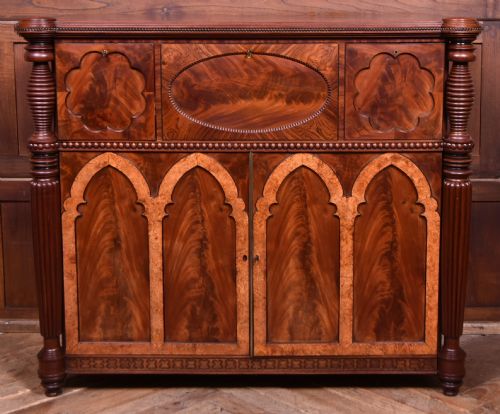
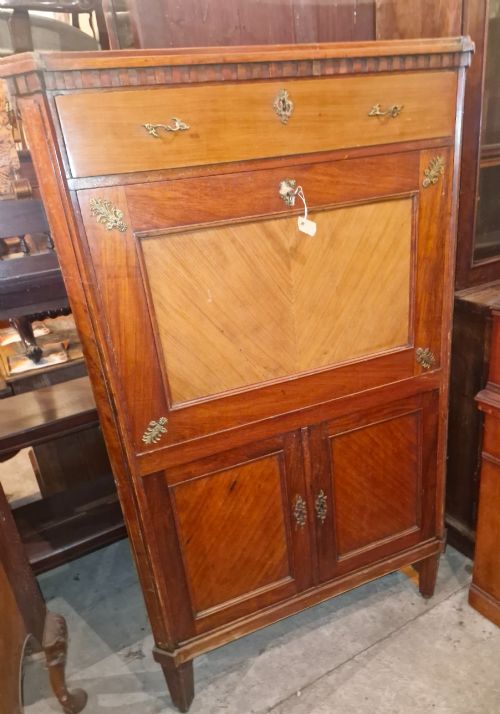
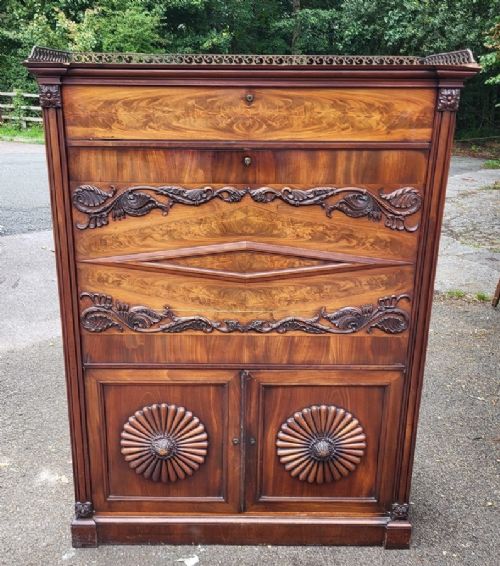
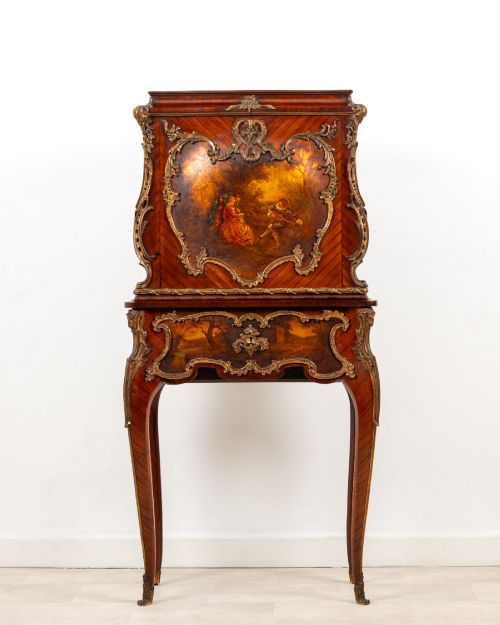
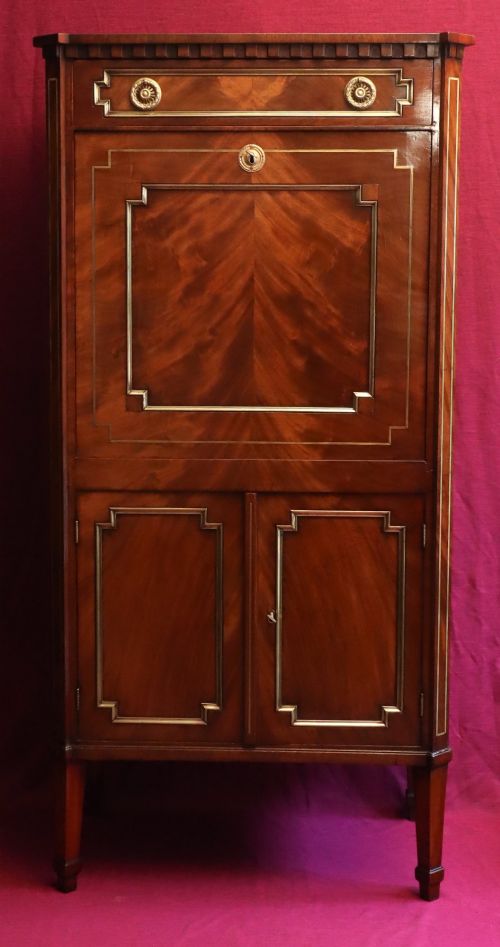
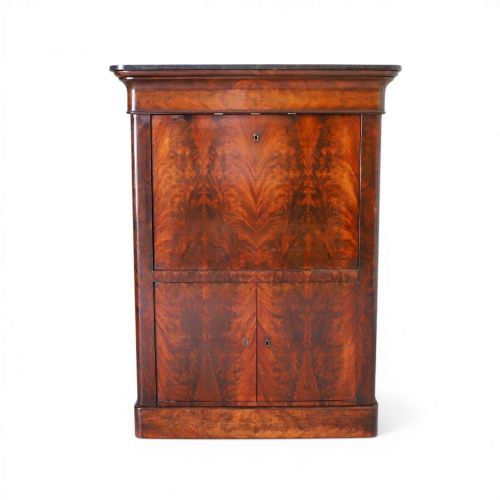
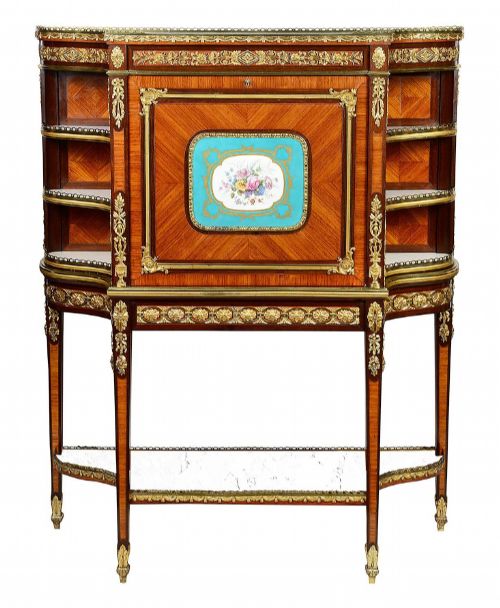
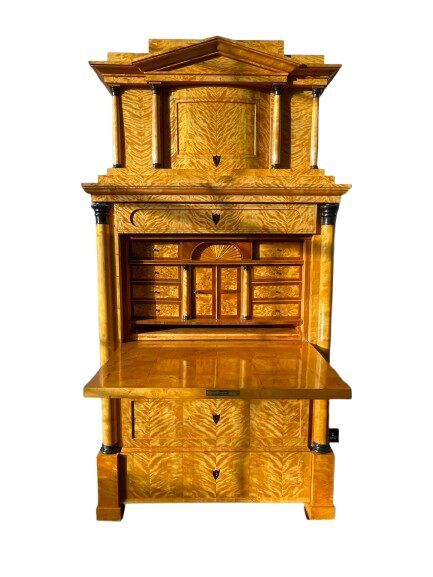
The pieces appearing on this page span the eighteenth, nineteenth and early twentieth centuries, drawing upon French, English, Dutch, Biedermeier and Scandinavian cabinet-making traditions. Mahogany, flame mahogany and walnut provide the structural timber for the majority of examples, often finished with marquetry or parquetry.
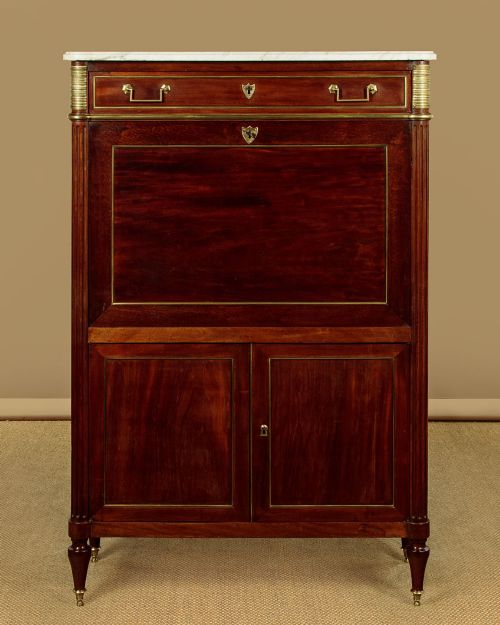
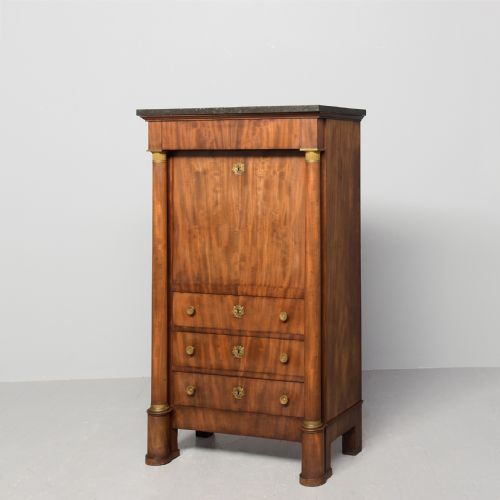
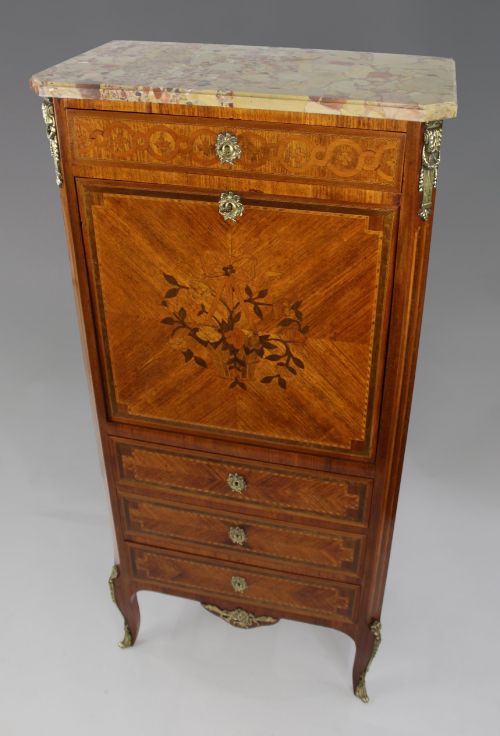
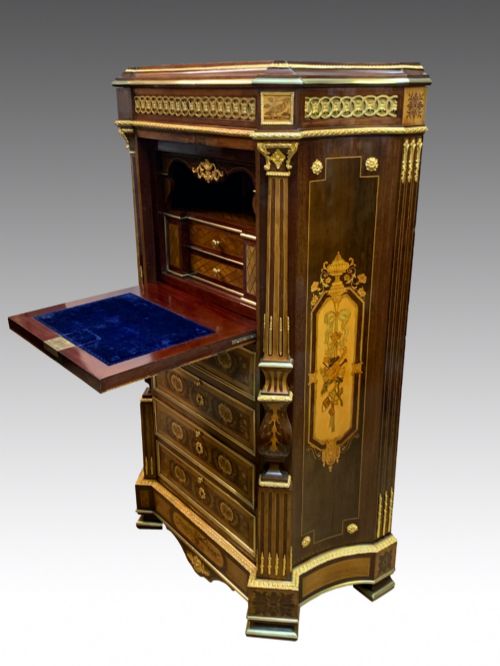
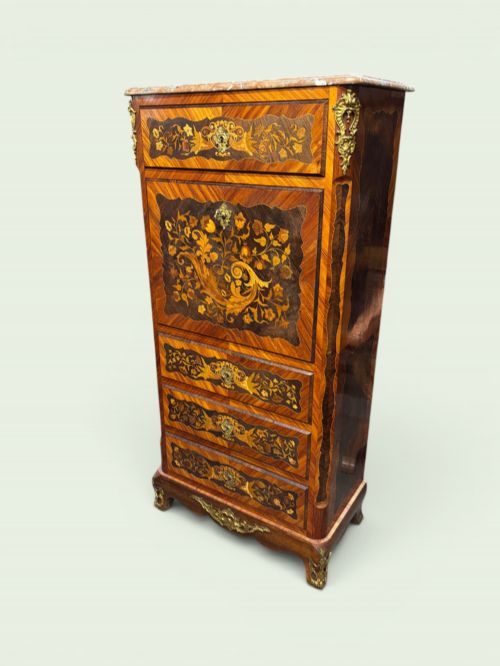
Continental European workshops predominate, particularly French ateliers producing Louis XV and Louis XVI revival pieces topped with marble and mounted in ormolu. Alongside these stand simpler Biedermeier designs in birch or mahogany, where clean architectural lines replace surface ornamentation.
Materials and construction
Cabinet-makers laid fine veneers of kingwood, rosewood, tulipwood or amboyna over stable secondary woods like oak, pine or mahogany, using the grain patterns to create symmetrical geometric panels or floral marquetry scenes.
Heavy slabs of white or grey marble fitted flush to the top surface on many French examples, requiring precise rebate cuts in the carcase to support the stone safely.
Internal mechanics rely on secret drawer mechanisms, spring-loaded catches and dovetailed joints hidden behind the main writing flap to secure documents away from casual view.
Listings feature mahogany, rosewood and kingwood veneers combined with original marble surfaces and concealed locking drawers.
Craftsmanship and preservation
The distinction between ordinary and superior pieces rests on the precision of the veneer work, the weight and chasing of the ormolu mounts, and the integrity of the internal pigeonhole compartments.
Original marble slabs, intact brass locks with working keys, and uncracked timber panels elevate an example, whereas replacement hardware or poorly seated secondary veneers indicate later intervention.
Structural stability depends upon the timber movement within the main fall-front door, which must open squarely without binding against the internal framing.
Gillows·Maison Krieger·Adriano Brambilla
The Secretaire a Abattant Cabinet Glossary
- Abattant
- The drop-front flap of a cabinet that pulls down to form a horizontal writing surface. It is typically held in check by internal hinges or side desk arms.
- Escritoire
- An alternative term for a writing cabinet or desk. It covers both slope-front boxes and tall vertical writing furniture.
- Ormolu
- Gilt-bronze mounts applied to furniture for decoration. High quality examples show sharp chisel work and deep fire-gilding.
- Marquetry
- Inlay work using various coloured wood veneers to form pictorial or geometric designs. It is glued to the carcase and scraped flush.
- Parquetry
- Geometric patterns formed by small pieces of wood veneer arranged in grids or herringbone motifs. Common on French case pieces.
Secretaire a Abattant Cabinet: Frequently Asked Questions
How do you open the secret drawers?
Secret drawers often release through hidden spring catches, sliding panels, or by removing a central pigeonhole insert to access a concealed spring release.
Cabinet-makers built these compartments into the upper frieze or behind the main writing well to keep private papers secure.
Can I use it as a daily desk?
The drop-front writing flap provides a sturdy writing surface when supported by internal stays or desk arms, making it suitable for occasional laptop use or letter writing.
Care should be taken not to overload the open flap beyond the weight it was originally designed to bear.
How do I tell French and Biedermeier styles apart?
French styles like Louis XV or Louis XVI revival feature curved cabriole legs, ornate ormolu mounts, and intricate floral marquetry on exotic wood veneers.
Biedermeier cabinets rely on architectural restraint, featuring flat surfaces, minimal hardware, and clear blonde or dark fruitwood grains.
Why do many have marble tops?
Marble tops provided a durable, stain-resistant surface for nineteenth-century interiors where owners might place lamps, vases, or washing basins.
They also added substantial weight to the upper carcase, anchoring tall vertical furniture against tipping.