
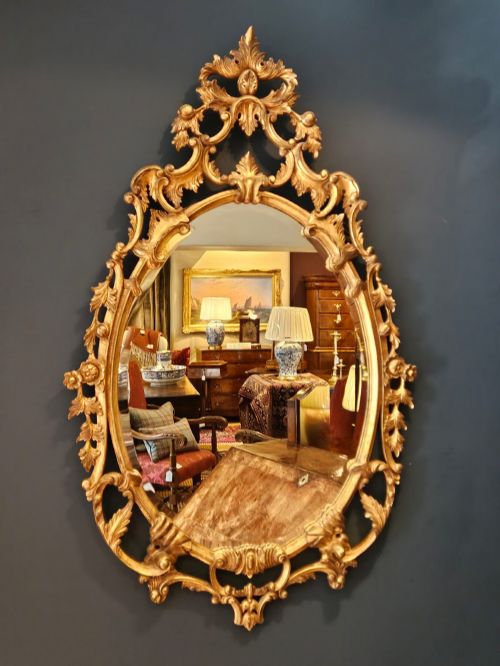
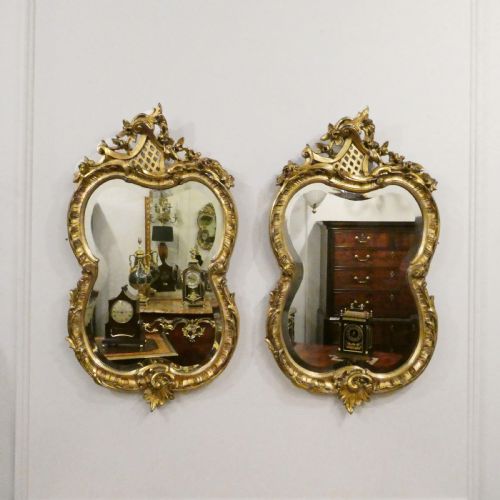


Scrollwork Gold Wall Mirror
A scrollwork gold wall mirror brings architectural depth and reflected light into a room through carved ornamentation and metallic brilliance.
Scrollwork Gold Wall Mirror
A scrollwork gold wall mirror combines reflective glass with elaborate metallic framing, often following historical revival designs. These pieces range in scale from compact hall mirrors to imposing wall fixtures designed to dominate a mantelpiece or principal wall.
The materials and aesthetic lean heavily towards ornate historical revivals, particularly Rococo and Baroque styles. Buyers encounter pieces spanning the eighteenth century through the Edwardian period, with nineteenth-century interpretations appearing frequently.
Origins vary across European traditions, including French chateau aesthetics, Italian Florentine carving, and Spanish gilt work. Forms include rectangular shapes, oval formats, and shield-shapes framed in carved wood or brass.
Construction and materials
Makers shaped wooden frames from timber before applying layers of gesso to build up intricate relief details. This plaster preparation provided a smooth, responsive base for subsequent gilding techniques.
Gilding involved the application of delicate gold leaf or gold paint to the prepared surface, creating a luminous metallic finish. Alternative metal framing utilised cast brass, combining structural rigidity with ornate surface decoration.
Regional styles represented on this page range from Italian Florentine carving to French Rococo and Spanish gilded designs.
Distinctions in quality
The depth and crispness of the carved wooden scrollwork distinguish superior examples from simpler moulded alternatives. Hand-carved details exhibit an organic fluidity and precision that mechanical replication cannot duplicate.
The preservation of the original gilded surface dictates the visual impact of the piece. High-grade execution shows subtlety in the interaction between burnished and matt areas of gold leaf over the gesso ground.
The Scrollwork Gold Wall Mirror Glossary
- Giltwood
- Wood that has been coated with gold leaf or a gold-coloured finish. This technique creates a rich metallic sheen while retaining the underlying carved wooden form.
- Gesso
- A plaster mixture applied to wood frames to create a smooth surface for carving and gilding. It allows craftsmen to model intricate relief ornamentation before applying gold leaf.
- Rococo
- An ornate design style characterised by asymmetrical scrollwork, C-scrolls, and naturalistic shell motifs. It heavily influences the decorative framing of many nineteenth-century mirrors.
- Baroque
- A theatrical and grand stylistic period emphasising drama, heavy carving, and monumental scale. Baroque revival mirrors often feature imposing proportions and rich surface detail.
- Beveled
- Glass edges that are cut and polished at an angle to catch the light. This traditional technique adds optical depth and refinement to the mirror plate.
Scrollwork Gold Wall Mirror: Frequently Asked Questions
How do I date a gold wall mirror?
Dating relies on examining the construction methods of the wooden frame, the composition of the gesso, and the style of the carving. Historical revival periods often mimic earlier centuries, requiring close inspection of material ageing.
The characteristics of the mirror glass itself, along with any backing boards or hardware, provide additional clues to the era of manufacture.
What is the difference between giltwood and gilt metal?
Giltwood consists of a carved wooden base covered in gesso and gold leaf, offering warm texture and organic depth. Gilt metal frames utilise brass or other alloys with a gold-toned finish.
Metal frames tend to present a more uniform industrial structure, whereas wooden frames showcase individual hand-carved nuances.
Where should I hang a large scrollwork mirror?
These mirrors function effectively above mantelpieces, console tables, or as focal points in entrance halls. Their reflective properties amplify natural light and visually expand the dimensions of the room.
Due to their substantial weight, particularly carved giltwood examples, secure wall fixings and load-bearing wall studs are essential for safe installation.
How do I clean an antique gilt mirror?
Dusting requires a soft, dry brush to prevent damage to delicate carved scrollwork and fragile gold leaf surfaces. Moisture can lift gesso and gilding, so liquid cleaners must be avoided entirely on the frame.
Glass cleaner applied sparingly to a cloth keeps the mirror plate clear without risking overspray onto the historic metallic finish.