





Scrolled Leg Side Table
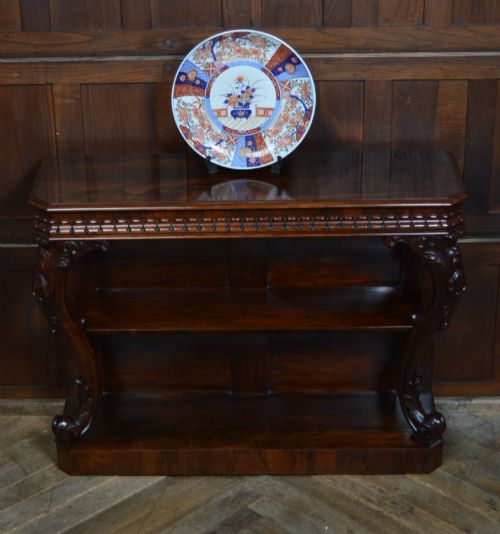
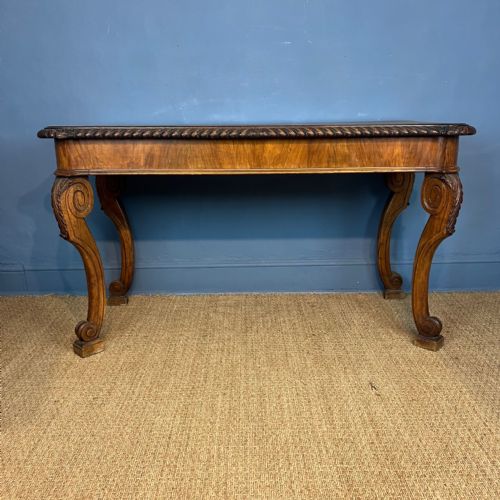
A scrolled leg side table brings sculptural timber and steady surface space to a hallway or drawing room.
Scrolled Leg Side Table
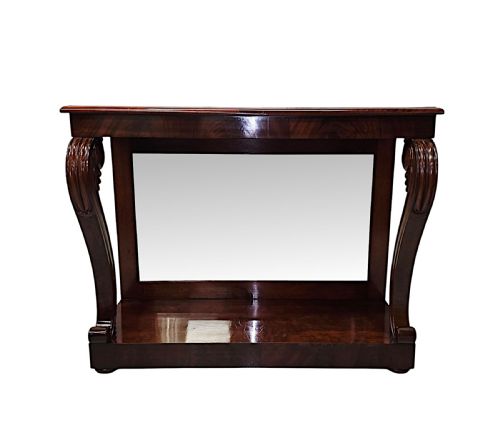
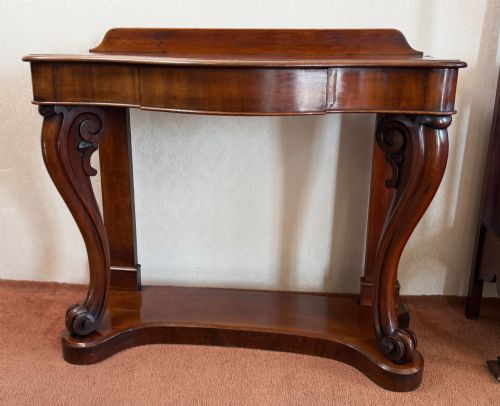
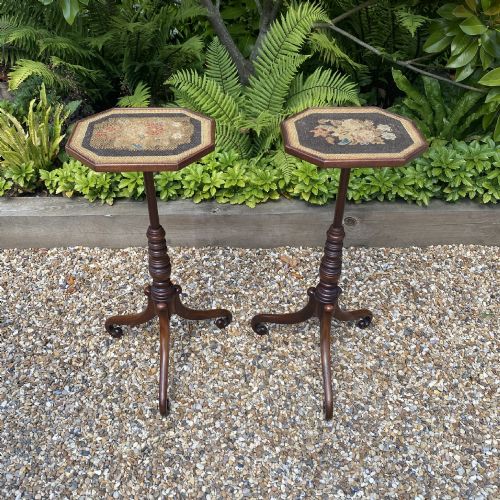
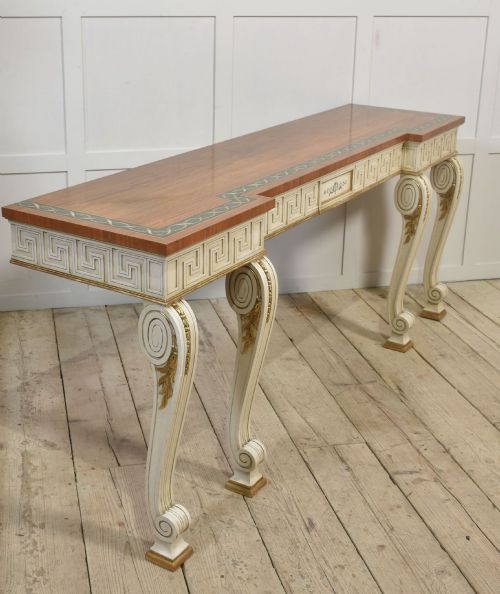
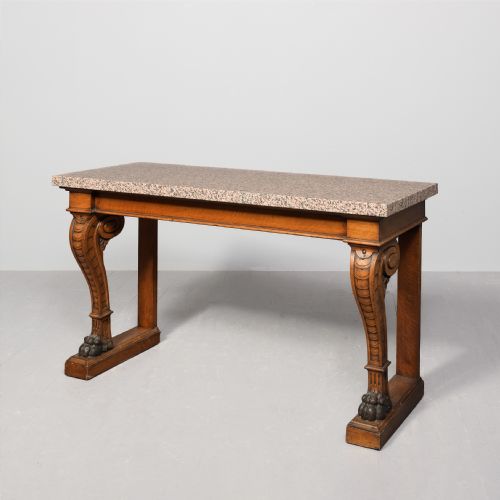
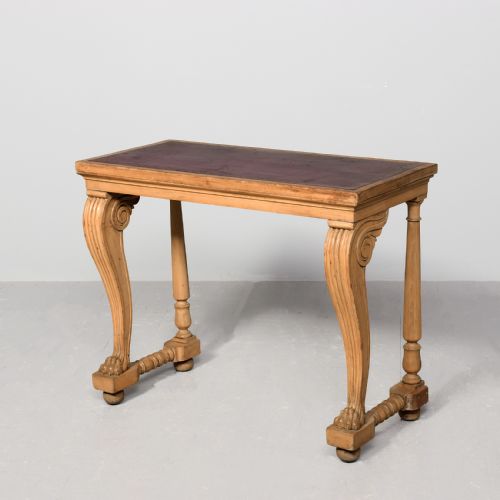
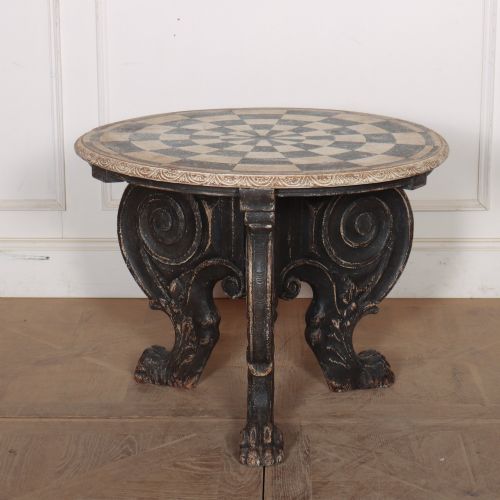
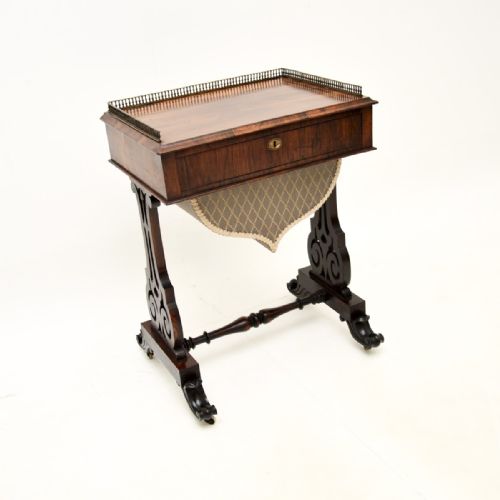
A scrolled leg side table is a compact surface built to stand against a wall or float within a room, most frequently encountered in mahogany, walnut, and rosewood. These pieces appear across the Georgian, Regency, and Victorian periods, taking forms such as console tables, pier tables, and occasional tables.
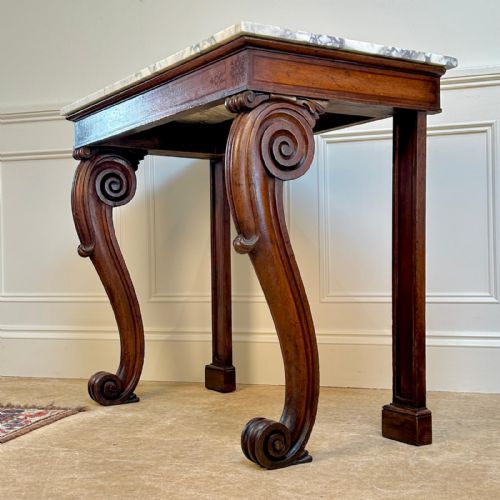
The primary visual signature lies in the curvilinear support beneath the top, often manifesting as bold scrolls or carved volutes. Surviving examples demonstrate a lineage stretching from the nineteenth century into the early twentieth century, spanning English, French, Irish, and Anglo-Indian workshops.
Materials and construction methods
Cabinetmakers relied on dense hardwoods such as mahogany, oak, and walnut, frequently applying figured veneers or burr timbers to flat surfaces and tabletops. Tops of marble, granite, or inset leather appear alongside traditional timber panels, supported by carved structural framing.
Joinery techniques combined traditional framing with hand-carved decorative elements, incorporating brass mounts, gilt details, and painted finishes on select continental and neoclassical examples.
Scrolled Leg Side Table Retail Price Guide 2026
Typical asking prices for scrolled leg side table among the pieces listed under this phrase on Sellingantiques today, from the lower quarter to the upper quarter. They describe what is for sale here now, not the wider market.
Some nineteenth-century makers hid secret compartments inside occasional tables for holding private letters.
Judging the quality of execution
Quality reveals itself in the depth and crispness of the carved scrolls and the selection of figured timber veneers. Superior pieces display seamless matching of wood grain across the top and drawer fronts, whereas simpler iterations rely on plain timber boards.
The integrity of the structural joints and the weight of materials like marble or granite tops distinguish standard domestic items from substantial console and pier tables commissioned for formal interiors.
Gillingtons of Dublin·James Mein of Kelso·Robert Strahan·Alexander McKenzie of Glasgow·Gillows·Whytock and Reid
The Scrolled Leg Side Table Glossary
- Console table
- A table designed to stand against a wall, traditionally secured with brackets or front legs. These pieces frequently feature decorative scrolled supports.
- Pier table
- A low table specifically built to sit against the wall beneath a pier glass or mirror. They often incorporate marble or granite inserts.
- Gueridon
- A small French round occasional table supported by a central column or multiple legs. They emerge frequently in nineteenth-century walnut and exotic woods.
- Serpentine shape
- A front edge curved in a wave-like form with a convex centre flanked by concave wings. This contour appears on mid-nineteenth-century mahogany examples.
Scrolled Leg Side Table: Frequently Asked Questions
What is a scrolled leg side table used for?
These tables provide a convenient surface for lamps, decorative objects, and correspondence in living rooms and hallways. Their shallow depth allows them to sit neatly against walls without obstructing walkways.
Larger console and pier versions often anchor a room visually, placed beneath mirrors or windows to display ornamental items.
How do I identify a Victorian example?
Victorian tables typically feature heavier proportions and darker timbers like rosewood and burr walnut, often paired with intricate carved details. You will frequently find them utilising serpentine fronts and robust turnings.
They reflect the eclectic revival styles popular during the nineteenth century, ranging from heavy mahogany to inlaid satinwood.
Where were these tables made?
The evidence shows production across British, Irish, French, German, and Anglo-Indian workshops. Regional preferences influenced the choice of materials, such as padouk in Anglo-Indian pieces and oak in regional English furniture.
Imported styles and local cabinetmaking traditions merged, resulting in distinct regional interpretations of the scrolled leg form.
How should I care for marble and wood tops?
Timber surfaces require occasional polishing with appropriate wax to nourish the grain and protect the finish from moisture. Avoid placing them in direct sunlight to prevent fading of rosewood and mahogany.
Marble and granite tops need only gentle wiping with a damp cloth, avoiding acidic cleaners that can etch the polished stone surface.