





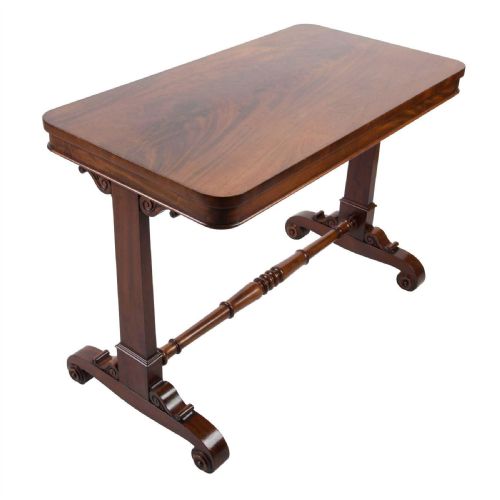
Scrolled Foot Occasional Table
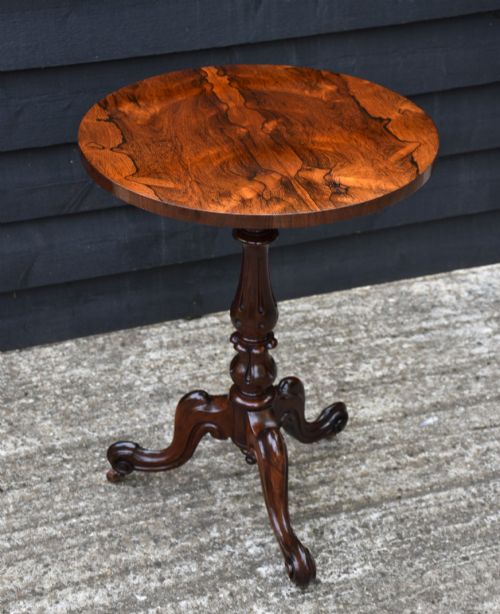
These scrolled foot occasional table examples are compact display surfaces built to hold a lamp or a glass, bringing timber warmth and historic form into a sitting room.
Scrolled Foot Occasional Table
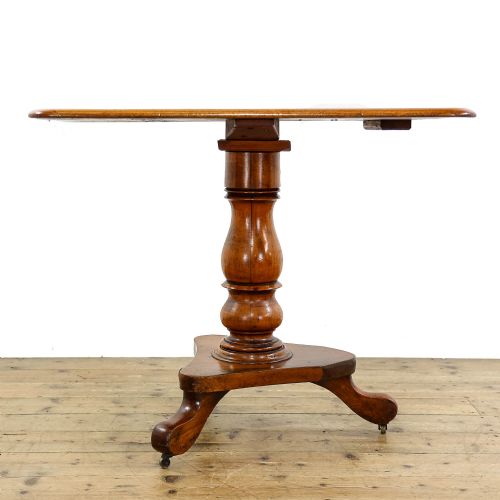
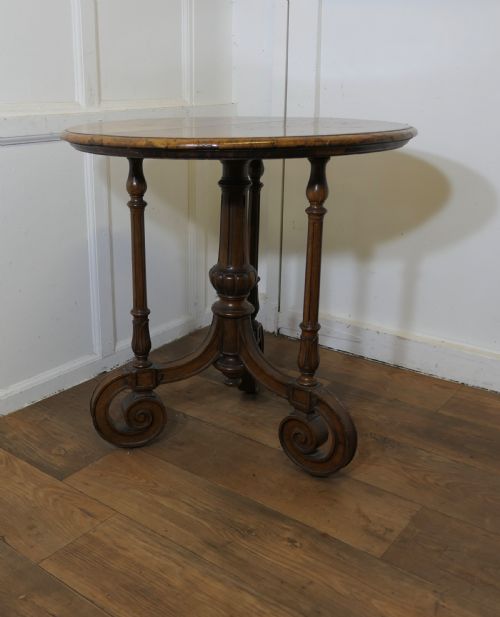
A scrolled foot occasional table is a small, moveable surface designed for drinks, lighting, or books, appearing across the nineteenth century and into the early twentieth century. These pieces stand on tripod bases or four-legged supports that terminate in carved scrolls, anchoring their compact frames to the floor.
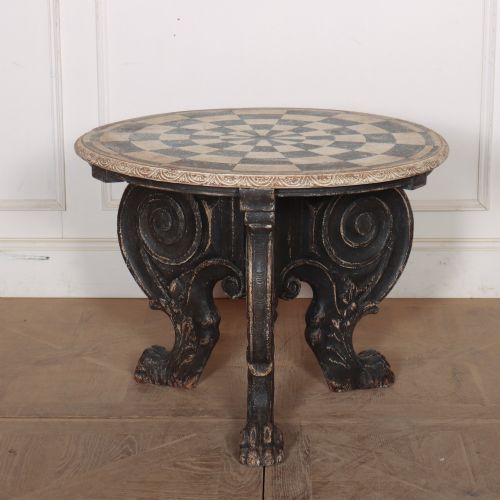
The versions most commonly met on this page date from the nineteenth century, including Victorian and Regency eras. Mahogany, rosewood, and walnut form the core of the selection, alongside rarer examples in burr walnut, carved oak, specimen wood, and painted finishes.
Makers adapted the form into various shapes, ranging from wine tables and lamp tables to circular side tables. They suit corners or beside seating, functioning as practical furniture with distinct period character.
How they were made
Cabinetmakers constructed these tables using dense hardwoods like mahogany, rosewood, and walnut, often applying burr veneers to tops to create striking grain patterns. Specimen wood tops brought together multiple timber varieties in geometric or pictorial arrangements, showcasing precision in cutting and fitting.
Carved details, such as the defining scrolled feet and occasional gilding, required skilled hand work rather than machinery. Turned pedestals and tripod legs were joined to circular or shaped tops with traditional pegging and glue blocks to ensure stability.
Some tables were built strictly for wine bottles, featuring small circular tops just wide enough to hold a decanter and a glass.
What varies in quality
The distinction between standard tables and finer work lies in the choice of timber and the crispness of the carving on the feet and pedestal. Selected veneers and intricate specimen wood tops indicate a higher tier of production.
Proportion and structural balance separate superior pieces from simpler utilitarian items. A well-balanced tripod base and tight joinery ensure the table remains steady during daily use.
Whytock and Reid
The Scrolled Foot Occasional Table Glossary
- Occasional table
- A small, moveable table designed for use as needed around a room rather than for a fixed primary purpose.
- Specimen wood top
- A tabletop composed of many different timber types arranged to display contrasting colours and grain patterns.
- Tripod base
- A three-legged support structure commonly found beneath small nineteenth-century tables.
- Burr walnut
- A figured timber harvested from the growth excrescences of walnut trees, prized for its swirling grain.
- Regency
- A British design period spanning the early nineteenth century, characterised by classical restraint and polished hardwoods.
Scrolled Foot Occasional Table: Frequently Asked Questions
What is a scrolled foot occasional table?
A scrolled foot occasional table is a compact nineteenth-century or early twentieth-century stand featuring curved, scroll-shaped feet at the base of its pedestal or legs.
These pieces were made in woods like mahogany, rosewood, and walnut to serve as side, lamp, or wine tables in period interiors.
Where should I place an occasional table?
These tables suit placement beside a sofa, armchair, or in an empty corner where surface space is required without bulk.
Their small footprint allows them to function easily in modern rooms while adding historic timber texture.
How do I identify a Regency table?
Regency tables typically display clean classical lines, dark polished mahogany or rosewood surfaces, and restrained decorative carving.
They reflect the design sensibilities of the early nineteenth century, often prioritising simple geometric forms over heavy ornamentation.
What woods were used for these tables?
Cabinetmakers primarily utilised dense hardwoods such as mahogany, rosewood, walnut, and oak for structural stability and rich colour.
Finer examples feature burr walnut veneers or multi-timber specimen wood tops that highlight varied natural grains.