

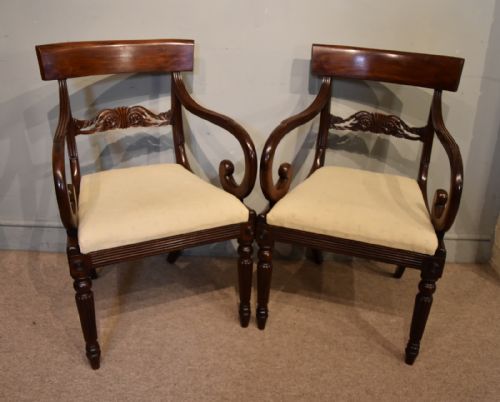
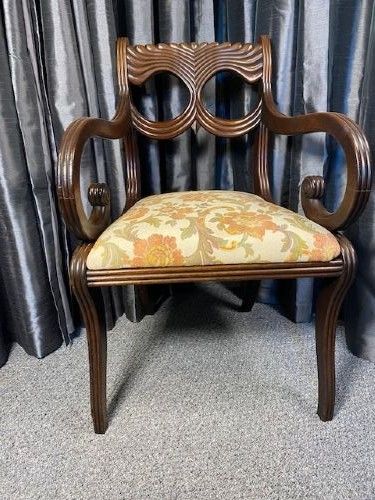
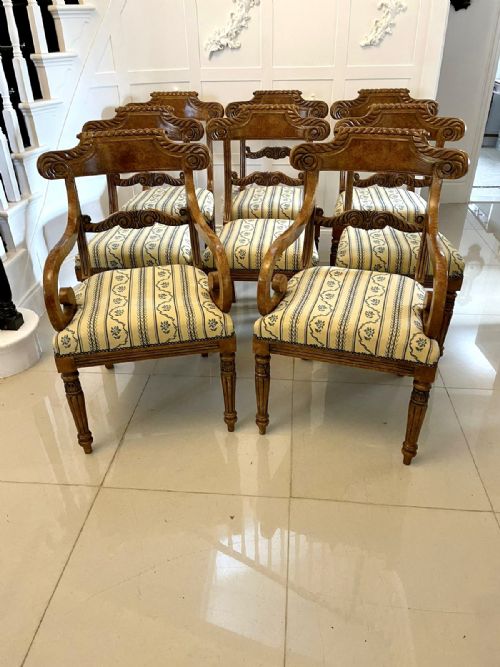


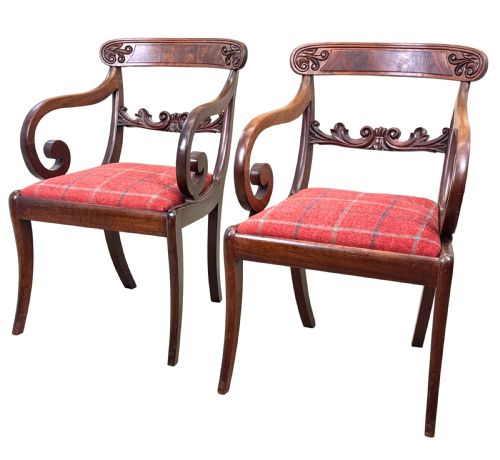


Scrolled Arm Carver
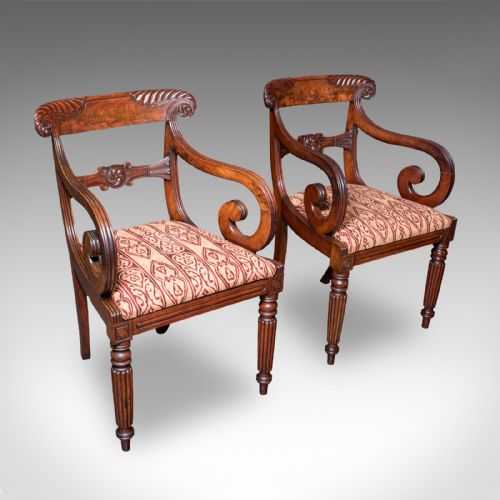
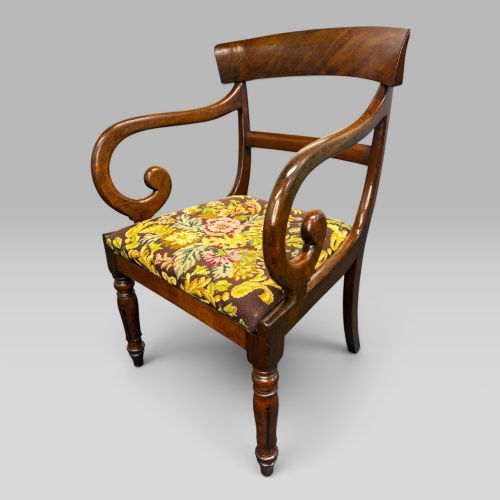
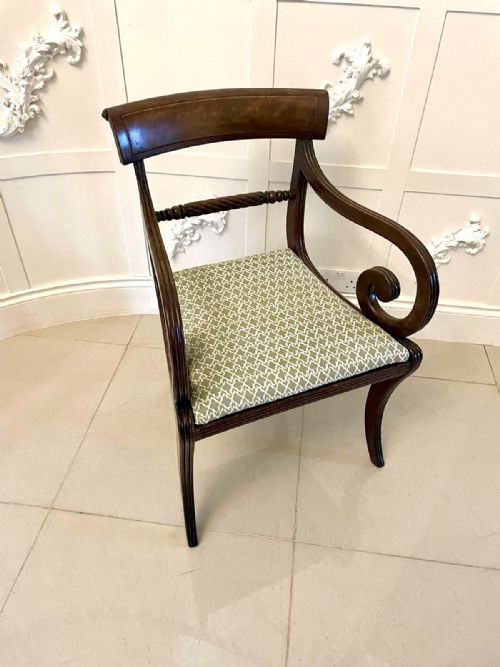
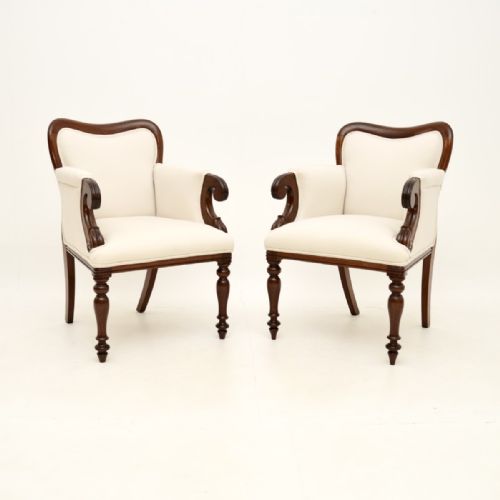
A scrolled arm carver offers distinct seating carved from mahogany and ash, combining supportive elbow rests with period character for the home.
Scrolled Arm Carver
When you search for a scrolled arm carver, you encounter seating designed for the dining room, desk, or library from periods spanning the Georgian, Regency, William IV, and Victorian eras. These armchairs and elbow chairs typically feature prominent curved arms that provide comfortable support while framing the timber construction.
The versions you meet most often on this page are constructed from mahogany and incorporate upholstered seats in fabric, leather, velvet, or needlepoint. They appear as single chairs, pairs, or larger sets alongside related desk chairs and dining chairs.
How they were made
Cabinetmakers built these chairs using solid timber such as mahogany, oak, ash, and rosewood, often shaping the armrests into sweeping scrolls. Selected examples incorporate brass inlay, ebonised details, or faux birds eye maple decoration to enhance the wooden surfaces.
Upholstery techniques varied from drop-in seats to traditional stuffed pads covered in floral fabrics, needlepoint, or leather. Joinery relied on sturdy frames designed to support regular use at desks or dining tables.
Listings feature mahogany predominantly, alongside oak, ash, and rosewood, spanning periods from Georgian and Regency through to Victorian and nineteen-twenty.
What varies in quality
The distinction between standard examples and finer pieces lies in the crispness of the timber carving and the elegance of the wood grain. Superior chairs display well-proportioned scroll arms and balanced framing that reflect careful attention from the maker.
The integrity of the original timber structure and the quality of the chosen upholstery materials elevate certain pieces above others. Subtle details such as brass inlay or ebonised accents further distinguish the finer items in the range.
The Scrolled Arm Carver Glossary
- Carver chair
- An armchair, traditionally placed at the head of a dining table or utilised at a desk. These chairs feature extended armrests to accommodate formal attire.
- Elbow chair
- An alternative term for an armchair with low armrests designed to support the user's elbows. They appear frequently in Regency and Victorian interiors.
- Drop-in seat
- A removable seat frame upholstered separately and dropped into the chair recess. This method allows for straightforward reupholstery without dismantling the main wooden structure.
- Needlepoint
- A type of canvas work embroidery used for chair upholstery. It provides a textured, decorative surface frequently found on Georgian and Regency seats.
- Sabre leg
- A concave curving chair leg that tapers towards the foot, reminiscent of a cavalry sabre. This form appears regularly on Regency mahogany seating.
Scrolled Arm Carver: Frequently Asked Questions
Where did they sit?
These chairs served multiple functions throughout the home, appearing principally as desk chairs, library seats, and end chairs at dining tables. Their supportive armrests made them suitable for prolonged seating in studies and morning rooms.
Pairs often flanked a fireplace or stood in reception rooms as matching elbow chairs. Single carvers typically paired with larger dining sets or functioned as standalone desk seating.
How do I spot Regency style?
Regency pieces often display clean architectural lines combined with classical motifs, such as sabre legs and brass inlay. Dark timbers like mahogany and rosewood dominate this aesthetic.
Scroll arms on these chairs curve fluidly outward, reflecting the influence of French and English design trends from the early nineteenth century.
What woods were used?
Mahogany forms the primary timber across the majority of these listings, chosen for its strength and rich grain. Oak, ash, and rosewood appear alongside maple and ebonised finishes.
Cabinetmakers selected these hardwoods to ensure the structural integrity of the scrolled arms and load-bearing legs.
How do I care for upholstery?
Maintenance depends on the specific material covering the seat, whether it is leather, velvet, fabric, or needlepoint. Gentle dusting and appropriate fabric cleaners preserve the condition of the textile.
Drop-in seats simplify maintenance because the upholstered insert can be removed independently from the main mahogany frame.