

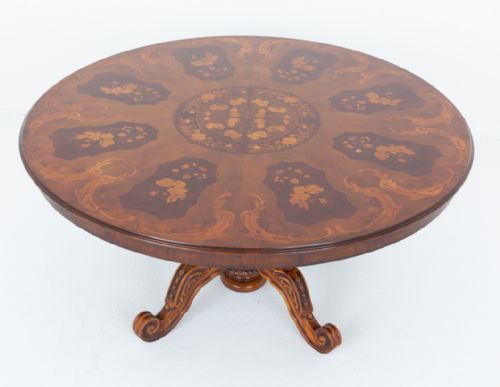


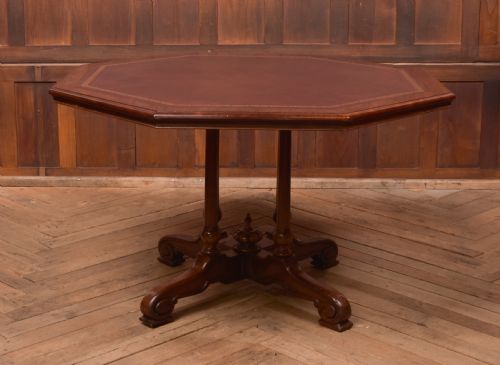
Scroll Feet Dining Table
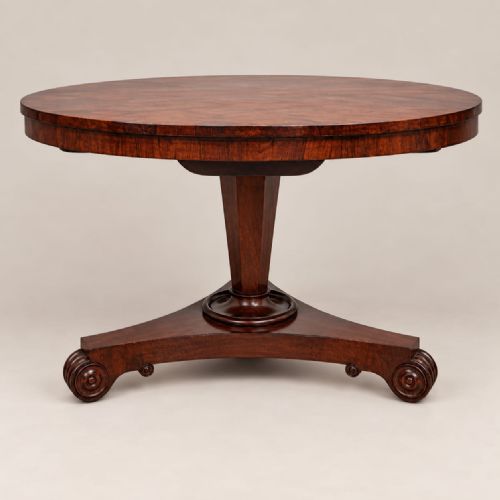
These scroll feet dining table examples bring rich timber surfaces and sturdy pedestal bases into a room, offering a solid centrepiece for daily meals.

Scroll Feet Dining Table
When you search for a scroll feet dining table, you encounter substantial pedestal forms rooted in the nineteenth century, including Victorian, William IV, and Regency periods.
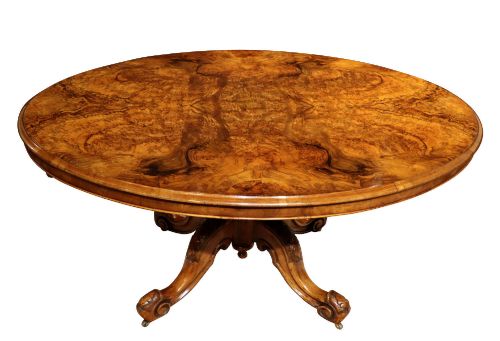
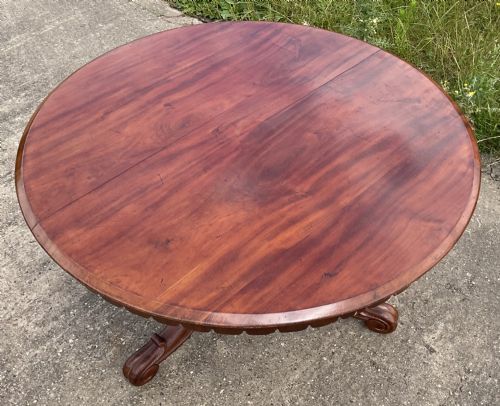
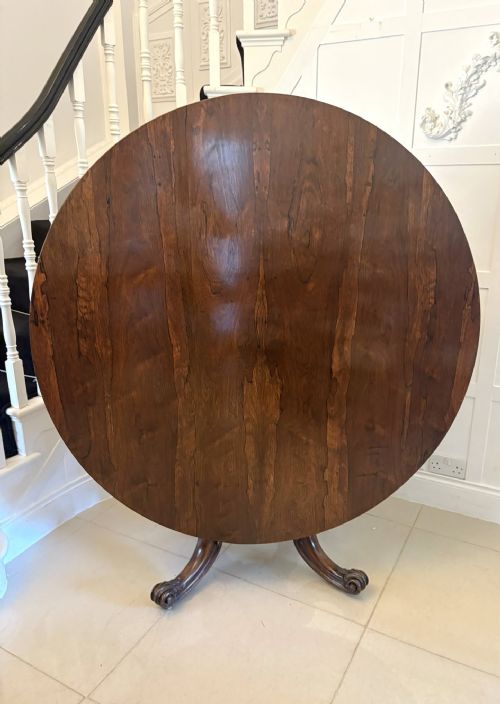
The selections available here lean heavily toward circular and oval breakfast or centre tables, alongside occasional pedestal dining tables set upon carved wooden supports.
Makers of these items utilised robust timber frames, shaping them into classical silhouettes that continue to serve traditional dining spaces effectively.
Materials and Construction
Cabinet makers constructed these tables using dense hardwoods such as mahogany, rosewood, and walnut, frequently applying burr walnut or flame mahogany veneers across the top surfaces.
Supports often incorporate carved wooden bases and quadrapod structures, occasionally featuring brass elements to anchor the heavy timber sections securely.
Joinery techniques focused on stability, balancing heavy central pedestals with sprawling feet to support tilting mechanisms and expanding leaves.
Several tables include tilt mechanisms, letting your dining surface double as a giant wooden shield against the wall when dinner ends.
Judging Quality
Quality rests upon the choice of timber figure, where richly grained burr walnut or select flame mahogany veneers separate finer examples from plain stock.
The depth and crispness of the carving on the pedestal base and feet dictate the overall refinement of the piece, reflecting the skill of the original workshop.
The Scroll Feet Dining Table Glossary
- Quadrapod base
- A four-legged support structure beneath a central column. This arrangement provides stability for large circular or oval dining surfaces.
- Tilt top
- A tabletop hinged to tip into a vertical position when not in use. This mechanism allowed tables to be stored against walls in period rooms.
- Flame mahogany veneer
- A sliced timber veneer showing a distinctive flame-like grain pattern. Cabinet makers applied this to enhance the visual appeal of table tops.
- Marquetry
- Decorative inlay work using various woods to form patterns. It appears on later revival tables to add surface detail.
Scroll Feet Dining Table: Frequently Asked Questions
How are these tables used?
These pieces serve primarily as dining tables or central furniture in principal rooms, providing a stable surface for meals or gatherings.
Many incorporate tilt mechanisms originally designed to save floor space when the room was cleared.
What periods do they come from?
The listings span the nineteenth century, capturing Victorian, William IV, and Regency eras alongside later Georgian revival pieces from the early twentieth century.
Each period brings distinct timber choices and carving details to the pedestal and feet.
How do I care for the timber?
Maintain the polished wood surfaces by keeping them away from direct heat sources and strong sunlight that can dry out old veneers.
Regular dusting with a soft cloth preserves the natural lustre of mahogany, rosewood, and walnut without heavy chemical polishes.
Are all these tables round?
While circular breakfast and centre tables form a large portion of the selection, oval pedestal dining tables also appear among the pieces.
Both shapes rely on central column supports rather than four corner legs.