

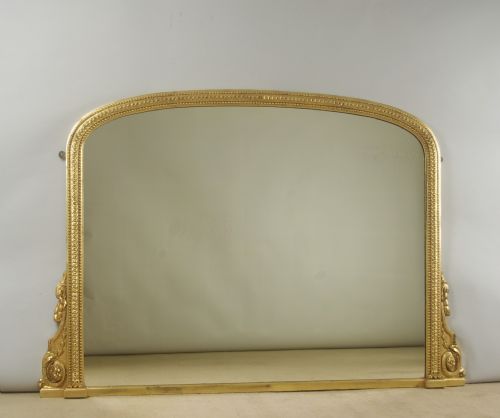
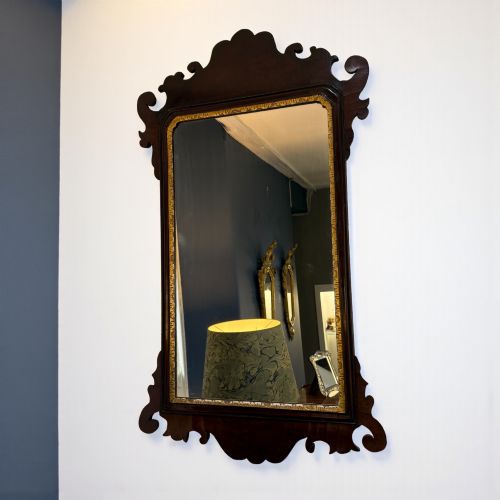
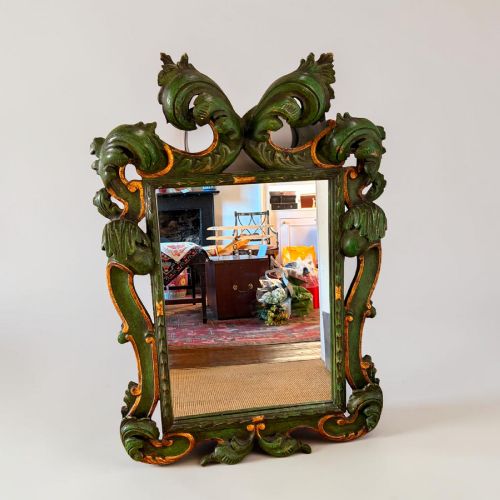
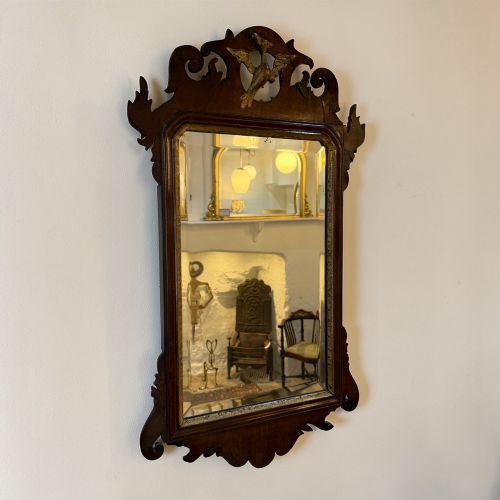


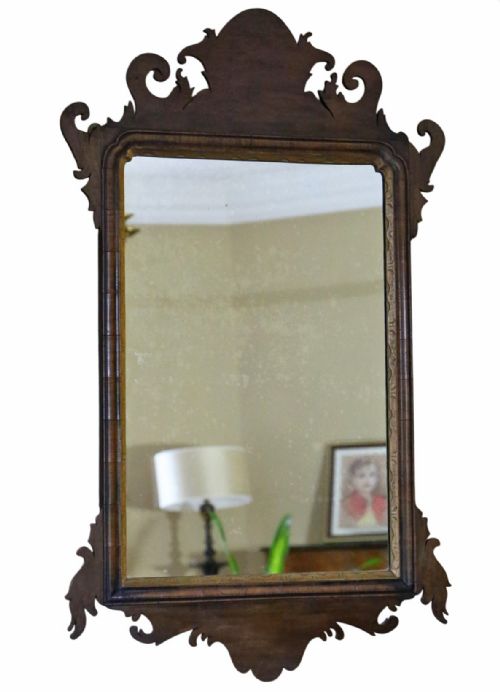
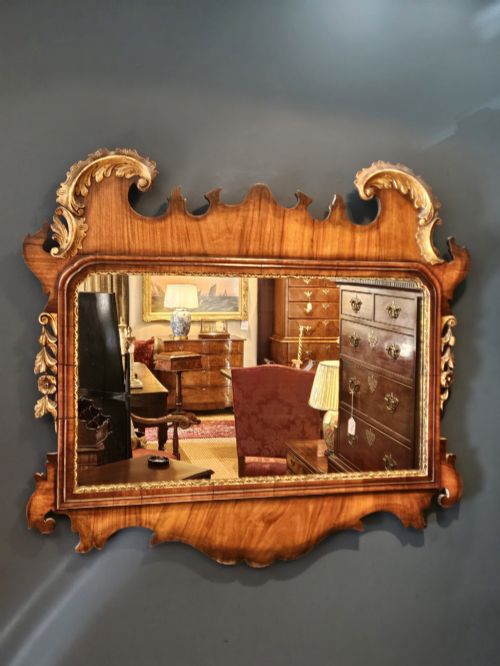


Scroll Carved Gilt Mirror
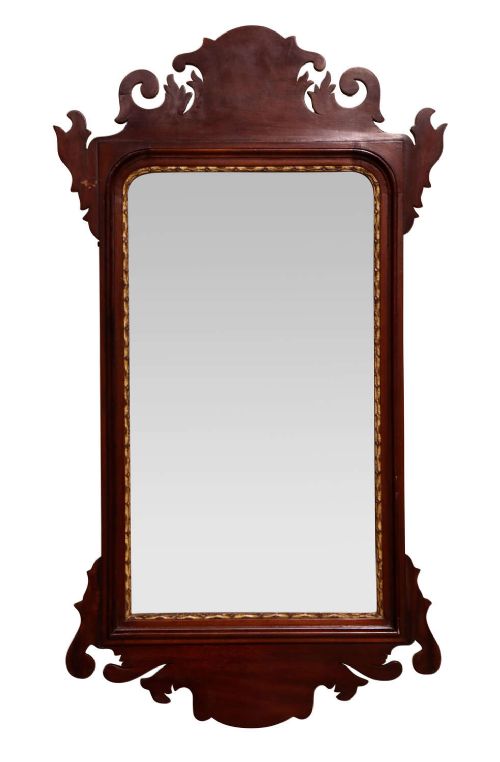
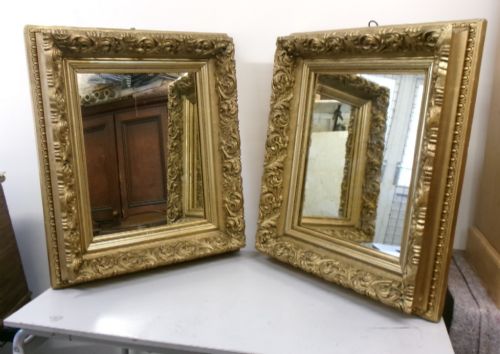
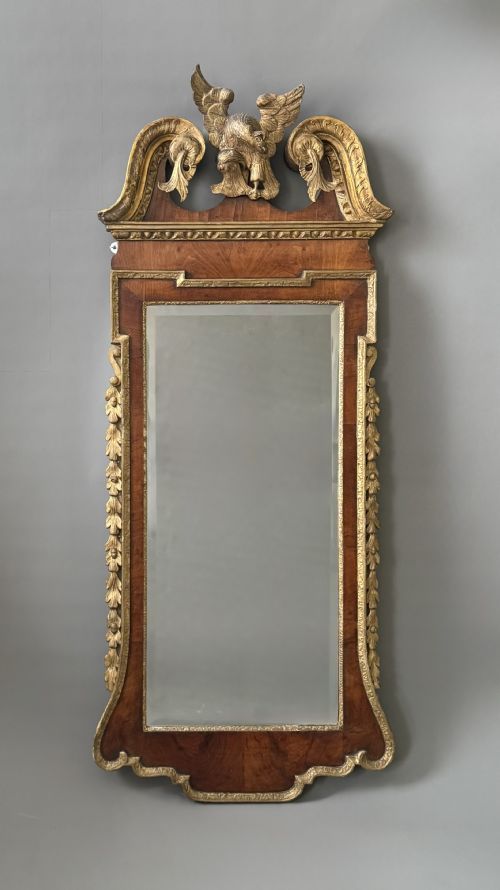
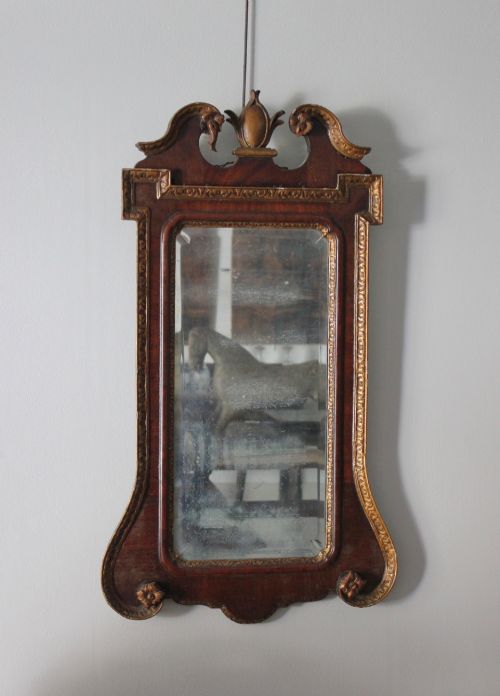
A scroll carved gilt mirror brings warmth and reflective depth to a room through traditional craftsmanship and ornate timber work.
Scroll Carved Gilt Mirror
A scroll carved gilt mirror is typically found in styles ranging from Georgian and Regency to Victorian revivals, spanning the eighteenth through the early twentieth centuries. These pieces function primarily as wall mirrors, overmantels, pier glasses, and vanity mirrors designed for reception rooms and bedchambers.
The selection includes substantial architectural overmantel mirrors alongside delicate fretwork frames intended for domestic interiors. English and continental origins predominate, offering variety in scale from intimate wall fixtures to large decorative centrepieces.
Materials and Construction
Makers shaped frames from native timbers such as mahogany, walnut, and sycamore, often applying gesso to create crisp relief details before finishing with gold leaf or gilding. Timber carvers worked the wood into elaborate scrolling patterns, pierced fretwork, and Rococo motifs.
Reflective surfaces consist of traditional mirror glass, occasionally featuring hand-engraved plates or displaying the mottled patina accumulated over centuries. Frames frequently combine parcel-gilt highlights with exposed wood grains to create textural contrast.
Scroll Carved Gilt Mirror Retail Price Guide 2026
Typical asking prices for scroll carved gilt mirror among the pieces listed under this phrase on Sellingantiques today, from the lower quarter to the upper quarter. They describe what is for sale here now, not the wider market.
Current listings feature pieces spanning the seventeenth century through the 1930s, utilising mahogany, walnut, gesso, and gold leaf.
Evaluating Quality and Detail
Quality rests upon the crispness and depth of the timber carving, where superior examples exhibit hand-carved intricacy rather than uniform machine moulding. The integrity of the original gilding and the retention of early mirror glass plates also distinguish finer specimens.
Proportion and balance within the scrolling framework dictate the aesthetic success of the piece, particularly in fretwork and Rococo designs. Superior examples maintain structural stability in their joints despite the delicate nature of pierced wooden frames.
The Scroll Carved Gilt Mirror Glossary
- Giltwood
- Timber that has been coated with gold leaf or metallic powder over a preparation layer. This finish gives the frame its characteristic metallic sheen.
- Fretwork
- Openwork ornamentation cut from a thin board using a fretsaw. This technique creates geometric or scrolling patterns common on eighteenth-century frames.
- Pier Glass
- A tall mirror designed to hang on the wall between windows. These pieces often sit above a matching pier table.
- Gesso
- A plaster mixture applied to wood frames to provide a smooth base for gilding. Carvers cut intricate details directly into this layered surface.
- Overmantel Mirror
- A wide mirror specifically proportioned to hang above a fireplace mantelpiece. These often incorporate landscape orientations or arched tops.
Scroll Carved Gilt Mirror: Frequently Asked Questions
Where should I hang a scroll carved gilt mirror?
These mirrors suit prominent spaces such as above a fireplace mantel, in a reception hall, or over a pier table where natural light can reflect across the room.
Consider the scale of the wall and surrounding furniture to ensure the proportions of the frame anchor the space effectively.
How do I identify a Georgian mirror?
Georgian pieces typically display dense hardwoods like mahogany or walnut, often incorporating hand-cut fretwork and parcel-gilt details characteristic of eighteenth-century design.
Examination of the backboards, fixings, and glass plate thickness can also offer clues regarding the period of manufacture.
What is the difference between Rococo and Victorian styles?
Original Rococo mirrors from the eighteenth century feature asymmetric scrolls and naturalistic floral motifs carved with organic fluidity. Victorian revivals often repeat these themes with heavier proportions and machine-assisted precision.
Comparing the crispness of the gesso work and the construction methods helps distinguish the earlier period pieces from later interpretations.
How should I clean a antique gilt mirror?
Dust the carved frame gently with a soft, dry brush to avoid disturbing fragile gold leaf or gesso details. Avoid liquid cleaners on the wooden surfaces.
Clean the mirror glass sparingly using a mild glass cleaner applied to a cloth rather than sprayed directly onto the glass, preventing moisture from seeping behind the plate.