



Scroll Back Chaise Longue
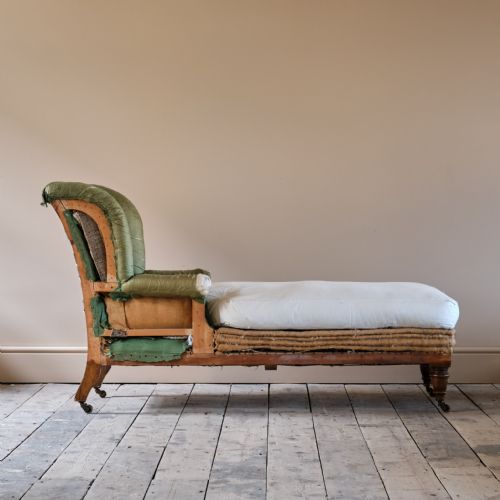
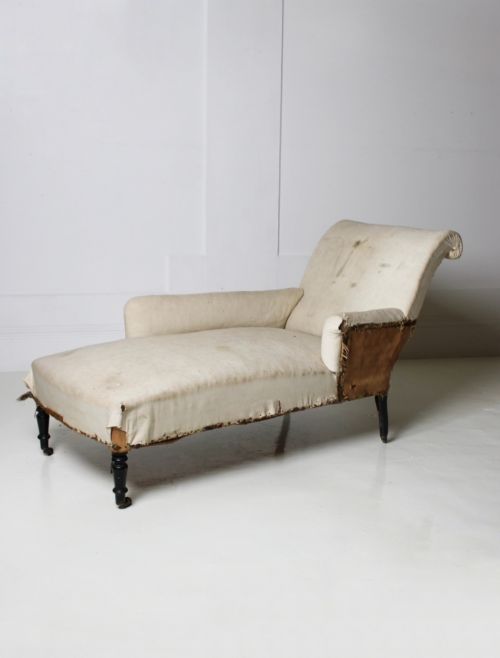
A scroll back chaise longue is a reclining seat designed for daytime resting, combining timber frames with soft upholstery.
Scroll Back Chaise Longue
Most items on this page date from the nineteenth century, featuring frames in mahogany, walnut, rosewood, beech, and pitch pine. Styles lean heavily toward the Victorian era, alongside Regency frames and Howard style daybeds. Forms include standard chaise longues, daybeds, and miniature furniture pieces.
Construction and materials
Makers built the structural frames of a scroll back chaise longue from dense hardwoods such as mahogany, walnut, rosewood, beech, and pitch pine. Some pieces utilise ebonised finishes or exposed show wood frames, highlighting the grain of the timber alongside carved scroll details.
Upholstery techniques involved traditional stuffing applied over supportive foundations, finished with fabrics, calico, or braided textiles. Frames often incorporate brass components, including original castors on turned legs to allow movement across the floor.
Scroll Back Chaise Longue Retail Price Guide 2026
Typical asking prices for scroll back chaise longue among the pieces listed under this phrase on Sellingantiques today, from the lower quarter to the upper quarter. They describe what is for sale here now, not the wider market.
Assessing quality and craftsmanship
Quality in a scroll back chaise longue rests upon the crispness of the timber carving and the architectural proportion of the scroll end. Finer pieces display deeply figured show wood, such as walnut or rosewood, combined with meticulous joinery in the frame.
The integrity of the original components also determines distinction, particularly the presence of matching turned legs and original brass castors. Miniature examples and signed works by makers demonstrate elevated levels of cabinetmaking skill.
Holland & Sons·Miles & Edwards
The Scroll Back Chaise Longue Glossary
- Chaise Longue
- A long upholstered chair for reclining, literally translating from French as long chair. These seating pieces typically feature an elevated backrest at one end.
- Show Wood
- Timber framework left exposed on an upholstered piece to display the grain and carving. Walnut and mahogany frequently appear in this application.
- Castor
- A small wheel mounted on a swivel assembly attached to the base of furniture legs. Brass versions appear on nineteenth-century daybeds to ease relocation.
- Ebonised
- Timber treated with a dark stain or finish to imitate ebony. This technique gained popularity during the nineteenth century for decorative effect.
Scroll Back Chaise Longue: Frequently Asked Questions
What is a scroll back chaise longue?
A scroll back chaise longue is a nineteenth-century daybed featuring an elevated, curved wooden backrest designed for reclining during the day.
These pieces combine timber frames in mahogany, walnut, or rosewood with upholstered seating and often include turned legs with brass castors.
Where were these daybeds used?
Owners placed these items in drawing rooms, master bedrooms, and large country house parlours for afternoon relaxation.
They served as versatile resting furniture that did not require retiring to a bedchamber.
How do I distinguish Victorian from Regency examples?
Regency pieces generally display cleaner classical lines and lighter proportions, often dating from the early part of the nineteenth century.
Victorian pieces frequently incorporate heavier carvings, button upholstery, and richer show woods like rosewood or walnut.
How do I care for the wood and upholstery?
Maintain the timber frame by dusting gently and applying appropriate wax polish sparingly to protect the polished surface.
Protect upholstered fabrics from direct sunlight to prevent fading, and consult a specialist for traditional textile restoration.