
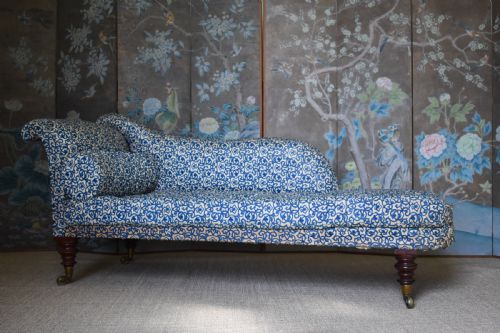


19th Century Lounge Sofa
A 19th century lounge sofa brings architectural presence and relaxed elegance to a room, offering a deep seat designed for reclining.
19th Century Lounge Sofa
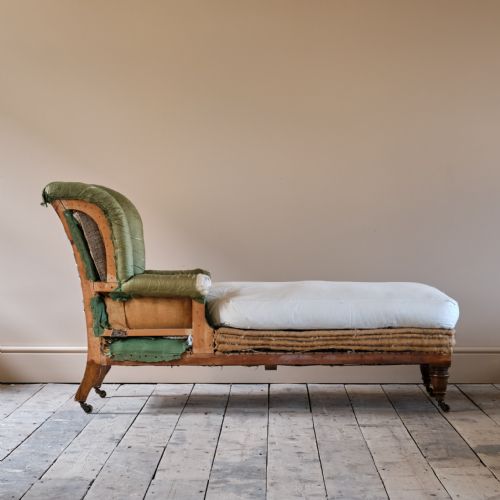
When searching for a 19th century lounge sofa, buyers encounter a diverse selection of seating forms spanning chaise longues, daybeds, and traditional settees. These items reflect the shifting domestic habits of the period, moving from formal reception rooms to private morning rooms and country house libraries.
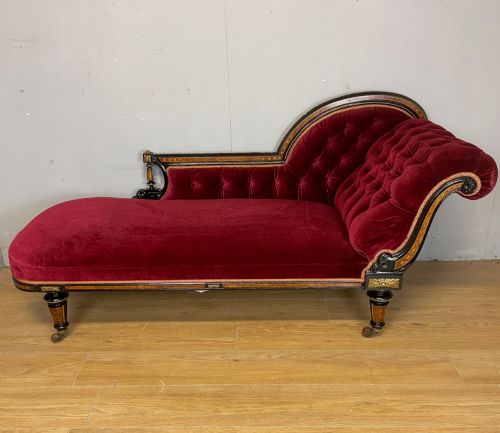
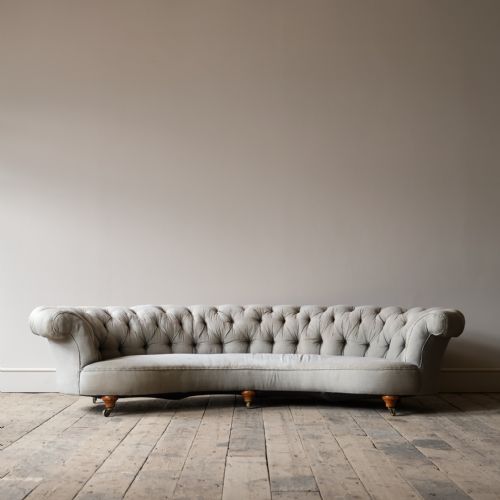
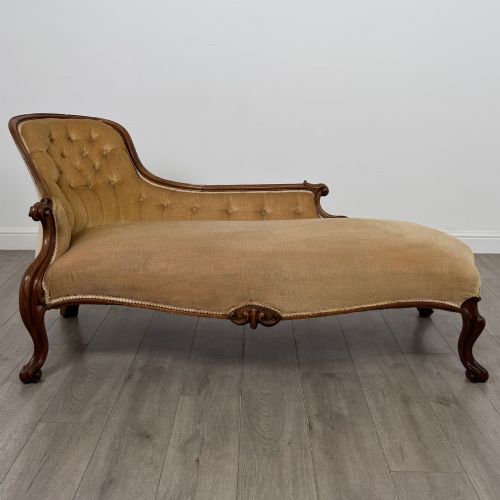
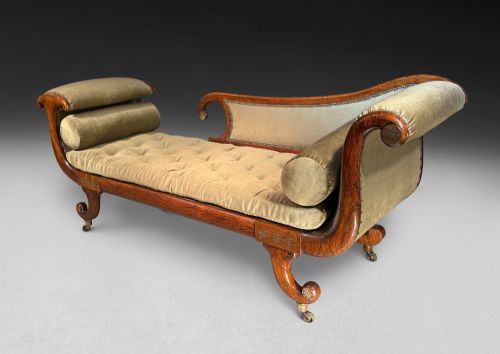
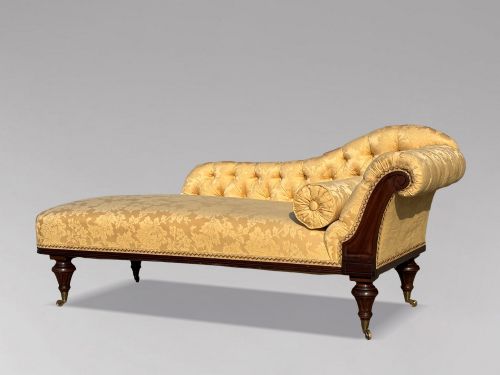
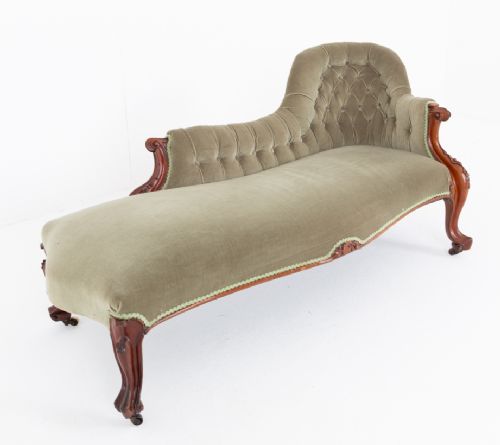
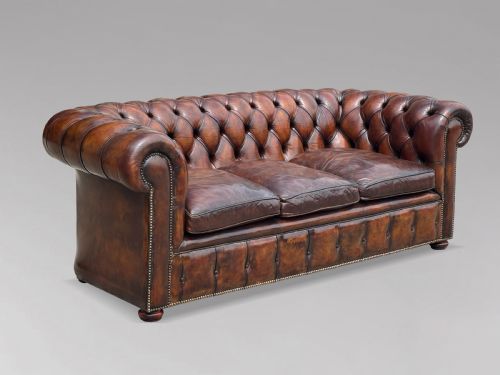
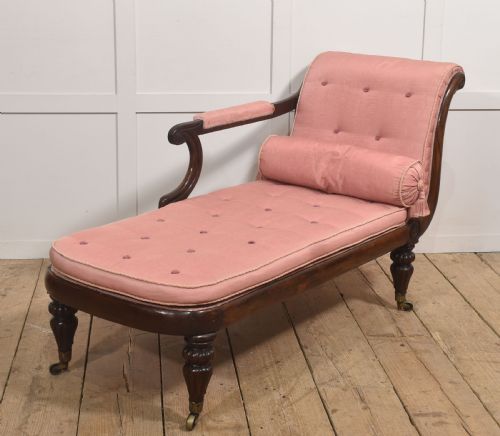
The version most commonly met on this page is the Victorian or Regency chaise longue, characterised by an asymmetric scroll end and upholstered wooden frames. Alongside these sit deep Chesterfield sofas, low occasional daybeds, and occasional open arm seating variants.
Origins stretch across English workshops, French provincial houses, and colonial makers, utilising dense timbers suited to long proportions and sustained lounging.
How they were made
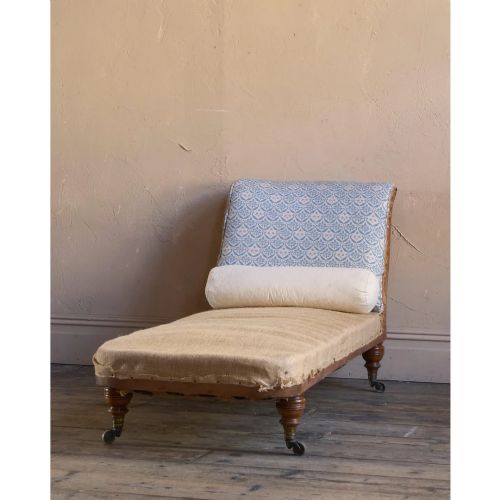
Construction relies heavily on dense hardwoods such as mahogany, rosewood, walnut, and ebonised timber, selected for structural stability under heavy upholstery. Frames are joined with traditional methods to support the characteristic low profiles and sweeping scroll arms.
Surface ornamentation integrates brass inlay, hand-carved mahogany details, and delicate ormolu mounts alongside inlaid walnut panels. Upholstery traditions utilise contemporary velvet, leather, and fabric materials stretched across robust internal webbing and stuffing.
Some nineteenth century daybeds were specifically designed narrower than standard beds, ensuring gentlemen did not doze too long after lunch.
What varies in quality
Quality rests primarily in the architectural integrity of the wooden frame and the sharpness of carved details on rosewood and mahogany structures. Pieces bearing attribution to established makers show superior joinery and more refined proportions in the scroll ends.
The refinement of brass inlay, the precision of ormolu mounts, and the choice of dense timbers like solid Rio rosewood elevate certain examples above standard commercial output. Fabric selection and the execution of deep buttoning or upholstery work also reflect the original investment in the piece.
Howard And Sons·H Goodall And Sons·Holland And Sons·Jas Shoolbred
The 19th Century Lounge Sofa Glossary
- Chaise Longue
- A long upholstered chair for reclining, typically featuring a single raised end and an open side.
- Chesterfield
- A deep-buttoned sofa with arms and back of the same height, traditionally finished in leather or heavy fabric.
- Ormolu
- Gilded bronze ornamentation applied to furniture surfaces for decorative contrast.
- Regency
- A British architectural and decorative style spanning the early part of the nineteenth century, known for classical restraint and exotic wood veneers.
- William IV
- A transitional stylistic period bridging Regency and early Victorian design, characterised by heavy, solid proportions.
19th Century Lounge Sofa: Frequently Asked Questions
Where should I place a chaise longue?
These pieces suit rooms with sufficient floor space to allow them to sit away from walls, functioning as standalone statement seating.
They pair well with morning rooms, large bedrooms, or reception spaces where their asymmetric profile remains visible from multiple angles.
How do I identify a Regency period piece?
Regency examples often display characteristic brass inlay, simulated rosewood finishes, and classical proportions derived from ancient Greek and Roman design.
Makers working in this era favoured clean structural lines combined with dark tropical timbers.
How do I care for antique upholstery fabric?
Routine maintenance involves gentle vacuuming with a soft brush attachment to remove dust from velvet and fabric surfaces.
Avoid placing antique textiles in direct sunlight to prevent fading of the original hues over time.