

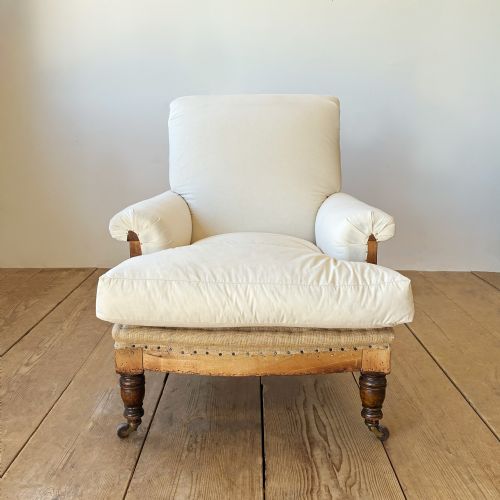


Scroll Arm Reading Chair
A scroll arm reading chair offers substantial comfort for studies and libraries, combining robust frames with deep seating.
Scroll Arm Reading Chair
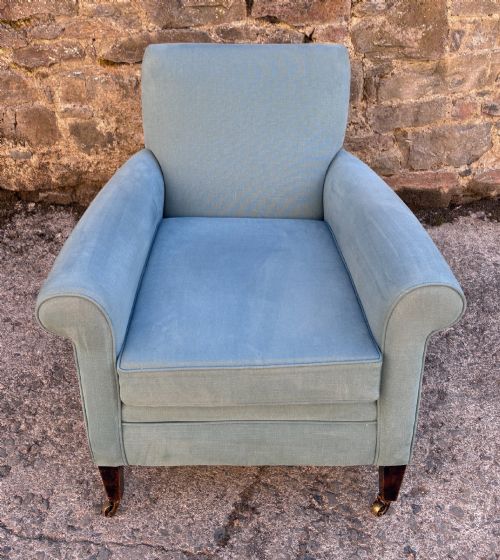
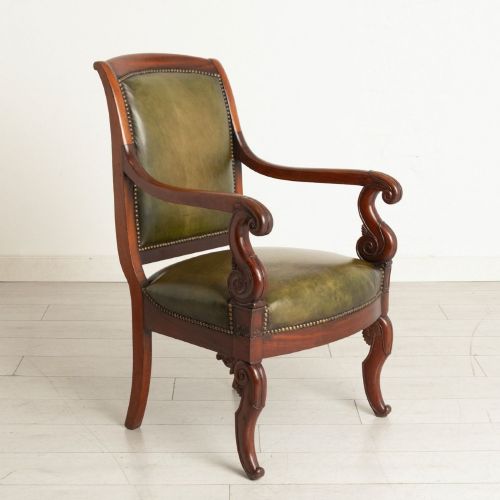
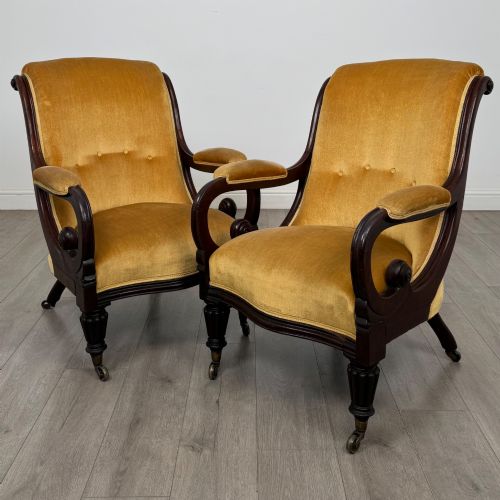
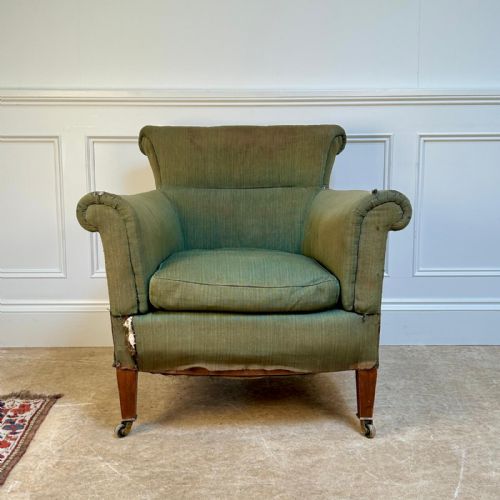
A scroll arm reading chair is primarily found across the nineteenth century, including Regency, William IV, and Victorian periods. These pieces serve as library chairs, desk chairs, and deep-seated country house armchairs designed for long periods of sitting.
The material record shows robust frames built from mahogany, rosewood, walnut, and hardwood, frequently paired with brass castors and fittings. Makers utilised traditional upholstery methods to finish these functional seats.
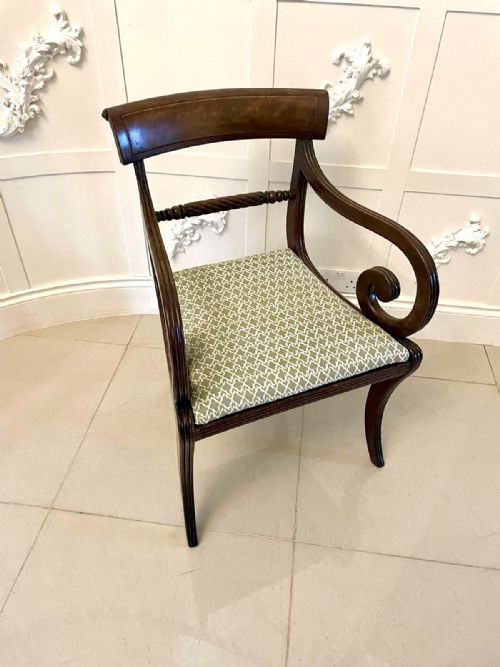
The inventory demonstrates distinct stylistic lineages, ranging from formal Regency library chairs with sabre legs to heavy Victorian gentleman chairs and English Country House seating. Buyers encounter both compact desk chairs and large proportioned lounging forms.
Construction and Materials
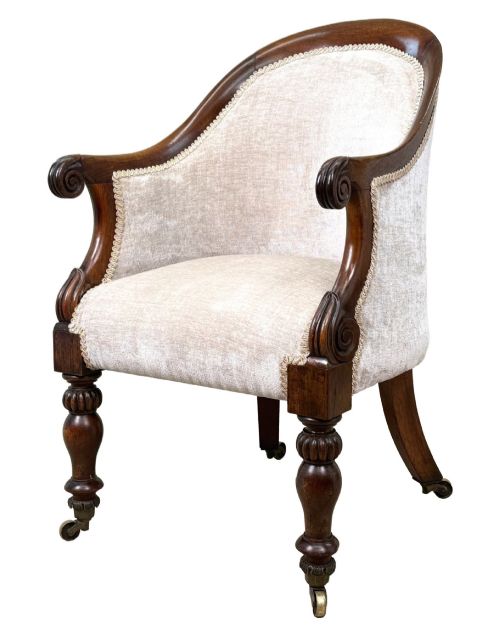
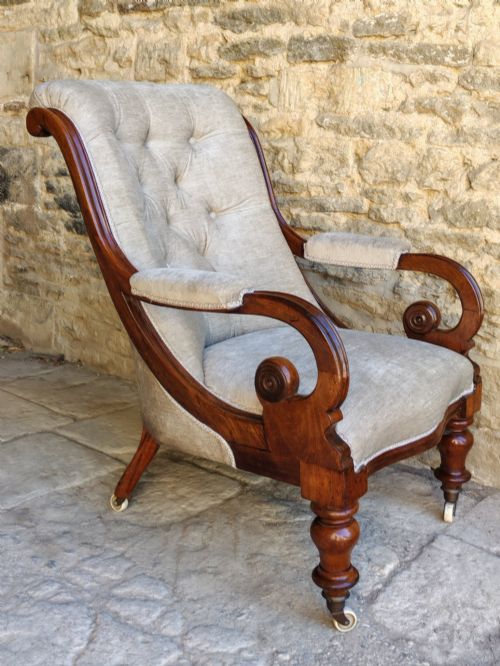
Cabinet makers utilised dense hardwoods such as mahogany and rosewood for the structural frames, often turning or carving the timber to form the characteristic scroll arms. Selected examples incorporate faux rosewood finishes and ebonised details to mimic more costly exotic materials.
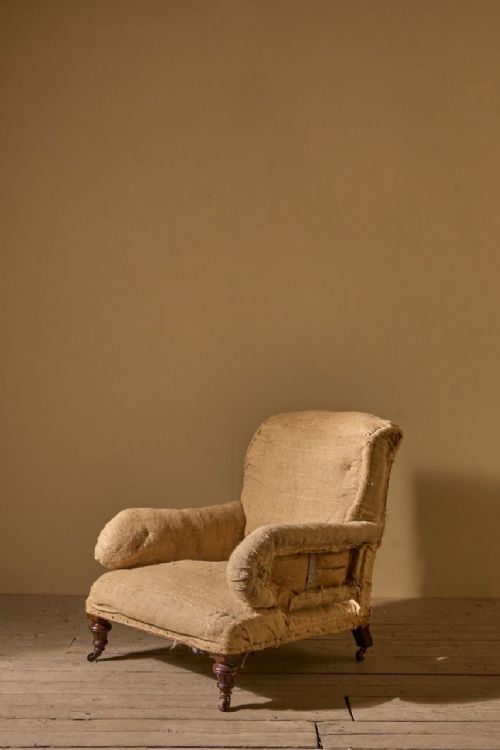
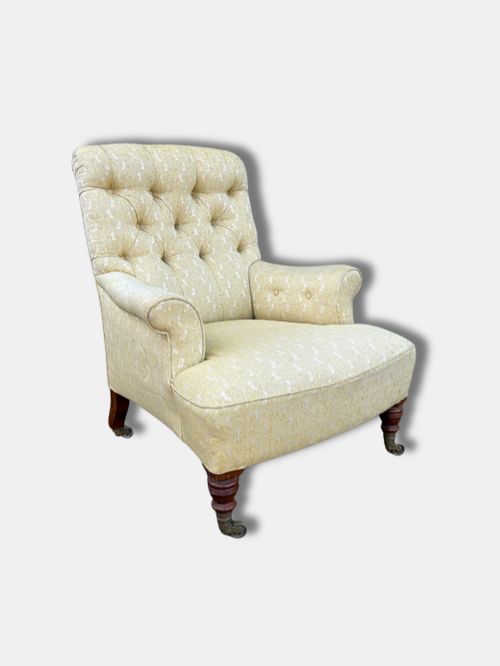
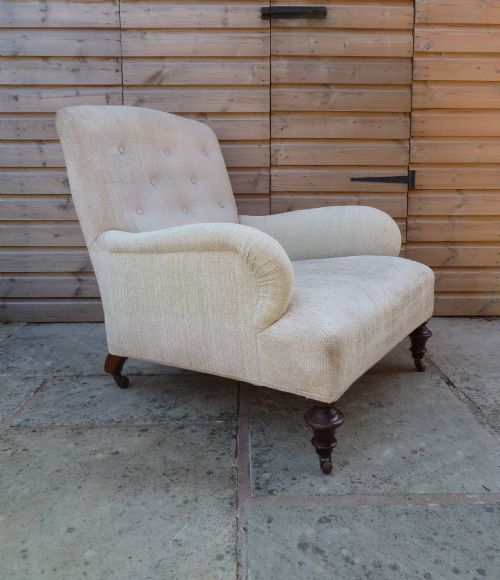
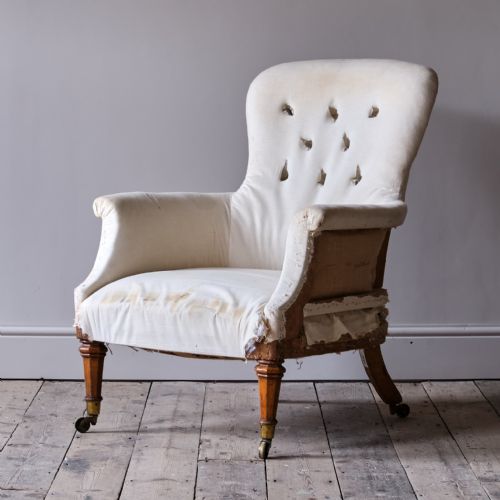
Upholstery techniques varied from button-backed springing and hessian foundations to tailored leather panels on desk chairs. Brass components, including castors and sliding mechanisms, appear consistently across library and reading forms to provide mobility and adjustment.
Several armchairs originate from the Royal and Ancient Golf Club of St Andrews.
Quality Variations
Quality rests upon the execution of the timber frame, where crisp carving on the scroll arms and substantial hardwood thickness distinguish superior workshop output from simpler production. The integration of functional elements, such as smooth sliding mechanisms on library chairs or stable sabre legs, dictates the structural integrity.
The selection of covering materials, ranging from hand-finished green leather to patterned velvet and fabric, alters the presence of the chair. Pieces bearing documented workshop associations or distinctive regional stylistic traits carry greater historic interest.
Howard and Sons·Hampton and Sons
The Scroll Arm Reading Chair Glossary
- Bergere
- An enclosed upholstered armchair with exposed wooden framing and cane or upholstered sides. This form appears frequently in Regency library settings.
- Sabre leg
- A curving, outwardly splayed leg profile characteristic of Regency seating design. It provides stability while tapering toward the foot.
- Tub chair
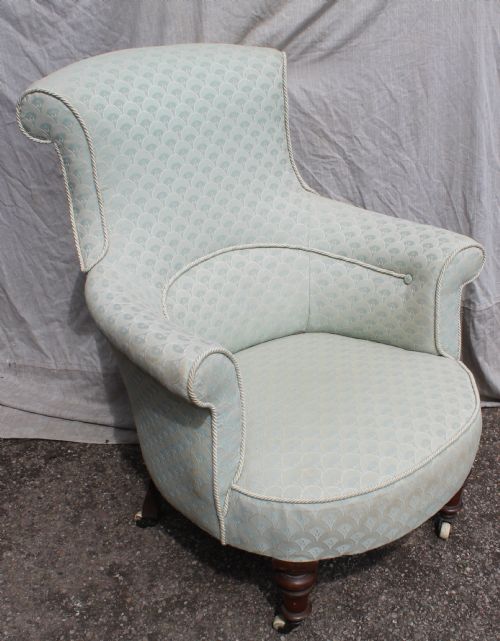
- An armchair with a continuous curved back and arms forming a single enveloping enclosure. These examples offer deep, supportive seating.
- Hessian
- A coarse woven fabric utilised as a foundational support layer beneath final upholstery layers. It forms the base for traditional sprung seats.
Scroll Arm Reading Chair: Frequently Asked Questions
What defines a scroll arm reading chair?
These seating forms feature distinct rolled wooden armrests designed to support the arms comfortably during extended periods of reading or study.
The category encompasses library chairs, desk chairs, and deep-seated armchairs originating from the nineteenth century.
Where were these chairs used?
Libraries, studies, and drawing rooms accommodated these comfortable seats, providing functional support for reading and writing.
Country houses and institutional settings also utilised large-proportioned versions for relaxation.
How do I identify a Regency reading chair?
Regency examples typically feature mahogany or rosewood frames, often incorporating sabre legs, brass castors, and leather upholstery.
These pieces tend to display cleaner classical lines compared to later heavy Victorian forms.
Are these chairs suitable for daily use?
Solid hardwood construction and traditional sprung upholstery make these historical pieces remarkably robust for contemporary seating.
Their deep proportions and supportive armrests provide practical comfort alongside period character.