



Scottish Tallboy Chest
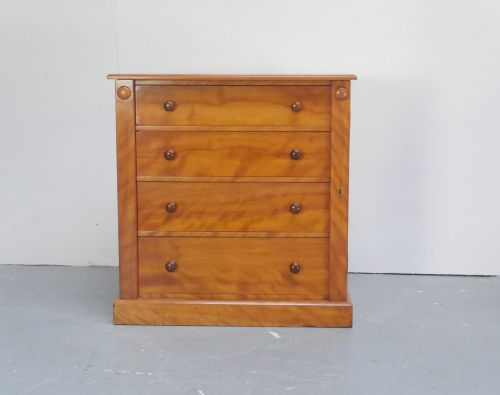
A scottish tallboy chest offers deep proportion and figured timber, built to command a room with clean architectural presence.
Scottish Tallboy Chest
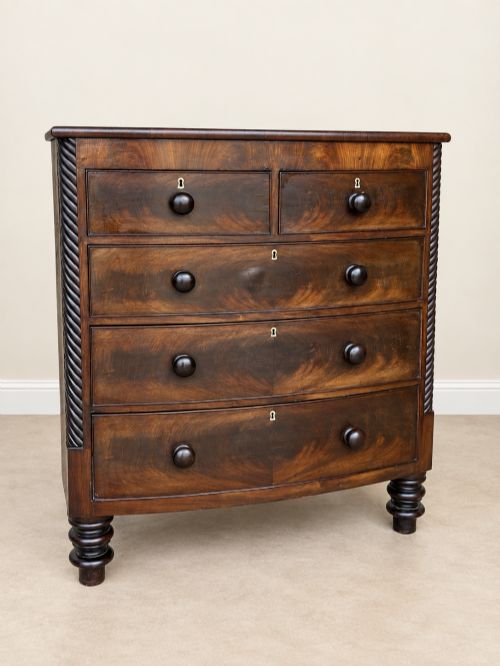
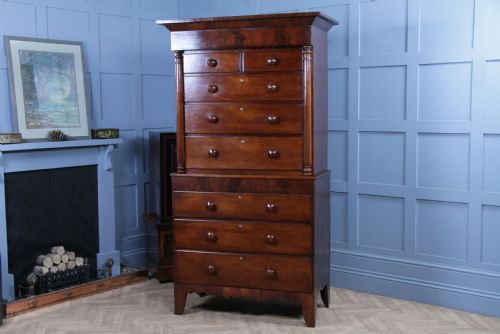
When you search for a scottish tallboy chest, you enter a field defined by substantial timber proportion and upright presence. These pieces serve as primary bedroom storage, offering multiple graduated drawers housed in tall configurations that maximise floor space.
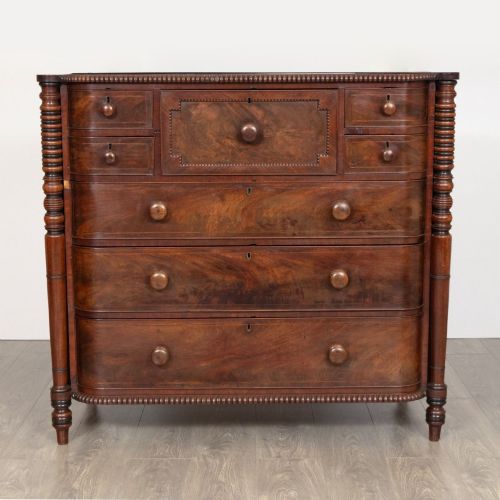
The versions most common on this page span the Georgian, Regency, and Victorian periods, often taking the form of chest on chest or tall chest designs. They appear frequently in mahogany, flame mahogany, and occasionally walnut or pine, reflecting the regional cabinet-making traditions of Scotland.
Makers such as Whytock & Reid and R H & J Simpson appear in the lineage of these tall forms, alongside unbranded country house pieces. Each item demonstrates the characteristic Scottish preference for strong vertical lines and rich timber figuring.
What varies in quality
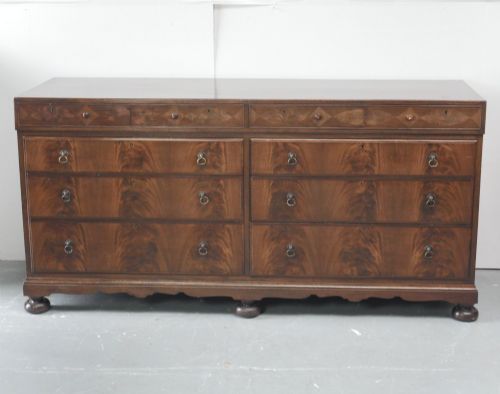
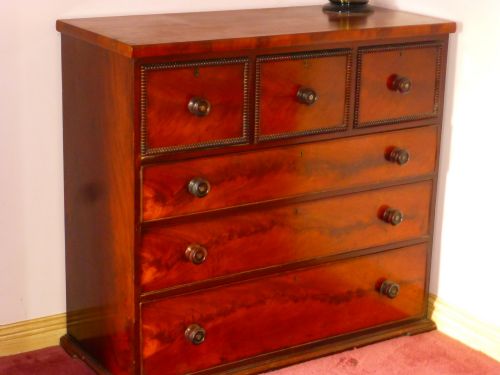
Quality rests primarily in the selection of the timber veneers and the matching of the grain across the drawer fronts. Finer examples display symmetrical flame mahogany patterns that catch the light evenly across the facade.
Proportion and execution of the feet and cornices also separate standard pieces from exceptional ones. Well-preserved original hardware and tight drawer joints elevate the standing of any tall chest.
Scottish Tallboy Chest Retail Price Guide 2026
Typical asking prices for scottish tallboy chest among the pieces listed under this phrase on Sellingantiques today, from the lower quarter to the upper quarter. They describe what is for sale here now, not the wider market.
Materials recorded across the inventory include mahogany, flame mahogany veneer, oak, walnut, pine, and brass.
Whytock & Reid·R H & J Simpson
The Scottish Tallboy Chest Glossary
- Tallboy
- A tall chest of drawers, often constructed as one chest stacked upon another. This form provides substantial vertical storage capacity.
- Flame mahogany
- Mahogany timber sliced to reveal a rippling, flame-like grain pattern. Cabinet makers reserved this highly decorative veneer for principal surfaces.
- Chest on chest
- A two-part form featuring a narrower upper chest resting upon a wider lower chest. It creates a commanding architectural silhouette.
- Bow front
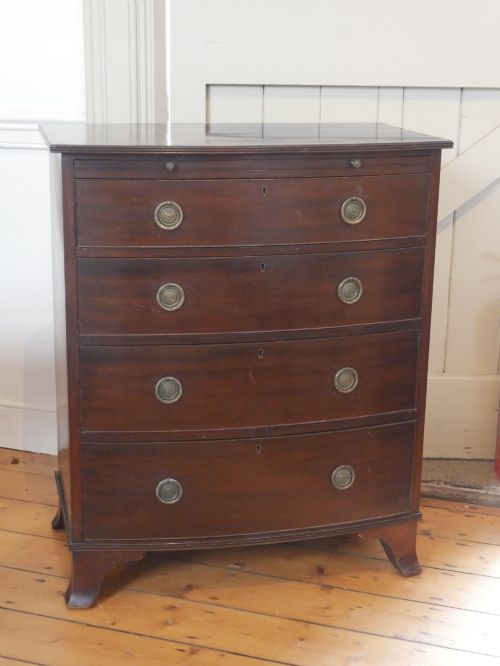
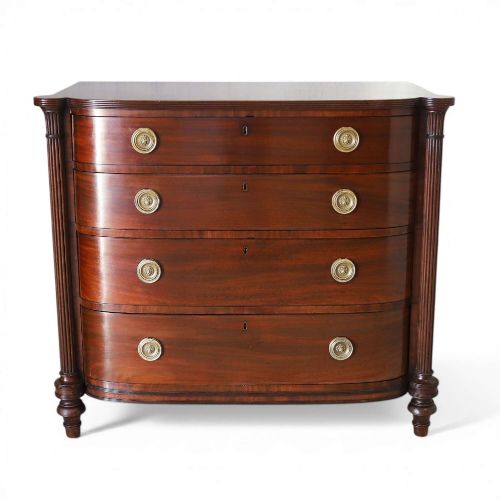
- A convex curved front facade popular in Regency and Victorian designs. This shape softens the rigidity of the tall chest form.
- Oak lined
- The construction of drawer interiors using solid oak timber. This indicates robust traditional craftsmanship.
Scottish Tallboy Chest: Frequently Asked Questions
Where did scottish tallboy chests originate?
These pieces originate from Scottish cabinet workshops influenced by Georgian, Regency, and Victorian design aesthetics.
Local makers adapted broader British furniture trends to suit regional tastes, favouring substantial proportions and figured mahogany timbers.
How do I care for flame mahogany?
Keep the timber away from direct sunlight and sudden temperature shifts to prevent the veneer from lifting.
Apply a traditional wax polish occasionally to nourish the wood and maintain a soft lustre on the surface.
What is a chest on chest?
A chest on chest consists of an upper section stacked directly onto a slightly larger lower base.
This two-part construction made large tall furniture easier to move through narrow staircases in historic homes.
Are these chests heavy?
These tall pieces are heavy due to the use of solid hardwoods like mahogany and oak throughout the carcass.
Two people are usually required to move them safely, especially tall double-section examples.