


Scottish Silver Brooch
These scottish silver brooch pieces combine silver work with traditional hardstones and motifs, offering wearable history that anchors highland craft in everyday wear.
Scottish silver brooch forms and periods
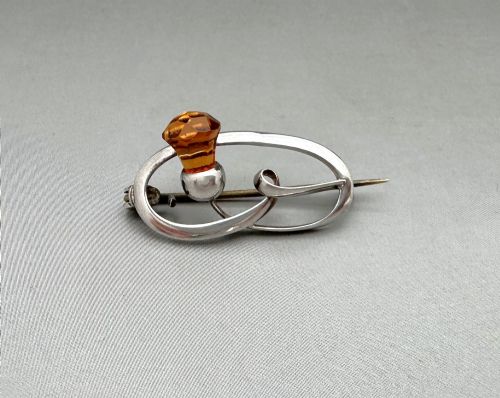
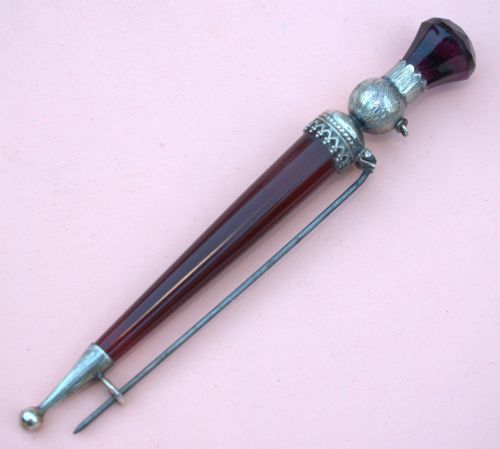
A scottish silver brooch encompasses various traditional forms including kilt pins, dirks, axes, swords, shields, and floral thistle motifs. These items span from the nineteenth century through the mid twentieth century, capturing distinct regional design movements.
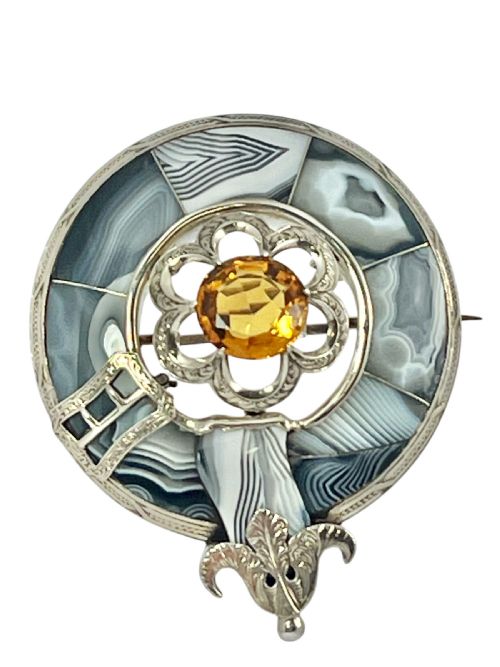
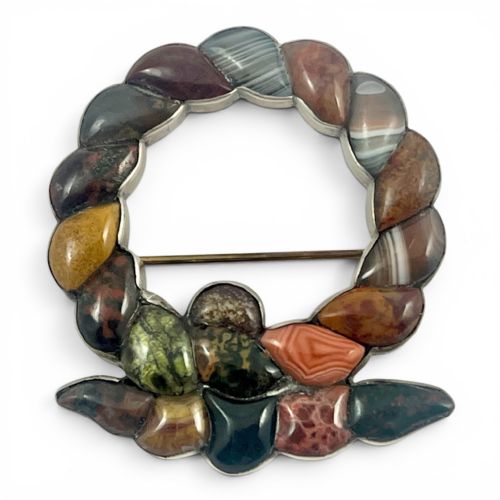
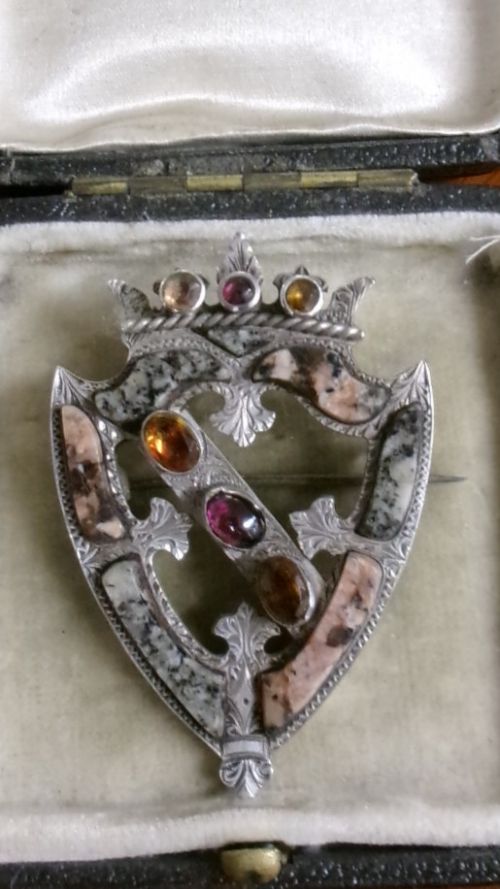
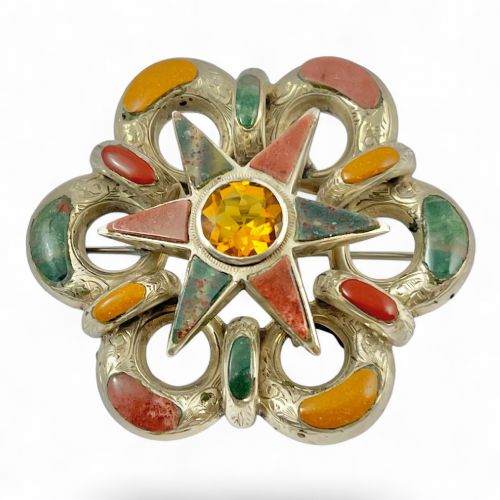
Victorian examples frequently incorporate hardstones and pebble designs like agate, malachite, and citrine within silver settings. Later pieces from the twentieth century often display Celtic Revival and Art Nouveau styles, including penannular shapes and shield brooches.
The materials paired with silver range from natural stones and pearls to amber glass and blue lace agate. Buyers encounter everything from simple knot work to elaborate clan symbols and curling designs.
Materials and construction
Silversmiths shaped solid silver into intricate frames, shields, and themed objects such as golf clubs and thistle heads. Stones including agate, amethyst, citrine, and malachite were cut, polished, and set directly into the metalwork.
Techniques relied on traditional metal fabrication combined with lapidary work to secure hardstones and pebbles. Pins, hinges, and catches were integrated into the reverse of each piece to ensure functional fastening for garments.
Listings feature silver combined with amber glass, pearl, blue lace agate, and various hardstones across the Victorian, Edwardian, and mid twentieth century periods.
Defining characteristics of craftsmanship
Quality rests in the precision of the silver smithing, particularly in the crispness of Celtic knotwork, shield borders, and engraved thistles. Superior pieces exhibit tight stone settings where agates and hardstones sit flush and secure within the metal frame.
The intricacy of the design further distinguishes individual items, with larger multi stone pebble pieces or fully articulated dirk and sword forms demanding greater skill than simpler circular brooches.
Charles Horner·Scottish Celtic Art Industries·Robert Allison and Sons·Adie and Lovekin
The Scottish Silver Brooch Glossary
- Agate
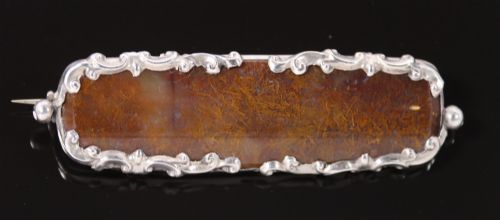
- A variety of chalcedony quartz frequently utilised in nineteenth century Scottish jewellery for its banded multicoloured patterns. These stones were polished into smooth cabochons and fitted into silver mounts.
- Penannular
- An incomplete circular ring brooch featuring terminals that allow the pin to pass through the fabric. This ancient form was revived during the Celtic Revival period.
- Thistle
- The national floral emblem of Scotland rendered in silver on numerous brooches and kilt pins. It frequently appears alongside leaves and natural stones.
- Hardstone
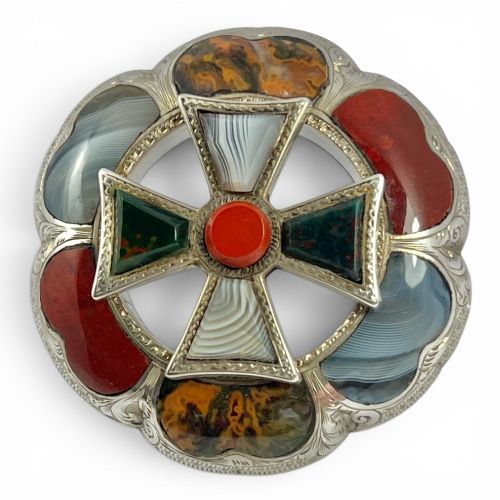
- Opaque ornamental stones such as jasper, bloodstone, and agate used in Victorian pebble jewellery. Craftsmen arranged these stones in geometric mosaics.
- Kilt pin
- A substantial fastener traditionally worn on the apron of a kilt. Scottish examples often replicate traditional weapons like swords or dirks in silver.
Frequently Asked Questions
How do I wear a scottish silver brooch?
These pieces function traditionally as closures for heavy woollens, kilt aprons, and tartan plaids. They also secure scarves and shawls on modern garments.
The substantial pin mechanism requires sturdy fabric to support the weight of stone set silver. Placing the brooch on thick weaves prevents the pin from sagging.
What is Victorian pebble jewellery?
Victorian pebble jewellery incorporates native Scottish hardstones gathered from rivers and hillsides, polished and mounted in silver. These stones include various colours of agate, malachite, and granite.
Craftsmen arranged these pebbles into geometric patterns, crosses, and shield designs. The style gained immense popularity during the nineteenth century highland revival.
How do I date a scottish silver brooch?
Dating relies on stylistic shifts from Victorian hardstone shields and dirks toward Edwardian thistle designs and mid century Celtic Revival work. Hallmarks stamped into the silver provide official assay office and year markers.
Earlier nineteenth century examples favour heavy agate mosaics, while twentieth century pieces often streamline these motifs into cleaner silver frameworks.
What motifs appear on these brooches?
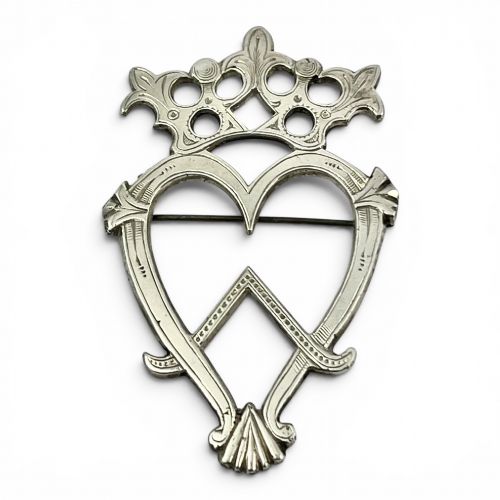
Common motifs include thistles, clan symbols, curling equipment, Luckenbooth hearts, and Celtic knotwork. Weapons such as dirks, axes, and swords also recur frequently.
These symbols reflect Scottish heritage and folklore, translating traditional objects into wearable silver ornaments.