

Scottish Highlands Oil
These works capture the wild topography and changing light of the Scottish highlands oil tradition.
Scottish Highlands Oil
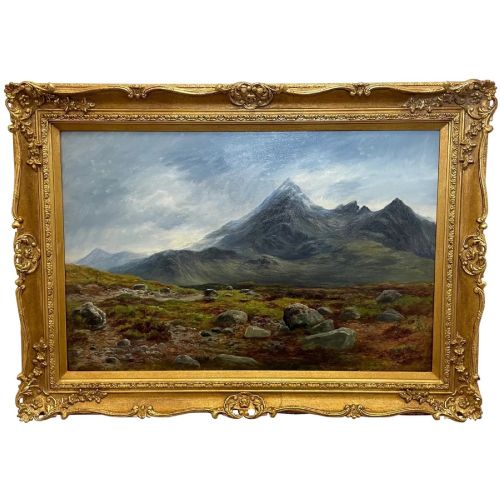
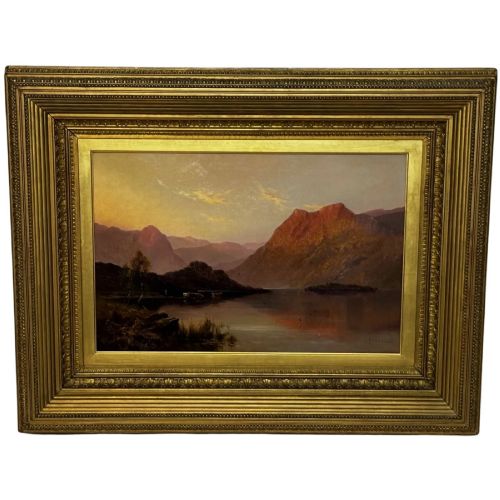
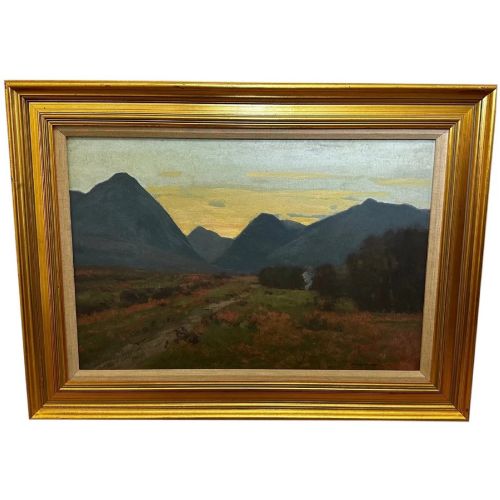
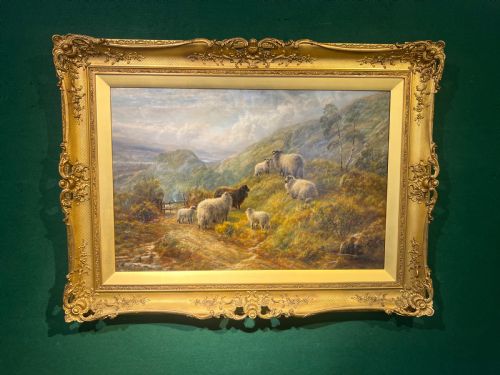
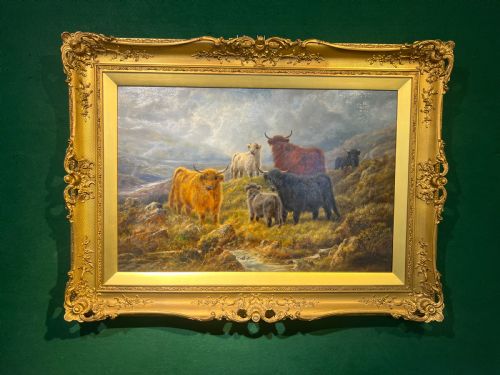
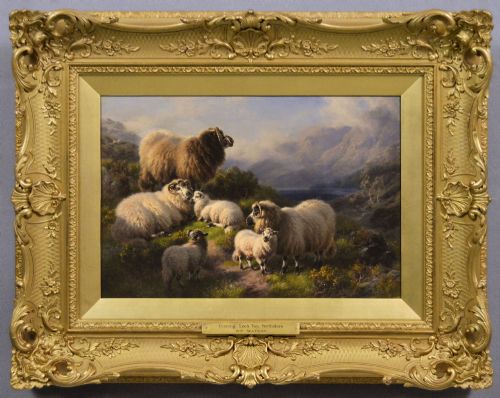
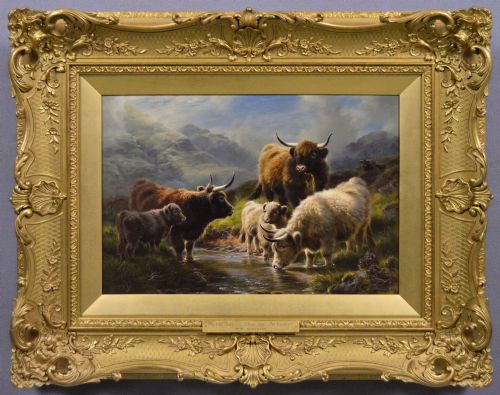
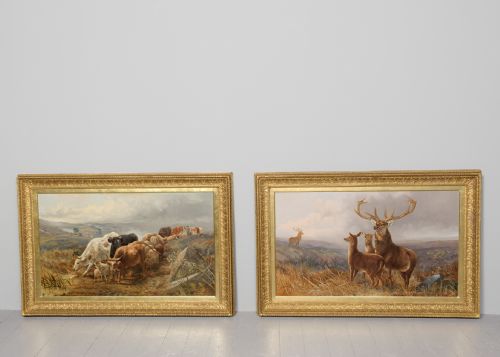
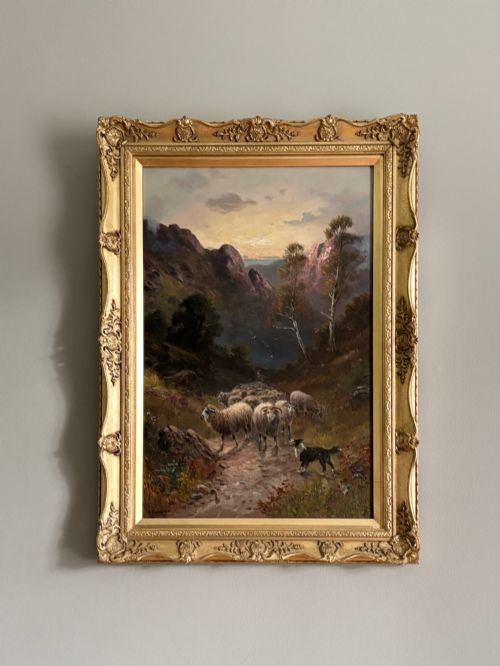
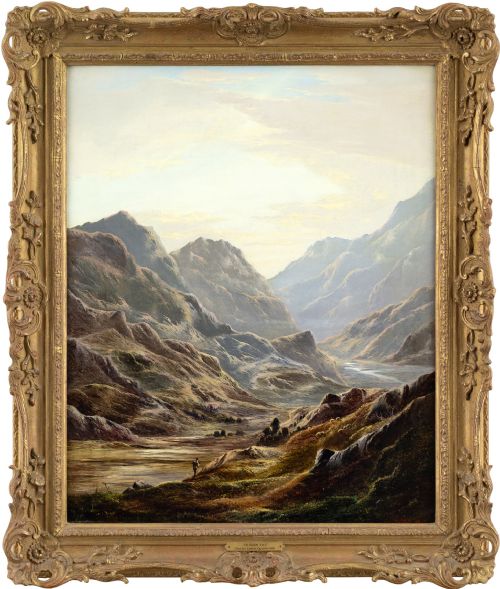
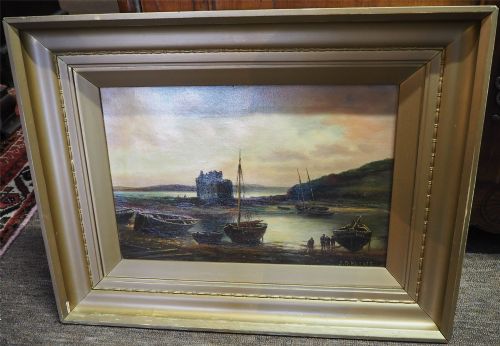
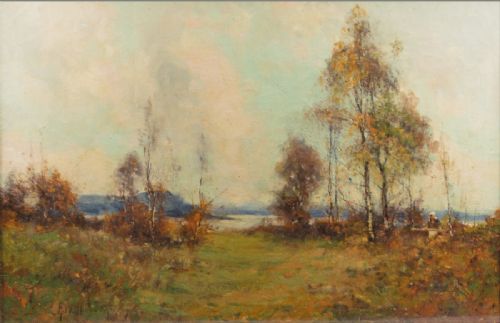
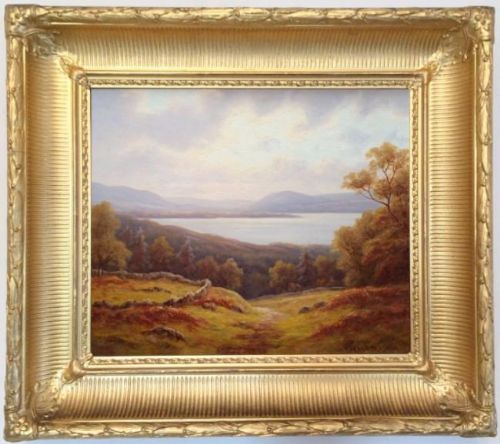
When you search for scottish highlands oil, you encounter framed canvases and wood panels depicting rugged terrain, lochs, and pastoral scenes. These works span the nineteenth century through the mid-twentieth century, encompassing Victorian pastoral views and later regional impressionism.
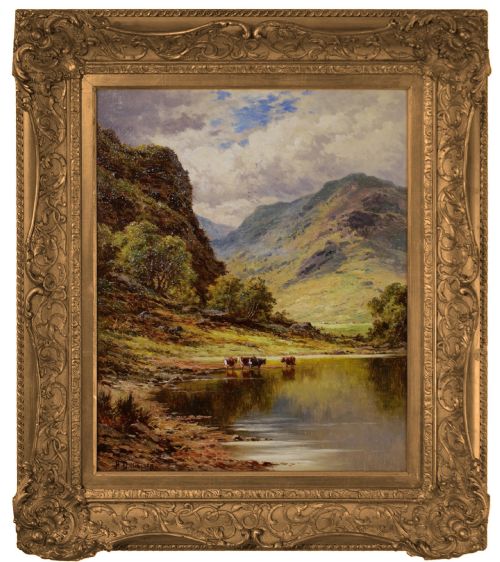
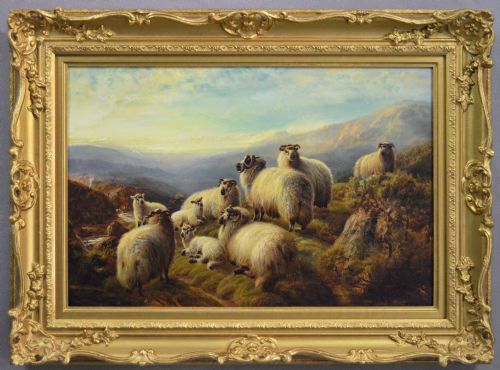
The subjects focus heavily on native fauna and rural life, featuring cattle, sheep, and figures beside Highland waters or stone bridges. These paintings served domestic interiors during the Victorian era and continue to anchor traditional fine art collections today.
Materials and Construction
The works rely upon oil paint applied to stretched canvas or wooden panels, supported by timber stretcher frames. Many retain their original giltwood and gesso frames embellished with gold leaf moulding.
Artists built up pigment through layered brushwork to render atmospheric Highland mists, heather-clad slopes, and the textures of animal coats.
The listings span oil on canvas, wood panels, and giltwood frames across Victorian and twentieth-century Scottish school periods.
Evaluating Quality
Quality rests upon the handling of light and atmospheric depth, distinguishing formulaic studio productions from observed landscape studies. Skilled brushwork captures the specific damp atmosphere of a glen rather than a generic backdrop.
The integration of the painting within its period frame matters greatly, as original gesso and giltwood settings preserve the physical context of the piece.
William Beattie Brown·Tom Campbell·George Houston·Henry H Parker·Robert Watson·William Watson Jnr·Robert Cleminson·Charles Leslie·Henry Robinson Hall
The Scottish Highlands Oil Glossary
- Oil on Canvas
- A traditional painting medium where pigmented oil is applied to a woven fabric support stretched across a wooden frame. This combination allows for rich blending and textured impasto work.
- Gesso
- A plaster-like mixture applied to wood or canvas as a smooth base for painting or gilding. On frames, it accepts deep moulding and gold leaf finishing.
- Giltwood
- Timber carved and coated with gold leaf or metallic powder. It forms the traditional ornate framing common to nineteenth-century British paintings.
- Oil Paint
- Pigment particles bound with a drying oil such as linseed. It dries slowly, permitting artists to work wet-in-wet to capture shifting mountain light.
Scottish Highlands Oil: Frequently Asked Questions
What subjects appear in these paintings?
The compositions feature Highland cattle, sheep flocks, lochs, and mountainous terrain under shifting Scottish skies. Figures engaged in rural activities or sporting pursuits also frequent the pastoral views.
These depictions reflect both romanticized ideals of the North and direct observations of regional weather patterns.
How should I clean an oil painting?
Dust accumulation requires only a very soft, dry brush applied with extreme care across the surface. Professional conservators should handle any removal of darker grime or old discoloured varnish.
Household liquids or damp cloths risk damaging the fragile oil pigment and canvas substrate.
Where were these artists working?
Many painters travelled directly from southern studios to sketch on location in Perthshire, Argyll, and Skye. They captured specific sites such as Loch Lomond, Glen Tilt, and Ben Lawers.
Their finished canvases were subsequently exhibited in Edinburgh and London galleries.
How do I identify a Victorian canvas?
Nineteenth-century works often display tightly woven canvas textures coupled with handwritten signatures and exhibition labels on the reverse stretcher bars. Period framing methods provide additional chronological clues.
Examining the underlying wood panel or stretcher frame helps confirm the era of manufacture.