




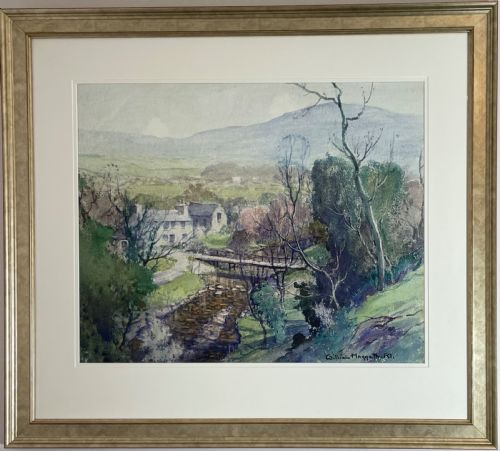


Green Mountain Landscape Artwork
Green mountain landscape artwork captures rugged terrain and towering peaks through traditional painting and carved jade.
Green Mountain Landscape Artwork
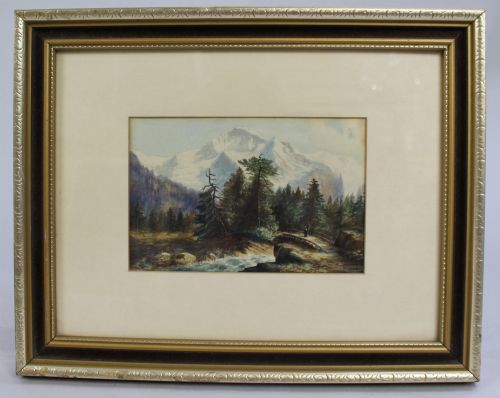
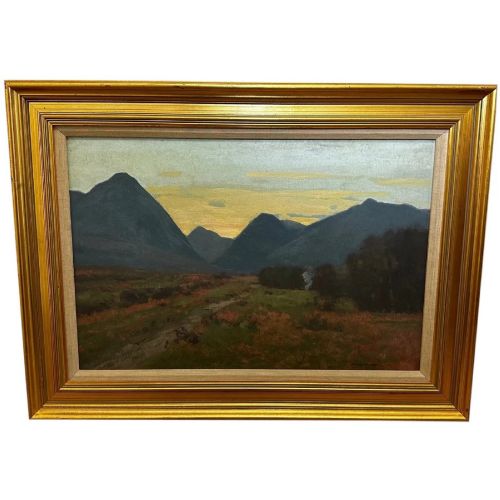
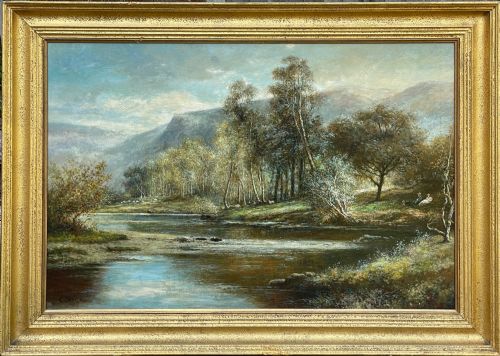
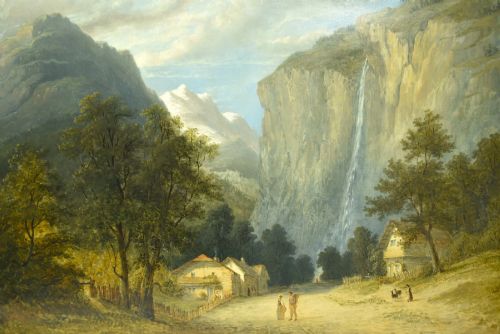
Green mountain landscape artwork depicts elevated terrain, valleys, rivers, and peaks captured by regional artists across Britain and Europe. These pieces encompass oil paintings, watercolours, and carved sculptures produced in traditional styles.
The selections available here range from Victorian British and Scottish landscapes to 17th-century Dutch school compositions and carved jade mountain sculptures on hardwood stands. Buyers encounter framed watercolours of Welsh and Lake District scenes alongside large oil paintings of Swiss and Bavarian views.
Makers and artists documented in these works span the 17th century through the mid-20th century, recording specific locations from Scotland and Wales to the Alps and China.
Materials and methods
Painters utilised oil and watercolour mediums applied to canvas, paper, and wood panels to render varied mountainous topography. Canvases are frequently housed in giltwood or gilt frames that complement the painted scenes.
Sculptural pieces are carved from green jade and displayed upon fitted hardwood stands, demonstrating traditional craftsmanship in hardstone. Works on paper are typically framed and glazed to protect the delicate watercolour pigments.
Green Mountain Landscape Artwork Retail Price Guide 2026
Typical asking prices for green mountain landscape artwork among the pieces listed under this phrase on Sellingantiques today, from the lower quarter to the upper quarter. They describe what is for sale here now, not the wider market.
Several sheep make uncredited cameo appearances in the rugged valleys of North Wales.
Assessing quality
Quality in these artworks rests upon the handling of light, depth, and atmospheric perspective within the terrain. Skilled brushwork and precise topographical rendering distinguish accomplished professional artists from minor regional recorders.
In carved jade sculptures, quality depends on the natural colour variation of the stone, the depth of the relief carving, and the fidelity of the fitted hardwood stand.
William Beattie Brown·George Houston·Benjamin Barker of Bath·Sidney Richard Percy·Benjamin Williams Leader
The Green Mountain Landscape Artwork Glossary
- Canvas
- A heavy woven fabric stretched across a wooden frame to serve as a support for oil paint. It provides a textured surface that holds thick pigment layers.
- Giltwood
- Wood that has been coated with a thin layer of gold leaf or gilt paint. Frames finished in this manner enhance the visual weight of traditional paintings.
- Watercolour
- A paint consisting of pigment suspended in a water-based solution applied to paper. It creates luminous, transparent washes ideal for capturing atmospheric mountain skies.
- Hardwood
- Dense timber derived from deciduous trees utilised to construct display stands for carved jade sculptures. It provides stable and polished support for heavy mineral carvings.
- Impressionism
- A style of painting emphasising unblended colour strokes and natural light rather than precise detail. Artists employed this approach to capture the shifting conditions of outdoor landscapes.
Green Mountain Landscape Artwork: Frequently Asked Questions
What subjects appear in these mountain artworks?
These works depict rugged peaks, Highland valleys, river banks, and alpine waterfalls. Many pieces record specific geographic locations across Britain, Europe, and Asia.
Scenes frequently incorporate figures, animals, or rural structures to establish scale against the imposing mountainous background.
How do I identify the period of a painting?
Periods are determined through artist signatures, framing materials, stylistic conventions, and inscribed dates on the reverse or front of the canvas. Victorian works often feature heavy gilt frames and romantic naturalism.
Earlier 17th-century examples display darker tonal palettes and classical composition structures typical of the Dutch school.
How should I care for an oil painting?
Oil paintings require stable indoor humidity away from direct sunlight to prevent canvas degradation and pigment cracking. Dusting should be performed gently with a soft, dry brush.
Avoid using liquid cleaners or abrasive cloths on the canvas surface or the surrounding gilt frame.