


Scottish Highland Loch Art
Scottish highland loch art captures the atmospheric scenery of northern waters through traditional nineteenth and early twentieth century painting.
Scottish Highland Loch Art
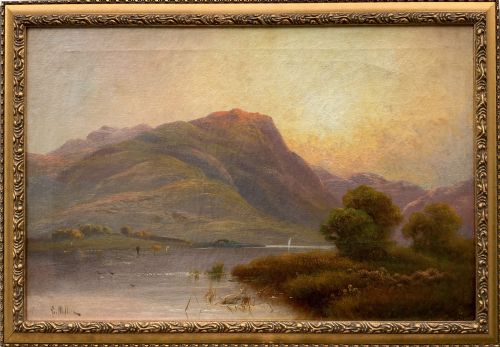
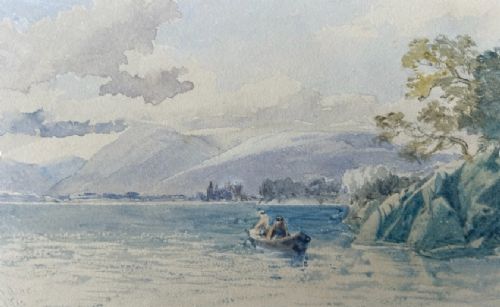
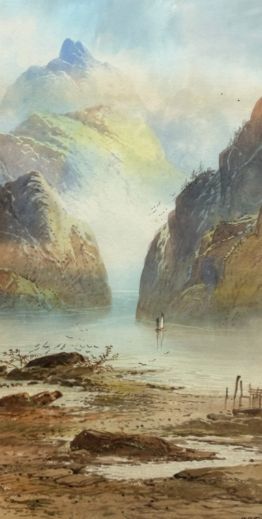
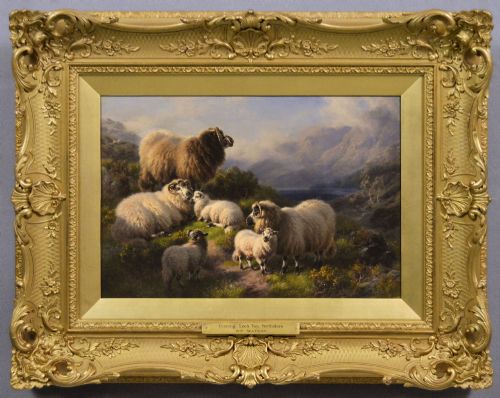
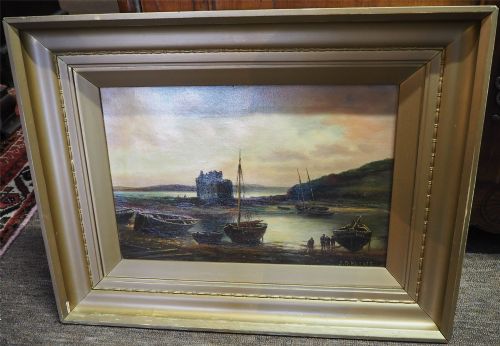
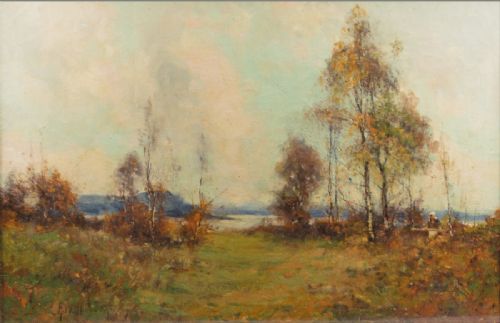
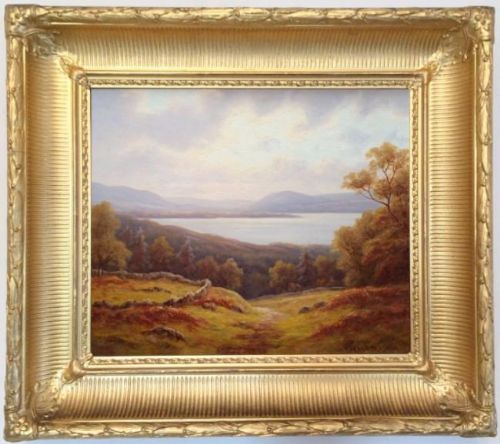
Scottish highland loch art encompasses framed watercolours and oil paintings depicting northern waters, mountains, and cattle.
The pieces on this page range from Victorian watercolours to early twentieth century oils on canvas.
Landscapes featuring specific locations such as Loch Lomond, Loch Tay, and Loch Ness recur frequently among the works.
Materials and methods
Artists painted primarily with oil paint on canvas or board, alongside watercolours and gouache on paper.
Frames frequently utilise carved wood and gesso with gilt finishes to complement the pastoral subjects.
Highland cattle stare damply out from behind decades of accumulated framing dust.
Evaluating quality
Quality rests upon the artist's ability to render light, mist, and water across the highland landscape.
Works by recognised named painters command greater attention than anonymous studio pieces of the period.
Thomas Miles Richardson Jnr·William Henry Earp·William Watson Jnr·Alexander Wellwood Rattray·Everett Watson Mellor·Henry Robinson Hall·Henry Hillier Parker·James Bell Anderson·William Miller Frazer·Daniel Sherrin·Alfred de Breanski Snr·AJ Thornton·George Cole·George Melvin Rennie·E M Seaton·J Gibb·F W Bartholomew
The Scottish Highland Loch Art Glossary
- Oil on Canvas
- Pigment mixed with drying oil applied to stretched fabric. This surface supports thick application and fine detail.
- Gesso
- A plaster mixture applied to wood frames before gilding. It provides a smooth base for decorative moulding.
- Watercolour Painting
- Pigments suspended in a water-based solution applied to paper. This medium creates transparent washes of light.
- Gouache
- An opaque water-based paint containing a binding agent. It yields solid colour areas alongside watercolours.
Scottish Highland Loch Art: Frequently Asked Questions
What is scottish highland loch art?
These works are nineteenth and twentieth century paintings depicting Scottish lakes, mountains, and cattle.
Artists capture atmospheric morning mists and sunsets across northern waters.
Where were these paintings displayed?
Victorian households hung these framed watercolours and oils in parlours and drawing rooms.
The pastoral subjects brought the scale of the northern landscape indoors.
How do I date these works?
Signatures, stretcher frames, and artist records help establish the period of creation.
Victorian examples often feature heavy gilt gesso frames alongside traditional canvas supports.
How do I care for these paintings?
Keep oil and watercolour works away from direct sunlight and damp environments.
Dust gilt frames gently with a soft dry brush without touching the canvas.